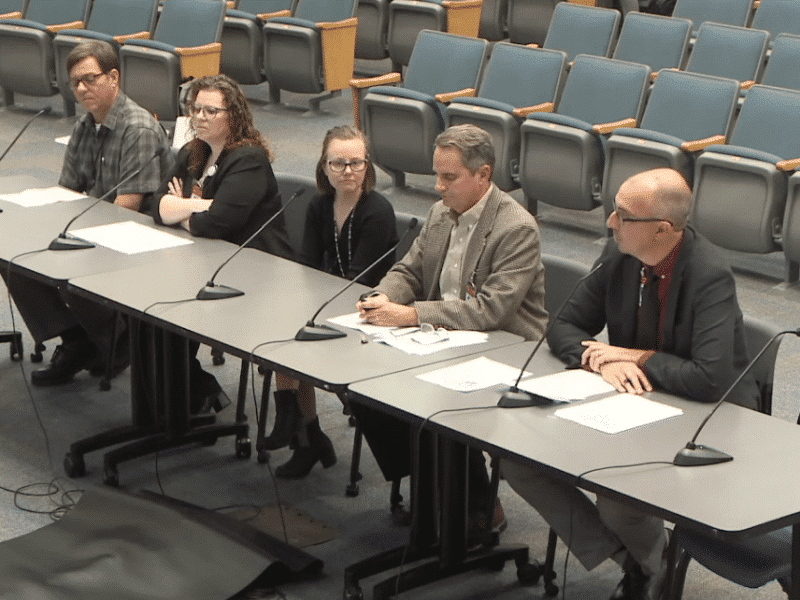
After the developer for an art studio/office building asked for a large number of exceptions to Oviedo’s development rules in early June, Oviedo City Council discussed possible changes to the city’s Land Development Code (LDC), including tree replacement.
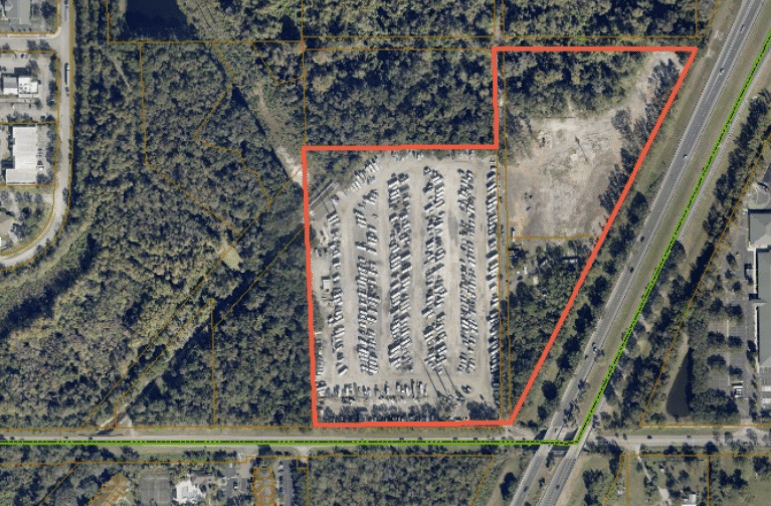
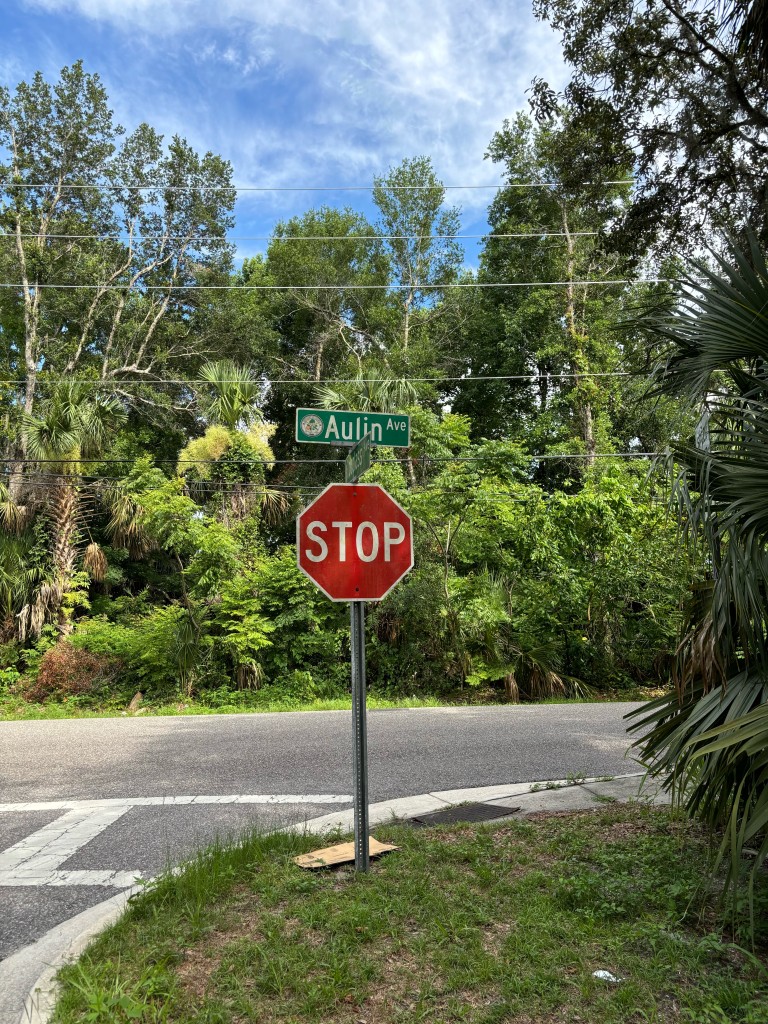
The developer, Gerard Land Aquatic Inc., asked City Council to approve 10 deviations for the property – a 3,184-square-foot building on a 0.48-acre property at the intersection of Aulin and Douglass Avenues.
If a developer cannot follow the LDC, which are the rules developers have to follow when building in the city, they need to get approval from the city council and undertake mitigations, which can include implementing environmentally-friendly design and donating public art.
The deviations were approved by the Council unanimously.

How the code works
Deviations are parts of a development that do not fully follow the LDC. However, the LDC does give developers some leeway — deviations less than 20% don’t require approval from the city council. For example, the McDonald’s on Chapman Road had no deviations.
Because the deviations for the Aulin property are more than 20%, City Council must analyze them to ensure they are reasonable. With approval, a site development order may be issued.
According to Oviedo Development Review Manager Harris Berns-Cadle, the size and shape of this particular property is an “obstacle” for following many parts of the LDC, causing the larger amount of deviations in this case.
Because the property is directly next to homes on one side, many LDC requirements were difficult to meet, according to Berns-Cadle. Among those is a required 30-foot buffer between homes and parking, resulting in a deviation by 65%, the greatest deviation on the list.
The tree problem
LDC requirements are a combination of set measurements and rules that depend on the size of the lot. Most rules about parking measurements, like the dimensions of parking spaces and the size of dividers, are a fixed measurement no matter the size of the property. In this case the tree requirements were a fixed amount, which posed another hurdle.
In his presentation to City Council, Berns-Cadle stated that the developer worked with city staff to minimize deviations where possible and “provide [the] appropriate mitigations.”
The mitigations include a payment of $2,000 to the city’s tree bank, installing an opaque wall instead of a 30-foot buffer, three additional bike spaces and two electric vehicle charging stations.
The mitigation that generated the most discussion involved the city’s tree bank funds, which are used to ensure that the required number of trees not included in the land are planted elsewhere in the city.
The LDC classifies replacement trees as trees that are cut down during construction and must be replaced, and required trees as trees that are required per acre per the city’s code. When discussing the tree bank mitigation, Councilmember Bob Pollack said that the replacement trees and required trees should “be inclusive” of each other instead of requiring both.
He said trees take up a large part of the lot, but the developer still needs to pay the “large” amount to the city’s tree bank, referring to the $2,000, because the property’s small size cannot fit all the required trees.
Despite these obstacles, the developer will plant 16 of the required 22 canopy trees on the property. The $2,000 will go toward planting additional trees elsewhere.
Mayor Megan Sladek acknowledged that the LDC is currently being reworked, and agreed with Pollack and Councilmember Natalie Teuchert that 16 canopy trees is a large number given the size of the lot. She raised concerns about “planting trees that cannot grow to full size” from overloading them on the property because of LDC requirements.
When asked what the discussion about the deviations could mean for future developments, Sladek said, “If we have rules where [approving the deviations] requires special permission, maybe our rules need to be changed to better reflect reality.”
She also stated that approving the requested deviations were “common sense,” suggesting that the LDC’s requirements may be redundant for unique properties like the Aulin office building.
Sladek said the LDC should be accessible enough where it is easy to understand for anyone interested in development.
“I’m hoping that we can come up with a way to make it so in the middle of the night, if somebody decides they’re going to be a hometown, small-scale developer […] that they can go look at the code and [determine] how many trees [they] need [and] what [their] setbacks are,” she said.
The current LDC was last enacted in 2018, and the updated LDC is expected to be adopted in August or September.
Next steps
Development Services Director Teresa Correa said next steps for the development include approval of the deviations and an architectural design order. Once those are complete, the building permit can be issued.
“They also need to apply for building plans and have them approved before the vertical construction,” she said.
Before construction, the developer still needs the following approvals:
1. Site Construction Type II Permit
2. Building Permit (prior to construction of any buildings, signage, fences, etc.)
3. Certificate of Occupancy
4. Clearing Grading and Tree Removal Permit
5. City of Oviedo and Seminole County Impact Fee Statements (before issuance of Building Permit)
6. FDOT Right-of-Way Permit (before issuance of Site Construction Type II Permit), if applicable 7. Lighting shall be installed before the issuance of Certificate of Occupancy and at the developer’s expense.
8. All initial/recurring monthly street lighting costs (CIAC fees, energy, maintenance and rental fees) within the community shall be incurred by the Developer and/or Homeowners Association.
Correa said the timeline will vary on building construction, depending on the pace of the developer in applying for the above permits.
Sorry for the interruption but please take 1 minute to read this. The news depends on it.
Did you know each article on Oviedo Community News takes anywhere from 10-15 hours to produce and edit and costs between $325 and $600? Your support makes it possible.
We believe that access to local news is a right, not a privilege, which is why our journalism is free for everyone. But we rely on readers like you to keep this work going. Your contribution keeps us independent and dedicated to our community.
If you believe in the value of local journalism, please make a tax-deductible contribution today or choose a monthly gift to help us plan for the future.
Thank you for supporting Oviedo Community News!
With gratitude,
Megan Stokes, OCN editor-in-chief
Thank you for reading! Before you go...
We are interested about hearing news in our community! Let us know what's happening!
Share a story!