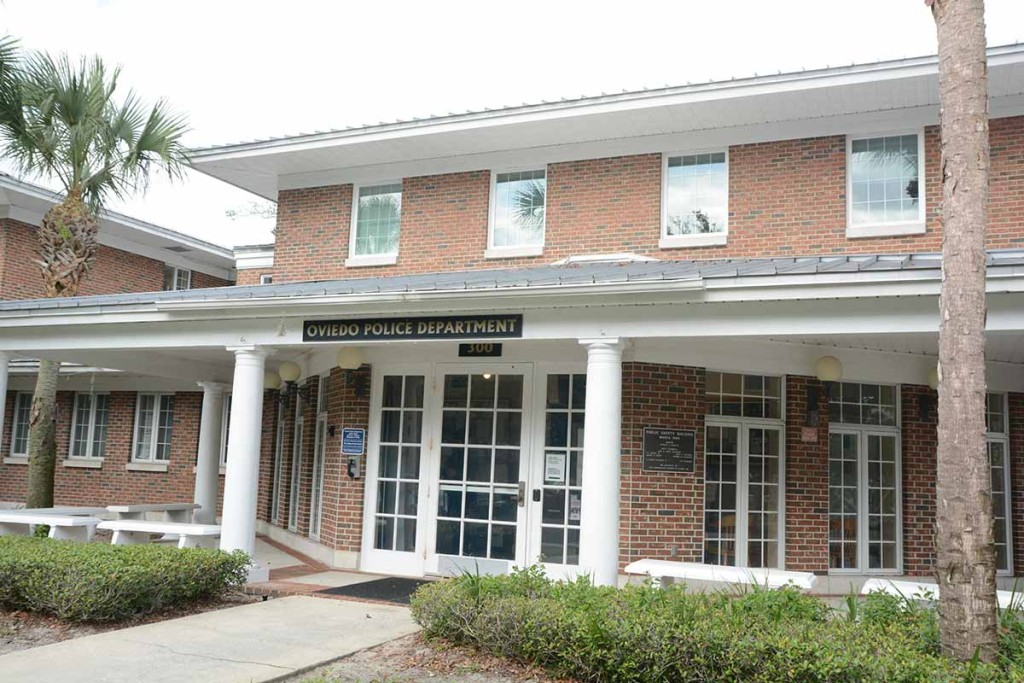
After a lengthy discussion on Tuesday, the Oviedo City Council voted to give November voters a police building referendum vote to decide whether or not the city will use $20.4 million in additional bonds to cover the costs of a new Oviedo public safety building.
If approved by voters on Nov. 5, the general obligation bonds, which would be paid back over 30 years through property taxes, would be combined with the $11.4 million in bonds passed in 2016 to help fund all or part of a new public safety building that is estimated to cost nearly $32 million to construct.
The estimate is based on construction of a new 28,800 square-foot building, and another 10,000 square feet of additional space that would not be finished until a future date. This plan was devised after a 2023 referendum asking for $35.5 million in bonds failed, with 64% of voters voting against it.
The proposed ballot question for the police building bond referendum would be:
Oviedo Public Safety Building Project; General Obligation Bonds
The Oviedo Public Safety Building project requires an estimated $31,815,822 to construct. Voters approved $11,400,000 for the project in 2016. Shall the City issue additional bonds not exceeding $20,415,822 bearing interest not exceeding maximum legal rates pledging the City’s full faith and credit for up to thirty years from date of issuance, payable from ad valorem taxes on all City taxable property, without limitation as to rate or amount, as provided in Ordinance No. 1745?
Yes – For Bonds [ ]
No – Against Bonds [ ]
During Tuesday’s meeting,Oviedo Mayor Megan Sladek and City Manager Bryan Cobb presented an alternative financing plan to the bonds. Their plan, which councilmembers ended up voting against, would have instead used funds from the One Cent Local Government Infrastructure Surtax, more commonly known as the one-cent or penny sales tax, to help fund the building.
The proposed alternative plan would have pushed a related referendum back a year to Nov. 4, 2025, and secured the debt through the fourth-generation of the one-cent sales tax, which may be on the Nov. 2024 ballot, with a financing term of nine years, while issuing the 2016 $11.4 million in bonds with a term of 15 years.
With these terms, the sales tax debt servicing would be about $3.25 million per year over the nine years, while the 2016 bonds would be about $990,000 over the 15 years, meaning that from years 10 through 15, the annual debt service would go from $4.24 million per year to $990,000 per year.
“It’s not a bad deal,” Cobb said at the meeting. “You look at a savings of around $13 million over the life of the [debt], I think it’s something worth considering.”
Another advantage of the alternative plan, Cobb said, was cost savings in property taxes.
With the full $31.8 million in bonds with 30-year financing terms, the estimated mileage rate — or the dollars assessed for every $1,000 of property value — would be 0.4711, leading to an increase of about $169.84 per year on a $350,000 home. With the alternative plan, the estimated mileage rate would have been 0.2451, an increase of $88.37 per year on the same valued property, a difference of $81.47 per year.
“We may be able to pay for this with a method that will raise the mileage rate for our residents half as much and for half as long,” Oviedo Mayor Megan Sladek said. “I think we are on the verge of making a lot of asks of our residents, and this is something that will allow us to address the needs of building that police department right away and also address some of the financial concerns of our residents.”
Going with the alternative plan, however, would have meant a substantial amount of money would not be available for already-planned infrastructure projects, of which the public safety building is included.
“It’s about priorities,” Cobb said. “If City Council wants to say that the public safety building is the priority, then that would be the priority of the sales tax program.”
Some additional money could be made available by increased storm water, water and sewer fees, “and all three of those can contain all of the things that are critical, and, in my opinion, that is the proper way to run our enterprise funds,” Sladek said.
Others on Council saw that as a roundabout way to find the needed amount of funds.
“To that point, you’re not saving a cent for taxpayers,” Councilmember Natalie Teuchert said. “Instead of being paid for with the penny sales tax, now we’re raising those utility fees on projects that would have covered [them].
“I’m always on board with saving taxpayer money, but what [Sladek] just described is exactly what I think would happen; we’re basically gutting our penny sales tax fund and leaving it with less than what we’re using right now to do our sidewalks and roads every year, which we all know is not enough,” she said.
Additionally, pushing the referendum back a year could have led to a change in construction and labor costs.
“This is the most transparent [way of proceeding] because voters will get a chance [to decide],” Councilmember Bob Pollack said. “They see the dollar amount and they get a chance to vote on this and determine whether they think that the public safety building’s a priority and that this dollar amount is the right amount.”
Despite the presentation of an alternative, the ordinance to add the referendum to the Nov. 5 ballot was approved by a 3-2 vote, with Sladek and councilmember Keith Britton dissenting. The next key date is Aug. 9, when the ballot language will be sent to the Seminole County Supervisor of Elections office for approval, after which, advertisements will be published in newspapers before the election.
“I think we need to move forward with this and not kick the can down another year and let the current police station fall in additional disarray,” Pollack said.
Sorry for the interruption but please take 1 minute to read this. The news depends on it.
Did you know each article on Oviedo Community News takes anywhere from 10-15 hours to produce and edit and costs between $325 and $600? Your support makes it possible.
We believe that access to local news is a right, not a privilege, which is why our journalism is free for everyone. But we rely on readers like you to keep this work going. Your contribution keeps us independent and dedicated to our community.
If you believe in the value of local journalism, please make a tax-deductible contribution today or choose a monthly gift to help us plan for the future.
Thank you for supporting Oviedo Community News!
With gratitude,
Megan Stokes, OCN editor-in-chief
Thank you for reading! Before you go...

We are interested about hearing news in our community! Let us know what's happening!
Share a story!