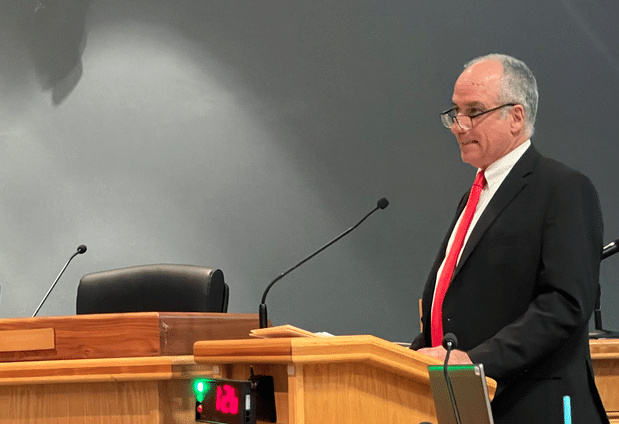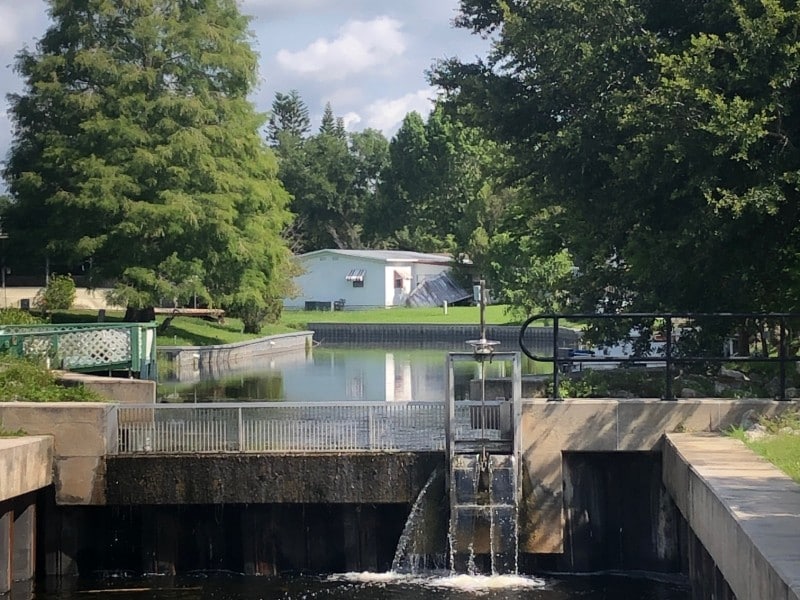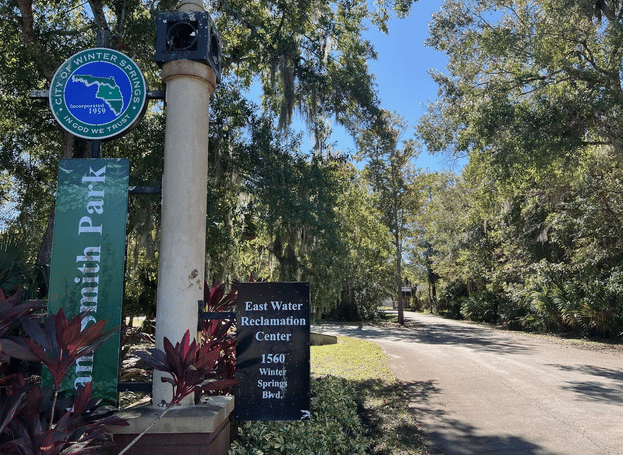
The state of the city’s two wastewater treatment plants and updates on the future of their new construction were the focus of the Winter Springs Commission’s wastewater workshop held on March 13.
The workshop comes after repeated calls by residents for improvements to both the city’s stormwater and wastewater systems, following residential flooding and a recent FDEP warning letter to the city for potential wastewater violations.
Construction of the east plant is estimated to take place over a two-year period, with the project expected to be completed by about mid-2028. While the immediate focus is on the design and construction of the east plant, design processes for the west plant are anticipated to start later this year.
Meera McKie, a project engineer with Carollo, said the design process for the project is currently underway with focus on the east plant and with the west plant to follow. The preliminary design for the project has been finalized.
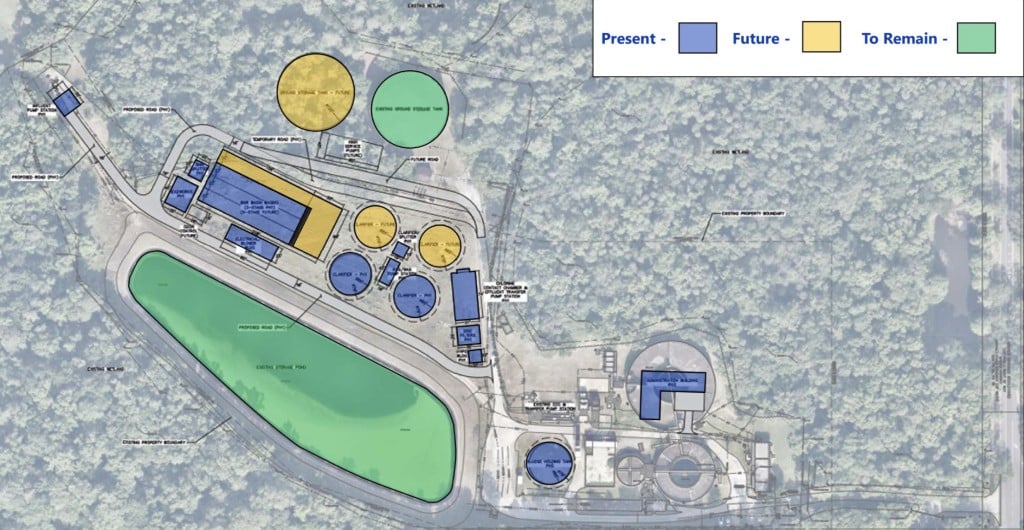
“I think some key elements to take away from here are that they’re really master-planning this site, so we’re looking to provide the city with what they need for today, but also plan for the future,” McKie said.
The project has two anticipated phases, with the first focusing on constructing most of the new facilities for the east plant while the west plant remains operational before moving into the second phase of selecting facilities to be constructed once the existing west plant is decommissioned and demolished.
“Since we’ll be constructing on-site, we want to make sure that we’re keeping the old plant, existing plant, in great condition, current operability, while also designing the new plant adjacent to that,” McKie said.
She said the plant construction project is anticipated to be primarily funded through State Revolving Funds, with additional grants being sought for gaps in funding as needed.
The project’s design loan was secured and paid for with SRF, as well as funding from the American Rescue Plan Act, to pay for design fees.
“The next step that we’re in now is to apply for our construction loan and that is also going to be through SRF,” McKie said.
In terms of the project cost, an exact dollar amount was not given. Project engineer Erik Anderson, a representative for the Construction Manager at Risk contractor Wharton-Smith, said the project’s billing would be done through a guaranteed maximum price process, which would set a maximum cost threshold not to be exceeded.
”The first one you’re going to see is a draft guaranteed maximum price,” Anderson said. “This is what we would call an estimate gap and this is what we’re going to use to obtain the SRF loan. Then the final guaranteed maximum price is going to be where you guys are authorizing the final costs on the project, and the beauty here is instead of just getting one lump sum number … you guys get to see every component that goes into this project.”
Anderosn said one “big key item” for the project’s schedule beyond funding is early procurement of equipment and materials for the construction of the first plant.
“Once the essential stuff starts to come in, we’ll look to break ground in the plant,” Scott Richards, project director and infrastructure design manager with Carollo Engineers, said.
Funding schedules for the west plant could potentially begin late in 2027 or early in 2028, with a target construction completion date estimated at some point in 2030.
“This is heavily, heavily controlled based on funding contingency and approval,” Richards said. “But that’s what we’re looking at today, and certainly want to keep you all updated as that changes, or if any changes do occur to that schedule. We know there’s a lot of moving parts, but we feel like right now the east plant is our priority.”
History of the current plants
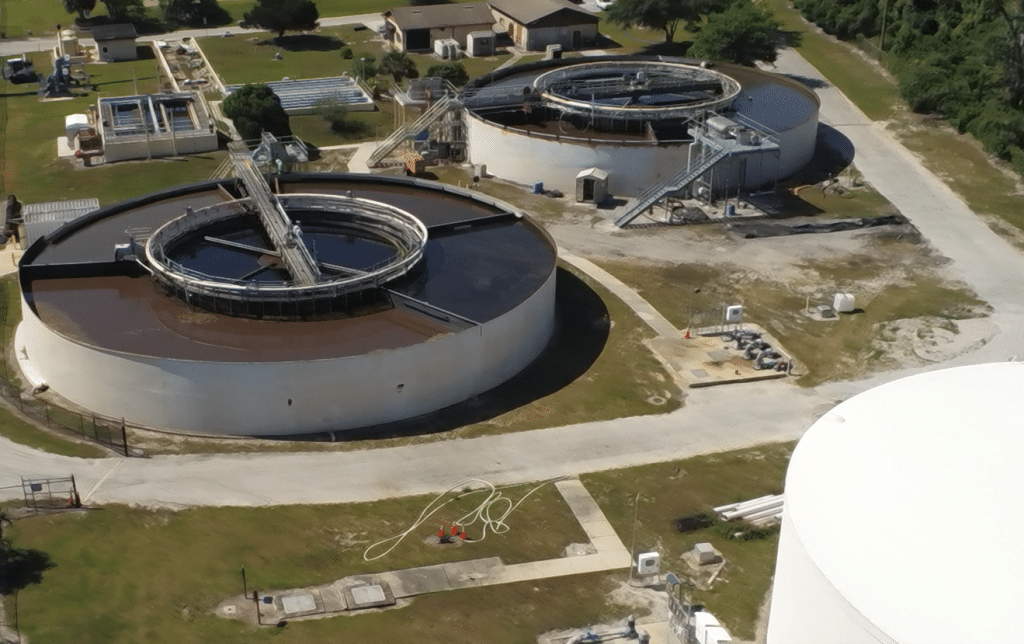
Richards said the existing treatment facilities are what are known as steel-ring package plants which were installed in the ’70s and ‘80s and are estimated to be “well beyond their useful life” by at least a decade based on current conditions and challenges that have occurred over the last five years, such as a wastewater spill at the east plant following impacts from Hurricane Milton in October.
According to the United States Environmental Protection Agency, package plants are “pre-manufactured treatment facilities used to treat wastewater in small communities or on individual properties.“
“One point of contention, we always like to remind ourselves [is that] these were preowned when installed, they were used [package] plants,” Richards said. “We truly don’t know how old they are. I have heard people indicate that they may have been as old as the ‘50s or ‘60s.”
He added that much of those challenges stem not just from the current condition, but the designs of the package plants themselves.
“Effectively, most of the process is wrapped into one of those individual circular tanks,” Richards said. “If any item within those tanks fails or has a problem, you are essentially at half capacity or less of the treatment plant immediately and that’s one of the challenges we’ve had over the past few years. If something does fail, you essentially lose that whole treatment process, and the new plants that we’ll talk about are not designed with that same mindset.”
Richards said priority repairs and work such as adding additional filters to the west plant following issues that occurred in 2020 and 2021 were completed in the past, but that this was a “limited approach.”
“I know the city spent a couple million dollars on those components, but again, that was a short-term goal of keeping those plants basically alive,” Richards said.
There’s been some work by the city in recent months to manage the operations of its wastewater treatment facilities. The commission approved a temporary lease in October for two belt presses which are used to dewater wastewater solids while the city removed its existing belt press, which was transported as needed between the plants, to be refurbished.
In February, the commission then approved a $298,000 contract to repair the existing belt press following the temporary lease.
Richards said while addressing ongoing issues with the current plants has always been a focus, the city has been planning for the future of its wastewater facilities for years.
“I want to make sure that we reiterate that as far back as 2021 we were already planning for new plants, and the city was planning for new plants,” Richards said. “I think it’s important to know that a lot of documents have been established to kind of set us on the path forward for these new facilities.”
Want to contact your elected leaders and weigh in on this topic? Find their contact information here. Have a news tip or opinion to share with OCN? Do that here.
Sorry for the interruption but please take 1 minute to read this. The news depends on it.
Did you know each article on Oviedo Community News takes anywhere from 10-15 hours to produce and edit and costs between $325 and $600? Your support makes it possible.
We believe that access to local news is a right, not a privilege, which is why our journalism is free for everyone. But we rely on readers like you to keep this work going. Your contribution keeps us independent and dedicated to our community.
If you believe in the value of local journalism, please make a tax-deductible contribution today or choose a monthly gift to help us plan for the future.
Thank you for supporting Oviedo Community News!
With gratitude,
Megan Stokes, OCN editor-in-chief
Thank you for reading! Before you go...
We are interested about hearing news in our community! Let us know what's happening!
Share a story!