The Seminole County Commission on Tuesday started the process of eliminating a number of Lynx bus routes, and would use an Uber-like microtransit system in the county as an alternative.
County commissioners have long voiced concerns that Seminole County is paying more for Lynx buses than it pays for its share of SunRail, and that many routes don’t have large numbers of riders.
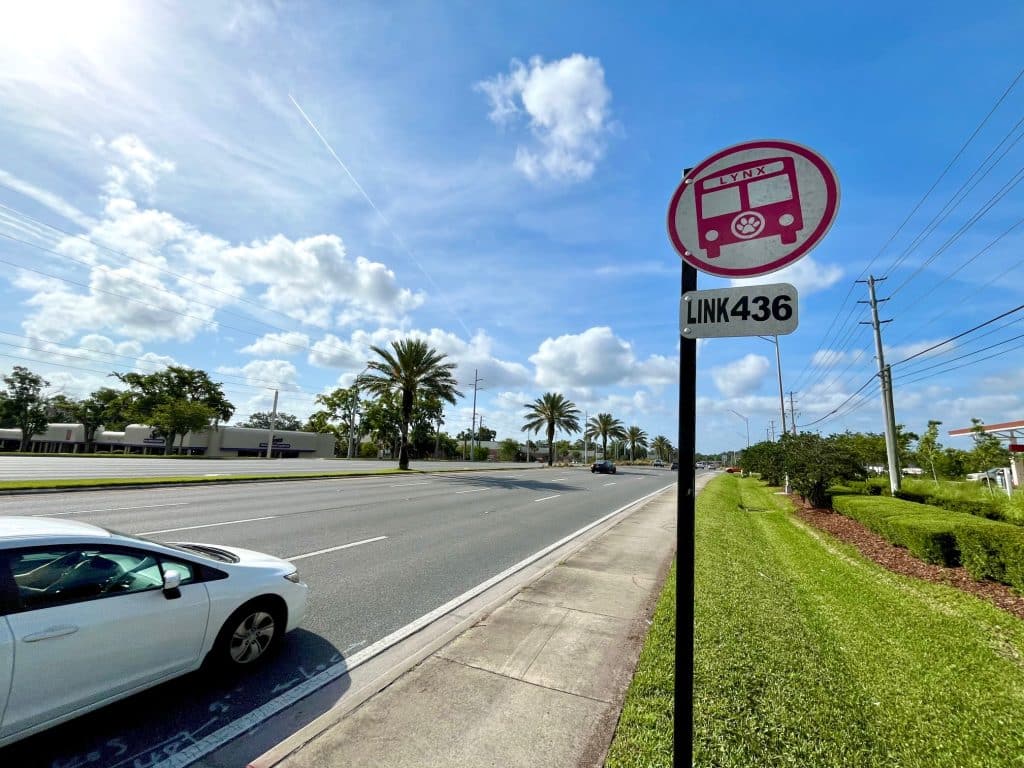
Commissioners answered staff questions on features of a possible microtransit system during a presentation Tuesday. The current timeline is to choose a microtransit vendor in May.
The county would start an education campaign on the changes in summer, and start offering the microtransit services in October. The Lynx routes would be eliminated in January of 2026.
“I have no delusions, there’s gonna [be] some speedbumps and hiccups,” County Chairman Jay Zembower said. “I don’t care how many news outlets you put it on, how much Facebook you put it on, we are gonna get calls: The bus didn’t come.”
Commissioner Andria Herr voiced her support for the program – but said the county needs to be careful that it doesn’t become too expensive.
“This is gonna open up a service level that becomes tolerable to a much larger portion of our population than the current bus system,” said County Commissioner Andria Herr. “It needs to sustain itself, while at the same time it’s supporting the vulnerable members of society that can’t afford a car and have no choice and need to get to work, doctor’s office, etc.”
Do you currently use the Lynx bus system? Would you be inclined to use a door-to-door service instead? Oviedo Community News wants to hear from you.
Currently, Lynx offers 11 fixed routes in Seminole County, and two neighborhood zone buses in Sanford and Oviedo. In 2024, the fixed routes had an average weekday ridership of of 6,644, and annually had 2.1 million rides in 2024.
County Commissioners are proposing to remove all fixed routes except:
• State Road 436 North & South (Link 436S; 436S)
• US 17-92 reduced to Fern Park Super Stop (Link 102; 103)
• West S.R. 434 reduced to Seminole State Altamonte (Link 23)
• East S.R. 434 reduced to McCulloch Road (Link 434)
• US 441 Orange Blossom Trail stop (Link 106)

Seminole County staff members said their estimate, though, is that 3,500 to 4,200 people use Lynx in Seminole County.
The microtransit project could cost anywhere from $3.8 million on the low end to nearly $14 million on the high end, and would have anywhere from 20 to 70 vehicles in use. These would be vans that residents can order via an app or call center, and schedule it door-to-door. If there are other people requesting rides near the same route, the vans would pick up multiple passengers. The goal would be a 30 minute wait time during the week, and a 60 minute wait time on the weekend.
The county is looking at three possible vendors for the microtransit services: Befree, Circuit Transit and River North Transit. One vendor currently provides services to Arlington, Virginia. You can view the proposals here; some of the vendors have fares starting at $1, although commissioners cautioned final prices haven’t been determined.
County Commissioner Amy Lockhart said one possible user of the service would be students taking dual enrollment classes.
“We are not taking a bus away from anyone that we are not replacing with a better service,” Lockart said. ‘“You will not be standing out in the sun waiting for a bus. … It will actually take you where you want to go.”
County Commissioners approved seeking a $10 million microtransit grant from the state to help pay for the new program in coming years. Commissioner Bob Dallari also had questions about the possible costs.
“What happens when you exceed the money allocated for Lynx?” Dallari asked. “And with Lynx, the routes we’re decommissioning so to speak, what happens to their stops and benches? … I don’t want people sitting waiting on a bus bench waiting for Lynx to show up.”
Funding would also come from savings from cuts to the current bus system, and could also be funded with gas tax and partner funding. One question that’s not yet known: How much the fares will be for users.
Commissioners did seem comfortable with using market-rate for rideshare services as a starting point, and then figuring out possible discounts for different groups or discounts based on the locations being traveled to.
“If we start doing the fare based on Uber, that’s gonna eliminate the people that are potentially using it now that truly need it to get from one place to another,” Constantine said.
Want to contact your elected leaders and weigh in on this topic? Find their contact information here. Have a news tip or opinion to share with OCN? Do that here.
Sorry for the interruption but please take 1 minute to read this. The news depends on it.
Did you know each article on Oviedo Community News takes anywhere from 10-15 hours to produce and edit and costs between $325 and $600? Your support makes it possible.
We believe that access to local news is a right, not a privilege, which is why our journalism is free for everyone. But we rely on readers like you to keep this work going. Your contribution keeps us independent and dedicated to our community.
If you believe in the value of local journalism, please make a tax-deductible contribution today or choose a monthly gift to help us plan for the future.
Thank you for supporting Oviedo Community News!
With gratitude,
Megan Stokes, OCN editor-in-chief
Thank you for reading! Before you go...
We are interested about hearing news in our community! Let us know what's happening!
Share a story!