Running for Oviedo Mayor this year is incumbent Megan Sladek, former Oviedo City Council member Judith Dolores Smith and Oviedo resident Brady Duke.
We invited each candidate to meet with OCN reporters to shoot an introduction video, OCN created a profile for each candidate and we sent each candidate a list of questions that we collected from our readers or formulated based on the priorities our readers shared with the OCN team. The Q&A is at the end of this article.
Unfortunately, Duke did not respond to multiple phone calls, emails and social media messages in time for publication. You’ll find his profile information but there is no video or answers to your questions. Because the guide has been published with the candidates’ responses it cannot be edited to include any additional candidate responses out of fairness and to protect the authenticity of the guide.
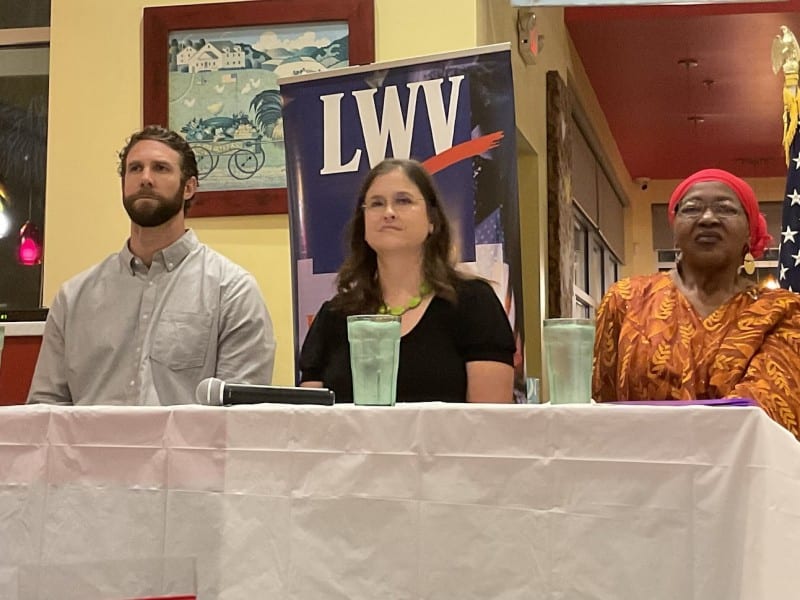
The League of Women Voters of Seminole County hosted an Oviedo mayoral candidate debate last week. Find the meeting recording here and OCN’s article on that debate here.
Candidates are listed in alphabetical order to ensure fairness.
Brady Duke
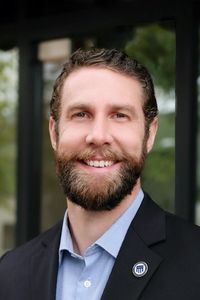
Brady Duke is an Oviedo resident running for Mayor of Oviedo. Last year he made an unsuccessful bid for a Congressional seat, which Cory Mills won.
According to Duke’s website, he is a former Navy SEAL sniper who worked with SEAL Team One and served multiple deployments overseas.
According to state records, Duke owns Vital Solutions Consulting, which his website says trains law enforcement and SWAT teams. He and his wife, Julie, run Intervene Ministries Inc, which offers “inner healing coaching for Christians”.
Duke’s website states that he and his family moved back to Florida after he honorably left the Navy. The website states that they chose Oviedo because of its close sense of community, charming feel, rich history and close proximity to Chuluota, where Duke lived the early years of his childhood and where his grandparents still live today. The couple has five children.
Duke has raised $2,000 in campaign contributions, all of which he contributed himself. He has no listed campaign expenditures. Learn more.
Megan Sladek
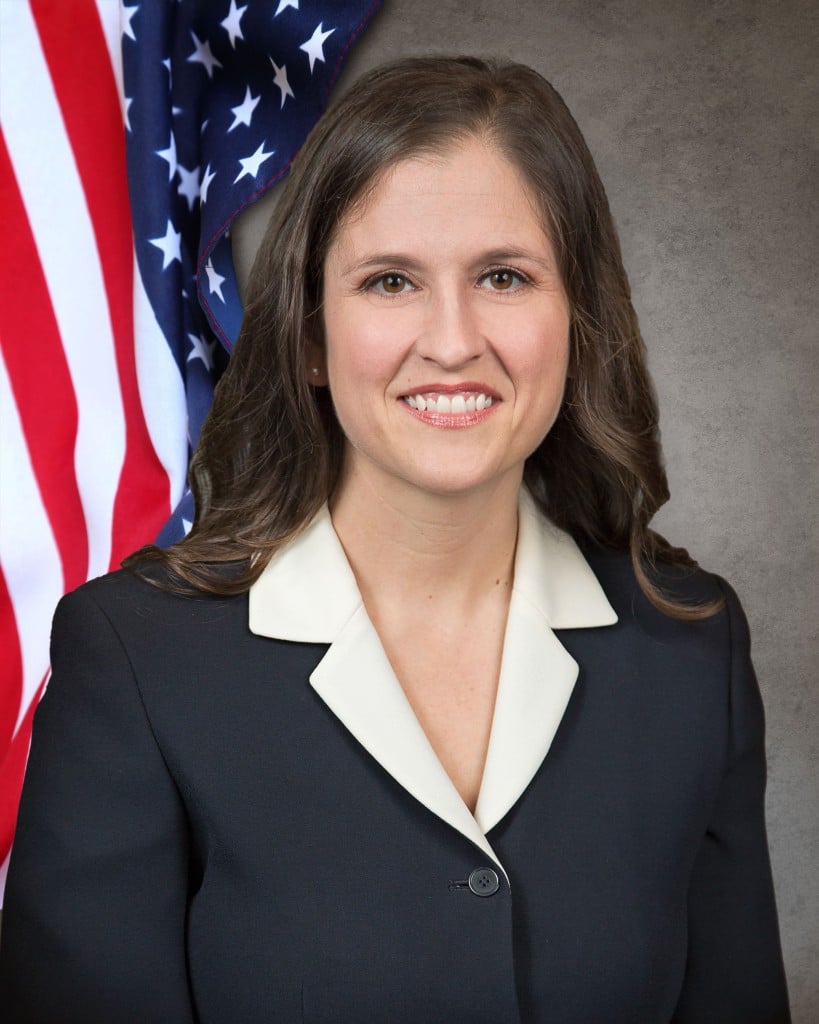
Megan Sladek is a 44-year-old lifelong Oviedo resident running for reelection for Mayor of Oviedo. She served a full two-year term on City Council until she began serving as mayor in 2019.
Sladek holds a law degree from the University of Florida, and a bachelor’s from the University of Notre Dame. She is the owner of Wolfshead Real Estate LLC, executive director of the Oviedo Preservation Project, owner and broker of the consulting company Sun Florida Realty, a current member of the American Legion Memorial Post 243, a Leadership Seminole board member, an Oviedo Historical Society member and a Children’s Ministry Volunteer and substitute Sunday School Teacher at CrossLife Church.
Sladek lives in the former Lake Charm Memorial Chapel, which is the oldest still-existing structure in Oviedo, with her husband and three children.
Her platform includes being fair, environmentally conservative, treating everyone equally and respectfully, and letting the private sector do its job. Sladek is also an open supporter of preserving the rural boundary.
Sladek has raised $9,313 in campaign contributions, with donors consisting mostly of local individuals. Her listed campaign expenditures total $2,419. Learn more.
Judith Dolores Smith

Judith Dolores Smith is a 69-year-old third generation Oviedo resident running for Mayor of Oviedo. She served one term as Oviedo City Council Group I member from 2019-2021.
Smith is a published author of several books, including “Home, a Journal of a First Trip to Israel.” She says she was also the former owner of multiple businesses, such as a bakery and a publishing company, and had a past career in social services and mental health. She is also board president of the Historic Oviedo Colored Schools Museum.
She graduated from Lincoln Memorial University, located in Harrogate, Tenn., with a bachelor’s degree in psychology and a minor in Spanish. Smith lives with her husband, John, in their home behind the house that Smith grew up in near East Broadway Street, on the same property her parents bought in 1959.
Smith’s motto for her campaign is “Changing the Conversation.” She said she believes that by asking the right questions we will get the right answers; to bring Oviedo into its next phase. Smith said she brought change to the community when she served on the Oviedo City Council, by working with Friends of Lake Jesup to help clean and restore Lake Jesup.
Smith has raised $300 in campaign contributions, all of which she contributed herself. Her campaign expenditures total $0. Learn more.
Candidate Q&A
Growth, development and the environment
In OCN’s survey for this voter guide, more than 40% of OCN readers identified growth and development as a local issue that matters most to them. Almost a quarter identified environmental preservation, including the protection of local wildlife, natural space and waterways, as their top local concern.
What do you think constitutes controlled or smart growth for Oviedo? [Smart growth, as defined by the Cambridge Dictionary, is directed at developing sustainable communities that are good places to live, to do business, to work, and to raise families.]
Judith Dolores Smith: Let’s Change the Conversation = LCTC. First of all, how do we define “smart growth” and how do we measure its success? One component of “smart growth” is affordable and workforce housing. We will need to constantly review and update zoning.
Megan Sladek: Coming up with a long-range plan in collaboration with residents and not deviating from it. We adopted such a plan in 2022, and I will go toe-to-toe with any developer who shows up trying to put apartments on that land on Mitchell Hammock [Road] designated as agricultural. It’s a fight we won before, and it’s a fight we can win again.
For incumbents, please describe any previous work on the City Council you’ve done that you think promotes smart or controlled growth. For those without previous Council experience, please describe any work you’ve done as a citizen in this vein.
MS: I refused to support Comprehensive Plan changes unless they resulted in less traffic and less paved surface than was allowed under the original comp plan designation and consistently opposed giving developers/owners additional building rights outside of residents of Oviedo getting a solid, quantifiable benefit (less pavement/less traffic). I also helped jump-start Oviedo’s implementation of a Mobility Plan, which will open up funding opportunities no longer available to cities aiming to move just cars.
JDS: LCTC. How do we build a “smart community” with limited automobile usage in an established community? It will be difficult in the short term. If it were easy, it would have been done already. While on [the Oviedo] City Council [from 2019-2021], we discussed various ways to limit automobile usage within the city. There were various reports presented and discussions on how to establish “connectivity” within the city moving forward.
Please describe what you plan to do on the City Council, if elected, to promote controlled or smart growth.
JDS: LCTC. What is realistically available to the office of mayor to promote “smart growth” as defined by our community? “Smart growth” consists of a number of components; hence, we need to have a specific goal in mind, so that we know how long it would take and how to measure success. The discussion of growth of the city is handled primarily by input from the citizens. Let’s not reinvent the wheel; hence, we should be open to input from consultants who have experience in other similar cities with respect to “smart growth.” We need to review zoning constantly to encourage “smart growth.”
MS: Follow the Comp Plan and advocate to keep impact fees as high as the math can justify. These are just about the only legal tools the state has allowed cities to retain to fight/shape development. I’m also looking forward to seeing Oviedo’s Mobility Plan be implemented, as I think it will encourage private investment in more environmentally-friendly buildings.
Please describe any work you plan to do, if elected, that will promote environmental preservation.
MS: I still like the idea of cluster zoning and support allowing people to build up rather than out. It is a more expensive thing to do, but it results in needing to clear-cut less space. Whether this could be codified in the Land Development Code is something that the mayor cannot do alone. Two Council members would have to agree to add this as a rule. Forcing people to go vertical is the only way to decrease the amount of clear-cutting without triggering property rights violations. I would also like to incorporate incentives to use more pervious materials in parking lots and green roofs.
JDS: LCTC. How will the citizens be encouraged to contribute toward maintaining a healthy ecological community? Continue to encourage the work of the Friends of Lake Jesup. The algae collecting project may increase or expand the commercial viability of algae. Educate citizens on resources available to us, such as the University of Florida’s Institute of Food and Agricultural Sciences (UF/IFAS) Seminole County Extension Office. We should plant additional trees. We should promote drought-tolerant grass.
Explain how the city’s resources, such as police, fire and public utility personnel and capital infrastructure, such as equipment, will keep pace with development and population growth.
JDS: LCTC. Will development help fuel the revenues that will be needed to adequately handle public safety and provide for maintaining and caring for our infrastructure? We should create an environment that promotes new ideas being shared to the Council members. We should maintain an open dialogue with staff at all levels to be able to suggest the best equipment to do the job. Whenever possible, we should have private companies invest in infrastructure as part of an expansion of their project.
MS: Oviedo’s water, sewer, and stormwater utilities are stand-alone enterprise funds. This means we do the math and charge rates that cover the cost to provide service, including equipment replacement. On police and fire, as the tax base grows, so will the amount we bring in to fund them. Our challenge is not so much inability to fund the people and equipment, it is the spaces these first responders will occupy. We will have to get creative to fund any expansions.
Traffic, transportation and roadway conditions
Nearly 30% of readers who responded to OCN’s voter guide survey said issues surrounding traffic in the city was their top local priority.
If elected, what would you do to ease traffic congestion in Oviedo?
MS: Encourage people to get out of their cars for short trips – 19% of trips in Oviedo are 2 miles or less. It is politically impossible to raise taxes as high as they would need to go to attempt to build our way out of traffic. Because no one wants to lose their cul-de-sac and create a grid, almost the entire city, by design, is forced onto chokepoint roads (Lockwood Boulevard, County Road 419, Mitchell Hammock Road) at rush hour. There is no cure for rush hour. But we can make it easier to get around other times and outside of a car.
JDS: LCTC. How do we allow for traffic that will support local businesses while helping the citizens to navigate our roads until current road projects come online? We should encourage roundabouts when possible, work closely with the county and the state, encourage carpooling and encourage working from home.
Multiple residents asked about what can be done to fix potholes and other deterioration in Oviedo’s roads in OCN’s voter guide survey. Do you think the quality and maintenance of Oviedo roads is an issue and, if so, what would you do, as a member of City Council, to better maintain them?
JDS: LCTC. Are our roads being maintained sufficiently? Currently there is a system in place to gauge how and when roads are maintained. The Oviedo Public Works staff does an adequate job with the resources that they have available to them. A reporting system would be maintained to prioritize repairs.
MS: Anything can be fixed with more money, and this budget cycle, City Council approved the addition of a four-person road and sidewalk crew. I’m hopeful this will help us knock out the backlog. That being said, Oviedo owns 318 lane miles of roads and hundreds of miles of sidewalks alongside tree-lined streets. Trees break sidewalks and roads. Public Works already maintains a solid list of the condition of all roads and paves in order of where the need is greatest. The reality is we cannot do more without more funding.
Are you planning to do any work, if elected to Council, to enhance public transportation options in Oviedo, such as bus service? If so, what do you think needs to be done?
MS: No. Lynx already goes door to door for the Oviedo residents who need it, and there is minimal demand for more service. [According to LYNX, a pilot program offering service to Oviedo was scrubbed due to low demand]. Oviedo spans 16 square miles and is so spread out with people going so many different directions, it is not economically sensible for regular bus service to attempt to operate here. I believe it would be a waste to spend Oviedo tax dollars on this. I do think it may become feasible for UCF/Seminole State to run shuttles from central stops in our more populated areas, and I would encourage those institutions to invest in that.
JDS: LCTC. How can we highlight various transportation options? In approximately 2009, the city subsidized bus transportation with LYNX. The buses ran empty many times. [According to LYNX, a pilot program offering service to Oviedo was scrubbed due to low demand]. LYNX went to a “will-call” option where citizens can call for at-home pickup. This seems to be a more viable option for this point in time. Call 407-841-LYNX (5969). Uber, taxis, and medical transportation systems are available. Wal-Mart just opened medical services in some of their stores. Transportation is an option. Encourage electric bicycles.
Several survey respondents asked how the city can become more friendly to walking and biking. Can you explain what you would do on Council to make the city more friendly to this type of transportation?
JDS: LCTC. How do we make traveling within the city safer? Sidewalks are being added while the roads are being upgraded. [Editor’s note: For details on this, click here and watch at the 1:50 mark].
MS: Implement our Mobility Plan. Oviedo has plans to address the sidewalk gaps and safety issues with walking and biking. We just need to follow that plan. In the meantime, I’ll keep biking in the road when there is no safe alternative. The Mobility Plan also envisions making it possible for people to use other modes of transportation, like scooters, golf carts, and low speed vehicles. Those motorized alternatives will take longer, as they are not permissible on narrow sidewalks designed for pedestrians.
Seminole County grades its roads’ capacity on a daily basis, meaning that it looks at total daily traffic numbers on the roads, not the number at peak traffic times, to determine if they’re at capacity. This is why most roads still show they have capacity for growth even though motorists experience congestion during their morning and afternoon commutes. The city uses the county’s road grades because otherwise it would have to pay to collect the traffic information itself, which would be a considerable expense, city staff has said. What is your opinion of this system? Do you believe that this is something that should be addressed by City Council? If so, how do you think it needs to be addressed? If not, why?
MS: Road grades do not indicate the economic success of an area; they show the speed with which people can cut through an area. I don’t put much stock in them. And there is no cure for rush hour traffic when we’ve already developed most of the city as dead-end subdivisions with one entrance that forces 100% of the neighborhood traffic to use a single road to reach the highway. We are better off spending any extra funding we can find on common-sense traffic solutions than quantifying the problem in a new/meaningless way.
JDS: LCTC. How do we define the problem of capacity and does it make a difference as to who measures it? Define the problem and what the objective is. How do we define success? The current system that we have is adequate for our needs in quantifying road capacity.
What can you do as a member of Council to ensure that other city infrastructure is in place ahead of development?
JDS: LCTC. Can infrastructure be put in place prior to development? Each project considered by the city has a development review process to ensure that proper infrastructure is in place prior to development.
MS: Legally, not much. The reason why is state law prohibits cities from saying “no” to projects based on infrastructure not being there yet. Aside from water, sewer, stormwater, and trash hauling, the state says we must accept impact fees instead of actual concurrency of infrastructure, which means we are legally required by the state to let the development continue even with roads and other “non-essential” infrastructure not up to par. The only thing we can do is make sure the impact fees are as high as the math can justify, and I support doing that.
Housing
If elected, would you make affordable/workforce housing a priority? If so, please explain how.
MS: Outside of honoring the Comp Plan and state law (which allows for apartments to be built in many places in Oviedo), no. I advocated to change the Comp Plan so affordable housing could be legally feasible in more places around town, but that went over like a lead balloon. I accept that I lost the vote. Oviedo does not have spare funding to subsidize housing. In my private capacity, I will continue to support the work of organizations like HOPE Helps, Rescue Outreach Mission, and the Sharing Center, all who work with people struggling to find affordable housing.
JDS: LCTC. How can citizens afford housing in the current market? This is an issue that must be addressed by all levels of government together: City, county, state, and federal. Promote an environment whereby high-paying businesses come to the area to promote educational programs that correspond to high-paying jobs. Governor Ron DeSantis signed a workforce housing bill in March 2023.
What are your views on building high-density apartment buildings along major traffic areas?
JDS: LCTC. How do we generate revenue that will help to maintain our infrastructure? No one is in favor of clogged roads. However, this is primarily a zoning issue.
MS: It’s better to build apartments along state and county roads than along city-owned, city-maintained roads, as that keeps traffic out of our local neighborhoods and road maintenance falls to not-the-city. Under Florida law, we have to honor all the property rights already doled out, and additional apartments were approved before I was even elected mayor. We can’t take back the rights previously doled out.
Taxes
Several survey respondents submitted questions concerning Oviedo’s tax rate.
If elected, what would you do, if anything, to cut costs in the city in an effort to reduce taxes? What would you do, if anything, to generate more revenue in the city to avoid raising taxes?
MS: Every year, I try to save taxpayers money by eliminating the City’s federal-level lobbyist, and every year I get outvoted. While I believe there is waste in the budget that could be cut, one man’s trash is another man’s treasure. I do not think it is possible to reduce the tax rate and maintain the level of service we are used to unless we play accounting games and replace taxes with fees. I remain open to cost-saving measures like collaborating with the county and private sector when doing so can provide the same or better service at a lower cost.
JDS: LCTC. Because living in our city is an investment, how do we take care of this investment wisely and with accountability? We should aim to attract and maintain business growth. Taxes (residential, businesses, fees, etc.) are revenue that allows the city to operate. Continue to support and encourage the excellent job that our finance department and department heads have been doing in monitoring their budgets.
Your experience
How long have you lived in Oviedo?
JDS: My maternal grandfather moved to Oviedo circa 1900. I graduated high school from Oviedo High School. I went away to college, returned, moved away with my husband, and returned in 1985. I currently live here.
MS: I’ve been a resident of Oviedo my entire life, though I did spend 8 years in other places while a student (Indiana, India, Boston, and Gainesville).
Please list any volunteer work you’ve done in the City of Oviedo.
MS:
- Oviedo Cemetery Tour script writer/actor for The Oviedo Preservation Project
- Concession stand volunteer at Oviedo High School
- Volunteer at HOPE Help’s Sham Rock’n Run 5K for at least five years
- Pick up litter as I’m walking along local roads
- Organize community clean-ups
- Helped put on Great Day in the Country with the Oviedo Woman’s Club
- Past Oviedo Woman’s Club vice president and member (2004-2014)
- Oviedo-Winter Springs Regional Chamber of Commerce Taste of Oviedo Committee and Cook-Off Chairman (2006-2018)
- Early Childhood Center (ECC) Board Member (2007-2008)
- First United Methodist Church of Oviedo Board of Trustees (2006-2008)
JDS:
- Oviedo Citizens in Action member (approximately 2005-2008)
- Secretary Trinity Care Ministry treasurer (approximately 1995-2020)
- Historic Oviedo Colored Schools Museum, Inc. President (2018-present)
- WMFE Reading Service (2001-2008)
- The National Federation of the Blind (1988-2008)
- The World Outside Reunion Committee historian (2000-now)
Please list any local municipal boards or committees that you’ve served on.
JDS:
- Oviedo City Council Group 1 seat (2019-2021)
- Served on Oviedo Citizens in Action’ committee to plan for the new downtown (Oviedo On the Park)
MS:
- Charter Review Committee (2005)
- Member of Oviedo City Council (2016-2018)
- Oviedo Mayor (2019-present)