Citizens who stay informed can take the proper precautions to avoid potentially ingesting germs in their tap water.
With precautionary boil water notices (PBWNs) on the rise in Winter Springs, here is a breakdown about what residents should keep in mind regarding the safety of their water.
“I want to first clarify that boil water notices are ‘precautionary boil water notices,’ which in itself means it is a precautionary approach to protecting public health,” Scott Richards, infrastructure design manager and vice president of water engineering firm Carollo Engineers, said in an email to OCN. “This means there is a possibility that outside untreated water has entered the potable water pipe.”
Carollo Engineers is a contracting firm that handles Winter Springs’ water systems engineering and aspects of its maintenance and repair.
Editor’s note: OCN understands that a boil water notice can mean a lot of work for a household. If you have a tip on how to make dealing with a boil water notice more manageable or have a story you’d like to share concerning your own experience with a boil water notice, share it here.
What is a PBWN?
A PBWN is issued to inform citizens of unsafe water conditions caused by contamination, flooding from unsealed wells, scheduled outage for repairs, or loss of water pressure due to broken water pipes, or negative pressure.
The City of Winter Springs released this informational video to further inform citizens.
“Please note there are a variety of reasons for the system breaks, and each of the recent breaks have occurred for different reasons, varying from nearby structures inducing a failure, to fiber contractors drilling through the pipe,” Bilal Iftikhar, Winter Springs’ director of utilities, said via email.
The city is required by law to issue PBWNs to inform affected citizens of possible unsafe water conditions in their areas. The Winter Springs Public Works and Utilities Department publishes PBWNs on their webpage, and posts press releases with updates to affected areas. If the number of affected citizens is limited, the city hangs a printed notice on each door of individual households or businesses. In addition, residents can sign up for e-Alerts to be notified, or receive an automated phone call if their phone number is on file with the Utilities Customer Service Department.

PBWNs are lifted once the required testing proves the water is safe. The water samples are taken by the city’s water utility and sent to an independent laboratory for testing. According to the Florida Department of Health, a minimum of one bacteriological sample is taken upstream and downstream of the affected area for two consecutive days. If no bacteria is found, the notice can be lifted after one day of receiving passing results. If a sample contains bacteria, two consecutive days of passing results are required to lift the notice.
Why are there multiple PBWN being issued?
One of the biggest reasons for PBWNs is aging infrastructure.
“Some of our pipes are from the ’80s, some are a little older. It’s just as certain types of pipes age, they can get brittle or get a little weaker,” Reeser said.
The types of pipes used in water utilities differ depending on what decade they were installed. Two of the most commonly used are PVC (plastic) or DIP (iron). Each type is prone to failure, such as cracking or corrosion, but often “external influences” are the cause. Soil conditions contribute to the breakage of older pipes, according to Reeser, as wet sand or soil is susceptible to compression, causing the pipes to break. Buried pipelines are designed to expect “loading” from passing vehicles. However, if the loads are heavier than anticipated, or the soil is wet when the loading occurs, the pipes are more prone to breakage.
“If somebody decides they’re going to park on the side of the road and they park on top of one of the mains, they can compress that sand depending on how wet it is. That can put some pressure on a pipe if it’s already under stress. That can cause breaks,” Reeser said.
Other factors that contribute toward pipe breakage and low pressure include:
- Shifting of utility and gas lines
- Uprooting of trees and roads during storms
- Erosion of stormwater systems
- Construction
As of Nov. 29, there have been 18 PBWNs issued in Winter Springs this year. According to Reeser, about half were issued due to outside contractors breaking lines while installing fiber optics. Of the four most recent notices, three were caused by fiber optic installation companies damaging water infrastructure, according to the city.
“From my first-hand experience with the city, I will note that the past year has been challenging,” Richards said. “In particular with the impacts of Hurricane Ian in 2022, where winds and flooding led to multiple water main breaks. More recently, the majority of the boil water notices have been a result of fiber optic contractors drilling through existing water mains. With increased hurricanes, growth and construction in Florida, many utilities around the state are facing similar challenges.”

Current State of city’s infrastructure
In May of last year the Winter Springs City Commission adopted a new wastewater plan to address its aging infrastructure. As part of the city’s updated Capital Improvement Program for utilities, multiple systems will be improved, including the two new wastewater treatment plants, as well as valve and water main replacements.
“Our goal is to begin a citywide look at the potable water system assets, including a valve assessment program and pipeline prioritization for future repair and replacement,” Iftikhar said.
The plan involves more than 150 miles of water main, and will take time and money to complete. From now until 2029, the projects are estimated to cost about $166 million. Because funds are limited, repairs and replacements will be strategically done annually by importance. Until further funding is found, the city will focus on the potable distribution system in 2024, as nearly $16 million is expected to be spent that year.
“Certain materials and eras of construction are more vulnerable than others,” Iftikhar said. We are aware of areas of the system which have pipe material which is more prone to breaks and we are focusing on these areas.”
What to do when a PBWN is in affect
According to the Centers for Disease Control, a one-minute rolling boil will neutralize drinking water contaminants, making it safe for consumption.
Boiled or bottled water should be used for drinking, cooking, making ice, and brushing teeth, to prevent ingesting possible contaminants. Food and drink preparation, such as rinsing vegetables or fruits, and making coffee and tea are included.
Where is the water sourced?
The City of Winter Springs’ water is sourced from the Floridan Aquifer System, the state’s major groundwater supply. According to the city’s annual drinking water report, the aquifer covers about 100,000 square miles of the southeastern U.S., including parts of Alabama, Mississippi, Georgia, and South Carolina.
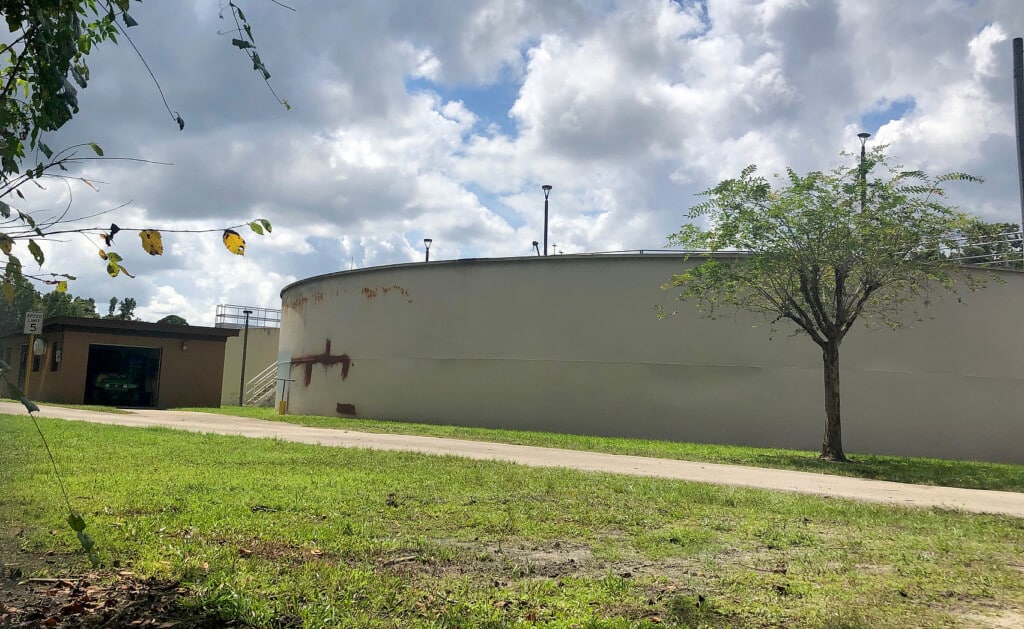
Winter Springs’ water is supplied through eight groundwater wells to three local water treatment plants located along Northern Way near Trotwood Park, Sheoah Boulevard behind the Highlands tennis courts, and at the corner of Bahama Road and Edgemon Avenue.
There are about 244 miles of pipeline that transports potable water throughout the city.
Latest assessment of water quality
The Florida Department of Environmental Protection (FDEP) sets laws that provide a guideline to protect and maintain the quality of the state’s water. Through their Source Water Assessment and Protection Program (SWAPP), they aim to ensure that the source of cities’ water is safe to consume.
Last year, the FDEP conducted a Source Water Assessment in Winter Springs. This annual report documents the search for any possible sources of contamination in or near any of the city’s groundwater supply wells. According to the report, the drinking water produced by the city from Jan. 1, 2022 to Dec. 31, 2022, met or exceeded all water quality regulations on both the federal and state level.
Of the 12 categories of contaminants, only one category – color – violated the maximum contaminant level. As stated in the report, the maximum contaminant level goal was 15 color units, and 17 color units were detected.
“Color, as a secondary contaminant, does not present a danger when measured at elevated levels,” Richards said. “In this scenario, the water was tested for and passed all other standards. This result was an anomaly compared to other color samples taken at this location, as all other ‘routine testing’ met the requirements.”
Because color is a secondary contaminant, it is an aesthetic violation since it is not considered to have major health effects, according to the report. Secondary contaminant samples are taken every three years. The sample included in the report was taken in February of 2020, while the latest sample was taken in January of 2023, and will be included in the 2023 report released in January of next year.
“These tests were completed, again, early in 2023. These results will be posted in the water quality report next year, but I will note that all values, primary and secondary, passed,” Richards said.
Generally, a change in color does not result in a boil water notice being issued, according to Richards. When reported, the city will investigate the area with the DEP referencing system data, and figure out if a PBWN is necessary. One of the most common causes of color changing is after an accumulation of naturally occurring elements in the water, such as iron.
“If a homeowner experiences color in their water, we (the city and engineers) want to know,” Richards said. “We sometimes ‘hear of’ these items, but unless these are formally reported/documented with the city, we cannot properly gather information and determine the cause.”
More information
If you have any questions or concerns regarding your water utilities, or want more information regarding PBWNs, you can contact Winter Springs’ Utilities Customer Service at 407-327-1800. Also check the FDEP’s guide to boil water notices.
Editor’s note: OCN understands that a boil water notice can mean a lot of work for a household. If you have a tip on how to make dealing with a boil water notice more manageable or have a story you’d like to share concerning your own experience with a boil water notice, share it here.
Sorry for the interruption but please take 1 minute to read this. The news depends on it.
Did you know each article on Oviedo Community News takes anywhere from 10-15 hours to produce and edit and costs between $325 and $600? Your support makes it possible.
We believe that access to local news is a right, not a privilege, which is why our journalism is free for everyone. But we rely on readers like you to keep this work going. Your contribution keeps us independent and dedicated to our community.
If you believe in the value of local journalism, please make a tax-deductible contribution today or choose a monthly gift to help us plan for the future.
Thank you for supporting Oviedo Community News!
With gratitude,
Megan Stokes, OCN editor-in-chief
Thank you for reading! Before you go...
We are interested about hearing news in our community! Let us know what's happening!
Share a story!