
Winter Springs enters ICE task force agreement, with reservations
After Fort Myers faced punishments after refusing to sign an ICE agreement, Winter Springs agrees. It “doesn’t sound very optional,” a commissioner said.
In a move following most of the state, the Winter Springs City Commission approved an agreement allowing local police to work with the federal government in enforcing immigration laws during its meeting on April 15. But that wasn’t without debate about letting ICE into the city.
The agreement, referred to as the 287(g) program, was originally included in the consent agenda but was pulled by Commissioner Sarah Baker who led the discussion while directing questions to Winter Springs Chief of Police Matt Tracht.
According to the U.S. Immigration and Customs Enforcement (ICE) website, the 287(g) program’s task force model, that the city has now agreed to, “serves as a force multiplier for law enforcement agencies to enforce limited immigration authority with ICE oversight during their routine police duties.”
Baker said she had “deep concerns” regarding the city’s police department with ICE initiatives that felt politically motivated and didn’t align with the “basic freedoms of the melting pot of America and in Winter Springs.”
“It would be a very slippery slope that starts here, but leads to excessive and unnecessary detentions disproportionately affecting people of color,” Baker said.
“…It’s my concern that the rights of municipalities are being taken away for political gain, and in a challenging political climate when we are already seeing great division. The people who will suffer the most from this political stunt are the people who live and work in our community, by creating distrust and more division. We don’t want to be afraid of our neighbors.”
In the wake of a mistaken deportation of a Maryland man to an El Salvadorian prison by ICE agents, Baker said she also had concern over the agreement giving local police the power and authority to “interrogate any alien or person believed to be an alien.”
She questioned how the task force model would be different to what the police department is already required to do when encountering someone with a standing warrant or who’ve committed a crime and “might not have the proper paperwork.”
Tracht said some of Baker’s concerns were valid, calling the agreement a “hot topic” around the state. He said previously, most immigration status related encounters have taken place during traffic stops and violations, and that the department’s current policies involved contacting ICE directly in those cases.
But in his nearly 30 years with the department, he said there have been about 12 encounters where ICE told officers to let immigrants with no local charges go because immigration enforcement simply “couldn’t get there.”
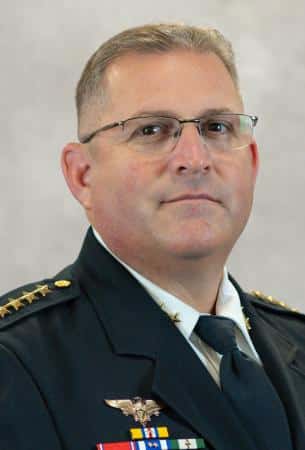
“But to your question, regardless of current immigration status, if a subject is arrested for a crime and they are an immigrant, that notification is made at the jail to jail level,” Tracht said. “We don’t have any authority to enforce federal laws or anything like that.”
He said the agreement allows police departments to designate specific officers to go through 40 hours of ICE training and would then allow them to, in the case of a person who has a civil ICE warrant, take them into custody and transport them to jail.
Tracht said he has not yet decided the numbers of officers that will be designated for the ICE training.
According to the Winter Springs 2024 annual police report, the city had a total of 47 employed officers, not counting leadership positions.
“This is not a search and seek for immigration violations in our city,” Tracht said. “Luckily, our city does not have an immigration problem … The intent of this was to target the violent offenders that are here illegally and have already committed crimes that the nation knows about.”
Community impacts
Baker also addressed how the task force program could potentially foster environments that increase racial profiling from law enforcement agents, drawing attention to how local Latino and Black communities might feel “stressed” about the possibility.
Tracht assured any kind of racial profiling will not be tolerated, before adding that the department has strict policies in place to prevent such instances from occurring.
“We’ve been an accredited agency for over 23 years,” Tracht said. “We take great pride in that, and we are held to these strict policies … Quite frankly, we’re such a small agency that we have a leadership culture that will know when this is going on, if this was to go on, the span of control of our officers under leadership is pretty tight, and it just wouldn’t be tolerated.”
He added that availability of any officer trained for the ICE task force would also play a role in the department’s efforts and that his intent is not to “search for immigrants.”
“If I only select one officer to the police department to be my ICE representative, and they’re not available, we move on,” Tracht said. “Other agencies are training how many they want. That’s up to them, but I don’t want to fill the police department full of ICE agents. That’s not my goal.”
Baker also questioned if it was necessary to enter into an agreement when the Seminole County Sheriff’s office already had, as Winter Springs does not operate a detention facility, while Seminole County does.
“We all are responsible for policing our own communities,” Tracht said. “If the situation arose and I needed to get the sheriff’s department in here, we could do that. But we are merely — you can call it kind of like an Uber driver for ICE.”
When questioned by Baker as to how to address residents’ fear of officers entering schools, churches or “other places considered safe,” Tracht said he wouldn’t allow that to happen.
“It’s taken over three decades to build the trust that the community has in us now, and that’s not something I’m willing to give up,” Tracht said.
“You start doing things like this, then you lose the community’s trust, and I’m not willing to put my name and my integrity on the line for that,” Tracht added. “Once we lose that, it’s very, very difficult to get back.”
ICE agreements already in place across Central Florida
Baker later drew attention to a situation last month in which the Fort Myers City Council unanimously passed its own agreement with ICE after it had originally failed to approve the measure and were met with threats of suspension and pulled funding from state officials.
“Fort Myers voted against this, and they had internal investigations opened on all of the commissioners that voted against it, and there were threats of losing appropriations … so that doesn’t sound very optional to me,” Baker said.
Tracht said Baker was correct and that an investigation was going to be led by the Attorney General’s office but had since been called off following the revote.
In addition to all 67 county sheriffs in the state, municipalities that have already signed the agreement include Oviedo, Sanford and Longwood, while others like Cassellberry and Lake Mary are still pending approval, Tracht said.
Following Baker’s questions, Mayor Kevin McCann asked if there was any impression the city had a choice in if it complied or not.
“We have $100 million in state revolving funds that we will be relying on,” McCann said. “We have a lot of other things that we will be relying on. We must work together with the state.”
“It puts us in a very tricky position,” Baker said.
“We do not have a choice here, folks,” McCann said.
A motion was made to approve by Deputy Mayor Cade Resnick, seconded by Commissioner Mark Caruso. The agreement was approved 4-1, with only Baker dissenting.
During public input, Winter Springs resident Joan Jansen commended Baker for her questions regarding the task force before expressing her disappointment that the majority of the commission had agreed to sign the agreement.
“Administrations come and go,” Jansen said. “Pressure can be applied from all kinds of places, to all kinds of places. The Commission will be pressured, you individually may be pressured, the police department gets pressured. Individual policemen get pressured … I think it’s always most important to do the right thing.”
Want to contact your elected leaders and weigh in on this topic? Find their contact information here. Have a news tip or opinion to share with OCN? Do that here.
Sorry for the interruption but please take 1 minute to read this. The news depends on it.
Did you know each article on Oviedo Community News takes anywhere from 10-15 hours to produce and edit and costs between $325 and $600? Your support makes it possible.
We believe that access to local news is a right, not a privilege, which is why our journalism is free for everyone. But we rely on readers like you to keep this work going. Your contribution keeps us independent and dedicated to our community.
If you believe in the value of local journalism, please make a tax-deductible contribution today or choose a monthly gift to help us plan for the future.
Thank you for supporting Oviedo Community News!
With gratitude,
Megan Stokes, OCN editor-in-chief
Thank you for reading! Before you go...
We are interested about hearing news in our community! Let us know what's happening!
Share a story!
Author

Related Articles

Questions raised about Winter Springs commissioners’ spending at hotel
A Winter Springs advocacy group wants to see receipts after purchases by commissioners on city-issued cards at an Orlando hotel.
Seminole County’s rural boundary survives the 2026 Legislative Session
A bill that would have granted near-automatic development rights in parts of rural areas failed in the Florida Senate’s final day.

Oviedo celebrates St. Patrick’s Day with a 5K and a street party
St. Patrick’s Day weekend in Oviedo started off with a bang at the HOPE Helps Sham Rock N Run 5K Saturday morning, then a big celebration in the evening.