It might get less expensive to put a tiny house in your backyard in Oviedo, but other costs could be rising dramatically over the next 10 years as the city deals with growth through one of its few remaining development braking mechanisms: impact fees.
Before passing a vote on first reading to increase the city’s impact fees, the Oviedo City Council last week heard the results of a study to figure out how much the city could expect its needs to increase, from new fire stations to more parks, more police officers and more maintenance as the city expects to absorb another 5,640 residents in the next 10 years.
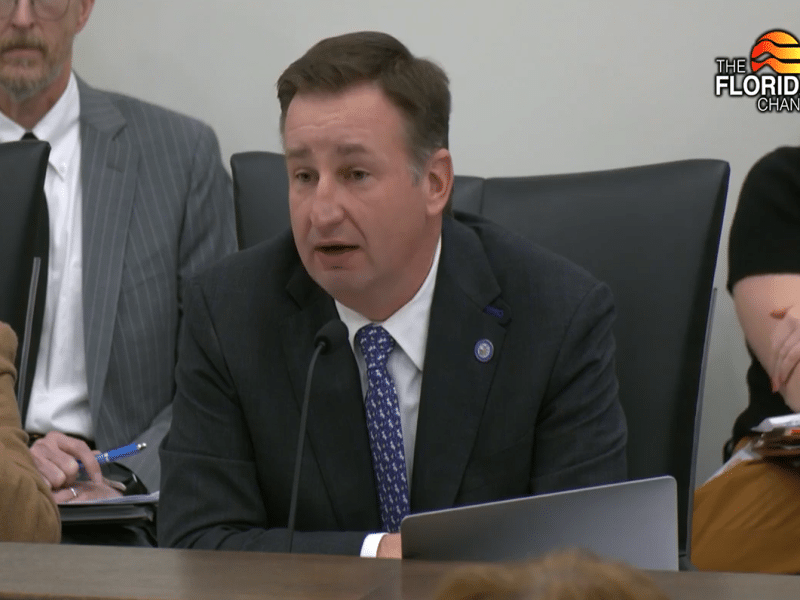
That’s the growth number Jonathan Paul of Nue Urban Concepts – the planning firm hired by the city to study and plan impact fees – said Oviedo should expect in that span. And with that come a slew of issues the city expects to confront, he said, including $10 million needed for another fire station and more than $10.2 million for parks and recreation.
“There’s significant growth being proposed within the city of Oviedo,” Paul said.
Residents can voice their concerns about the changes, scheduled to be voted on at a second and final reading of the ordinance at the city’s next scheduled regular Council meeting at 6:30 p.m. on Monday, Dec. 1.
Want to contact your elected leaders and weigh in on this topic? Find their contact information here. Have a news tip or opinion to share with OCN? Do that here.
That includes an estimated nearly 5,000 more people who will work in Oviedo in 2035 who don’t work there now.
Looking ahead: only 335 more residents expected to live and work in Oviedo
In that calculation only 335 of the nearly 5,000 new workers were expected to also live in Oviedo, which would be at odds with one of the city’s goals expressed in the 2045 mobility plan.The mobility plan outlined a denser, more pedestrian and micromobility-friendly downtown core to reduce traffic.
“The idea is to shorten distances and promote a safe route for residents to commute in ways other than driving,” Oviedo Development Service Director Teresa Correa told Oviedo Community News in October about Oviedo’s plans for increased connectivity and micromobility in certain parts of the city.
Micromobility, according to the Federal Highway Administration, is “Any small, low-speed, human or electric-powered transportation device, including bicycles, scooters, electric-assist bicycles (e-bikes), electric scooters (e-scooters), and other small, lightweight, wheeled conveyances.” In short: any transportation that removes commuters from roads.
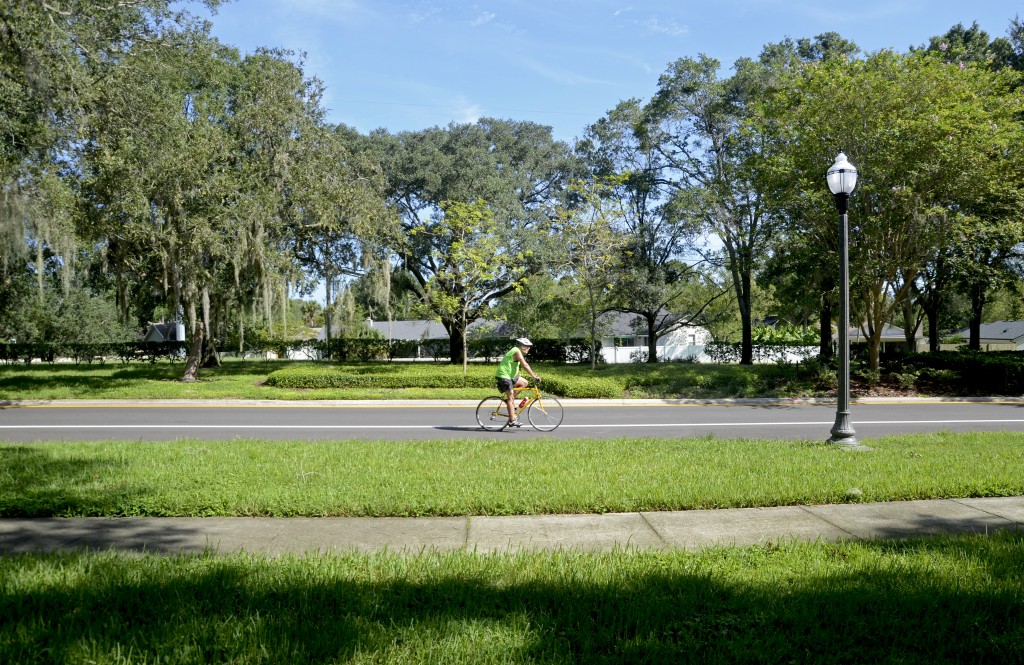
And just like with new roads, those trails and pathways to accommodate new residents and workers cost the city money. And that’s where impact fees come in.
Who pays for more development?
The city’s goal, Paul said, is for fees to continue to increase on new developments to avoid charging existing residents more for services needed by new residents growing the city. Impact fees accomplish that by charging developers for each residence they build, helping to pay for the cost of additional city services.
“This is something that new development only pays for,” Paul said. “These are not taxes on existing residents. These are not assessments on existing residents. If you are building a brand new home in Oviedo and you come in for a building permit…then you would essentially pay these fees.”
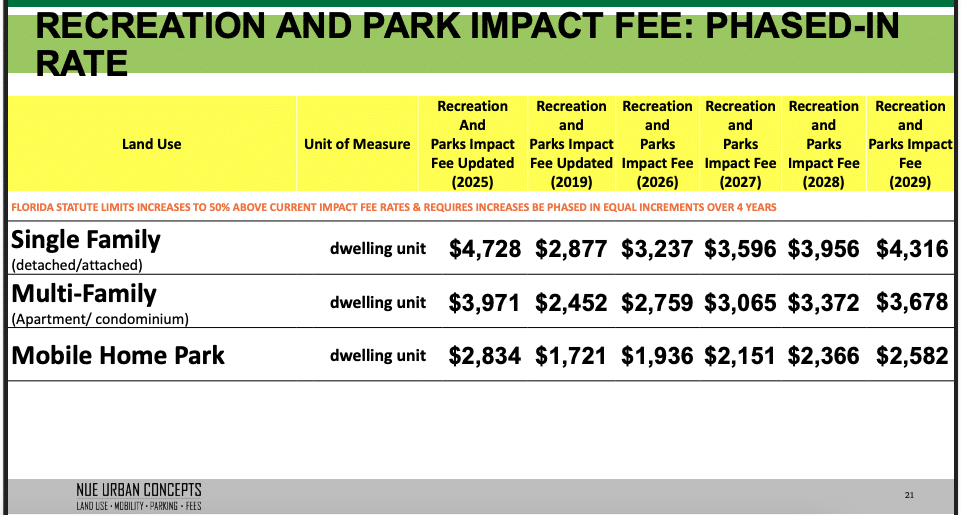
Currently the impact fee is $1,721 for a mobile home, $2,452 for an apartment or condominium, and $2,877 for a single-family home. The more a city can charge, the more it can use to keep pace with growth, Mayor Megan Sladek said. The proposed increase would put fees by 2029 at $2,582 for a mobile home, $3,678 for an apartment or condominium, and $4,316 for a single-family home.
But Oviedo may be getting outrun by the expected growth rate.
State law holds city back from charging new developments more
The city is estimated to need another 49 employees by 2035 due to growth.
Oviedo pays for city services through a combination of taxes and fees ranging from property taxes to usage fees such as water bills. But to pay for development and growth, which requires more services from police, fire, parks and recreation, infrastructure and more, the city attempts to recoup that growth through fees to developers.
“What we’re talking about here is the thing that everybody says we want to do and that is charge new people for all the problems we have,” Sladek said.
But that’s been held back by a state law that only allows cities to raise fees at a certain pace, Sladek said.
A law that the Florida Legislature passed earlier this year drew criticism from Democratic lawmakers for causing more confusion in the process for how cities update and handle regulating development.
“In the past five years, the state has changed the statute concerning impact fees five times,” FL Sen. Darryl Rouson said in April, as reported in Florida Politics. The most recent change, SB 1080, makes cities have to gradually raise impact fees to developers and it can’t exceed a set rate of increase. If the city sets a new impact fee this year, that only represents what it will be when it reaches that maximum level in 2029. The city can only gradually increase the amount until then.
“The proposal here is to charge the highest amount we are allowed to under Florida law, which when you hear about this phasing in, we’re not allowed to just hop right away to what we have mathematically calculated the actual impact will be,” Sladek said. “So we are doing our very best up here to accelerate the speed at which we do these studies and hop our impact fees to the right place.”
But if growth and costs outrun the maximum rate the city can increase it by, which is an increase of 50% at the end of a 4-year span, gradually increasing to that maximum, then the city is stuck, which is the case now, Sladek said.
“So in the next four years you’ll see we are upping our impact fees,” she said. “But we will still not charge enough to cover the cost of the impact that the new development will bring, but we’re going to be staying on top of it as much as we can.”
Backyard cottages: A revenue source, retirement plan or family lifeline
One amendment to the impact fees Paul proposed during Monday’s discussion: changing the fee charged for residents wanting to build an Accessory Dwelling Unit, or “backyard cottage” in their backyard. The fee currently falls under the impact fee schedule for single-family homes, which is the most expensive residential fee in the city.
The current fee rate to build a 1,000-square-foot accessory dwelling unit, including additional mobility fees, would be $7,287, according to Oviedo Assistant City Manager Patrick Kelly.
“The single-family rate would be relatively high for accessory dwelling units,” Paul said.
New definitions and rules for accessory dwelling units were added to the city’s Land Development Code updates last year.
“I’d rather push it even lower on impact fees for backyard cottages,” Sladek wrote to Oviedo Community News Friday. “…but I doubt there are three votes to get that to happen, and also none of the fees are anywhere close to where they ought to be. It’s a real pickle of a situation.”
Sladek, who has spoken in favor of backyard cottages in the past, said that they could help solve a few of Oviedo’s growth management problems simultaneously. She’s even considered one for herself.
“I think if we made it less of a pain in the rear to build a backyard cottage, more people would do it, because it’s essentially eliminating the cost of the land in the cost equation,” she said.
But that would require more than just fee changes in the city, she said, including updates to a law that says no more than three unrelated people can live at the same address in the city.
“Having a small place on site for family members or to use as a rental could offer people so much more flexibility,” Sladek said. “I’d love to live in a smaller place some day, and also to basically live in the same place. If I could make the numbers work for a backyard cottage, I could live there and someone else could live in the larger house.”
The amended ordinance including the change to the fee schedule for backyard cottages passed unanimously Nov. 17, and will see a second and final reading and vote on Dec. 1.
Sorry for the interruption but please take 1 minute to read this. The news depends on it.
Did you know each article on Oviedo Community News takes anywhere from 10-15 hours to produce and edit and costs between $325 and $600? Your support makes it possible.
We believe that access to local news is a right, not a privilege, which is why our journalism is free for everyone. But we rely on readers like you to keep this work going. Your contribution keeps us independent and dedicated to our community.
If you believe in the value of local journalism, please make a tax-deductible contribution today or choose a monthly gift to help us plan for the future.
Thank you for supporting Oviedo Community News!
With gratitude,
Megan Stokes, OCN editor-in-chief
Thank you for reading! Before you go...
We are interested about hearing news in our community! Let us know what's happening!
Share a story!