For Winter Springs resident Maria Rojo, getting up at 5 a.m. to hail a Scout ride has become her new normal.
Rojo takes the Scout to a Sunrail station to get to her marketing job. She’s gotten used to the long waits.
But the problem lately, she said, is that it will start off with a 90 minute or 120 minute wait. But then the app will refresh.
“And now it says, like 150 minutes, and I’m so confused because there’s more stops added,” Rojo said. “So I’m already planning ahead of time by ordering hours ahead of time. But obviously, if they add even more time, that is when it becomes like, ‘Okay, I can’t use this. This is not working for me.’”
When that happens, Rojo ends up having to take an Uber to work. She’s been late to work because of it. And, she added, it feels like things are getting worse.
“Thankfully, my job hasn’t been as strict and drastic,” Rojo said. “LYNX should have stayed while they’re figuring everything out. I think it’s more than they can handle at the moment.”
Rojo’s experience is not unique, according to multiple interviews Oviedo Community News has done with riders. The issues most commonly experienced are wait times that start at one number, and then mutate and balloon without explanation.
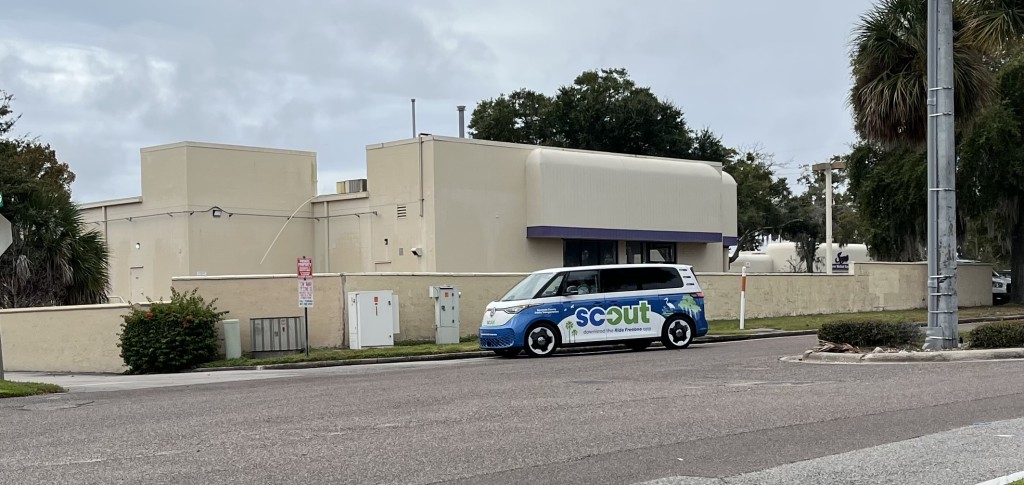
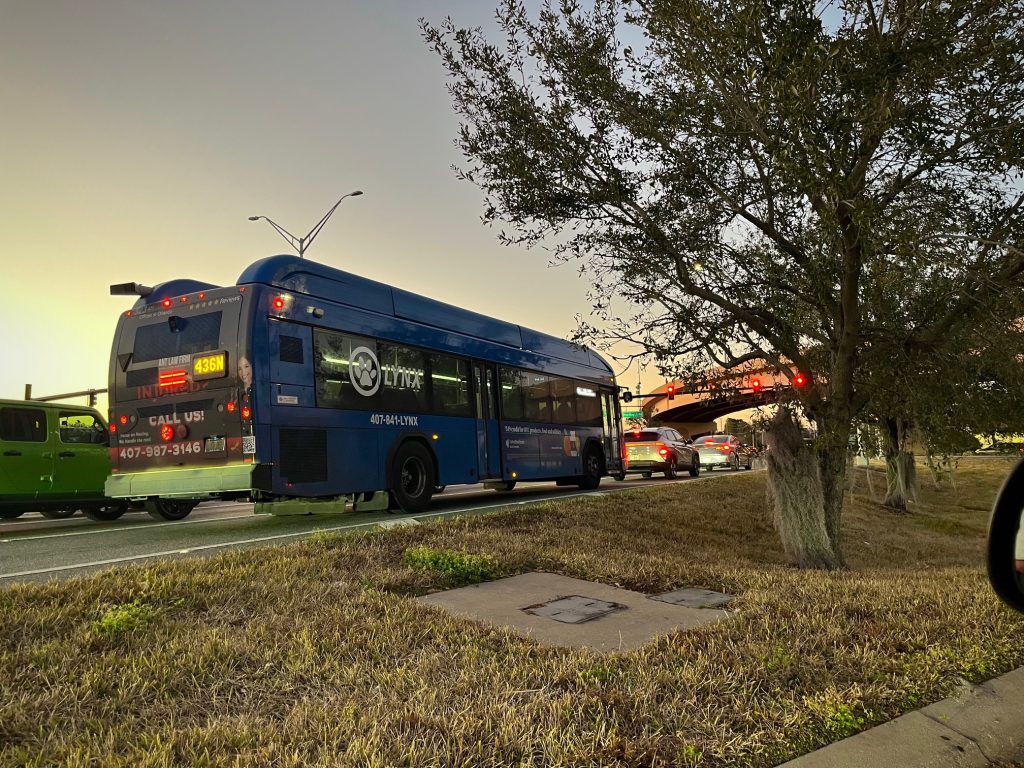
In January Seminole County did away with most public buses – known as LYNX – to save an estimated $5 million this fiscal year. The county has instead moved to an on-demand micro-transit system called Scout.
Users can book a ride, end-to-end, from a fleet of electric vehicles operated by contractor Freebee. It’s similar to an Uber, but other passengers are picked up along the way.
County officials say the big issue in the last month is people canceling rides. That causes the system to re-route, and can change people’s time.
“These cars are moving around, they’re dynamic,” said Chris Patton, a spokesman for Seminole County. “If they’re already moving toward someone that’s canceled a ride, the people that are farther away from that ride will have an increase.”
Jason Spiegel, a managing partner with Freebee, the app that runs Scout, said when someone cancels a ride, they don’t just leave.
“Because the system is balancing dozens of riders and trips simultaneously, it’s optimizing for overall system efficiency and total wait times across everyone, not just a single rider in isolation,” Spiegel wrote “So while a cancellation can sometimes shorten someone’s ETA, other times it can cause the system to reshuffle routes in a way that results in a slightly longer estimated wait for certain riders.
“In short: every cancellation triggers a real-time route optimization across the entire network, and the updated ETA reflects what the system calculates as the most efficient overall plan for all riders currently in service,” he said.
During the month of January, Scout had 23,539 total passengers – a 21.6 percent increase from the month prior, when LYNX buses were still running. There are 3,194 unique users, and that works out to about 900 trips taken every day.
LYNX, though, says it was moving more passengers than that. That means there could be passengers who were using LYNX, but now are using something other than Scout to get around.
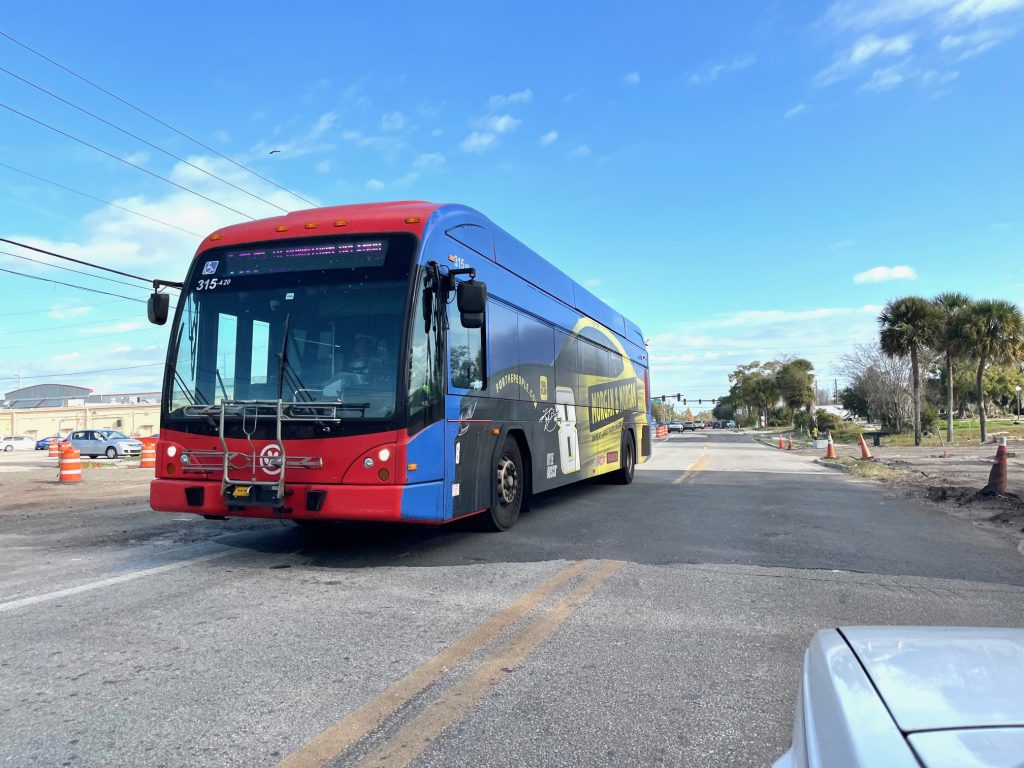
“We were moving more than 2,000 a day,” said Matthew Friedman, a spokesman for Lynx. “Definitely more than the 900. And Scout goes to places we weren’t going.”
One stat that’s increasing with the users – wait times. The average wait time in January was up to 45 minutes, a 28% increase over the month prior and well above the county’s 30 minute average wait time target.
Patton reiterated the reason people’s wait times are changing is because of people canceling rides. He said 60% of the cancellations come from 10% of users.
“We’re having people that cancel over and over and over again to try and get a better spot in line,” Patton said. “And that’s what we’re trying to eliminate. We’re not seeing all unique cancellations and (they) don’t come back.”
One factor that could be lowering the average wait times is that when someone cancels a ride, their wait time is not factored into the average. That makes sense if people cancel a ride right away, but if people like Rojo are waiting and then canceling when the times increase, they won’t be factored into the averages.
Patton asked residents who are struggling to email or call.
“We need them to reach out if they’re having trouble,” Patton said. “Call us. Email us. We’re here to help.”
Currently, 41 percent of riders are eligible for some form of a discount, whether it’s for seniors, students, low-income riders, or people with disabilities. Check here to see what discounts are available and how to apply.
Scout can be reached by calling 407-665-7433 (RIDE). Option 2 to get help contacts Seminole County staff directly. People can also email scout@seminolecountyfl.gov.
Want to contact your elected leaders and weigh in on this topic? Find their contact information here. Have a news tip or opinion to share with OCN? Do that here.
Scout has rolled out an update limiting the number of times a person can cancel a ride without being locked out of the system. Those who are locked out can still call to book a ride.
And help is coming in the form of grant money. Seminole County has gotten a grant from the Florida Department of Transportation that should arrive in July that could add another seven or eight vehicles to the fleet.
‘Its getting better,’ one user says
Brian Stevens had been using LYNX to commute from his place in Orange County to his job in Seminole County.
Starting in January, he started adding Scout into the commute. But now he only uses it in the evening to get home from work, because he can’t count on the wait times in the morning.
He had a number of glitches when it started, and regularly had 90 minute wait times last month. Now he’s had it arrive much sooner.
“I can admit it’s getting better,” Steven said.
But in the morning he’s using Uber because he can’t be late to work. It could ultimately make him buy a car sooner.
“It’s ultimately not a good replacement for LYNX,” Stevens said.
Trina is an Orange County resident who was thinking about moving to Seminole County. She’s carless by choice, and Oviedo Community News is not using her last name because she works in the environmental field and doesn’t want to be seen as criticizing a transportation project.
She used Scout to get to the Scottish Highland Games in January on a Saturday.
The trip there in the morning took 90 minutes. When she went to leave, it again told her 90 minutes.
So she waited and ate dinner at a Chipotle. She had about 30 minutes left before it was supposed to pick her up.
“And then it bumped up four riders ahead of me, and went back to 90 minutes,” Trina said. “And I was like, ‘Oh my god, this is insane.’ Like it was getting dark. I was done.”
She ended up calling a friend and asking for a ride. She had been considering moving back to Seminole County.
Now? Maybe not.
“I will not move to Seminole County until they have a more dependable and sustainable transit solution than Scout,” Trina said. “Period.”
Abe Aboraya is Report for America corps member
Sorry for the interruption but please take 1 minute to read this. The news depends on it.
Did you know each article on Oviedo Community News takes anywhere from 10-15 hours to produce and edit and costs between $325 and $600? Your support makes it possible.
We believe that access to local news is a right, not a privilege, which is why our journalism is free for everyone. But we rely on readers like you to keep this work going. Your contribution keeps us independent and dedicated to our community.
If you believe in the value of local journalism, please make a tax-deductible contribution today or choose a monthly gift to help us plan for the future.
Thank you for supporting Oviedo Community News!
With gratitude,
Megan Stokes, OCN editor-in-chief
Thank you for reading! Before you go...
We are interested about hearing news in our community! Let us know what's happening!
Share a story!