
Winter Springs pushes to protect Lake Jesup
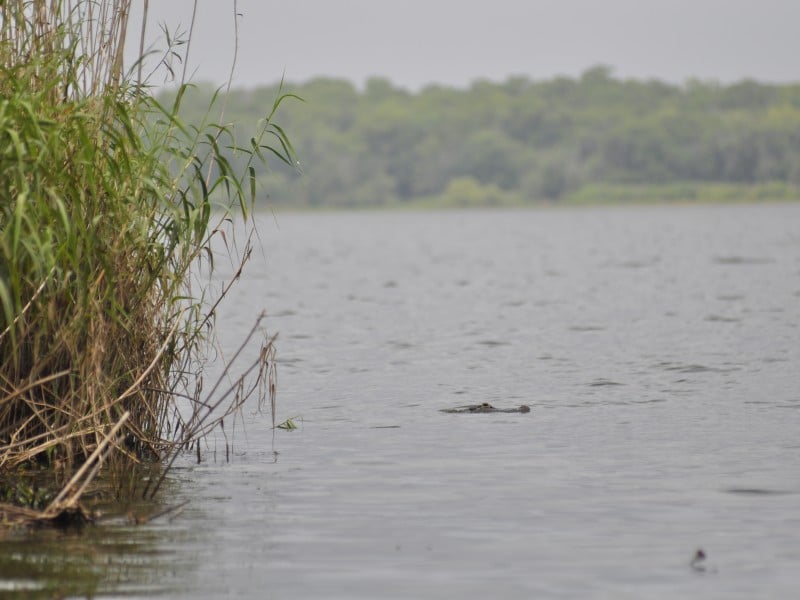
The city with “the weakest protections of all the cities in the county” has started a push to help clean up the environmentally embattled Lake Jesup.
“Years ago this lake was actually a fishing destination,” Winter Springs City Commissioner Ted Johnson said. “And over a period of time we’ve managed to pretty much wreck it.”
Monday night the Winter Springs City Commission pushed to help curtail the “chemical warfare,” according to Deputy Mayor Kevin Cannon, that’s used to kill algae in Lake Jesup.
The lake’s algae issues have spanned decades, with articles in the Orlando Sentinel lamenting the lake’s condition as far back as the 1980s, as flow issues into the St. John’s River prevented the lake from naturally cleaning itself. Fertilizer and other runoff caused algae, which feeds off of the nitrogen and phosphorus in common fertilizers, to explode in the lake.
Ambitious cleanup projects in the past had been considered and then abandoned for various reasons. In 2011 the Army Corps of Engineers had considered dredging the lake and removing dozens of acres of wetland to improve the water flow through the northeast corner of the lake, but the project was abandoned due to its nearly $10 million cost and engineered destruction of more than two dozen acres of wetlands. In 2015 a project to remove pollutants at $1,000 per pound was also snubbed due to cost.
In the meantime municipalities had focused on reducing chemicals entering the lake. Currently Winter Springs lags behind other Seminole County cities in the strength of their ordinances preventing fertilizer runoff.
“A large part of our jurisdictional limits is along the south shore of Lake Jesup,” Cannon said. “Shame on our city to have the weakest protections.”
Commissioner Rob Elliott suggested the city look into putting special baskets into storm drains to prevent plant matter, which can be a source of nitrogen and phosphorus pollution, from being washed into storm water systems where it can pollute Lake Jesup or other bodies of water.
Cost could be a factor in some of those protections, with city staff pointing out that the city might not have enough code enforcement officers available to enforce a stronger fertilizer ordinance.
“Just because it’s difficult to enforce something doesn’t mean it’s not the right thing to do,” Cannon said.
The Commission directed City Attorney Anthony Garganese to help draft up a more comprehensive fertilizer ordinance that will come back to the Commission at a future meeting.
Sorry for the interruption but please take 1 minute to read this. The news depends on it.
Did you know each article on Oviedo Community News takes anywhere from 10-15 hours to produce and edit and costs between $325 and $600? Your support makes it possible.
We believe that access to local news is a right, not a privilege, which is why our journalism is free for everyone. But we rely on readers like you to keep this work going. Your contribution keeps us independent and dedicated to our community.
If you believe in the value of local journalism, please make a tax-deductible contribution today or choose a monthly gift to help us plan for the future.
Thank you for supporting Oviedo Community News!
With gratitude,
Megan Stokes, OCN editor-in-chief
Thank you for reading! Before you go...
We are interested about hearing news in our community! Let us know what's happening!
Share a story!
Author

Related Articles

A one-shot deal: Jerry Vaughan honors veterans’ last wishes nationwide
Chuluota veteran Jerry Vaughan crafts reconstructed military uniforms to give deceased veterans a dignified final salute. His hope is, with a new federal bill, he could put himself out of a job.
Winter Springs approves $600,000 in emergency repairs to wastewater system
Officials say they’re 90 days away from breaking ground on a treatment plant – but equipment failures have the city keeping the environmental regulators appraised