
Winter Springs misses deadline on audited financials
State money is now at risk for Winter Springs after the city missed a moved-up deadline to give to the state. But the city now has a 30-day grace period.
Winter Springs did not send its 2022 audited financial statements to a state committee by the Jan. 15 deadline, possibly jeopardizing state grants and reimbursement dollars. The city is now in a 30-day grace period before any action is taken.
According to a letter sent to the Joint Legislative Audit Committee (JLAC) and obtained by Oviedo Community News, Winter Springs Interim Finance Director Donna Bruno wrote that JLAC had originally agreed to allow her to have until Jan. 31 to submit the final audited finances.
She said that it’s “physically impossible” to meet the Jan. 15 deadline.
“At the meeting on Dec. 4, 2023, I mentioned that my son was getting married and needed time off,” Bruno wrote. “I respectfully request that you honor the original January 31, 2024 deadline set by JLAC and agreed to by us.”
JLAC staff member Kathy DuBose responded to the email that, while the committee discussed giving Winter Springs until the end of January at its Dec. 4 meeting, the actual vote was taken on Dec. 11. And at that meeting, the Jan. 15 deadline was established.
“There is a 30-day grace period from the effective date of the committee’s action,” DuBose wrote. “[The Department of Revenue] and [the Department of Financial Services] may not withhold any state funds from an entity until 30 days after they receive our notice. Therefore, as long as your audit report and AFR are submitted by mid-February, which you indicate
they should be, there will not be any funds withheld.”
Winter Springs has been under the financial microscope for months now, going through two audits: one from the Seminole County Comptroller and the other from the Joint Legislative Audit Committee.
The results of the audits found high turnover in management, which Winter Springs Mayor Kevin McCann had blamed in part on “political operatives” harassing high-level staff on social media. The audits also found serious issues with the city’s wastewater system that need to be addressed, which the city is in the process of completing in a more than $100 million water system overhaul. But the audits did not find missing city money, or that the city was in danger of not being able to pay its bills – things that in state statute would trigger the conditions of a financial emergency.
McCann told state legislators that the city had “$93 million cash-on-hand” as of Oct. 31. When it turned out that the city didn’t have that much in unrestricted reserves, but instead had it in investments and other accounts, lawmakers were angry.
“If we were lied to, it’s one of two things: They either knew, or they should have known,” State Sen. Jason Pizzo said at the Dec. 11 meeting. “The mayor here represented that he had $92 million on hand, 120% of the operating budget. And he does not. He either knew that he didn’t, or should have known that he didn’t. Both are dangerous. One makes you dumb. The other makes you nefarious.”
Winter Springs has hired an outside law firm to handle its dealings with the state. There has been no word from the governor’s office about an investigation to determine if Winter Springs is in a state of financial emergency.
Sorry for the interruption but please take 1 minute to read this. The news depends on it.
Did you know each article on Oviedo Community News takes anywhere from 10-15 hours to produce and edit and costs between $325 and $600? Your support makes it possible.
We believe that access to local news is a right, not a privilege, which is why our journalism is free for everyone. But we rely on readers like you to keep this work going. Your contribution keeps us independent and dedicated to our community.
If you believe in the value of local journalism, please make a tax-deductible contribution today or choose a monthly gift to help us plan for the future.
Thank you for supporting Oviedo Community News!
With gratitude,
Megan Stokes, OCN editor-in-chief
Thank you for reading! Before you go...
We are interested about hearing news in our community! Let us know what's happening!
Share a story!
Author

Related Articles
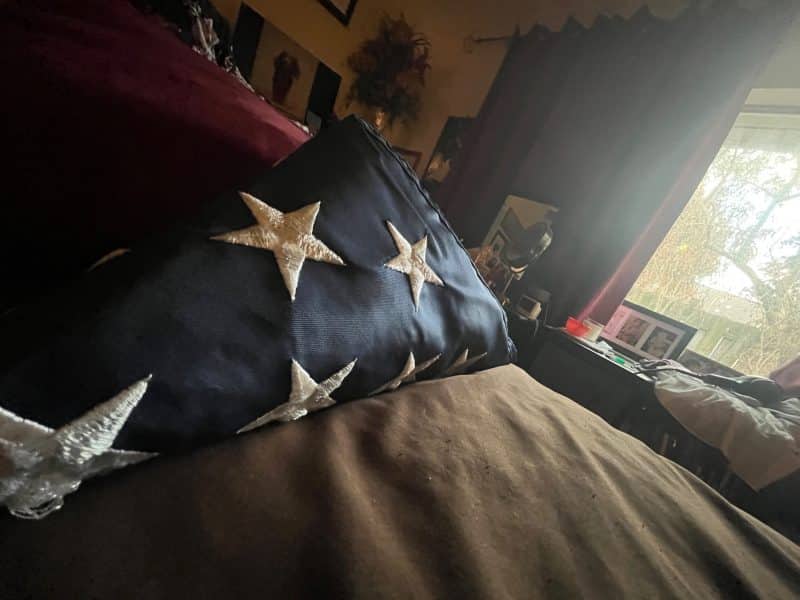
A one-shot deal: Jerry Vaughan honors veterans’ last wishes nationwide
Chuluota veteran Jerry Vaughan crafts reconstructed military uniforms to give deceased veterans a dignified final salute. His hope is, with a new federal bill, he could put himself out of a job.
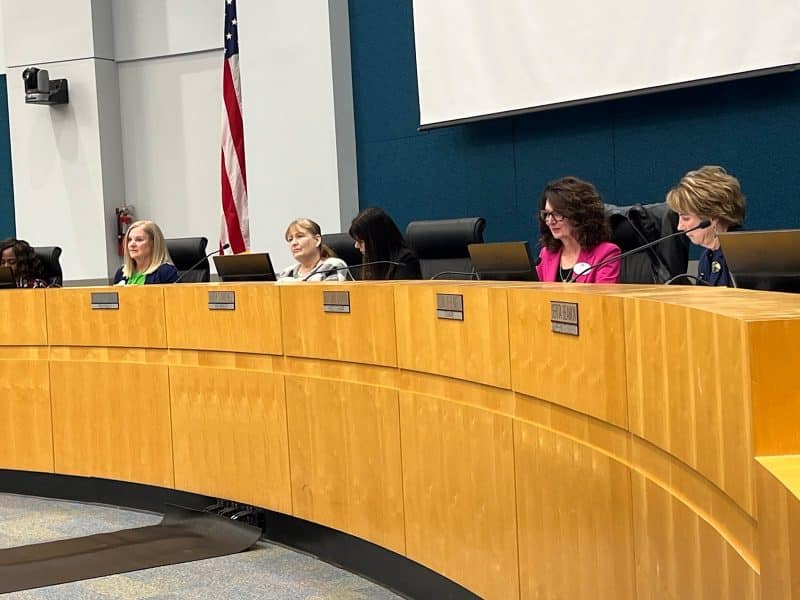
Seminole County Public Schools approves county’s first community school
Seminole County Public Schools finalized an agreement Tuesday to bring the county’s first community school to Sanford.