
U.S. Senate candidates
Seven senate candidates will battle it out in the primaries for Florida’s open U.S. Senate seat on Aug. 20.
The following are Florida’s U.S. Senate candidates: Feena Bonoan, Stanley Campbell, John Columbus, Ben Everidge, Alan Grayson, Keith Gross, Rod Joseph, Howard Knepper, Debbie Mucarsel-Powell, Tuan Nguyen, Brian Rush, incumbent Rick Scott.
Scott, Columbus, Gross will be on the primary ballot for those registered Republican and Campbell, Joseph, Mucarsel-Powell and Rush will be on the ballot for those registered Democrat. These are the senate candidates listed below. The rest of the candidates above will join the Voter Guide and the ballot for the General Election on Nov. 5.
OCN created a profile for each candidate and we sent each candidate a list of questions that we collected from our readers and residents of Greater Oviedo and Winter Springs, or formulated based on the priorities our readers shared with the OCN team. Each candidate within a specific race received the same, exact list of questions and the questions were sent to each candidate at the same time. They all had a 50-word limit for each question and their answers were only edited for grammar and clarity. The Q&A is at the end of this article.
Unfortunately, some senate candidates did not respond to the Q&A request, which was sent multiple times to each candidate. Because the guide has been published with the candidates’ responses it cannot be edited to include any additional candidate responses out of fairness and to protect the authenticity of the guide.
What do U.S. Senators do?
Each state elects two senators to represent them on a federal level. U.S. Senators serve six-year terms.
Examples of what the U.S. Senate oversees:
- The Constitution grants Congress the power to declare war
- The body can conduct impeachment trials and convict an impeached government official
- Investigate the executive branch
- Review and approve or reject presidential appointees to executive and judicial branch posts
- Vote to approve treaties made by the executive branch
- Take action on amendments, bills, resolutions and motions by voting
- Proposing legislation, drafting or amending bills
- Overseeing the federal budget
U.S. Senators make $174,000.
Candidates (listed in alphabetical order to ensure fairness)
Stanley Campbell

Stanley Campbell is a Democratic candidate for U.S. Senator. He lives in Palm City and was a former U.S. Navy pilot and test pilot. At 19 years old, he created the data reduction algorithm and aero-analysis for the Voyager 2 spacecraft, according to an article in African American Golfer’s Digest. He also previously worked with NASA.
According to his website, he plans on “improving education, creating economic opportunities, protecting our planet, and strengthening the systems of equality so that everyone has a fair shot at the American Dream.” He said he strives to “protect Medicare, ensuring affordable healthcare, housing, and a quality education that respects our national history, to safeguarding and securing equal freedoms and justice under the law.”
He has $50,000 worth of campaign contributions. Learn more.
John Columbus
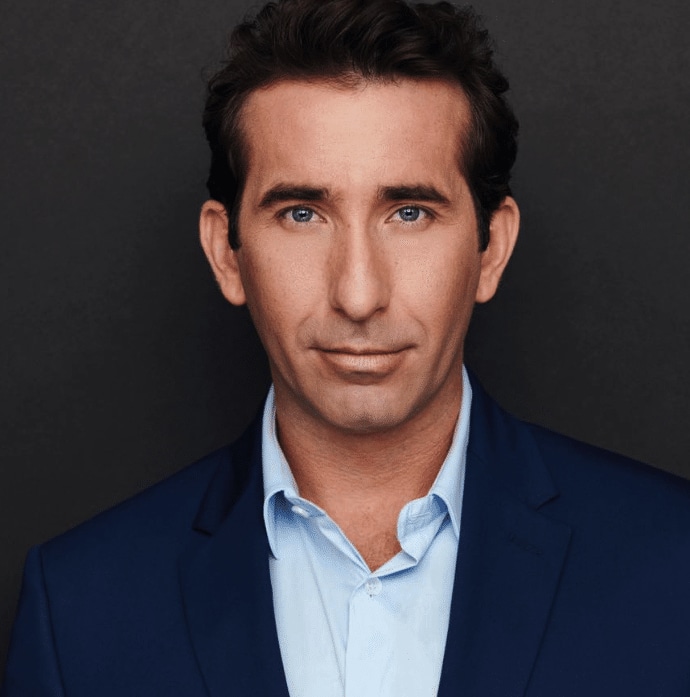
John Columbus is a 40-year-old Republican candidate for U.S. senator.
He lives in the Dr. Phillips area and works at Walt Disney World as an actor, according to his Facebook profile. He said via email he has been a theater professional for the majority of his life. This is his first time in politics and his policies include protecting the environment, promoting recreational cannabis usage, supporting law enforcement while also holding them accountable to injustice, and more.
Columbus said in an email that this is a grassroots campaign that he has divested all his stock holdings for and invested into it. He has $12,223 in campaign contributions, according to the Federal Election Commission. $5,000 are from committee contributions and $7,000 are from individual contributions. The rest of the funds are from the candidate. Columbus said via email that he does not have any public endorsements. Learn more.
Keith Gross

Keith Gross is a Republican candidate running for the U.S. Senate. He is from the Florida panhandle and served in the U.S. National Guard, according to his website.
Among the issues he supports are: closing the borders to limit immigration; freedom of speech on social media, college campuses, and beyond; limiting what’s being taught in the classroom to combat what he refers to as “indoctrination”; and the Second Amendment, according to his website.
According to the Federal Election Commission, he has raised $181,016 in total contributions, with $135,798 of it coming from himself. Learn more.
Rod Joseph

Rod Joseph is a 46-year-old Democratic candidate for U.S. Senate. Joseph lives in Debary and owns a security company. He is a U.S. Army veteran with roles as Logistics Officer and Paralegal NCO, according to his website. He said he is pursuing a PhD in international relations and diplomacy that has been placed on hold due to the campaign.
His platform is based on issues such as immigration reform, cutting spending and reducing national debt, criminal justice reform and more.
According to his website, he is endorsed by Janet Buford Johnson, candidate for House of Representatives District 41; Audrey Edmondson, Miami Dade County Commissioner District 3; Dr. Bobb Rousseau, CEO and founder of Apostrophe Management; Dr. Eladio Jose Armisto, chairman of Florida Democratic League, Inc.; Daphney Campbell, state senator and mayoral candidate in Miami; David Garcia, mayor of Springfield, Ill.; Apostrophe Consulting; and Florida Democratic League, Inc.
According to the Federal Election Commission, he has a campaign contribution total of $28,595. Learn more.
Debbie Mucarsel-Powell

Mucarsel-Powell, a 53-year-old Democrat from Miami, is running for the U.S. Senate. She is a senior advisor at Giffords, an organization advocating for gun safety. Before this role, she was an associate dean and director of development for Florida International University.
Mucarsel-Powell was a U.S. representative from 2019 to 2021, during which she sponsored bills in favor of equal pay, Covid-19 safety in schools and voter protection. Her platform also includes protecting social security, reducing costs for medication and reducing inflation.
She has been endorsed by Emily’s List, Jewish Dems, Latino Victory and others. View a full list of endorsements. Mucarsel-Powell has received $7,291,926.87 in contributions and spent $4,541,326.97. Learn more.
Brian Rush
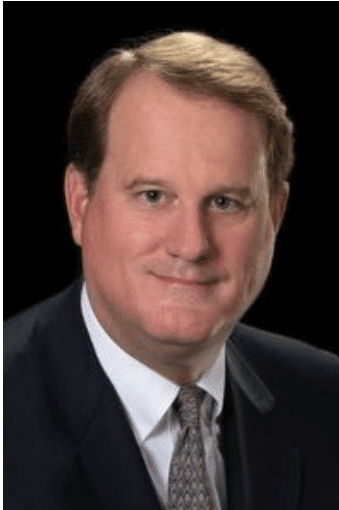
Brian Rush is a 65-year-old Democratic candidate for U.S. Senate. According to a representative from his team, Rush is a former member of the Florida House of Representatives who served for eight years, leaving office in the mid 1990s. He lives in North Tampa and is a real estate investor. He was also an attorney for 35 years.
The representative said via email that he is the fifth oldest of 12 children in his family. According to his website, he values family, along with reproductive rights, reducing gun violence, tax reform and more.
Rush received public endorsements and awards from the League of Conservation voters, the Sierra Club, the Florida Teachers Profession, National Education Association, Florida Sheriffs Association, Hillsborough County Education Award, the LaGaceta Newspaper and the Tampa Bay Times.
According to the Federal Election Commission, he has $70,332 in total contributions with $810 worth of candidate contributions and a loan of $10,000. Learn more.
Rick Scott
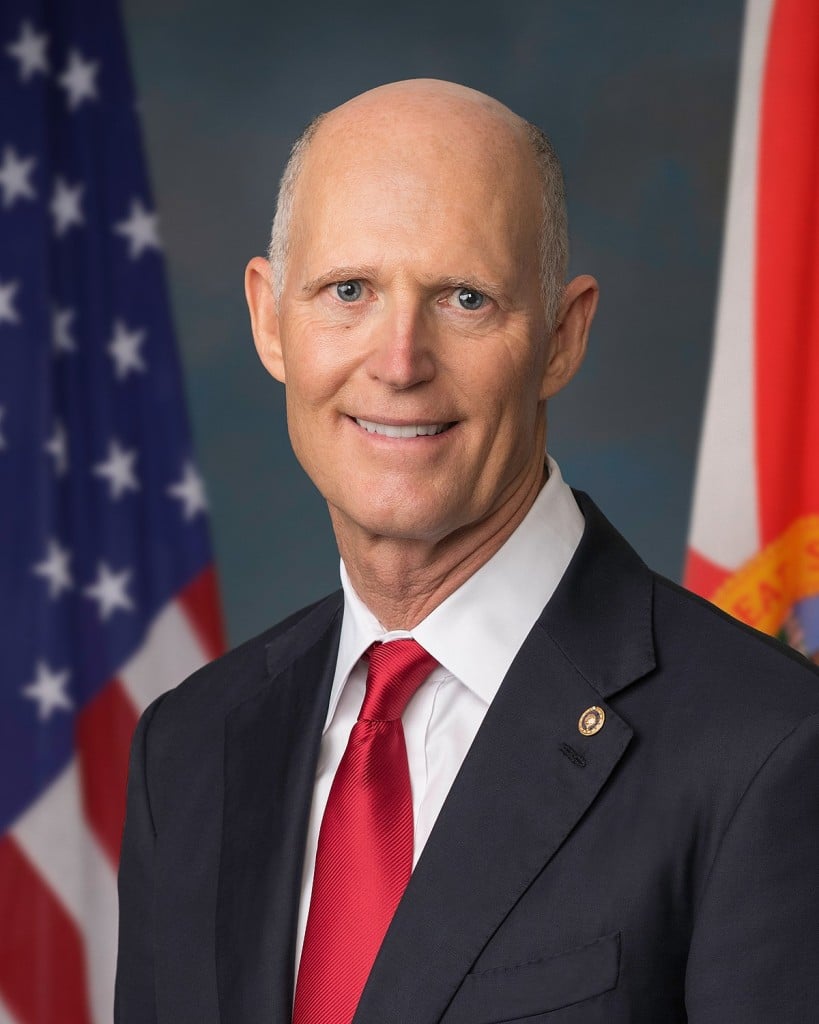
Scott, a former two-term governor of Florida, is a 71-year-old Republican candidate in Naples running for re-election to the United States Senate. Scott co-founded Columbia Hospital Corporation, which eventually became the U.S.’s largest for-profit healthcare company. Scott resigned as CEO amid allegations of perpetuating what was then the largest Medicare fraud in history. He later pursued venture capitalism. He has been a senator since his win in 2018.
A key focus of Scott’s platform is lowering unemployment (currently 3.3%) and bolstering the economy in a state currently enjoying a record-high GDP. His “12-Point Plan to Rescue America,” first introduced in 2022, aims to reduce immigration, limit federal programs in favor of state authority and maintain an “America First” approach to foreign policy.
Among Scott’s endorsers are the National Federation of Independent Business, Florida Chamber of Commerce and Florida Forestry Association. View a full list of endorsements. Scott received $20,967,042.31 in campaign contributions and spent $18,644,863.69, as of May 2024. Top donors include the GEO Group, a private prison investor, and residents from The Villages. Learn more.
Candidate Q&A
The senate candidates below are the folks who responded to OCN’s Q&A. It was explained to each candidate that the questions were based on voter questions and priorities. The order of and answers started alphabetically and then revolved for fairness.
Traffic and infrastructure
Q: What will you do to bring in federal funding to improve hurricane preparedness and disaster response?
Stanley Campbell: I propose adding property insurance and hurricane preparedness to the National Critical Infrastructure Protection Program. This act will make the federal government the first payer. This is a shared responsibility with other states. This initiative will bring down insurance prices in Florida by approximately 29%.
Keith Gross: Florida should be [receiving] more federal support than it has. I will work to increase federal support of these critical programs, cut waste and red tape. We need to stop federal spending on unimportant things and redirect those funds to critical spending such as disaster preparedness and response.
Debbie Mucarsel-Powell: As I did in Congress, I will fully support FEMA funding and fight to bring investments for resilient infrastructure to Florida – unlike Rick Scott, who voted against over $1 billion in infrastructure resiliency funding and against $18.8 Billion in FEMA funding the day after Hurricane Ian hit Florida.
Economy
Q: What will you do to help the state invest in BIPOC-owned (Black, Indigenous, people of color) businesses?
Debbie Mucarsel-Powell: I will fight for easier access to financing to create generational wealth – from supporting work-training programs to bringing small business loans to local communities. By pushing legislation to incentivize investment in small businesses, Florida can lead in creating entrepreneurial opportunities for our BIPOC communities.
Stanley Campbell: High speed rail funding from Tampa to Orlando, to Jacksonville and Pensacola. Tailored fundings will include directed placement to BIPOC companies. Funding mentorship programs, equitable procurement policies, and partnerships with established majority businesses and capital for BIPOC entrepreneurs’ success.
Keith Gross: No group should be singled out for benefits or discrimination. We are all equal under the law and need to stop separating people by group or class for special recognition or benefits. This is a land of equal opportunities, not equal outcomes. No free society can guarantee equal outcomes. I prefer freedom to “free” stuff.
Q: What will you do to bring high-wage jobs to Florida?
Keith Gross: Eliminate unnecessary regulations and bureaucratic interference. If you get the government out of the way, people will prosper. Smaller federal government, fewer regulations and renegotiate the terrible foreign trade deals that have sold out the American people.
Debbie Mucarsel-Powell: I will defend American jobs from outsourcing and focus on creating high-paying jobs by expanding solar panel production in Florida to lower energy costs statewide. Additionally, I will champion legislation to support unions, provide seed grants to Florida startups and promote buying American.
Stanley Campbell: Bringing pharmaceutical jobs to Florida through legislation that invests in production facilities. Expanding renewable energy (such as solar), expanding high-speed rail, and increasing housing construction jobs by adding inventory; additionally, educational programs to attract tech industries. Increase in teachers’ pay will create a sustainable infrastructure for high-paying jobs.
Social Services
Q: What are your thoughts on abortion access in Florida and the increasing restrictions upon it?
Stanley Campbell: I support women’s rights to health and oppose restrictions that are the current law in Florida. My wife was pregnant with twins, and one was ectopic. Today, she and my son would be dead given the occurrence and any potential for her care. I will work to get this back to right
Keith Gross: As a U.S. Senator, I will work to keep the federal government out of the issue entirely. Abortion is and always has been a state issue. The U.S. Constitution does not provide the federal government the right to insert itself into this state matter. Keep [Washington] D.C. out of the way and let states do the right thing.
Debbie Mucarsel-Powell: I am disgusted by the attacks on women’s reproductive freedoms, including Florida’s abortion ban, which Scott supports. Government has no right to interfere in Floridians’ personal healthcare decisions, and as Senator, I will protect Floridians’ reproductive freedoms – including access to abortion, IVF and contraception.
Q: As America’s older generations increase in population, what will you do to improve assistance for seniors?
Debbie Mucarsel-Powell: I will protect our seniors by safeguarding Social Security and Medicare from cruel extremists like Rick Scott, who seek to eliminate these benefits. I will fight to expand Medicare coverage to include dental and optical care, strengthen benefits for assisted living and lower drug and treatment costs.
Stanley Campbell: I will support Medicaid expansion, full funding of Social Security and equitable adjustments for inflation while tripling the wages that they are allowed to earn without penalty. I will cap Medicare prescription drug prices and allow restaurants to participate in the Meals on Wheels program.
Keith Gross: First of all, the government should not be allowed to break its promises to the people who have paid into programs like Social Security and Medicare for years. We must protect these programs and ensure that seniors get the return on investment they were promised. It is not government money, it is OUR money we paid in.
Q: What will you do to improve healthcare coverage and reduce health care costs?
Keith Gross: Reduce burdensome regulations that complicate the healthcare industry. Government should not be deciding what healthcare you receive or from which provider. Government does a terrible job at most things, and I will not allow our nation to become like Canada where medical care is worse than the DMV.
Debbie Mucarsel-Powell: As the Associate Dean at [Florida International University]’s medical school, I worked to deliver affordable healthcare to Florida’s underserved communities. In Congress, I was proud to write the bill to expand seniors’ Medicare coverage. I will fight to protect and expand the ACA so millions of Floridians can afford critical healthcare.
Stanley Campbell: I cut fraud in healthcare to reduce costs and I will propose a law to criminalize Medicaid/Medicare Fraud. Extension of the [Affordable Care Act] to include dental and eyes, negotiating drug prices and incentivizing preventive care. Promoting telehealth and investing in medical research. Transparency in pricing will drive down cost.
Q: What will you do to increase access to credit repair and assistance for residents who are struggling with debt?
Stanley Campbell: I would extend The Federal Trade Commission enforcement powers under the Credit Repair Organizations Act. Providing more oversight to the CFPB under Fair Credit Reporting Act (FCRA) will ensure compliance of credit bureaus. This legislation will include funding for service centers designed to assist clients directly.
Keith Gross: If YOU take out a loan, YOU pay it back. Don’t expect your neighbor to pay your bills. This is not a government issue requiring federal interference. Too many people believe that the federal government is the tool for solving all problems. I believe government IS the problem.
Debbie Mucarsel-Powell: As Senator, I will support increased transparency and eliminate predatory programs. I will advocate for the Credit Reporting Accuracy Act to increase transparency and accuracy in the credit reporting process. Additionally, I will support current legislation to lower student debt and remove medical debt from credit reports.
Q: As home prices have become out of reach for average workers, what are your thoughts on affordable/attainable housing for low-income residents? Does it have a place in Florida? What will you do about it?
Debbie Mucarsel-Powell: Floridians deserve to afford to live in their home state, and it’s becoming impossible. I will push legislation to lower home insurance rates by 25%, offer tax incentives for building affordable housing, expand housing grants, and protect renters from being pushed out of their homes by hedge funds and corporations.
Stanley Campbell: Expand tax incentives for developers building affordable units, increasing funding for Section 8 vouchers and turning long term Section 8 into equity toward ownership. Reforms for density, supporting community land trusts, public-private partnerships for mixed-income developments to ensure diverse housing options.
Keith Gross: Reducing government regulation is proven to allow an increase in housing supply. Like most problems in our nation, it can be addressed by getting government out of the way and letting people exercise their rights to life and liberty free of useless government interference.
Q: Will you help improve solutions for people with disabilities? If yes, how?
Keith Gross: As a society it is our moral obligation to care for those who cannot care for themselves. With less wasteful government spending, we can redirect funds to performing these more important governmental tasks.
Debbie Mucarsel-Powell: I will support legislation to fund programs to help people with disabilities receive education and find employment, like I did in Congress. I will support job creation for people with disabilities, transportation benefits via Medicare, and promote legislation like the Affordable Insulin Act to address rising drug prices.
Stanley Campbell: My focus is on accessibility in infrastructure and services for public transportation, advocacy for inclusive policies, comprehensive healthcare coverage and employment opportunities. This extends to commercial business and structures. We will expand the Administration for Community Living placed under the HHS.
Voter services
Q: What will you do to ensure voters’ rights are kept safe in light of recent purges of voters from registration rolls?
Stanley Campbell: I will reintroduce the John Lewis Voting Rights Act, which includes roll purging, gerrymandering and annexation of voters. I’ll provide funding for voter education and introduce a standardized, automated, and secure system for automation of the voting process.
Editor’s note: The claim of voter fraud in the 2020 presidential election has been proven to be untrue. Not only have reputable news organizations extensively fact checked this claim, it has also been litigated exhaustively in the courts.
Keith Gross: Considering the mass fraud in 2020, cleaning up the voter rolls seems past due. I believe only U.S. citizens with proper ID that states who they are and that they are a U.S. citizen should be permitted to vote. Anything else is simply treason. We cannot allow illegals to overtake our nation through illegal voting.
Debbie Mucarsel-Powell: Attacks on voting rights undermine democracy and disproportionately target communities of color. I will work across the aisle to pass the John Lewis Voting Rights Act which will provide critical voter protections to all Floridians.
Education
Q: What are your thoughts on removing history lessons from schools, namely the history of slavery and oppression of BIPOC?
Debbie Mucarsel-Powell: As a parent myself, I believe politicians have no right to limit our children’s education. Book bans and inaccurate history lessons especially harm students of color, and have no place in our state. Our students must have the freedom to learn the full and accurate history of America.
Stanley Campbell: I went to a Jewish High School in Miami Beach in the ‘70s and I was taught that if you don’t remember your history, you are doomed to repeat it. I believe that. The removal of Black History is the augmentation of American History. We are emancipated and should not have to be emancipated again.
Keith Gross: Schools should teach an unbiased, straightforward basic curriculum. Government-funded schools have no place teaching woke ideology and manipulating another generation of youth. Schools are teaching kids to hate America instead of showing them that America is why slavery ended. We fought a civil war to end Democrat slavery.
Editor’s note to clarify: During the time of the Civil War the Republican Party was largely the liberal party in American politics and the Democratic Party was largely the conservative, pro-slavery party, though they were also split north and south on the issue. But due to numerous important political events following the Civil War and during the mid-20th century, particularly the Civil Rights Act of 1964, the parties’ ideologies gradually changed to what they are today.
Q: With the average annual cost of childcare in Florida, according to the Economic Policy Institute, reaching $7,287 for a 4-year-old and $9,238 for an infant, how will you help improve the affordability of childcare for local working parents?
Keith Gross: This is an issue best handled by state, not federal government. We need to reduce our federal government to the Constitutional mandate laid out by the Founding Fathers. Taxing your neighbors to cover your household expenses is not one of those Constitutional ideals. America is off track, but we can save it.
Debbie Mucarsel-Powell: As a mother I understand the importance of safe and affordable childcare. As Senator, I would proudly expand the Child Tax Credit (CTC) to raise American children out of poverty. I would support legislation to help the families of an estimated 1 million Florida children receive a fully refundable $2,000 Child Tax Credit.
Stanley Campbell: In the short term we will propose adding funds to the Community Development Block Grant (CDBG) Program, which provides funding to states to assist low-income families in accessing childcare services. The longer-term program is to lower the age for starting school to 4 and expand these services.
Do you have questions or comments about this guide? Contact OCN staff here.
Sorry for the interruption but please take 1 minute to read this. The news depends on it.
Did you know each article on Oviedo Community News takes anywhere from 10-15 hours to produce and edit and costs between $325 and $600? Your support makes it possible.
We believe that access to local news is a right, not a privilege, which is why our journalism is free for everyone. But we rely on readers like you to keep this work going. Your contribution keeps us independent and dedicated to our community.
If you believe in the value of local journalism, please make a tax-deductible contribution today or choose a monthly gift to help us plan for the future.
Thank you for supporting Oviedo Community News!
With gratitude,
Megan Stokes, OCN editor-in-chief
Thank you for reading! Before you go...

We are interested about hearing news in our community! Let us know what's happening!
Share a story!
Authors

Related Articles

Election results: General Election 2024
OCN has live local, state and national election results from Election Day.


Election results: Primary Election 2024
Dehlinger wins easily in School Board race, while another race heads for a runoff after one candidate misses the cutoff.