
Winter Springs seeks to raise stormwater rate ahead of hurricane preparations
The proposed stormwater rate increase could raise nearly a million dollars for infrastructure.
Deputy Mayor Cade Resnick proposed the city’s lowest stormwater utility rate of $5 be increased to $10 amidst discussion of the city’s storm preparations during the Winter Springs City Commission’s March 31 meeting.
Resnick used the term “PTSD” to describe his concerns ahead of the upcoming hurricane season, which begins in June.
The city has experienced infrastructure damages and extensive flooding in the past following storms such as Hurricane Ian, Hurricane Helene and Hurricane Milton.
“Here we are again with storms coming, and people are already calling, there’s concerns,” Resnick said, adding he’s spoken to other municipalities that are in the process of or have already changed stormwater rates, including Oviedo, Casselberry, Longwood and Sanford.
“So in all my calls every city, pretty much, said we have to raise ours,” Resnick said. “With that being said, I would like us to … take an honest look now at raising our stormwater fees before we get to the hurricane season, so we can do the work necessary and prep everything by hiring the staff we need and getting things done sooner rather than later.”
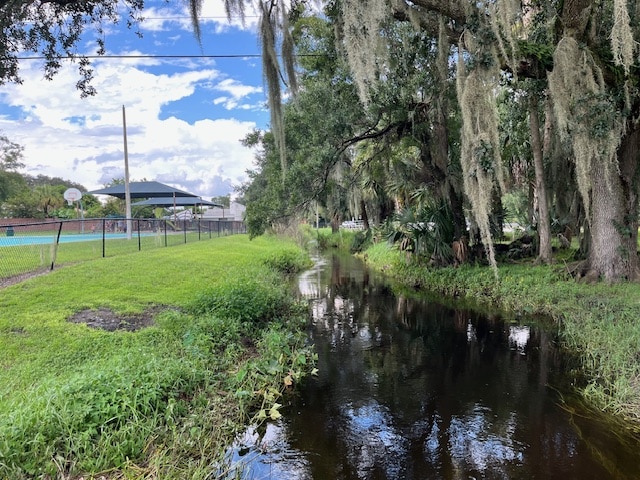
Commissioner Victoria Bruce suggested the commission “bite the bullet today” to move forward with the rate increase and then reevaluate following the completion of the city’s ongoing stormwater study.
“That way we’re getting some revenue in so that we can start doing projects that are needed for stormwater repair,” Bruce said.
Mayor Kevin McCann said there’s “no question” stormwater rates will have to increase, a point he’s made previously. He added he wouldn’t approve a large increase to the lowest rate of $5, such as jumping to $45, but that a smaller increase could be a good step for the city’s preparations.
“We lost hundreds of homes during Hurricane Ian and we have a responsibility to do something,” McCann said. “We just simply need to take a bite out of the apple now.”
When asked by Commissioner Paul Diaz if general funds could be pulled for stormwater, City Manager Kevin Sweet said there is an ability to utilize general fund revenue to cover stormwater costs.
He further clarified, using the example that because Seminole County does not have a stormwater utility enterprise fund it can use ad valorem tax funds, which are typically generated through municipal property taxes, as part of general fund operations, but that the city has a stormwater utility enterprise fund and cannot commingle the two.
“Most of our capital-related items that the City of Winter Springs handles have been paid for through the Penny Sales tax, through the third-gen work, and will likely continue in many things,” Sweet said. “You can’t use the Penny Sales tax for ongoing general maintenance, so that causes a problem with our ongoing maintenance issues and just being able to maintain the infrastructure that we do have.”
“I think we talked about this last week, our ad valorem [tax] doesn’t even cover the police department so it would be difficult to move money,” Commissioner Sarah Baker added, a statement to which Finance Director Holly Queen affirmed.
Sweet said potentially raising the rate to $11 from $5 would add an estimated $80,000 to the fund every month, for a total of about $960,000 per year. The city has identified 17 public projects to improve the stormwater system that Sweet said will require capital investment “beyond what the [stormwater] fund can incur” currently.
“In addition, the city would intend to hire additional staff to improve the maintenance and service throughout the city,” Sweet said. “The current stormwater team that exists is extremely minimal, and the extent of what the city is required to maintain and keep up with isn’t adequate. I think out of all that, you’ll see there’s a demand for staff, there’s a demand for equipment, and all of these things, of which the current enterprise system of revenue collection is not sustainable.”
A request for cuts
Diaz questioned if Queen could find the equivalent amount the new rate would garner in a year, rounding up to $1 million, to be cut from the budget to “shore up” the fund and have it be revisited later.
“I mean, I can probably earmark $13 million [to cut],” Diaz said.
Queen said she did not have an answer while standing at the podium “not prepared.”
Commissioner Mark Caruso said he’s spoken to many residents who’ve said they’re willing to pay more for better services, especially when it comes to stormwater.
“I know there’s a lot [of residents] out there that can handle that increase,” Caruso said. “What kind of response can the residents get if this goes through tonight?”
Sweet said there wouldn’t be an immediate response as the rate increase would have to go through public hearing first before being implemented, but that in the long term the revenue would assist the city.
“There’ll be a little bit of delay, as you can expect, to start seeing that revenue show itself,” Sweet said. “But I think long term, somewhat immediate, we can look at seeing some of the impacts of those increases, being able to actually see that work being done, and that money being utilized for those purposes. But it’ll take some time.”
He added the city’s stormwater department typically begins preparations in April but that a number of improvements are currently underway and will continue.
“The number of these other projects and areas take money and revenue and people and equipment and things to be able to accomplish,” Sweet said. “Without starting to see an increase in revenue coming in, those additional things will not be able — that’s beyond our existing capacity and funding availability to be able to accomplish.”
The meeting’s approved consent agenda included a grant agreement by the U.S. Department of Agriculture’s National Resource Conservation Resources, or NRCS, to reimburse the city up to about $1.5 million for costs related to debris and sediment removal from creeks and streams impacted by Hurricane Milton.
Diaz says it’s spending, not revenue
Diaz accused the city of not having a problem with revenue but spending. According to 2022 Seminole County Census Data, Winter Springs has a population approximately 40% larger than neighboring Casselberry, and 160% larger than Longwood, but has an overall budget that’s 10% less than those nearby cities. Compared to Oviedo, Winter Springs, at just under 40,000 residents, has a nearly identical population but a city budget that’s nearly 25% smaller.
Diaz suggested that the city’s budget should be reviewed line by line to allocate necessary cuts so residents “don’t have to be freaked out every time there’s a storm.”
“Because the reason they’re freaked out … is because the city has not done what it was supposed to do, and now it’s saying, ‘Hey, but you know what? Give us more money so we can continue not doing what we haven’t done,’” Diaz said.
Resnick then made a motion to approve staff to bring back a proposal for the rate increase, seconded by Bruce. The motion passed 4-1, with Diaz dissenting.
Later during public input, former District 3 commissioner candidate Karen Meyer addressed Diaz’s claim the increased rate would “punish” residents, saying the term positions residents as victims.
“I don’t believe that’s correct,” Meyer said. “Residents need to support and they expect to support the services that they enjoy … Our city manager has expressed very clearly that the city is just getting by with their finances and their staff for current stormwater management. I expect the city to be a planner of our future needs.”
Want to contact your elected leaders and weigh in on this topic? Find their contact information here. Have a news tip or opinion to share with OCN? Do that here.
Sorry for the interruption but please take 1 minute to read this. The news depends on it.
Did you know each article on Oviedo Community News takes anywhere from 10-15 hours to produce and edit and costs between $325 and $600? Your support makes it possible.
We believe that access to local news is a right, not a privilege, which is why our journalism is free for everyone. But we rely on readers like you to keep this work going. Your contribution keeps us independent and dedicated to our community.
If you believe in the value of local journalism, please make a tax-deductible contribution today or choose a monthly gift to help us plan for the future.
Thank you for supporting Oviedo Community News!
With gratitude,
Megan Stokes, OCN editor-in-chief
Thank you for reading! Before you go...
We are interested about hearing news in our community! Let us know what's happening!
Share a story!
Author

Related Articles
Bill to gut Seminole County rural boundary could apply outside of Central Florida
Florida Senate poised to take up the bill this Friday, as developer Chris Dorworth pushes county commissioners to support it.

Life as a Hagerty transgender student, explained
“I’ve been trying to figure myself out for a long time.” Hagerty transgender students find solace among ‘the same kind of different.’
Twin Rivers Golf Club to receive protections; Stormwater project updates
Bounded on both sides by the Econ and Little Econ rivers, Oviedo’s Twin Rivers Golf Club now could see new laws to keep it safe.