
Seminole County votes to increase property taxes
Geneva resident, decrying increased taxes while battling continued issues: ‘Our county roads, our ditches, our culverts are not being taken care of’. A second and final Commission vote is expected on Tuesday, Sept. 23 at 5:30 p.m.
Geneva resident Nancy Harmon told Seminole County Commissioners Wednesday night that increasing taxes to maintain the budget and quality of life doesn’t cut it for her.
Harmon said the roads in Geneva aren’t being taken care of.
“Our county roads, our ditches, our culverts are not being taken care of, and we continue to get flooding,” Harmon said. “We say we want to maintain a quality of life. Ok, we’ll maintain a quality of life with ditches being full in Geneva.”
The Seminole County Commission voted Wednesday night to increase property taxes for the first time in 16 years. This was the first vote on the proposed millage rate for the coming year. A second and final Commission vote is expected on Tuesday, Sept. 23 at 5:30 p.m.
Seminole County plans to increase its base property tax rate by 0.5 mills after facing a $35 million budget deficit. The final property tax rate would be 5.3751, a 10% increase. That translates to $537.51 for every $100,000 in taxable value that a home has.
The county property tax rate applies to every property in Seminole County, and the base rate is paid by residents living in Seminole County cities as well.
Seminole County is proposing a $1.2 billion budget, which was cut by $12.9 million since it was first proposed earlier this year. The Seminole County Sheriff’s Office has cut $900,000 from its proposed nearly $200 million budget, and reduced budget reserves by another $11 million.
Public safety represents more than 65% of the Seminole County budget. And in Florida, if the county commission says no to the sheriff’s proposed budget, the sheriff can appeal that denial to the Florida Administrative Commission, which is the governor and his cabinet – which can overrule the county. That power came into effect after the Florida Legislature passed a law aimed at the state preventing counties from defunding police.
More than a dozen residents spoke to the county about the property tax increase. Most were against it, while groups like the Seminole County League of Women Voters, board members for the Central Florida Zoo spoke in favor of the increase.
Mary Jo Martin has been a resident of Geneva since 1992 and attended Wednesday’s meeting. She’s a widower living on 1.5 acres of land.
She said the tax increase won’t impact her directly because of eligible tax exemptions. But she’s worried the proposed tax increase will hurt her friends.
That’s because living in the rural boundary, properties are larger. She asked commissioners to be more transparent with spending.
“What is this money all being spent on?” Martin asked. “What is all that? Let me know why you really need this money.”
Sanford resident George Sellery said Seminole County was the only county in Central Florida looking to increase its property tax rate, Republican or Democrat.
“I do not believe in the rollback rate. I believe in staying at the current rate,” Sellery said. “You’re raising taxes to put $12 million in reserves.”
There are multiple parts of the tax rate for Seminole County. The first is the base millage – a tax rate calculated based on amount paid per $1,000 in taxable property value – which is possibly raising by 0.5 mills to 5.3751. The county also charges a separate millage of 2.7649 for fire service, which is paid in unincorporated Seminole County and also in three cities: Winter Springs, Altamonte Springs and Casselberry, which contract fire services from Seminole County. Those living in unincorporated Seminole County also pay 0.1107 mills for roads and transportation.
That means the total millage rate in unincorporated Seminole County would go from 7.7507 to 8.2507. That means someone paying property taxes on a $200,000 home would see their county tax bill increase by about $100 per year, to $1,650.
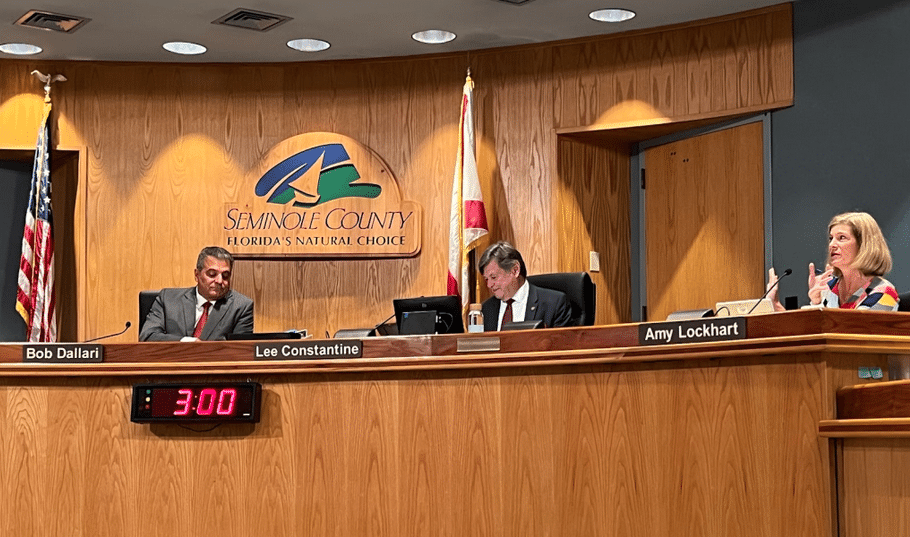
Seminole County Commissioner Jay Zembower said the county would have had to increase taxes four years ago if it weren’t for federal COVID relief money. And lawmakers in Tallahassee and Washington, D.C. are talking about further tax cuts – and the county has no one to pass those tax cuts along to.
“I will assure you that nobody up here wants to see any increase whatsoever, including myself as a business owner with non-homesteaded commercial property,” Zembower said. “Do I like it? Absolutely not, not as a businessman. But I realize there’s a price to pay to live in a community that’s safe (with a) high quality of life.”
Seminole County Commissioner Bob Dallari, who represents the Oviedo area, was the lone vote against the tentative budget rate back in August. Dallari also voted against increasing the county’s gas tax and utility tax increases earlier this year .
Dallari pointed toward unfunded mandates from Tallahassee as an issue. Dallari said there’s been issues where cities raise their pay rates for officers, and it escalates between different cities and the county.
“I’m hoping that we can bring the seven cities to the table to see how we can all coexist in the next coming years,” Dallari said. “What comes first, the cities or the county. It’s a never-ending cycle.”
Dallari ultimately voted against the increase in the millage rate, but voted for the budget.
Seminole County has also voted to increase two other taxes earlier this year. The county has approved a 5-cent gas tax paid by consumers when getting gas. And residents in unincorporated Seminole County had an increase in the taxes they pay on utilities, including electricity, water, natural gas and propane.
Winter Springs is keeping its property tax rate flat for the coming budget year, although other fees have been increased.
Want to contact your elected leaders and weigh in on this topic? Find their contact information here. Have a news tip or opinion to share with OCN? Do that here.
Abe Aboraya is a Report for America corps member.
Sorry for the interruption but please take 1 minute to read this. The news depends on it.
Did you know each article on Oviedo Community News takes anywhere from 10-15 hours to produce and edit and costs between $325 and $600? Your support makes it possible.
We believe that access to local news is a right, not a privilege, which is why our journalism is free for everyone. But we rely on readers like you to keep this work going. Your contribution keeps us independent and dedicated to our community.
If you believe in the value of local journalism, please make a tax-deductible contribution today or choose a monthly gift to help us plan for the future.
Thank you for supporting Oviedo Community News!
With gratitude,
Megan Stokes, OCN editor-in-chief
Thank you for reading! Before you go...
We are interested about hearing news in our community! Let us know what's happening!
Share a story!
Author

Related Articles

Who’s on the Seminole County primary ballot for 2026
County Commission Candidate Nakicha Dunn calls foul as 2026 primary qualifying ends.
New Seminole County campus offers closer autism services
OCA provides care for adults with autism after the ‘service cliff.’
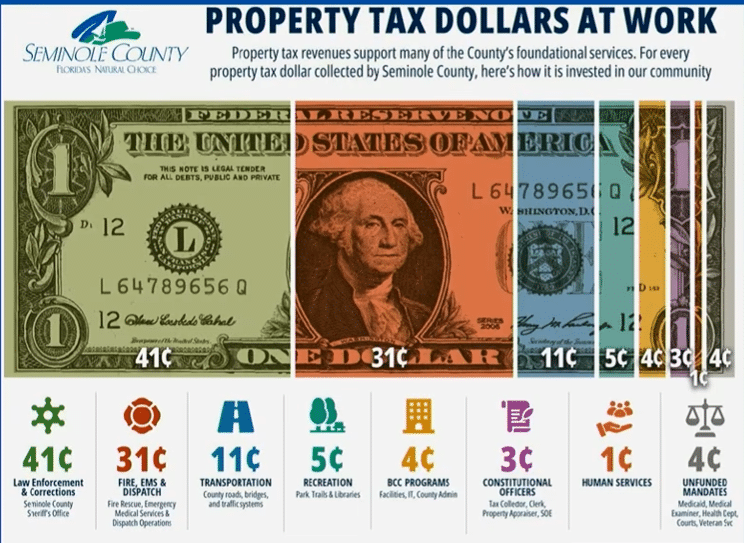
Help us report on property tax reform and affordability
Oviedo Community News wants to know what affordability means to you.