It’s been more than an hour, and Brian Stevens can finally see the Scout van that’s bringing him to work.
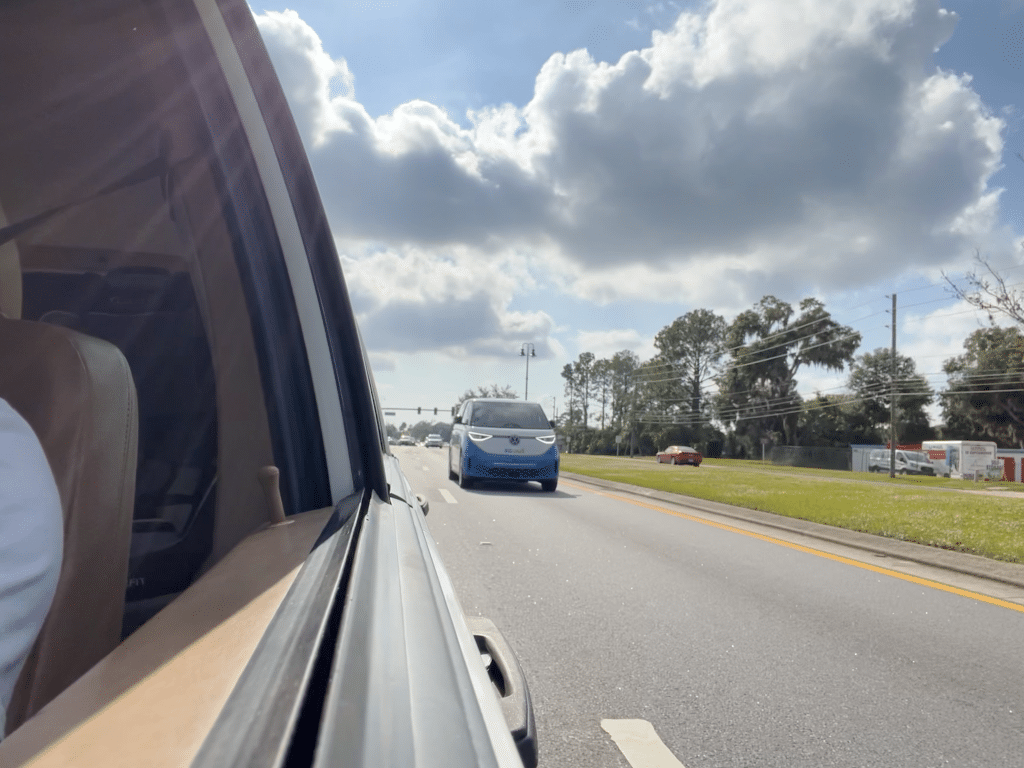
The sleek, electric Volkswagen ID Buzz pulls up, nearly noiseless except for the crunch of gravel under the tires, a bike rack hanging off the back. He touches the handle on the door, and it slides open automatically. The van is crisp, waxed blue and white, adorned with an illustration of a tree draped in Spanish moss next to a heron outlined in green.
As the passenger door finishes opening, Stevens steps in.
“Let you know, I’m going to Altamonte Springs, I gotta pick somebody first up,” the driver says by way of greeting.
Through the Sirius XM radio, set to an all-grunge channel, Kurt Cobain appears to read the situation perfectly while singing “Heart Shaped Box.”
“Hey! Wait! I got a new complaint!” Cobain screams.
Stevens, 45, works for a law firm in Longwood, but he lives in MetroWest, so five days a week he normally takes a three-hour Lynx bus ride each way across two counties to get to his job.
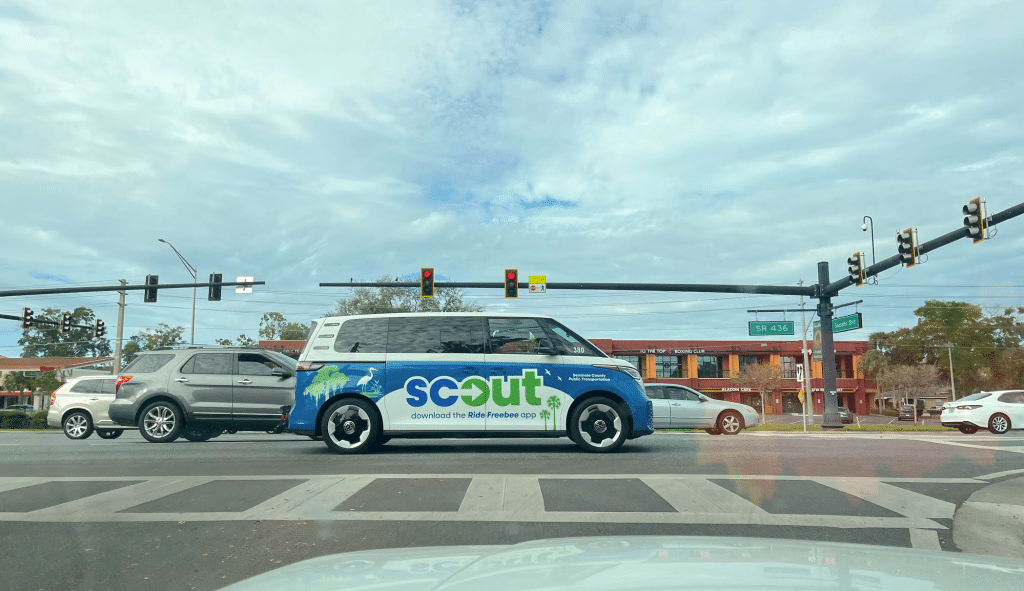
But on Thursday, Nov. 20, Stevens was trying out Scout, the micro-transit service Seminole County is switching to, replacing many bus routes. Most Lynx routes in the county will stop completely come Jan. 10.
For Stevens, the ride was hailed at 8:47 a.m. from the Lynx Fern Park SuperStop. The Scout app said it would take 45 minutes to an hour for his ride to arrive, but it actually arrived at 10:08 a.m. – an hour and 20 minutes later.
By now, Stevens has just 20 minutes to get to work. A typical car could make the drive in 15 minutes, but the added stop to pick up a passenger tacked on an extra 10 minutes.
So Stevens didn’t get to his job for 25 minutes – making him late for his 10:30 a.m. shift. From his pickup at the Fern Park SuperStop to his job, it took one hour and 52 minutes from when he hailed the Scout to get to work.
Had he taken the normal Lynx bus, he said he would have arrived at 9:30 a.m. – about half as long as the Scout.
“I knew it was gonna take a while for them to pick me up, but I didn’t realize it was gonna be that long,” Stevens said. “I would have made it on time if they didn’t have to pick up someone else, and we didn’t know that until we were already in the Scout.”
Scout, which is run through the Freebee app, is a fleet of electric Volkswagen ID Buzz vans and Toyota Siennas that can be hailed from an app, like Uber, and take Seminole County residents door-to-door. Unlike a standard Uber, the vehicles also pick up other riders along the way.
The service has gotten more popular since its launch in October, and wait times have ballooned. The county is now spending nearly $1 million to increase the number of vehicles on the road. The goal is to cut down on delays like Stevens’ morning commute.
“It’s not really a big deal at this point,” Stevens said about being late to work. “Now if it’s continuous, it will be.”
Max wait time cut in half – from 3 hours to 90 minutes
So was Stevens’ experience a fluke?
On the same day Stevens took the Scout, he was one of 670 people taking 600 trips. The average wait time that day was 44.1 minutes for a ride, but the contract signed by Freebee requires the average wait time to be less than 30 minutes.
But that’s the average wait time. On Nov. 20, the minimum wait time was three minutes, and the maximum wait time that day was 189 minutes.
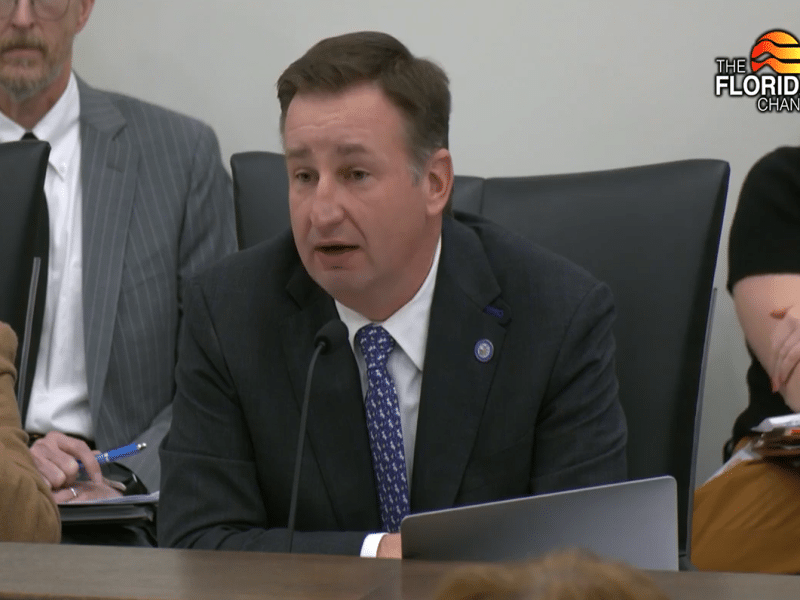
“We want the amount of vehicles to match the demand,” said Seminole County Commission Chair Andria Herr. “We want to manage it within the expense lines that we set forth. So the idea is that we’re improving service, but decreasing cost versus the old Lynx bus routes that weren’t necessarily as widely used as one might think.”
Seminole County started the Scout program with 35 cars on the road, at an annual cost of $5.4 million. The contract allows it to pay Scout to increase the fleet to a maximum of 55 cars without having to get Seminole County Commission approval to spend more money, for a total of $7.76 million.
And the county is now asking Scout to increase its fleet, which will take time to order the vehicles and hire drivers. The fleet is expected to increase by seven more vehicles, for an estimated cost of $968,000.
That doesn’t include any revenue from fares, which brought about $50,000 into the county last month.
In the meantime, the county is working with Scout to alter their drivers’ schedules so that more vehicles – including the fleet’s backup vehicles – are on the road during the peak hours of 6 to 10 a.m. and 2 to 6 p.m. The county is also allowing Scout to increase the trip deviations from 10 minutes to 15 minutes so that vehicles are able to pick up more passengers on a single trip.
And the metrics are getting better. On Nov. 28 – Black Friday – there were 660 passengers who took 549 trips. The average wait time was down to 17.23 minutes. The minimum time was two minutes, and the maximum was 91 minutes – about half as long as the week prior.
“That’s why you’re seeing the service improvements,” said Ji Li, Seminole County’s micro-transit manager.
But Herr said she doesn’t see the county expanding the amount of money spent on Scout anytime soon. On May 20, Seminole County approved a contract for $5.4 million Freebee to operate 35 vehicles; that can be expanded to 55 vehicles for $7.8 million annually.
“I don’t necessarily see us saying, ‘Yay, this is great, let’s exceed the Lynx budget that we had before,’” Herr said. “That is simply not the goal. This is not to replace Uber or Lyft. This is to provide a public transportation system for people that are otherwise transportation-restricted, to be able to move around the county, do business in the county, get healthcare in the county, (and) get work in the county efficiently and effectively.”
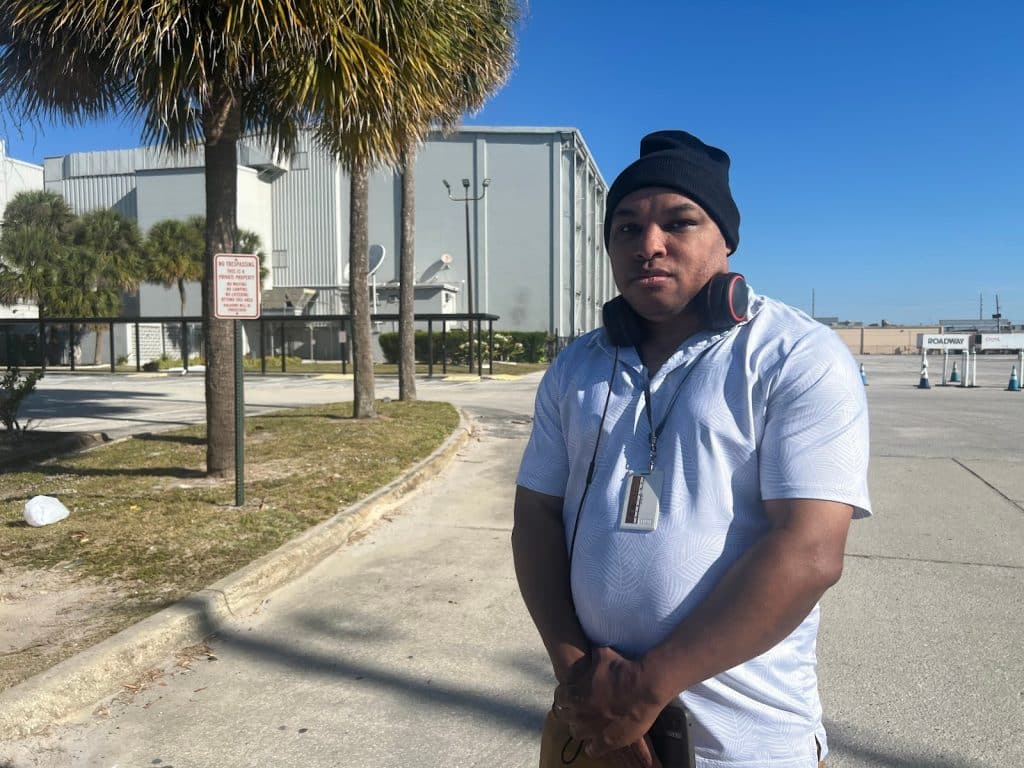
Meet Brian Stevens and hear his Lynx bus stories – from puking, to fighting, to giving up a seat
Brian Stevens has some bus stories.
Stevens said he’s seen passengers throw up on the bus, witnessed fights and even saw a woman accuse a man of trafficking her.
Stevens wears a black beanie, a short-sleeve white polo and brown slacks. He carries a black backpack, stuffed like a “go bag.” It’s got extra clothes, deodorant, toothbrush and toothpaste, and, on most days, a heavy-duty umbrella.
He recently got an electric fan for when it’s hot out. For food, he typically keeps lunchables and ramen noodles in his bag as well.
“Food is definitely a factor,” Stevens said.
He keeps a pair of black over-the-ear headphones around his neck at all times. If headphones didn’t exist, “I probably would have just bought a car a long time ago,” he says.
And for all the unpleasant bus-riding experiences, he’s also seen people giving up their seats for people who are elderly, and bus drivers taking a moment to wait for passengers running late.
“I listen to my podcasts and more educational stuff,” Stevens said. “So for me personally, it’s actually the most enjoyable part of my day, to be honest with you.”
Stevens said bus drivers have been announcing that the routes are going away come Jan. 10 to prepare riders for the change. But he said the irony is some of the routes actually seem more crowded in recent months.
Data shows that might be playing out. While most routes are seeing at least slight declines from January to October in 2025, according to Lynx data, some routes are increasing in the amount of monthly riders.
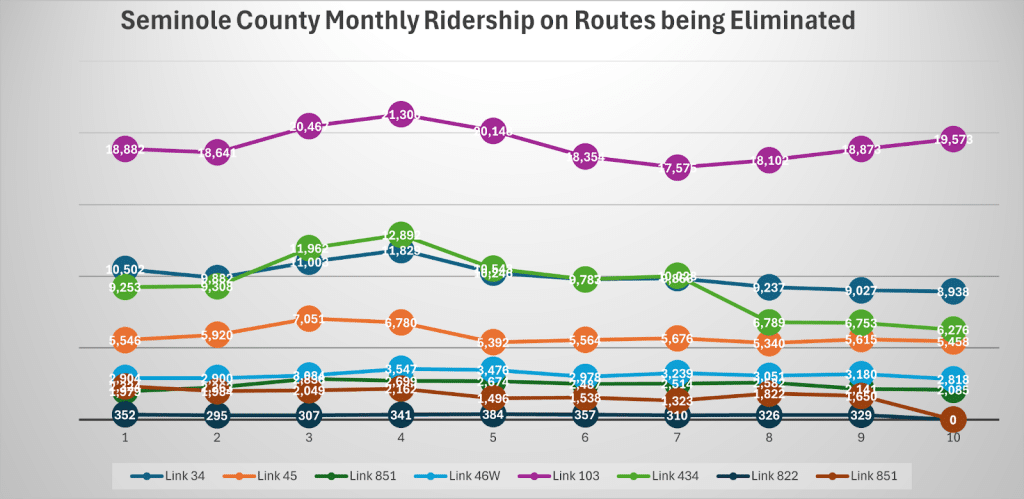
Link 103, for example, runs from the Fern Park SuperStop up to Sanford. That route saw 18,882 trips in January of 2025, and 19,573 trips in October. It also is the route used most by people seeking county and charity services, as it runs by the Seminole County jail, The Sharing Center and Rescue Outreach Mission in Sanford, the county’s only general access homeless shelter.
Matthew Friedman, a spokesman for Lynx, said even looking at daily totals, Lynx isn’t seeing huge drops in ridership since Scout soft-launched in September, at first launching in two of the county’s five zones.
Robert Spodeck was waiting for a bus on the same day Stevens took the Scout to his work. He said it’s “ridiculous” that the county is cutting the Link 103 up to Sanford.
“The bus is subsidized in so many ways, and they can’t find the money to go to Sanford?” Spodeck asked. “It’s just that they don’t want to go to Sanford anymore.”
Spodeck went on, saying it’s just “typical government stuff.”
“They’re all crooks, man,” Spodeck said. “I don’t have enough words to say [kind ones] about the things that they do.”
Scout is getting ‘busier and busier,’ driver says
On the day Stevens took the Scout to work, one driver said it’s been getting “busier and busier.”
She rode the bus herself for a year and a half, and sees the benefits of not having to wait at a bus stop for the ride.
Earlier, she had four people in her vehicle at once, and had to put on a bike rack to bring one passenger to college. Separately, another passenger said this was his 62nd trip in a Scout.
He used to ride his e-bike until he was hit by a car. While in the hospital, someone told him about the Scout service.
Another driver, Yavette “Yaya” Harper has been driving with Scout since the soft launch in September. She said the software that handles coordinating passenger pickups and routes is working better now, and getting more riders.
But there aren’t a lot of riders who are using Scout instead of public transit, she said.
“Not yet,” Harper said. “Most of the people I’ve been getting used to do rideshare with Uber and said this costs less. So far it’s been a few people who used to ride public transportation. … We get a lot of students who probably miss the (school) bus.”
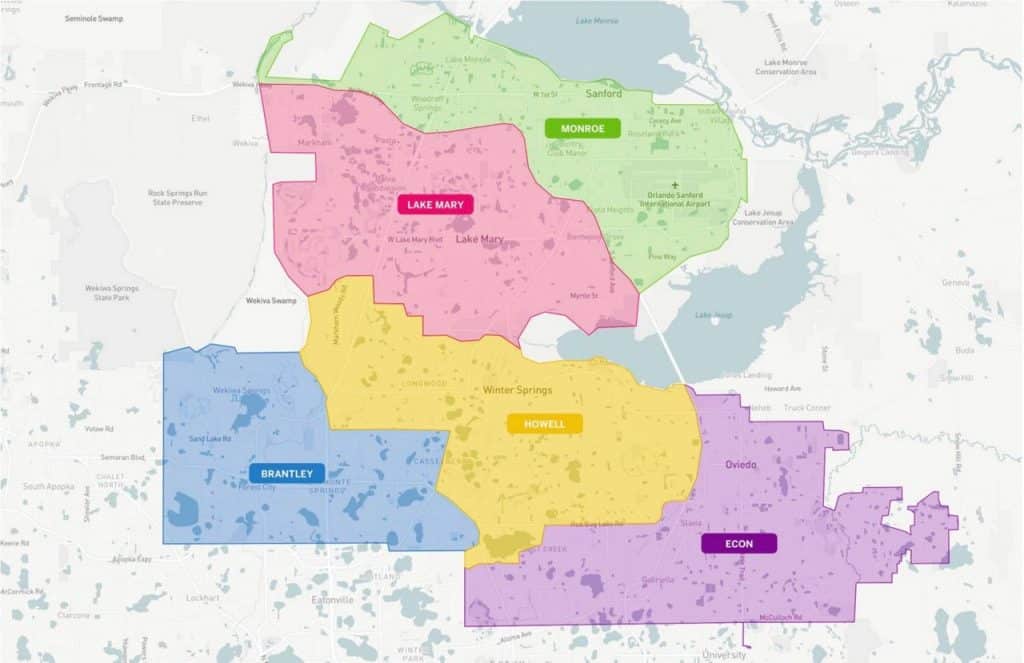
Harper said most of the passengers are in the Sanford area. She said as a driver, you could be in Casselberry, and then get a pickup in Oviedo. “You’ll be like come on, and they’re gonna wait so long.”
Where people are taking the Scout to and from
| ORIGIN REGION | DESTINATION REGION | RIDES | TOTAL PASSENGERS |
| Brantley | Brantley | 870 | 1,006 |
| Brantley | Econ | 101 | 126 |
| Brantley | Howell | 364 | 428 |
| Brantley | Lake Mary | 298 | 350 |
| Brantley | Monroe | 228 | 274 |
| Econ | Brantley | 84 | 106 |
| Econ | Econ | 306 | 371 |
| Econ | Howell | 121 | 138 |
| Econ | Lake Mary | 173 | 181 |
| Econ | Monroe | 100 | 108 |
| Howell | Brantley | 345 | 403 |
| Howell | Econ | 146 | 172 |
| Howell | Howell | 509 | 579 |
| Howell | Lake Mary | 451 | 490 |
| Howell | Monroe | 284 | 328 |
| Lake Mary | Brantley | 323 | 373 |
| Lake Mary | Econ | 134 | 144 |
| Lake Mary | Howell | 444 | 490 |
| Lake Mary | Lake Mary | 2,116 | 2,379 |
| Lake Mary | Monroe | 1,634 | 1,901 |
| Monroe | Brantley | 262 | 311 |
| Monroe | Econ | 113 | 119 |
| Monroe | Howell | 310 | 370 |
| Monroe | Lake Mary | 1,835 | 2,073 |
| Monroe | Monroe | 3,238 | 3,759 |
“Not too many in Winter Springs,” she said. “And then Oviedo, we always have just a small few in Oviedo.”
Scout employee: Lynx service is ‘old reliable’
Stevens has not used Scout since the first time when he was late Nov. 20.
There were a couple of issues that came to light during Stevens’ use of Scout. The first and most obvious one was the wait times.
When I tried to book a separate ride with Stevens, going from the same starting location to the same end location, two different drivers were assigned – despite booking at the same starting location and ending location within a few minutes of each other.
But Stevens was also frustrated that he couldn’t book a trip ahead of time. County officials say they have no desire to allow users to schedule rides ahead of time.
But there’s a possible loophole here. Normally, people have to be within 1,500 feet of their pickup spot to hail a Scout. But users riding SunRail can book rides ahead while on the train, said Chris Patton, a spokesman for the county.
Another big question: What happens in January, when more of the Lynx bus riders move over to Scout?
“After January, March, sometime around that time, they’ll probably really figure it out, you know,” Stevens said. “How many people are going to use it once there’s no more buses? You’re talking about a whole county of people who can’t take a bus. And yeah, they may just use it once in a while, but a lot of once in a while for thousands of people can easily add up.”
Stevens said he is saving up for a car. But he doesn’t want to be forced to buy one.
“I’m too cheap, to be perfectly honest with you,” Stevens said. “I don’t like monthly payments, so I’d rather just save up and just get the car that I want under my terms, versus a county trying to force me to just buy a car.”
It’s midday back at the Fern Park SuperStop at State Road 17-92 and State Road 436. The sun is shining, the temperature is mid 80s beneath blue skies.
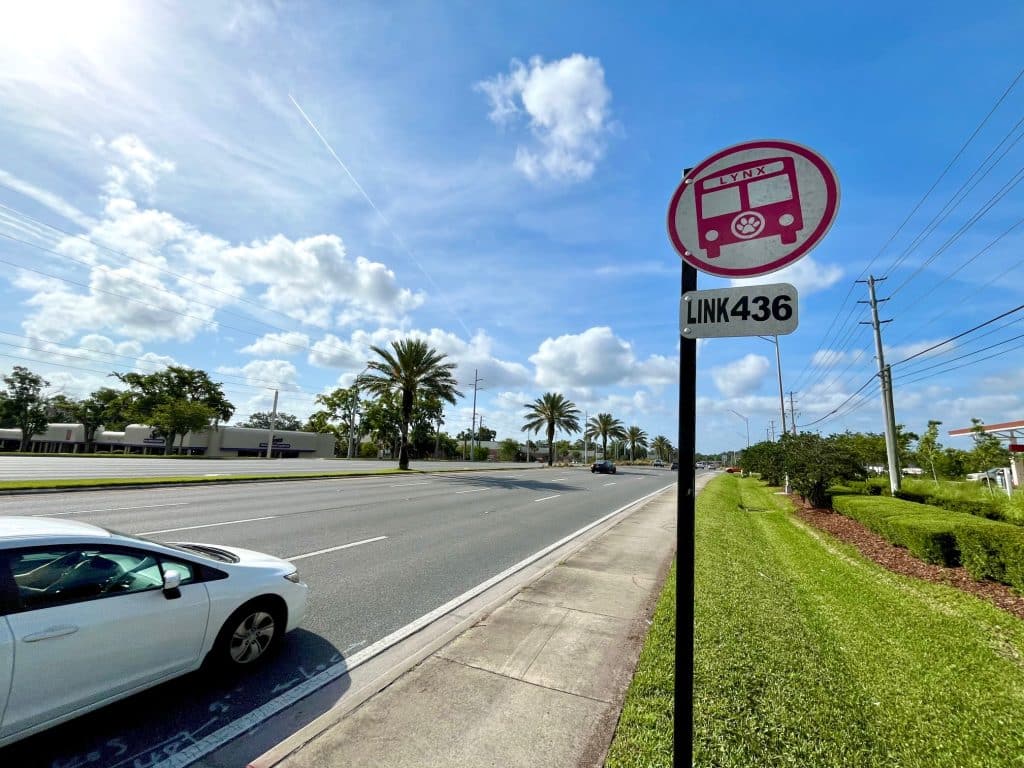
A man waits at the Lynx bus route wearing a Scout polo shirt. He isn’t doing outreach for Scout. His truck has broken down, and he needs a ride to work.
The wait times for Scout, he said, were too long, so he’s taking the Lynx bus to work – for Scout.
Why would he do this, irony aside? The Lynx bus, he says, is simply “Old reliable.”
At least until Jan. 10.
Want to contact your elected leaders and weigh in on this topic? Find their contact information here. Have a news tip or opinion to share with OCN? Do that here.
Abe Aboraya is a Report for America corps member.
Sorry for the interruption but please take 1 minute to read this. The news depends on it.
Did you know each article on Oviedo Community News takes anywhere from 10-15 hours to produce and edit and costs between $325 and $600? Your support makes it possible.
We believe that access to local news is a right, not a privilege, which is why our journalism is free for everyone. But we rely on readers like you to keep this work going. Your contribution keeps us independent and dedicated to our community.
If you believe in the value of local journalism, please make a tax-deductible contribution today or choose a monthly gift to help us plan for the future.
Thank you for supporting Oviedo Community News!
With gratitude,
Megan Stokes, OCN editor-in-chief
Thank you for reading! Before you go...
We are interested about hearing news in our community! Let us know what's happening!
Share a story!