
After Oak Forest Lake fish kill, the question looms: Who pays for cleanup on private lakes?
Winter Springs meeting next week to hash out a new stormwater policy, expected to lead to increases in stormwater fees for residents.
For residents living along Oak Forest Lake, algae blooms and occasional pea-soup green water have been the norm. But after a treatment to kill the algae in early March, residents noticed something was wrong.
“But the next day, we noticed all the fish jumping and going for air and things like that,” said resident Mark Gordon.
“They were trying to get air,” added Suzanne Gordon.
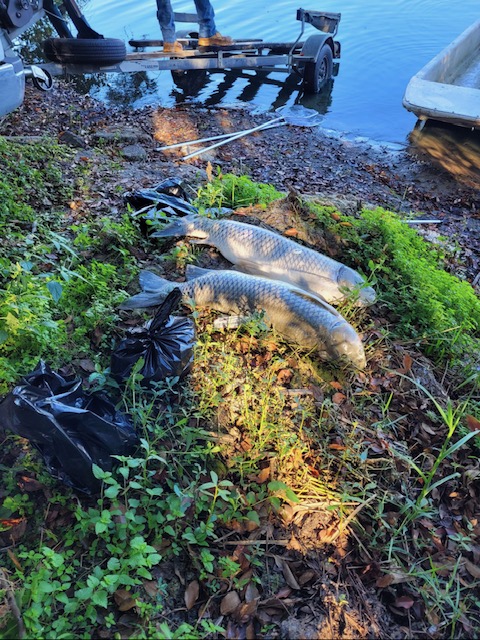
The fish began congregating by a fountain at the lake, gulping for air. And by March 10, fish began dying by the hundreds in the lake. Residents said contractors removed 20 to 30 black trash bags of fish over several days.
The smell was awful.
“We had to close the windows,” Mark Gordon said.
Officials said what happened at Oak Forest Lake was a perfect storm of conditions. An algae bloom reduced the oxygen levels in the lake, which already had low water levels. There’s years of muck built on the bottom. A weir to control the lake levels either failed or was tampered with, further lowering the lake. And the final straw was the treatment to kill the algae.
But the broader policy question for the city and residents: Who pays for it? The natural lake is private – the general public can’t access it. But the city has an agreement that allows stormwater runoff from the surrounding neighborhood to go into the lake – an agreement, residents said, done in the 70s that would not be allowed today.
“We basically want the city, since they’re using this as a stormwater pond when it’s a natural lake, we want them to step up and do the steps that have to be taken,” Suzanne Gordon said. “And they have to continue to do it, they cannot reroute it.”
Oak Forest Lake is a seven-acre lake, the seventh largest natural water body in Seminole County, according to documents provided by former city officials. It has more than 20 homes on its shores, most with boat docks.
There are ducks, fish, turtles, and even the occasional otter. Gordon said he didn’t know there were eels in the lake until they washed up dead in the fish kill.
Starting in 1978, the city had a signed agreement to route stormwater runoff from the surrounding neighborhoods into the lake. Oak Forest Lake is a prime example of what’s known as a “hybrid” lake.
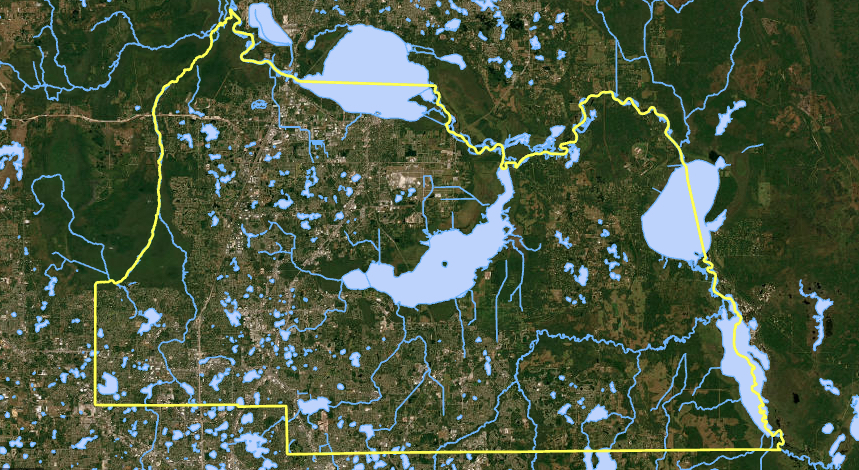
A complicated system of interconnected ponds, creeks, rivers and lakes flows together to prevent flooding in Seminole County, with Winter Springs routing stormwater from multiple cities and two counties through its water systems.
– Map courtesy of University of South Florida.
Winter Springs has 368 ponds, with 48 owned by the government and public ponds and 225 private ponds. The remaining 95 are what’s known as hybrid ponds, meaning they service public roads or infrastructure or serve a vital part of the stormwater system while being private.
What level of maintenance and repair the city is willing to do is open for debate, but will ultimately impact possible rate increases for residents.
Winter Springs is having a workshop Wednesday, April 1 to talk about the city’s policy going forward. The meeting is at 9 a.m. and, depending on what commissioners decide, it could further increase the rates residents pay for stormwater.
So what’s next for Oak Forest Lake?
Officials say the lake is not beyond repair.
“The lake is not a dead lake, it’s still a lake that can be revitalized and healthy, get it back if we follow this game plan,” said Winter Springs City Manager Kevin Sweet. “It’ll take some additional funding. There’s many lakes we’ll be discussing (next week). We need to have some real conversations about what the cost impact will be.”
Winter Springs Commissioner Mark Caruso held a meeting with neighbors after the fish kill to go over the city’s next steps on the lake.
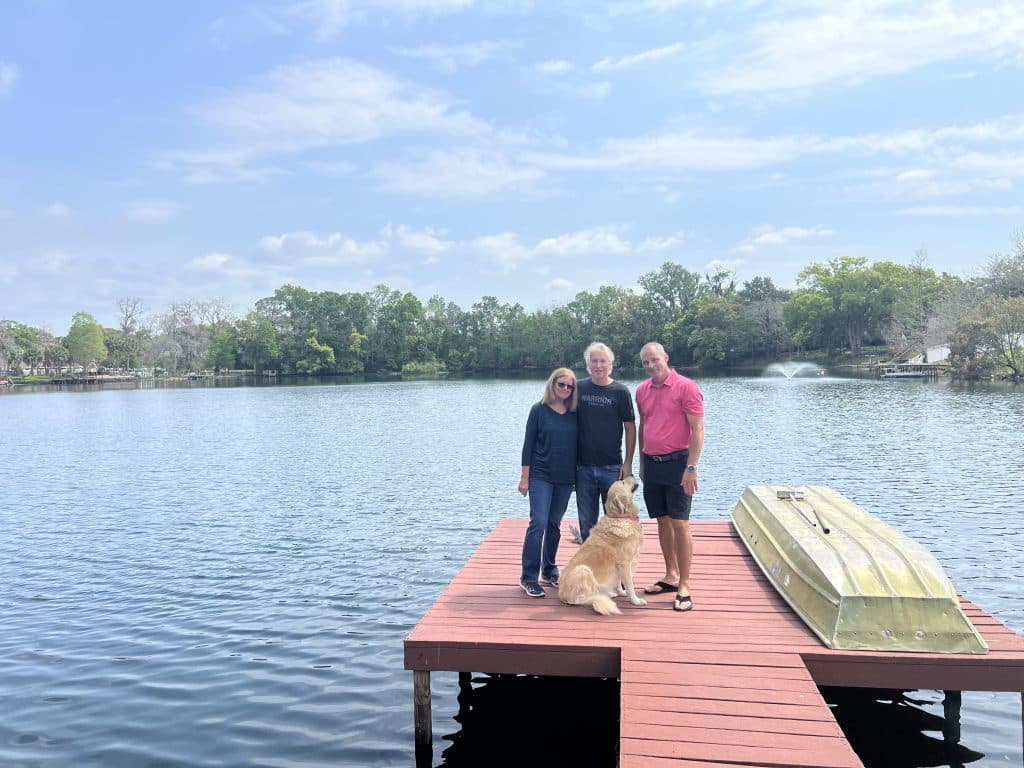
“The city is not perfect,” said City Commissioner Mark Caruso, who lives nearby the lake. “There’s many problems. If we can take care of the big stuff – like, in my eyes, this is the biggest lake we have in Winter Springs.”
Want to contact your elected leaders and weigh in on this topic? Find their contact information here. Have a news tip or opinion to share with OCN? Do that here.
Winter Springs’s contractor, SOLitude Lake Management, was out Wednesday morning doing a new type of treatment on the pond called SeDox. SOLitutude will no longer do the copper sulphate spraying that seemed to trigger the fish kill.
The city has also put a running generator near the lake to help aerate the water in the short term. Longterm, the city is talking about installing a permanent aeration system at the lake, and taking other measures to reduce the phosphorus in the lake.
“The use of products like (Scott’s Turf Builder) Bonus S, those high nitrogen products on your lawn, they make our neighborhoods look spectacular,” said Winter Springs Mayor Kevin McCann. “But I would please encourage people to use them on a very limited basis. They do significant damage to our waterways, and are doing long-term damage eventually to Lake Jesup and wildlife throughout the state.”
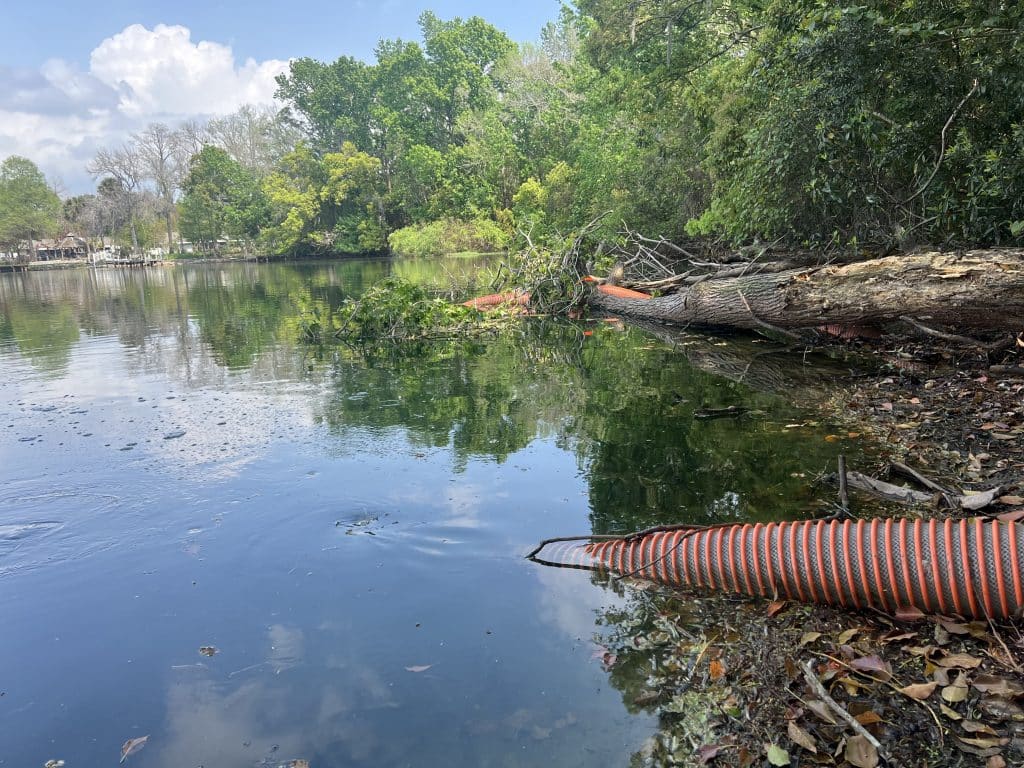
The city is also looking to repair the lake’s control structure, where one of the weirs was either removed or failed, causing the lake’s level to drop further. There are two entrances for stormwater to enter Oak Forest Lake, and water discharges through the weir to the north side of Winter Springs Boulevard.
When the lake is ready for it, it will be restocked with fish.
“SOLitude will continue removing dead fish and will monitor oxygen levels weekly,” Winter Springs City Manager Kevin Sweet wrote in an email to residents. “Once conditions stabilize, they have committed to restocking fish in the lake at no cost to the city.”
Abe Aboraya is a Report for America corps member
An earlier verison of this article incorrectly identified the brand of lawn fertilizer.
Support local news!
Choose a monthly amount
Hometown Hero
Community Champion
Golden Rooster Society
Custom Amount
Thank you for your support!
Author

Related Articles

Flock license plate reader discussion leads to possible de-Flocking of Oviedo
Oviedo considers removing Flock license plate readers, among the reported 190 cameras installed in Seminole County.
Oviedo Mall kennel approved following dramatic public hearing
Pet rescue nonprofit in Oviedo gets go-ahead to begin boarding dogs over the weekend, despite neighbor’s claims that dog noise issues haven’t stopped.
Ryan Elijah upsets Rep. Cory Mills for U.S. House District 7
Embattled incumbent Cory Mills, facing ethics investigations, falls to former Fox 35 anchor Ryan Elijah, who now hopes to reach across the aisle.