
Oviedo residents to see 17% solid waste rate hike June 1
Oviedo’s garbage fee is going up to help shore up a shortfall in funding that originated from the county charging more.
Oviedo residents are set to see a substantial increase in their garbage fee in the coming weeks.
After discussing what was determined to be a needed influx of funds to help the city’s solid waste program remain self-sufficient at its March 30 work session, the Oviedo City Council voted unanimously to approve a 17% garbage fee hike to $29.29 per month, beginning June 1.
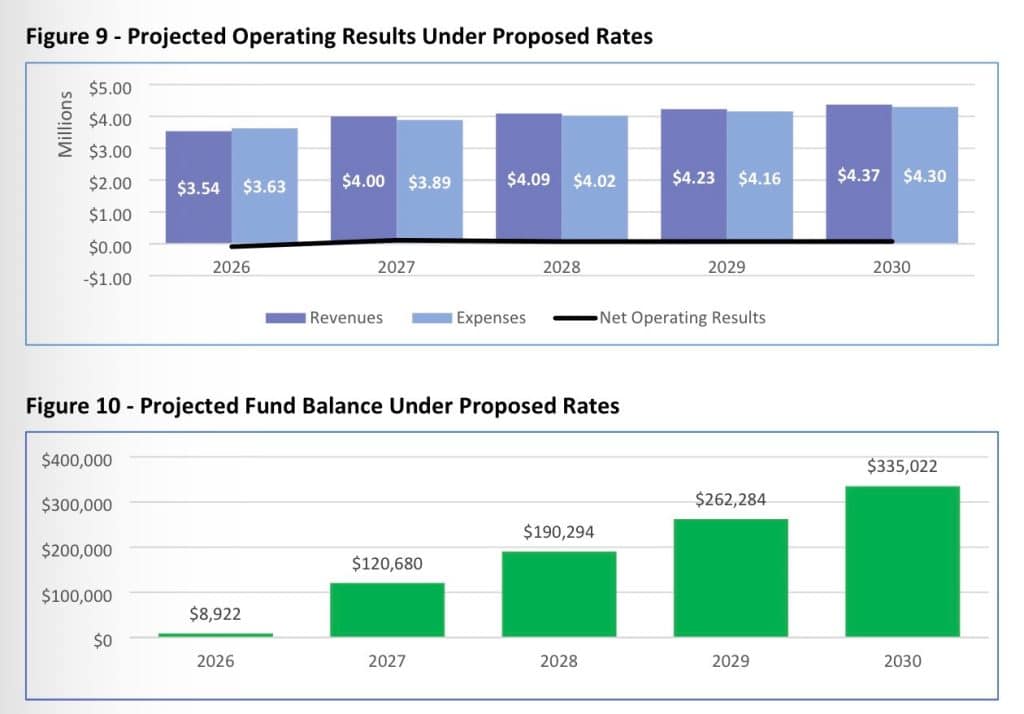
Residents will continue to see smaller annual increases on each subsequent Oct. 1 — including this year — to fend off inflation through at least 2030, by which time it would have risen to $32.16.
”To keep the reserves above water, I think it’s something we’ve got to do,” Councilmember Jeff Boddiford said. “You hate having to increase fees, but, again, it’s a service to the residents that you’re getting weekly trash service, you’re getting weekly recycling, you’re getting weekly yard waste, you’re getting … bulk [waste removal].
“It’s a good service that we’re providing to the community; it’s just costs are going up, and we have to take costs up, as well,” he said.
This is not the first time in recent years that Oviedo residents have seen increases to city bills, as stormwater and water utility rates increased significantly in February 2025.
”I pay more for water and trash in Oviedo than my power bill,” Facebook user Samuel Kaiser wrote on OCN’s Facebook post following the March 30 work session. “This city is absurd with their fees.”
On Oct. 1, 2016, solid waste rates were $19.64, followed by rates of $19.76 on the same date in 2017 and 2018, $20.43 in 2019 and $22.98 in 2020.
In 2021, solid waste rates were increased by $2.02 per month to $25, where the number has stayed in the five years since. With the flat rate, the city has seen a decline in its solid waste fund balance from its peak of $263,000 in 2023 to $100,000 on Oct. 1, 2025, with a projected deficit in 2026 and beyond if the rate would have remained at its current level.
“One of the benefits of paying for this kind of thing with fees is that we are transparent with how much money we collect, and how much money goes out,” Councilmember Alan Ott said. “We are getting charged more money by the county and by the contractor, and this is how it has to go. We have to pay for it and this is the way it works.”
Want to contact your elected leaders and weigh in on this topic? Find their contact information here. Have a news tip or opinion to share with OCN? Do that here.
Sorry for the interruption but please take 1 minute to read this. The news depends on it.
Did you know each article on Oviedo Community News takes anywhere from 10-15 hours to produce and edit and costs between $325 and $600? Your support makes it possible.
We believe that access to local news is a right, not a privilege, which is why our journalism is free for everyone. But we rely on readers like you to keep this work going. Your contribution keeps us independent and dedicated to our community.
If you believe in the value of local journalism, please make a tax-deductible contribution today or choose a monthly gift to help us plan for the future.
Thank you for supporting Oviedo Community News!
With gratitude,
Megan Stokes, OCN editor-in-chief
Thank you for reading! Before you go...
We are interested about hearing news in our community! Let us know what's happening!
Share a story!
Support local news!
Choose a monthly amount
Hometown Hero
Community Champion
Golden Rooster Society
Custom Amount
Thank you for your support!
Author

Related Articles
Oviedo prepares outreach plan for upcoming property tax amendment vote
With the November elections less than four months away, Oviedo continues to prepare for the possibility of losing millions of dollars that pays for infrastructure, parks and more.

Oviedo awards construction contract to fix Mitchell Hammock ‘suicide lane’
After a study showed the road was one of Oviedo’s most dangerous, the city secures funding to help pay for it, part of a citywide push to improve traffic safety.

Oviedo City Council drops tax rate after paying off debt
Oviedo pays off long-standing loans that helped pay for Downtown Master Plan, fire station.