
Winter Springs talks storm management, hurricane damage funding
As hurricane damage is still being assessed in Winter Springs, the city is looking for how to rebuild its stormwater systems yet again.
Following the wake of Hurricane Helene and Hurricane Milton’s impacts to Winter Springs, city commissioners began the processes for storm damage mitigation during Monday night’s commission meeting, addressing ongoing stormwater management, relief funding and debris removal.
A longstanding concern for residents, flooding issues and stormwater management have posed numerous challenges for the city, exacerbated by the recent hurricanes. With Milton now gone, the city has begun focusing its efforts on remediating street and waterway damages.
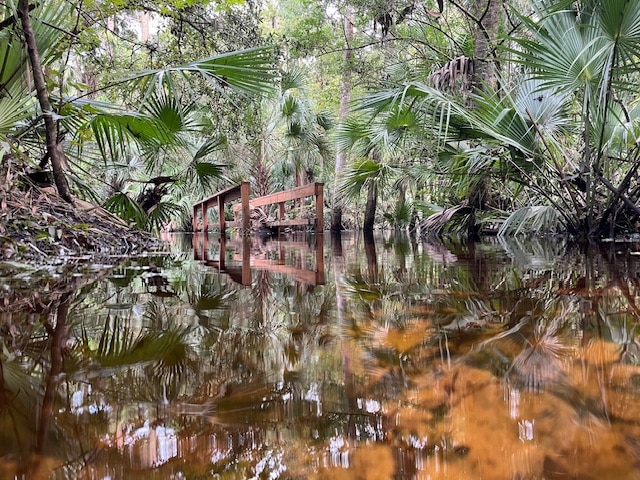
The city is ahead of the pace of other municipalities in cleaning up storm debris, as Winter Springs Mayor Kevin McCann said debris pickup across the city began Tuesday.
“It will cost the city millions of dollars to pick up all of the debris,” McCann said. “Whether it be tree trunks, branches, fencing that’s down – those pickups start tomorrow. Many other communities are waiting a week to begin, but we’re going to get started tomorrow.”
Winter Springs Director of Finance Holly Queen told the commission that a change in FEMA requirements meant that only debris pickup on public roads, not private roads, can be reimbursed for the city.
Brian Dunigan, director of operations for Winter Springs, told the commission he’d spoken with the city’s account manager just prior to the meeting regarding the distinction between private and public debris removal for maximum reimbursement.
“He is very familiar with this process and understands the segregation that has to happen between the debris that’s picked up,” Dunigan said. “So I think we’re in very good hands there to make sure that we’re taking the necessary steps to maximize our potential for reimbursement from FEMA.”
McCann said while debris removal will begin this week, the commission would eventually need to address the issue of private road clearance at the city’s expense.
“We don’t need to address it tonight, but it will be something that will come down the road,” McCann said.
McCann asked that the commission approve the consent agenda containing a resolution to clear storm debris from private streets, with the understanding that the city may incur a “considerable cost” in doing so without the potential for FEMA reimbursement down the line.
McCann also said the commission was unaware of the updated regulations regarding public versus private streets at the time the item was added into the meeting agenda.
Before the vote, Queen said funds for the debris cleanup would not be taken out of the city’s general fund, but instead a storm reserve in the city’s solid waste fund specifically intended for such a purpose.
The consent agenda was passed unanimously by the commission.
David Hamstra, the Stormwater Department manager for Pegasus Engineering LLC, which consults with the city, also presented an overview of the city’s funding options for storm repairs following the damages recently caused by both storms.
Prior to Hurricane Helene’s impact, and in response to resident concerns over flooding issues, Hamstra presented the Commission with a stormwater briefing, which you can find here.
The city’s two main options for outside funding assistance, Hamstra said, will most likely come from either FEMA relief funds or the National Resource Conservation Service.
“Throughout the State of Florida, all the cities and counties that had been hit by Milton are basically totaling up their cost to get the city back in operation, whether that’s debris removal, failed roadways, utility damages,” Hamstra said, referring to FEMA’s funding. “In this case, the county then turns it over to the state, the state compiles all that and gives it to the federal government, so individual assistance and public assistance has to be totaled up and tallied up in order to know how much we’re going to get back for mitigation.”
Funding from the NRCS would cover what FEMA does not, Hamstra said, though this would not include flood mitigation, which helps prevent damage from future flooding.
“They’re mostly taking care of restoring natural waterways,” Hamstra said. “For example, that’s why they pay for sediment removal within creeks and rivers, erosion projects and things like that regarding our waterways.”
Hamstra said it was up to the city, however, to make the decision to begin clearing out the waterways prior to NRCS approval, as doing so without prior approval may result in the city losing out on funding reimbursements.
“The city has all the right to, if they want to do debris removal and sedimentation removal, you just won’t get reimbursed because you’re doing it before the NRCS approves those particular projects for consideration,” Hamstra said. “So it’s every city and county’s decision whether they want to react promptly or wait until the federal dollars are available to offset their costs.”
He also told the commission that it may take up to three to six months to have NRCS come out and begin the process.
“You can do the streets, that’s covered under public assistance,” Hamstra said. “And all the downed trees and the debris from the trees gone down, that’s all covered under our public assistance. That could begin right away. But if you want to get into the creeks, if there’s significant erosion or blocked waterways, if you want to get your money back, that means you wait until the NRCS program is made publicly available.”
Commissioner Cade Resnick questioned the city’s actions prior to the storms, saying the Commission should consider focusing on easements to allow for access to assist in clearing private streets and property for storms in the future.
“I would like for us up here, when voting comes along, to consider that the other thing, as well as the conversation of private versus community property, is to get the easements that we need to get this done so we can do it properly,” Resnick said. “There’s still flooding. There’s significant flooding in areas that we could have had easements for and taken care of this over the last two years.”
Hamstra said the storm brought nearly nine inches of rainfall within 12 hours according to the National Weather Service, almost equating to a 100-year-storm event. Stormwater systems in cities are typically designed to withstand 25-year storm events, which have significantly less rainfall.
“It was a good test of the system, but… we got spared,” Hamstra said. “It was not nearly as bad as [Hurricane] Ian, but we look at the rainfall, the duration that occurred, it was pushing the 100-year limit again.”
“So we’ve got to be better prepared,” Resnick said. “Somebody said safety, people don’t feel safe … we have to make it a priority that people feel safe.”
Want to contact your elected leaders and weigh in on this topic? Find their contact information here. Have a news tip or opinion to share with OCN? Do that here.
Sorry for the interruption but please take 1 minute to read this. The news depends on it.
Did you know each article on Oviedo Community News takes anywhere from 10-15 hours to produce and edit and costs between $325 and $600? Your support makes it possible.
We believe that access to local news is a right, not a privilege, which is why our journalism is free for everyone. But we rely on readers like you to keep this work going. Your contribution keeps us independent and dedicated to our community.
If you believe in the value of local journalism, please make a tax-deductible contribution today or choose a monthly gift to help us plan for the future.
Thank you for supporting Oviedo Community News!
With gratitude,
Megan Stokes, OCN editor-in-chief
Thank you for reading! Before you go...
We are interested about hearing news in our community! Let us know what's happening!
Share a story!
Author

Related Articles
DeSantis vetoes Seminole County appropriations worth $2.5M
Projects included a smart water meter system upgrades, an AI system to monitor schools for guns and crosswalk projects, but were vetoed by DeSantis.
City of Oviedo plants Liberty Tree as part of America’s 250th anniversary celebration
Newly planted hickory tree is one of seven planned Liberty Trees across Seminole County to commemorate semiquincentennial.
Oviedo begins preparing for potential property tax vote impact
“There are places in this state, cities that will probably not continue to exist,” Seminole County Property Appraiser Johnson said.
