
Victoria Bruce
Editor’s note: Bruce did a phone interview with Oviedo Community News.
Age: 42
Where they live: Winter Springs
Where they work: CEO of The Mitigation Banking Group, Current City of Winter Springs City Commissioner District 2
Prior work experience: Interned at Mitigation Marketing in 2004, eventually becoming President in 2016
Prior political experience: Bruce was elected to her current position of City of Winter Springs City Commissioner District 2 Commissioner in 2022.
Platform: Bruce said she hopes to make the performing arts a priority in Winter Springs alongside balancing growth and sustainability. “Sustaining Winter Springs” is the motto of her campaign.
Why they are running: Bruce said she is running for City of Winter Springs City Commissioner District 2 because there are many issues — infrastructure improvements, fiscal responsibility and environmental stewardship — that need to be addressed. She said her three years of experience as the City of Winter Springs City Commissioner will aid in balancing these issues.
Most recent campaign finance report: Nothing listed on official websites.
Endorsements:
Former Winter Springs Mayor Charles Lacey
Former Seminole County Commissioner John Horan
Candidate website: Victoria Bruce
Fun fact about the candidate: Bruce said she got into children’s theater in elementary school, and it was a life-changing experience. Her time participating in theater has created a focus for her to help grow the performing arts in Winter Springs.
Most recent campaign finance report: We will update this section as updated campaign finance reports become available
Candidate Q&A: The questions below are based on voter questions and expressed priorities. Each of the candidates within a race were asked the same questions and given the same amount of time to respond. The candidates’ answers were fact checked but otherwise unedited.
Top problem and your suggested solution:
All things Water!!! “One Water” is an integrated planning and management approach that treats all water; including drinking (potable) water, wastewater, stormwater, and recycled water (non-potable/reclaimed) as a single, interconnected, and valuable resource. The One Water strategy aids communities and utilities to work together for long-term reliability and environmental health. Much of the Winter Springs system was built decades ago, and the lack of maintenance for decades shows The pipes, lift stations, and wastewater treatment capacity determines whether water is safe and service is reliable. My solution is a worst case first, data-driven replacement schedule that is funded before discretionary spending, not after it. That means replacing aging pipes and lift stations on a planned timetable instead of reacting to failures, keeping wastewater capacity ahead of demand so new development does not strain the system, and aggressively pursuing grants and low-interest state financing so residents carry less of the cost. It also means publishing testing results and compliance status where residents can find them, so improvement is something they can verify.
Problem 2 and your suggested solution:
Affordability! Residents are absorbing higher costs across the board, and city government controls a real share of that through the millage rate, utility rates, and fees. My approach is to hold the line where the city has authority and to be honest about where it does not. I supported directing our City Manager to pursue the rollback rate for this budget year so property owners were not paying more simply because assessed values rose. On the utility side, I will keep insisting that any rate change come with a plain explanation of exactly what it pays for, that we chase outside funding first, and that utility rates never become a quiet substitute for general revenue. Residents deserve to see the math.
Problem 3 and your suggested solution:
Smart Growth! My standard is that capacity comes before approval. Traffic, drainage, utilities, and public safety capacity should be addressed before a project moves forward, not negotiated afterward when residents are already living with the consequences. I apply that test to every development that comes before the commission. I also believe protecting a 1/3 of Seminole County of our rural boundary land, which is zoned for low density, this is a top priority.
Why do you deserve re-election in this race?
I have a record rather than empty promises. I have been in the room for the budget decisions and infrastructure decisions that shape this city, and I understand how these systems actually work, which is the difference between wanting reliable water and knowing what it takes to deliver it. I answer residents directly and quickly, including the ones who disagree with me. I have pushed for transparency in how the city reports its own performance, supported conservation of our remaining natural land, and treated infrastructure as the first obligation of local government. Residents can judge me on what I have done with the seat, and I am asking to keep doing that work!!
According to a University of North Florida poll, Floridians say housing affordability is their top issue. What are your solutions for dealing with Florida’s affordability issue on a local level?
The Live Local Act is a Florida law designed to increase affordable housing by allowing developers to bypass local zoning rules if they set aside a portion of their units for workforce housing for at least 40% of residential units that must stay affordable for 30 years. The Law was First passed in 2023 (Senate Bill 102) and updated through 2026, the law aims to tackle the state’s housing shortage. The local governments do not prefer this, as it takes away from “Home Rule.” However, workforce housing was continuously being denied because of ‘Not In My Backyard” beliefs so they had to set a law to not allow push backs from permitting to allow for affordable housing. When cities fought back, most situations have ended up in lawsuits (like Integra). Zoning Override: Cities and counties must allow multi-family or mixed-use projects in areas zoned for commercial, industrial, or mixed use. Fast-Track Approval: Projects get administrative approval without needing local public hearings, rezoning votes, or comprehensive plan amendments. State Funding: The state provides up to $811 million for housing programs and incentives. Tax Relief: Developers receive property tax exemptions and sales tax breaks on building materials for qualifying affordable housing developments. Recent 2026 Updates (Live Local Act 4.0) Expanded Sites: The updated law allows projects on specific land owned by local governments, school districts, and religious institutions. Height Protections: Local governments cannot restrict building heights using setbacks or deny maximum height limits allowed by nearby commercial zones. Although, I may not like that Home Rule is being affected by this law, I understand the need and see both sides.
Will you vote YES or NO on the constitutional amendment to slash property taxes, and explain your position. How would you replace lost revenue – fees and/or service reductions?
Tough Question!!!! If Amendment 3 passes, the city of Winter Springs would lose roughly $2 million in the first year and about $4 million every year after that. That’s a lot of cuts; therefore, the city will either have to increase other fees on to the residents, support more economic growth, and/or increase revenue such as more Sponsorships, like the Advent Health Pickleball Court. The city may also need to cut services like Events, a Travel Freeze, and other services (which has not been recognized yet). Although, this pending potential revenue loss is unknown at this time, I still voted recently to rollback the mileage rate this year; so your cost is the same as last year regardless of the property value increase. I think residents need tax relief but I am unsure if this is the right vehicle.
Utility costs are rising for customers in Florida, and the proliferation of data centers is expected to exacerbate that issue. How should Florida’s utility regulators respond?
The New 2026 Regulations for Ratepayer Protections; under legislation signed by Governor Ron DeSantis in 2026; utility companies are barred from passing high infrastructure and electricity costs of large data centers onto residential or small business customers. The law preserves local community authority to regulate zoning, permitting, and environmental standards for new data center proposals. Large industrial-scale users should pay the full cost of the capacity they require. When a data center or comparable load arrives, the generation, transmission, and grid upgrades it triggers should be assigned to that customer class rather than spread across residential ratepayers who had no part in the decision. Residents in Winter Springs are already watching every line on the bill. They should not be underwriting infrastructure built for someone else’s business model.
What do you think is the biggest environmental issue the government should address in Seminole County?
Supporting the Rural Boundary is a key priority that we are going to have to fight to protect The state attempted to pass a law that was not approved, but may come back again to increase the density in the rural boundary. We have high density in 2/3 of the county, to ensure 1/3 of it stays protected with low density. In addition, Seminole County should be focusing on acquiring new acquisitions of land to deter development. It’s the only way to stop development, is to own the land. Seminole County also must set its priorities of advocating for conservation efforts including the Florida Forever acquisition of High Oaks Ranch, a 672-acre rural property in eastern Seminole County near Chuluota. I will continue to support any conservation efforts in Florida to keep our lands protected from future development.
Do you agree with the current federal and state governments’ approaches to immigration enforcement? Why or why not?
Since Winter Springs involvement with ICE, the city has turned in 5 immigrants with outstanding warrants. The police departments follows Florida law, and its core job is responding to calls, investigating crimes, and keeping neighborhoods safe. My main priority is keeping residents safe from illegal immigrants that are dangerous to our community.
Readers shared concern about overdevelopment in the Greater Oviedo and Winter Springs community. We know that local municipalities must plan for density based on state population projections. How will you handle decisions about incoming development and redevelopment that balances the law, the needs of the city and the desires of your constituents?
Smart Growth for Economic Development and balancing the protection of the environment is key in managing a city. Private property rights allow a landowner to develop on the land he owns within the (Future) Land Use/Zoning. If asked to rezone, I say No! In addition Redevelopment needs to be encouraged over New Development with tax incentives.
Local governments continue to increase stormwater rates to pay for drainage projects. At the same time, the city and county commissioners continue to approve development, which eliminates natural drainage and filtration. If elected, what actual, concrete policy steps would you take to address flooding?
Since the 80’s, all new Development requires Stormwater drainage that can not effect a neighboring property via the Water Management District or Florida Department of Environmental Protection via a Environmental Resource Permit (ERP), which ensures stormwater runoff is better off than pre-development. Older areas that were developed prior to 1980 lack the necessary resources. Therefore, retrofitting Stormwater ponds and infrastructure are key to assisting older parts of town from flooding. In addition, we need the funds to provide maintenance, not just capital projects. Ponds, inlets, and outfalls that are not maintained do not perform as designed, and deferred maintenance is the most common reason a system that looks adequate on paper floods in practice. Our stormwater utility is on a phased rate schedule precisely because that account had been operating in deficit of $500,000.00 and borrowing from the General Fund, which is not acceptable and unsustainable.
Residents often complain of high water bills, and water bills that are going up. Can you propose any relief for residents?
Obtain a rain sensor, to ensure you are not wasting water for irrigation. 50 loads of laundry is comparable to running your irrigation for a cycle. This will not only ensure water conservation but also a lower utility bill. Potable (Drinking) Water, the Stormwater Fund & Wastewater fees fund the utility system itself, and the system needs substantial reinvestment after decades of use. I will continue to encourage the city to pursue grants and low-interest State Revolving Fund financing to minimize the cost on residents.
What steps would you take to ensure elected officials don’t personally profit from development?
Direct bribery is illegal: Elected officials cannot legally take cash in exchange for a zoning vote.
Cities use the county’s full-day traffic counts to decide whether or not to widen roads instead of peak times, which can cause congestion as development comes in. What steps would you take to address traffic issues?
Full-day averages hide the problem. A road that performs acceptably across twenty-four hours can fail completely between 7:30 and 9:00 in the morning, which is when residents actually experience it. I would push for peak-hour and peak-direction counts to be used in concurrency and capacity decisions, and for counts to be taken after nearby projects are occupied rather than relying on pre-construction baselines. Most of the roads causing the worst congestion here are county or state facilities, so this has to be a joint conversation with Seminole County and FDOT rather than something a single city can solve alone.
Some traffic lights only let two to four cars through before changing to yellow and red. Some left turn lanes are so short that cars see their green left turn lights, but cannot access the left lane. Traffic jams are getting longer on Slavia and some other roads all the time. How would you address these issues?
These are solvable engineering problems, and residents should not have to accept them as permanent. Short cycles that release only a few cars, and left turn lanes with storage too short to reach the green arrow, are correctable through retiming and restriping. The complication is jurisdiction, since signal timing on State Road 434 and county roads is not controlled by the city. My approach is to document specific intersections with resident reports and city data, take them to the county and FDOT as a prioritized list rather than one complaint at a time, and report back publicly on what was requested and what was done. Residents deserve to know whether a request was made and refused, or never made at all.
Do you support keeping the rural boundary as-is in Seminole County?
Yes, I support keeping the rural boundary as it is. It has done what it was designed to do, which is give the county a durable edge between developed areas and the low-density land that still absorbs water, supports wildlife, and defines the character of this area. Once that line moves, it does not move back. I support conservation of remaining natural land!
What steps would you propose to address student safety on e-bikes?
This needs to be handled by the State of Florida as a safety issue. I have been engaged with the City of Winter Springs police department on education aimed at both students and parents, covering the rules that already exist around age, speed, and where these bikes can legally operate, since many families genuinely do not know them. Enforcement should start with warnings and contact rather than citations. On the infrastructure side, the real fix is separation. Where students are riding on roads without a safe alternative, that is a trail and connectivity gap we should be addressing in our capital planning, and I would prioritize the segments that connect neighborhoods to schools to ensure our walk ability score.
What are candidates willing to do to restore respect for the election process?
We need to stop making empty promises and carry through what we said we would do.
Winter Springs has the highest percentage of residential tax base. What solutions would you propose? And what ideas do you have to revitalize the Winter Springs Town Center?
Winter Springs carries an unusually high share of its tax base on homestead residential property of approx 90% which means homeowners absorb costs that a more balanced community spreads across commercial and industrial property. There is no quick correction to that. Over time it means treating appropriate commercial development as a fiscal necessity rather than an intrusion. One of our largest taxpayers is the Integra Apartments on SR 434. The Town Center is the most direct opportunity we have to spur economic growth, which needs to have consistent occupancy. However, this is privately owned and not managed well with several different investment groups managing different sections of the Town Center. Increasing the density of the Town Center will increase small businesses to survive.
As a city commissioner or mayor, will you pledge to accept the recommendations from the Charter Review Commission as presented, with no changes?
The Charter Review Commission does serious work and its recommendations deserve real weight, a full public hearing, and a genuine presumption in their favor. But a commissioner who promises in advance to approve a document not yet written has given away the review function residents elected them to perform, and the charter is the city’s foundational governing document. My commitment is that I will listen to recommendations from the committee and consider each suggestion with full due diligence.
Author

Related Articles
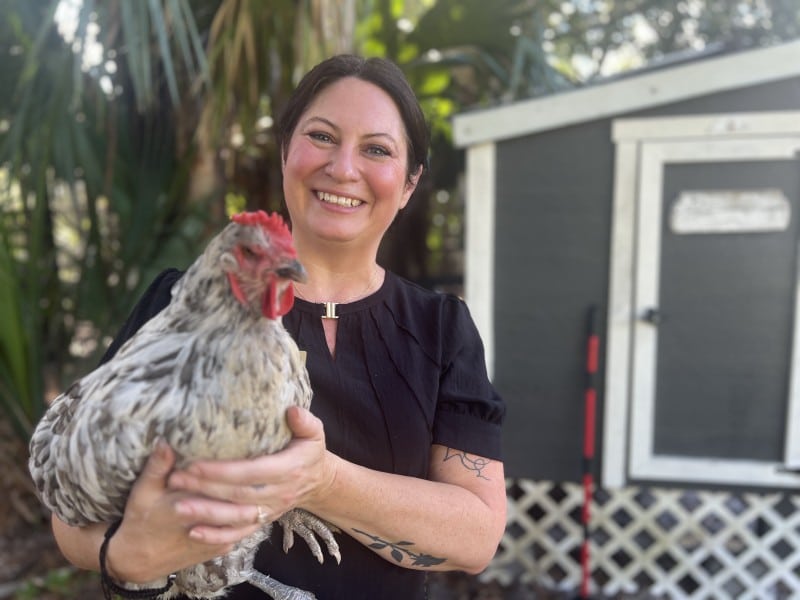
Attempted coop: Winter Springs makes first move to allow backyard chickens
Final vote at the end of the month to allow up to 20 backyard chickens in certain areas, but some residents want the city to wait.
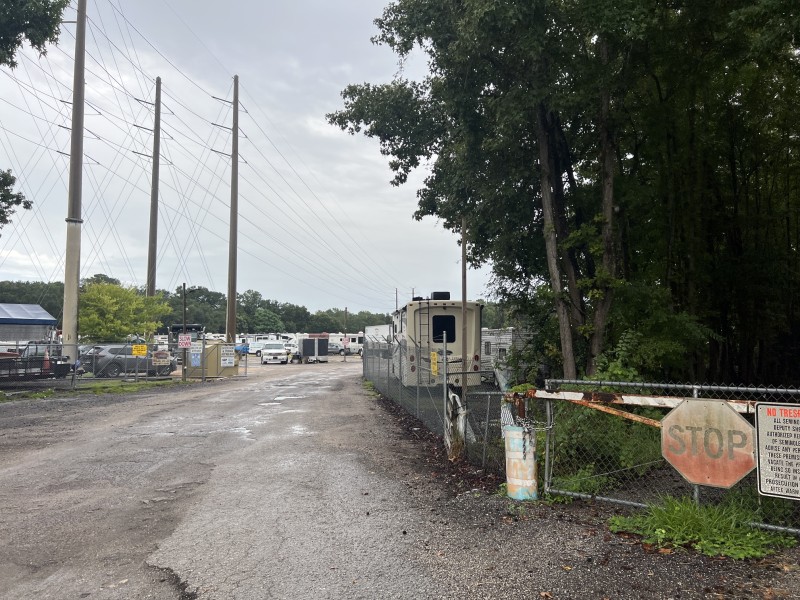
Seminole County approval could pave the way for 300+ apartments near Lukas Nursery
Greeneway Preserve still needs a detailed site plan before construction would start, as commissioners warn the area is ‘prone to flooding.’
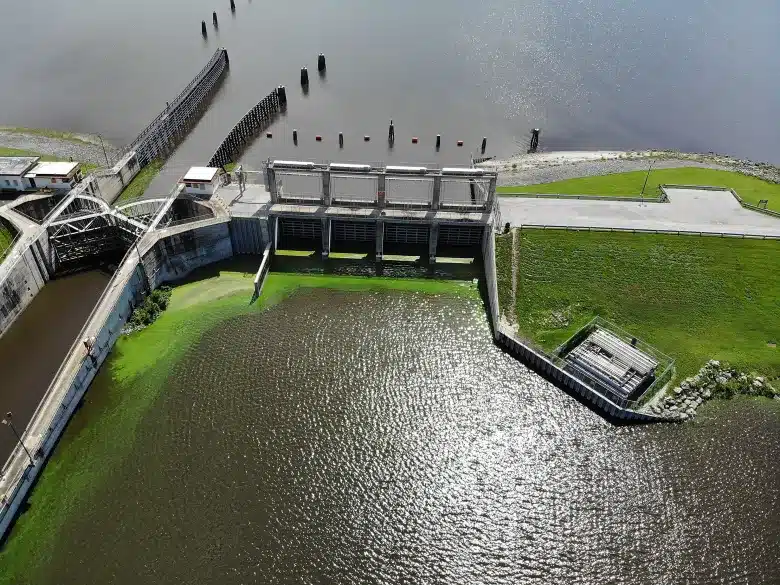
Watchdogs warn Amendment 3 may cut funding for flood control and drinking water
Florida’s water management districts depend on property taxes to fund about a third of their work preventing floods, securing the drinking water supply and conserving wetlands.