
Recycling in Seminole County, explained
The county is well below the state’s previous target, but that comes in part because of residents not understanding what can be recycled.
Only 11-13% of the items Seminole County residents put in their recycling bins each year get recycled, according to county officials. But there may be some recyclable items at home that residents are missing.
Recycling rates in Florida have been declining for the past couple of years, according to the Florida Department of Environmental Protection. The Department created a state-wide recycling goal of 75% by 2020; however, Florida failed to meet the interim goal of 60% and have maintained a rate of below 50% since then.
“I think a lot of times when we talk about recycling, we want to save the planet, and that can be overwhelming very quickly,” Seminole County Solid Waste Division program recycling coordinator Adeemir Dacenay said.
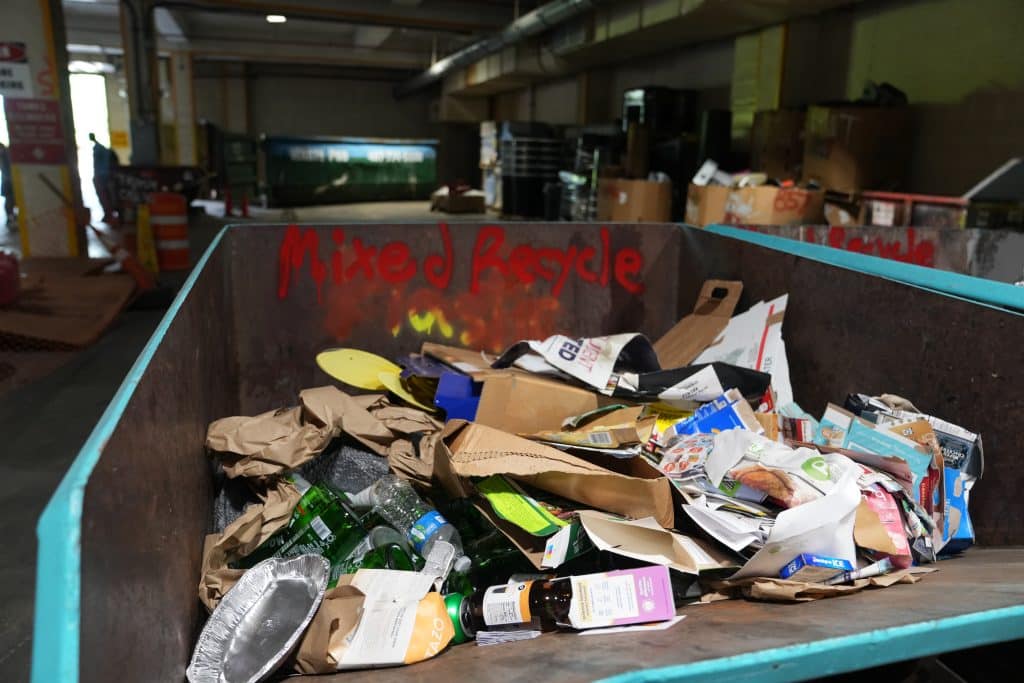
Paul Diaz, Winter Springs District 1 commissioner, said in an email that the current recycling system in the city lacks transparency, especially because most residents don’t know that many of the items they place in the recycling bin ultimately end up in landfills due to factors such as contamination.
“We would love that number [recycled materials] to be higher, and that’s where education and letting people understand what can be recycled, what happens curbside, and just being wiser about our choices come into play,” Dacenay said.
Reuse Shop gives oddball items a second life
But there are some items where residents can have a little bit more control over whether they’re recycled. That can be as simple as knowing where to recycle certain items.
Trashed hazardous materials, such as chemicals, paint, and unwanted bicycles and shoes, could get a new lease on life, thanks to Seminole County’s Reuse Shop.
Residents can drop off hazardous materials, such as electronics, chemicals and construction debris at the Central Transfer Station, 1950 State Road 419 in Longwood, to then be tested for contamination and, if they are in good condition and deemed appropriate by technicians, they’ll go into a “Reuse Shop” in the same facility where residents can have it for free, up to 20 items per day.
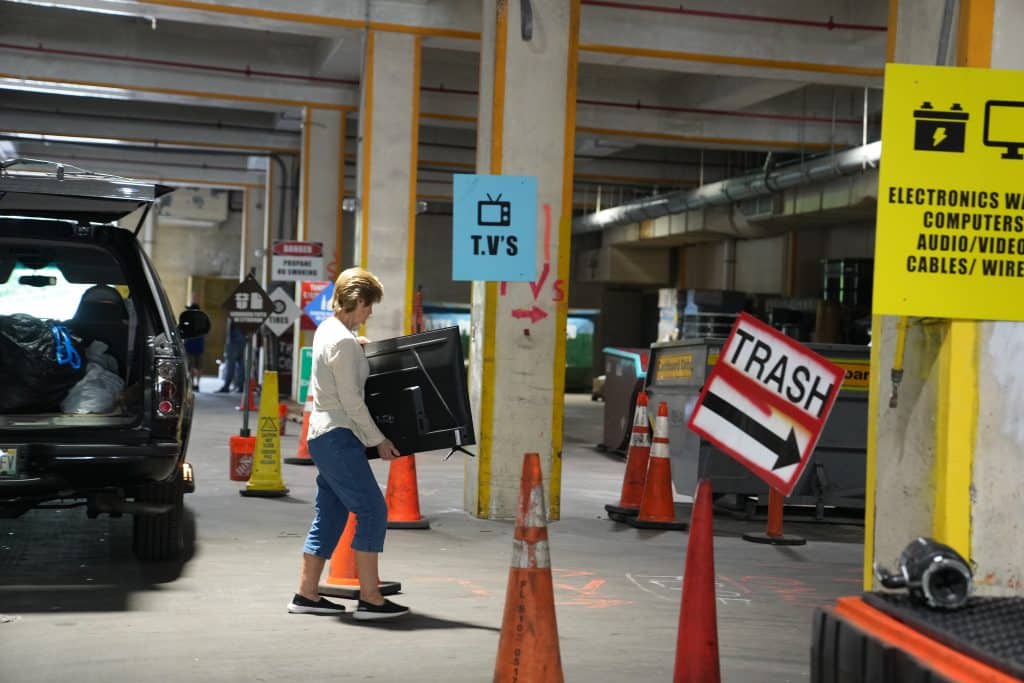
Any person who wishes to dispose of a bicycle can drop it off at the landfill at 1930 Osceola Road in Geneva. Then, the county will collect the bicycles and take them to Rusty’s Bicycle Recycle, a charitable organization dedicated to repairing bicycles to later donate them to charities that serve people experiencing homelessness, including veterans and foster children in the Orange and Seminole County area.
Shoes are also considered recyclable. Residents can drop them off at the Central Transfer Station. Then, they’ll be collected by Recycled Sneaker Project, an organization dedicated to helping developing countries by donating shoes and helping raise funds for various schools and organizations.
On the other side, to determine if the materials that the Central Transfer Station receives are not contaminated and are safe to handle once they are placed at the Reuse Shop, the county goes through an extensive testing process.
The testing process has different methods to make sure a product is safe to give back to the residents. For example, Dacenay said that the technicians use ammonia strips to measure the level of ammonia in a substance. Other times, they use visual testing.
“Let’s say you’re taking a bottle of Roundup, your typical weed killer; well, for something like that, where you know someone else could’ve mixed it with water, or anything like that, or kind of like cutting that down, we use visual inspection,” Dacenay said.
He said that if the hazardous materials can’t be tested by a technician or can’t pass an inspection, they would be placed in a locker within the same facility equipped with ventilation and a sprinkler system so it can’t contaminate the rest of the materials.
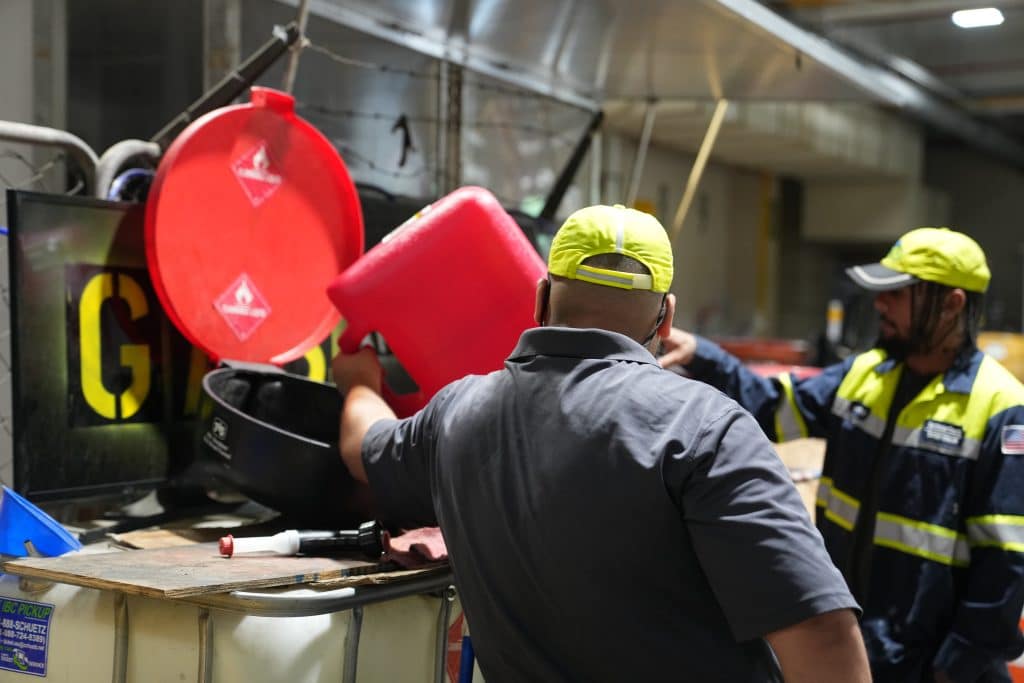
Since there isn’t a hazardous waste disposal facility in Florida, the county uses a third-party contractor to retrieve those materials and transport them out of state for their own processing and specialized waste disposal, Dacenay said.
As for the more traditional recycled materials, after they arrive at the Central Transfer Station, they are placed in trailers and transported to a Waste Management facility called Materials Recovery Facility in Brevard County to be sorted.
“If it’s still something that they can end up using, it’ll go through multiple layers on the conveyor belt,” said Dacenay. “Whether it’s using optical sensors or weight, or some even use air to sort it out, it’ll get bailed and essentially put in giant cubes, and it’s sold to third parties.”
What counts as recyclable
According to Seminole County Solid Waste Management, recycled materials are divided into different categories:
– Paper and cardboard such as newspapers and corrugated cardboard
– Aluminum, steel and tin cans
– Plastic and glass containers
Materials that are not considered curbside recyclable (but may be recyclable in other ways) include:
– Glass windows and other construction debris
– Plastic bags, bubble wraps and other plastic wraps
– Wax-lined paper cups and plates, such as takeout coffee cups
Recycled materials should always be dry and as clean as possible before being put in the recycling bin. According to Waste Management, cardboard boxes should only be considered recyclable if they’re completely empty and dry; however, that doesn’t mean that they need to be completely clean.
Their goal is to make sure they are clean enough and free of most food waste to avoid contaminating other recyclable materials. They recommend scraping the residue out of cans and jars and, if possible, rinsing them before putting them in the recycling bin.
Got bags? Take them to the store
Having said that, there are still some items that residents in Seminole County treat as recyclable in bins, when they are meant to be placed in special containers, sometimes found at grocery stores, such as Publix.
Dacenay said that the most common mistake people make when it comes to recycling is thinking that plastic bags can be recycled in bins at home.
“A lot of people will assume because they see plastic bags being collected outside of a grocery store or something like that, that they can just go into your curbside recycling, and that’s just not the case here,” Dacenay said.
If the technicians at the Central Transfer Station receive plastic bags mixed with the rest of the recyclable materials they would be sent to the Materials Recovery Facility to then be placed in a different pile and sent to the landfill.
Despite the fact that plastic bags are not recyclable curbside, companies such as Publix offer people the opportunity to dispose of them in recyclable bins outside of the store.
Once Publix picks them up, they are sent to their nearest Return Center to be compacted into bales and transported to a manufacturing facility for processing. After that, they are turned into plastic pellets, which are solid pieces of plastic used to make more plastic products, and then sold to manufacturers who will use them to make new materials such as more plastic bags, fencing, benches, and more.
In addition to plastic bags, Publix also recycles other materials that need to be clean and dry before being placed in the store’s recycling bins, such as:
– Soft plastic such as overwrap from packages like toilet paper and napkins, zip-top and other resealable bags, ice bags, air pillows and bubble wrap
– Paper such as newspapers and paper bags
– Foam such as egg cartons, takeout trays and cups and styrofoam
Recycling outside the box (or bin)
Not every item can be recycled curbside, but Cathy Swerdlow, League of Women Voters of Seminole County President, was part of an initiative where they collected campaign signs during the 2022 General Election and sent them to a facility to be processed and recycled. However, she still feels that there’s still a lack of education and effort about recycling in the county,
“I’ve lived in Seminole County for a long time, and I just don’t see that there’s been enough of an effort to have a robust program [about recycling],” Swerdlow said. “I understand that recycling is not an easy task, but I’ve been to other communities where there seems to be a better effort to get that information out to at least whatever you’re doing, make sure the public understands.”
She said that she recently visited her daughter in Cincinnati and noticed that she received a five-by-eight postcard, which, according to her, “clearly showed what things were recyclable” and that “you could just put it on your refrigerator, and you’d always have it available.”
In Seminole County, she said, she feels there’s a lack of education about recycling on the county’s part.
“If you have a question about whether something is recyclable, you can then go searching through the website [Seminole County], and eventually you’ll find it, but it’s not front and center, so it is not easily accessible,” Swerdlow said. “People tend to have a lot of questions, and not always an easy way to find the answer.”
Cost and recycling rates
The cost varies depending on the area people live in, but by diverting trash from the landfill, it would decrease pollution and, consequently, extend the life of the landfill, Seminole County District 3 Commissioner Lee Constantine, said.
The average cost to maintain recycling in Seminole County is somewhere between $2 and $4 per household. According to the U.S Census Bureau, between 2019-2023, there were 185,396 households in the county.
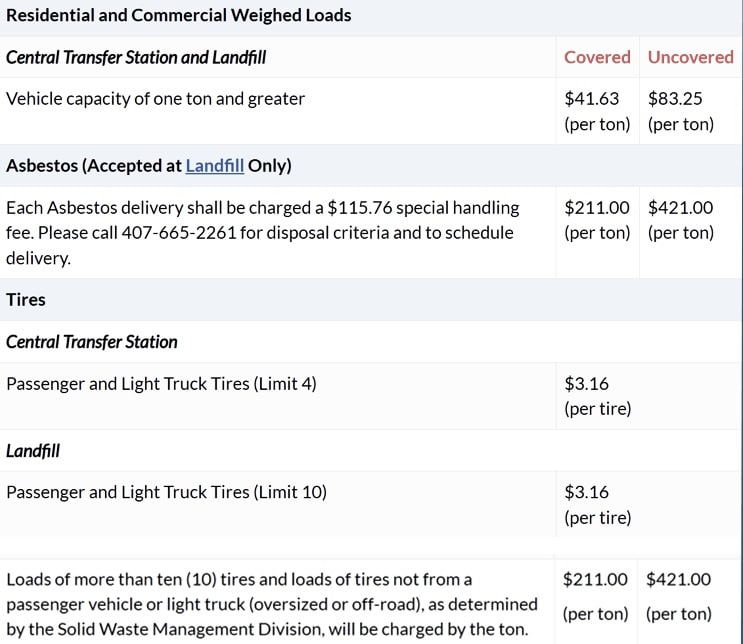
“Just because there is a cost doesn’t mean that it’s not worth it,” Dacenay said.
Ways to improve recycling in the area
Dacenay said that the county offers a single-stream system, which is a system where people can place all the recyclable materials together in one bin.
“Single-stream recycling makes it easier because it decreases misunderstandings about what can be recycled and what not,” Constantine said.
He also said that making recyclable bins more accessible to people, especially seniors who can’t walk or push them to the curb, would facilitate recycling. By having more portable cans with wheels or even smaller ones, more and more people would consider giving recycling a chance.
Out of all the cities that are part of Seminole County, not all of them offer their residents the same kind of recycle bins.
Cities like Oviedo offer rolling bins, while Sanford and Winter Springs have the small ones that people have to carry to the curb.
“If we can’t make people do it, what we can do is make it easier for them to do what they know is right,” Constantine said.
Sorry for the interruption but please take 1 minute to read this. The news depends on it.
Did you know each article on Oviedo Community News takes anywhere from 10-15 hours to produce and edit and costs between $325 and $600? Your support makes it possible.
We believe that access to local news is a right, not a privilege, which is why our journalism is free for everyone. But we rely on readers like you to keep this work going. Your contribution keeps us independent and dedicated to our community.
If you believe in the value of local journalism, please make a tax-deductible contribution today or choose a monthly gift to help us plan for the future.
Thank you for supporting Oviedo Community News!
With gratitude,
Megan Stokes, OCN editor-in-chief
Thank you for reading! Before you go...
We are interested about hearing news in our community! Let us know what's happening!
Share a story!
Author

Related Articles

After Oak Forest Lake fish kill, the question looms: Who pays for cleanup on private lakes?
Winter Springs meeting next week to hash out a new stormwater policy, expected to lead to increases in stormwater fees for residents.
Seminole County finalizes arts funding for 2026
Grant application windows open next week for arts organizations after Seminole County finalizes arts funding that was in doubt after commissioners questioned it.

Winter Springs approves $65.8M replacement to aging wastewater plant – cheaper than budgeted
After years of planning, the city moves forward to replace water facilities. Winter Springs also appoints new charter review committee members who could oversee major changes to the city.