
Winter Springs stormwater rate hike approved
After weeks of debate and arguments on the dais, the Winter Springs City Commission raises the fee by $5.
Over a month after the initial proposal, the Winter Springs City Commission approved the increase of the city’s stormwater rate from $5 to $10 per month during its May 12 meeting.
The rate increase is the first the city has seen in 20 years and has proven a controversial topic amongst the dais, with Commissioner Paul Diaz consistently voicing his opposition to the move, which he said would “punish” residents in recent meetings while calling for $1 million in general funds to be diverted to stormwater instead.
Mayor Kevin McCann said the rate ordinance would be “one of the most important votes” undertaken by the Commission in years.
“This is critically important,” McCann said. “We cannot continue to have our fellow residents losing their homes, storm after storm after storm. And we are elected not to represent our political philosophy, we are elected to represent the residents and the families of Winter Springs. We must do our job.”
Discussion of the increase began with Diaz calling the ordinance “procedurally invalid” according to a subsection of Florida Statute 163.3177, which outlines that capital improvement elements be reviewed on an annual basis and modifications to “update the five-year capital improvement schedule may be accomplished by ordinance and may not be deemed to be amendments to the local comprehensive plan.”
He argued the fee increase did not match updates to the capital improvement elements of the comprehensive plan’s statutes, but City Attorney Anthony Garganese said he “wasn’t sure” he followed Diaz’s reasoning.
“In terms of capital improvement plans, the stormwater utility fund appears to be underfunded for the capital improvement projects that the city currently has on the drawing boards,” Garganese said. “I’ll let the manager speak to the financial aspects of it, but my understanding is this rate would offset some of those projected expenses. It’s my understanding that there’s also a more detailed rate study that’s in the works too.”
That brought Diaz to his next point, that the comprehensive plan included an objective which he said demanded a financial analysis be performed before incurring any “new obligations.”
“There’s been no full structural review, no internal efficiency audit, no assessment for enterprise transfers,” Diaz said. “A tax increase, without that comprehensive analysis that the comp plan requires, is premature. It’s out of compliance with the stated city’s policy.”
But City Manager Kevin Sweet said the proposed rate structure would mainly be to fund ongoing operations for the deficit within the stormwater enterprise fund.
“A capital improvement meets a certain definition to include a five-year lifespan and number of other things that kind of constitute what a capital improvement is,” Sweet said. “Ongoing maintenance is not capital improvement. In fact, it’s quite clearly defined within the use of any sales tax on the utilization of that which you can’t use for maintenance has to be for capital improvement projects.”
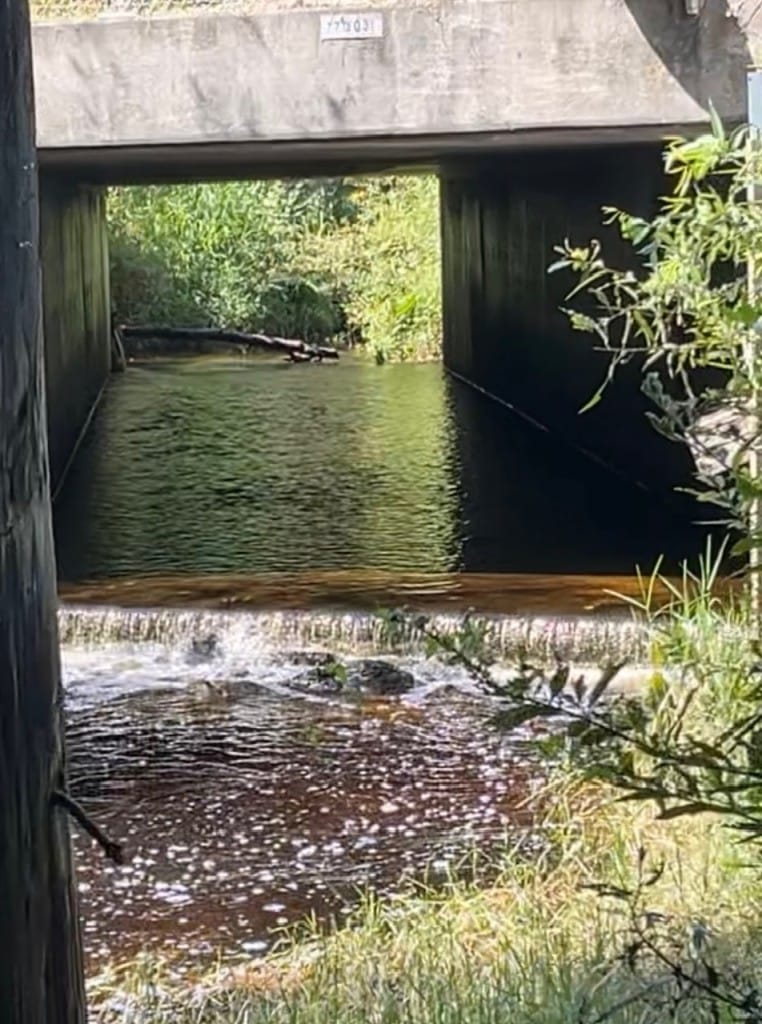
After a brief review, Garganese told Diaz he could not find the infrastructure and capital improvement elements he was seeing and that he had not been given the chance to look prior to the meeting.
A four commissioner vote
Diaz then proposed the final action of the ordinance be postponed due to the absence of Deputy Mayor Cade Resnick, who had already notified the dais he would not be present due to a family matter at the Commission’s last meeting.
“Let’s go ahead and just hit the pause button until we’re all here and we can discuss it and prioritize stormwater spending once and for all,” Diaz said, to which McCann responded the city’s charter allowed for such absences and that legal precedent already existed for the Commission to move forward with a missing member.
A similar suggestion to postpone was made by Commissioner Mark Caruso, asking the Commission not move forward without ensuring the city commit to creating a policy requiring local creeks be cleared annually for sediment and debris.
“I want to be clear, I’m not against this increase,” Caruso said. “It’s just that the residents want to be sure, and they want to guarantee that this [clearing] is going to get done every year.”
Diaz amended his motion to include discussion of Caruso’s creek policy, though Caruso later clarified his position had not been based on an objection to voting in Resnick’s absence but on wanting to guarantee the creek policy for residents.
The meeting’s consent agenda included approval for a $400,000 project award, funded entirely through a Natural Resources Conservation Service grant agreement and initial costs paid by the Third Generation Sales tax fund for later reimbursement, for debris removal services ahead of the upcoming hurricane season from Bear Creek, No Name Creek and four others.
Later during public input, former District 3 commissioner candidate Karen Meyer said while Diaz’s opening statement had been that there hadn’t been time to properly discuss the rate, the truth was there had been.
“You have had time, and you have had years of being aware of this problem,” Meyer said. “I expect my commissioners to come prepared and not come at the eleventh hour and say, ‘Well, we need to discuss it.’ That’s not acceptable.”
She added her understanding was the policy could be added to a future agenda item and neither it nor Resnick’s absence should delay the vote.
“You cannot put city business on hold because one commissioner is not here for whatever reason,” Meyer said. “We must deal with the city issues. Mr. Caruso has a suggestion, but he should not derail this item before the commission for a totally new suggestion.”
Diaz’s motion to postpone later failed 3-1, with only Diaz himself in favor.
Looking toward future
McCann said after weeks of discussion, it’s clear the city’s stormwater fund is “upside down” and that reserves will likely be pulled at some point to meet needs. He said it’s a matter of when, not if, the city is faced with another major storm.
“Are we going to be, as a community, prepared for that disaster?” McCann said. “Are we going to have the resources, the reserves and the infrastructure in place, or are we going to play games with this?”
Sweet added that the city is currently underway with its Fiscal Year 2026 budget and that if the city does not have a revenue source that is increased, it won’t be able to adequately address the stormwater enterprise fund budget.
“It’s going to require us to vote [on] a rate increase where we can do a revenue projection on what that will bring in in order to balance [the budget],” Sweet said. “It has to come from somewhere or we’re going to have to look at another mid-year budget amendment to move money in to balance that account so that we can then adequately budget.”
Sweet said from his perspective the city is paying for the “sins” of its past because of prior administrations and elected officials not handling the issue, adding that didn’t include anyone sitting on the dais that evening.
“I can tell you definitively, for several years, this budget has been operating at a deficit and money has been moved into it,” Sweet said. “Much like we’re going to have to do now in order to be able to continue that. But if we’re going to continue talking about ongoing operations of that enterprise fund without any revenue source coming in, we’re just going to continue the conversation for years to come.”
He said he wasn’t sure how the city would handle its next stormwater budget unless it could address the shortage of revenue, regardless if it was through a one time influx.
Commissioner Sarah Baker reiterated Sweet’s point that, in past years, the city has moved money in order to cover the funds.
“That is going to be something that is still needed for us to do this year,” Baker said. “So while we have not discussed a number up here, Mr. Diaz has thrown out a number that we should move — it sounds like that’s already being looked at.”
She added she’d personally rather see her bill go up a few dollars now for the rate and then again in a few months as opposed to all at once, also allowing time for the city “to start collecting funds that it very much needs.”
Public comments on the ordinance saw many residents appear to speak in support of the rate increase. Others, such as Ken Greenberg, president of the Winter Springs Community Association and former Winter Springs commissioner, said the proposed influx of funds would address the issue better.
“Why would we not move forward and move money into the accounts now so our city manager can do the job he knows needs to be done?” Greenberg said. “Why would we kick the can down the road? Why wouldn’t we just move the money now and then do a proper rate study? I don’t care if you move it $5, but that does nothing.”
Resident Laurel Ross expressed her disappointment in Diaz’s preparing of statute-related questions to ask the city attorney without consulting with him prior to the meeting. She said it was necessary for the dais to move forward with a vote.
“I think all of your constituents, all of us out here, want you to go ahead and make this decision tonight to start the process,” Ross said. “Is it a complete fix? No, it’s a band aid. It’s something that should have been done years ago, but it’s something that needs to be done tonight.”
The commission voted 3-1 to approve the rate increase, with only Diaz dissenting.
Want to contact your elected leaders and weigh in on this topic? Find their contact information here. Have a news tip or opinion to share with OCN? Do that here.
Support local news!
Choose a monthly amount
Hometown Hero
Community Champion
Rooster Society
Custom Amount
Thank you for your support!
Author

Related Articles
Celebrate Oviedo Community News’ 5th anniversary at Spill Wine Bar tonight!
On the patio and inside, Oviedo Community News’ anniversary party Tuesday, Sept. 15 takes over Spill Wine Bar again this year with a trivia night, charcuterie board, drink tickets and good conversation as a thank you to our readers and supporters.
Seminole County Public Schools enrollment drops additional 700 students
Plan is to absorb ‘manageable’ $5.7 million cut without job cuts, but teachers could be shuffled

Oviedo could end holiday events, cut services if Amendment 3 passes
Oviedo mulls ending Christmas, Halloween, Easter events in addition to cutting back open hours for parks and pools to handle potential revenue losses if Amendment 3 passes.