
Oviedo’s 2025 mayoral and city council elections, explained
Oviedo’s 2025 election currently has no contested races.
Oviedo may have an election coming up this November, but there’s a good chance its residents may not even see a ballot.
That’s because the incumbent candidates for the city’s mayor and Group 1 council seats are currently running uncontested in the general election set for Nov. 4, 2025. If there are no other candidates by the end of the qualifying period, both races will be called without a formal election and go to the incumbents.
The qualifying period for candidates runs from Aug. 4 to noon on Aug. 8, during regular hours at the City Clerk’s office.
Until then, residents can learn what exactly to expect for this upcoming election, how it runs and what each of the roles for both seats entail ahead of receiving their potential ballot in the next few months.
Here’s what you need to know.
Current election
This year’s election will consist of the seats held by Mayor Megan Sladek and City Council member Natalie Teuchert, the two incumbents up for re-election this fall.
By law, regular elections are scheduled for the first Tuesday after the first Monday in November of each year, which this year would be Nov. 4. In Oviedo, the mayor and one council member seat are elected on odd years, while the three remaining seats are elected on even years.
City council elections are non-partisan, and all members serve the city at-large for two-year terms. Candidates must live within the city to qualify and voters all across Oviedo can cast a ballot for all candidates.
Sladek, who first served as a council member from 2016 to 2018, is currently serving on her third term as mayor after a successful 2023 run in which she garnered more than 54% of the vote after defeating challengers Brady Duke and former council member Judith Dolores Smith.
In 2021, Teuchert first beat then incumbent Smith for the Group 1 City Council seat with more than 52% of the vote, and ran again unopposed in the 2023 election. As of 2024, she also serves as the city’s Deputy Mayor.
The last day to register to vote for this election, if held, is Oct. 6.
Where incumbents stand on the issues
In terms of candidate platforms, Sladek said her campaign shares the same values she’s “meticulously stuck with” and has run on “from the very beginning” such as those listed on her website, which include promoting financial transparency within government and fostering environmentally sustainable development.
If re-elected, she said she’ll also continue to follow the approach she currently uses for analyzing issues brought to the city council.
“Is this an appropriate role of government, and if it’s not, what are we doing?” Sladek said. “If it is the appropriate role of government, is there anybody else who could do it cheaper than us? It just kind of goes through the thought process of how do you evaluate all of the things that we could do with the immense taxing power that we do, in fact, have.”
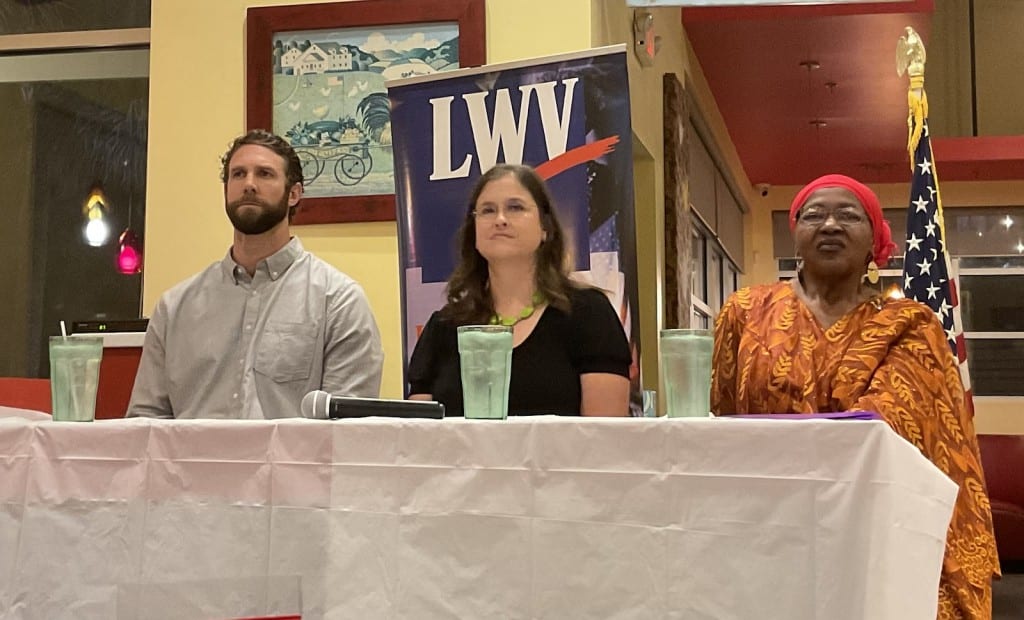
Teuchert is also sticking to her roots, drawing attention to the promises she said she’s made and delivered on from her previous campaigns.
“Now I’ve got four years under my belt of things I can point to that I’ve done so far on my platform,” she said, citing promises such as advocating for senior programming at Riverside Park, separating new bicycle lanes from roads and approving funding for installing Internet services at Round Lake Park.
According to her campaign website, Teuchert also plans to continue to run on issues such as protecting Seminole County’s rural boundary, supporting the city’s small businesses and advocating for controlled growth.
You can read a candidate question-and-answer Teuchert did with Oviedo Community News during the 2023 election. You can read Sladek’s question-and-answer here.
What does running involve?
There are a few steps required in order for a candidate to qualify before Aug. 8 for the general election.
To start, each candidate seeking the office of Mayor or City Council must be a qualified elector and have lived within the incorporated city limits for more than one consecutive year prior to the time for qualifying for office.
Then there’s several things that must be submitted by the candidate to the local elections office, such as the Division of Elections form DS/DE 9, the Appointment of Campaign Treasurer and Designation of Campaign Depository for Candidate, and form DS/DE 84, the Statement of Candidate.
In an email to Oviedo Community News, Deputy City Clerk Madelyn Bui said candidates must also turn in their “election assessment, Seminole County acknowledgement of electronic filing, form 1 verification, acceptance of candidacy letter, notification of pre-election equipment testing [and] candidate oath.”
Candidates are required to collect 150 signed petitions in order to be nominated to run for city council. Previously, they were only required to collect 25 petitions until a 2021 charter amendment increased the requirement, something which Sladek said has helped to ensure only candidates wanting to make a legitimate run for office appear on the ballot.
“It’s basically 150 permission slips, so it’s saying 150 people think it’s okay for me to run again or to run in the first place,” Sladek said, adding she submitted all of her necessary petitions back in May.
Teuchert said she has about 10 petitions left to go to meet the requirement but expects to have them submitted by the end of the week.
Sladek and Teuchert have little left to do as candidates in this year’s election, with no other contenders in sight just yet. Both said they wouldn’t mind seeing other names on the ballot.
“I always think it’s kind of healthy to have multiple candidates because it brings attention to the issues that people are looking to represent,” Teuchert said. “I always think that’s good. Democracy is good, but getting people to step up and put themselves out there for some public scrutiny can be tough sometimes.”
It’s not uncommon to see local government elections go uncontested, Sladek said. According to research conducted by Ballotpedia on Florida’s 2024 elections, 30% of the state’s 1,059 regular elections held last year went uncontested.
That hasn’t usually been the experience for Sladek herself when running, as her last four elections all saw her face off against political opponents.
Research by Ballotpedia also found offices of city council and mayor had the second and third highest rates for contested elections that year, with rates of 99% and 97% respectively. In Sladek’s case, that’s something she’d like to see happen with her own office.
“There’s still time to run,” Sladek said. “Please, encourage people to run against me.”
If there is one benefit to uncontested elections for the city, it’s that it keeps election costs down.
According to a memo from City Manager Bryan Cobb submitted in May, costs for the upcoming November election, including early voting, were estimated to range anywhere from $24,000 to more than $45,000, depending on the number of polling locations used.
The total cost for the city during the prior 2023 election ran over $14,600, while costs for the election held in 2021 came out to about $34,600, and included poll worker staffing and training, ballot printing, absentee ballots, election equipment transportation and other items.
What happens when you win?
When a candidate wins either the mayoral or council member seat, they’ll officially take office upon the first regularly scheduled city council meeting held in December following their election, contested or not.
Upon election to office, candidates are expected to follow the general powers and duties listed in the city’s charter.

The city council is composed of five members, one of whom is the mayor, and each receives one vote on issues brought before the body.
According to the city’s website, the council is described as the “legislative and governing body of the City responsible for establishing policies, managing growth and land use, adopting an annual budget and tax rate, setting water rates, wastewater rates and other fees and charges for City services, adopting local laws and ordinances and hiring and overseeing the City Manager.”
“My job is to represent our community, make sure that our citizens’ concerns are being heard and voiced,” Teuchert said. “Essentially, make sure that problems are being solved.”
Sladek said the role of the mayor is essentially being the “mouthpiece for the entire council,” but that all five council members retain largely the same responsibilities.
“I get a bigger megaphone than everybody else and the opportunity to make proclamations, but aside from that, really, we all have very similar roles,” she said. “If three council members vote a different way on something, and I’m on the losing side, I go tell everybody, ‘Well, here’s what the council said.’”
Other duties specific to the mayor are outlined in the city’s charter.

One basic requirement shared by all elected members is that they’re expected to attend Oviedo City Council meetings in City Hall on the first and third Monday of every month, unless otherwise noted, at 6:30 p.m.
But council members do more than just attend meetings, Teuchert said.
“Almost every local official is involved in nonprofits and volunteering and community groups, that’s hand-in-hand with making sure their voices are being heard,” Teuchert said. “That’s part of the commitment — talking to residents all the time, seeing what problems are, taking calls from people who are having active issues and then routing them to people who have a solution.”
In terms of how much time is needed to fulfill the duties of each role, Sladek said that in her experience as both mayor and council member, the number can change.
“You could do a serviceable job by investing maybe four hours a week, but to do a spectacular job it varies,” Sladek said. “If I reply timely to everybody who’s reaching out, I can spend anywhere from 15 to 20 or more hours a week working. If you have a 40 hour job, and you’re doing this on top of it, it’s something to be mindful of.”
Teuchert agreed.
“It’s definitely a part time job, I could easily throw 10 hours a week at it,” Teuchert said. “If you have a busy council agenda that week, it can be more than that … You’re pretty much a politician all the time. If I’m out with my family at a restaurant and someone runs into me, I’m still who I am. It’s a full-time appearance, part-time job.”
Both roles also receive annual salaries, though the amount is low enough that most typically work full-time jobs in addition to their public service contributions.
As of the last salary increase stipulated by city charter in October of last year, the mayor receives $19,513 annually, while council members receive $16,260.
Three more seats on the city council will be up for election next year on Nov. 3, 2026 when the terms for Group 2 member Keith Britton, Group 3 member Alan Ott and Group 4 member Jeff Boddiford end.
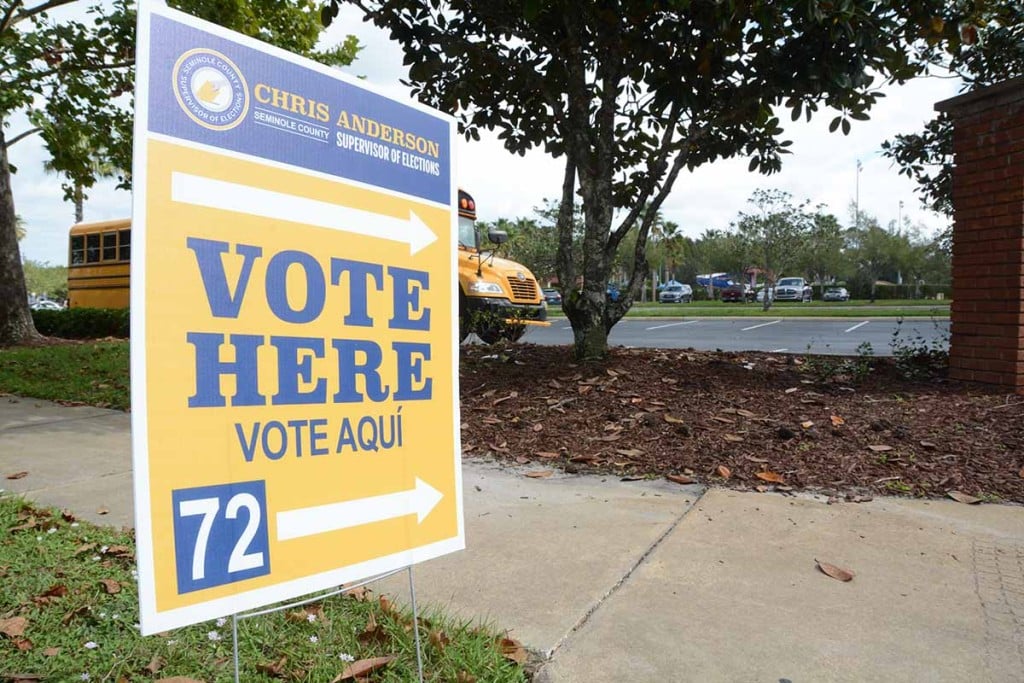
Learn more about Oviedo’s elections here.
Want to contact your elected leaders and weigh in on this topic? Find their contact information here. Have a news tip or opinion to share with OCN? Do that here.
Support critical, local news you rely on to stay informed, connected and empowered.
Choose a monthly amount
Hometown Hero
Community Champion
Rooster Society
Custom Amount
Thank you for your support!
Author

Related Articles
Watch: Winter Springs election candidates talk water quality, Amendment 3 and controversies
Oviedo Community News is adding video interviews with candidates from Oviedo, Winter Springs, Seminole County and beyond to its 2026 voter guide.
Development, explained: How local governments plan for growth
How Oviedo, Winter Springs and Seminole County plan for growth, determine what can be built and navigate Florida law.
Oviedo implements regulations, penalties for e-bikes, other micromobility devices
Speed limits, helmet rules and bans on headphones among the new regulations, but police say enforcement won’t work the same way as traffic laws.