
Winter Springs stormwater rate could go up to pay for pond maintenance
Rates would eventually double to $20 per month by 2030, under a proposal commissioners workshopped this week
The Winter Springs City Commission gave consensus at a workshop Wednesday to bring back a stormwater rate increase that would add $5 per month to a resident’s water bill – and eventually double the stormwater bill by 2030.
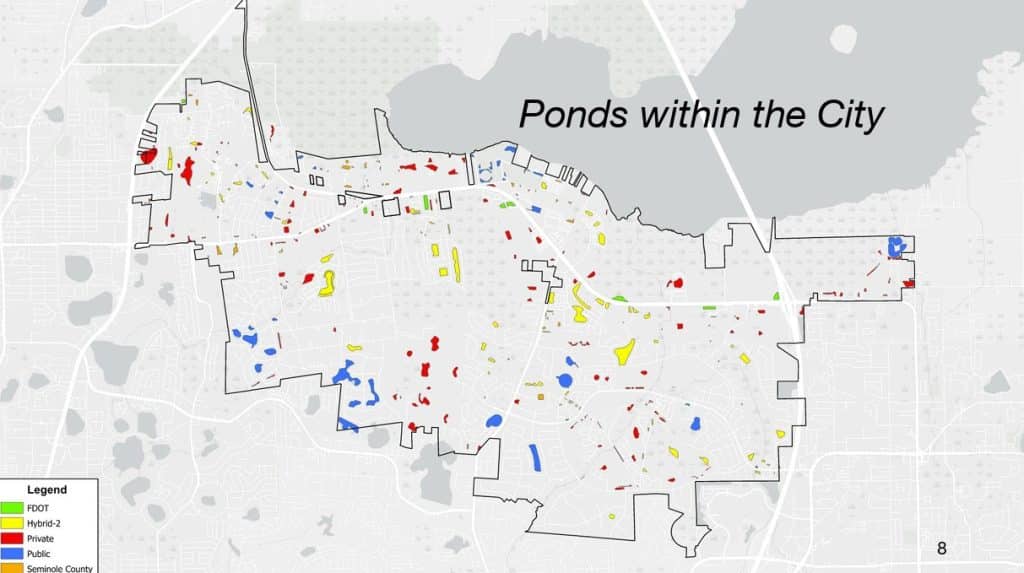
Winter Springs has 345 ponds, and most – 224 – are maintained either by other governments, like the Florida Department of Transportation and Seminole County, or private entities, like homeowners associations.

There are 43 public ponds owned and completely maintained by the City of Winter Springs. The proposal calls for the city to take over some maintenance of an additional 78 hybrid ponds. Those are ponds that may be privately owned, but get stormwater from city roads or infrastructure.
Winter Springs Mayor Kevin McCann said there are some areas where the city was maintaining ponds with a “wink or handshake kind of deals” that will lose some services.
“We may end up having some private ponds [which] have been receiving city services at taxpayer expense [which] may be losing some services, or we may pull back,” McCann said. “And then (we are) going to have some ponds who have not been receiving services [which] will start receiving services.”
Key vote on Winter Springs stormwater rates will be April 27
So how will the changes affect residents’ water bills?
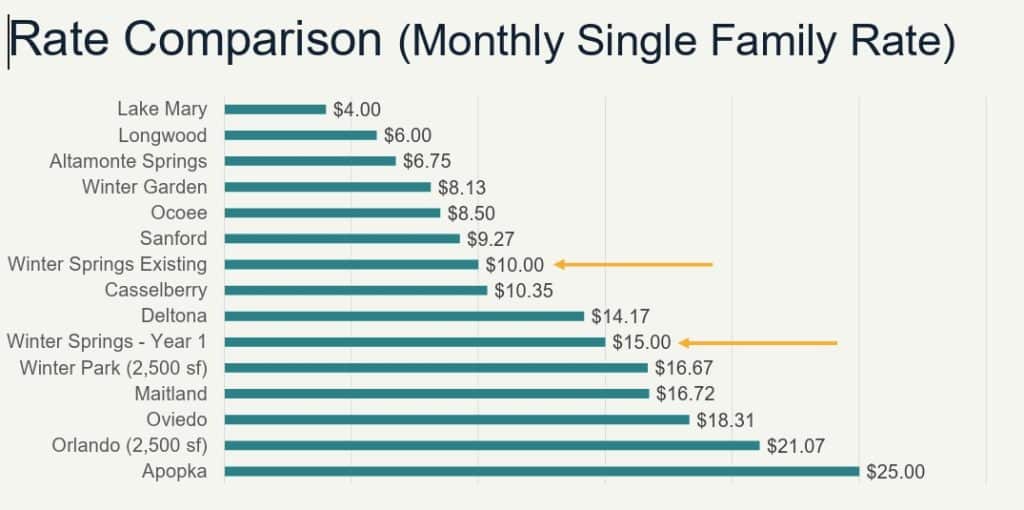
Residents currently pay $10 per month for stormwater services, which was also doubled in 2025 from $5 to $10. The current plan now calls for increasing the rate to $15 per month for Fiscal Year 2026-27, which begins in October.
Then rates would increase at a slower rate for the next three years until hitting $20.50 per month in fiscal year 2029-30. From there, it’s expected that there would be built in annual increases for inflation.
Commissioner Paul Diaz was the only commissioner who spoke against the increases. He said in the last five years, his water bill has more than doubled because of rate increases.
“It’s never a good time to raise taxes,” Diaz said. “Wawa is over $4 a gallon. I don’t have that pain point; I drive electric cars, but I see it. And I know a lot of other people do. … That’s real money. And adding another tax burden to them is unconscionable.”
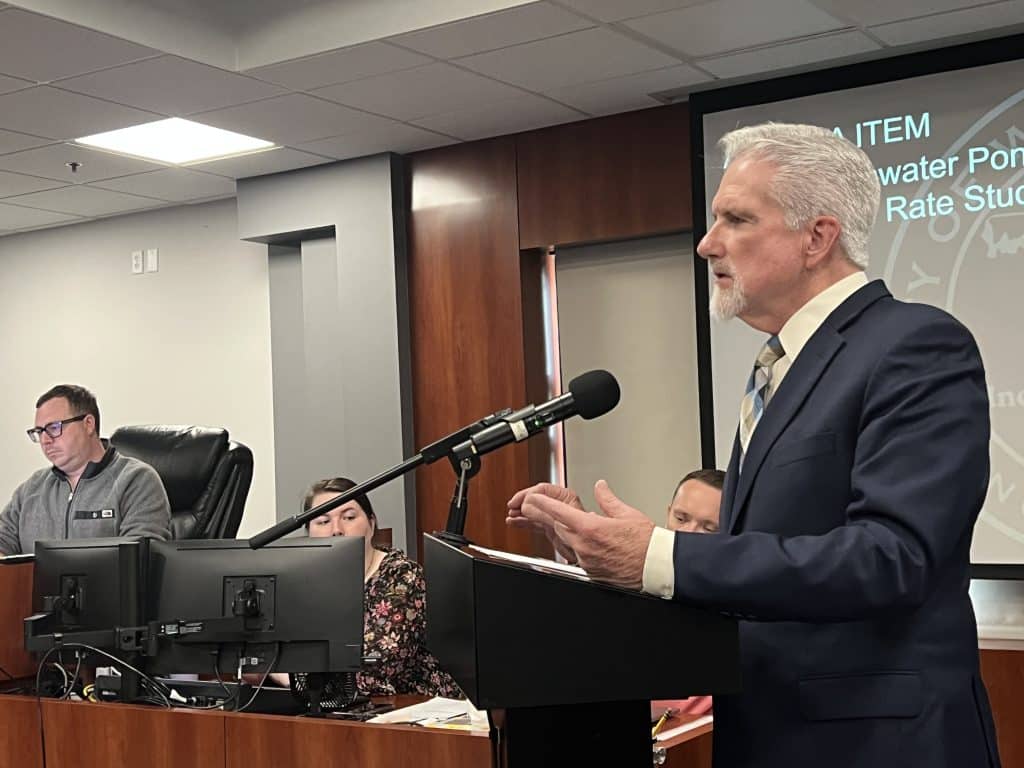
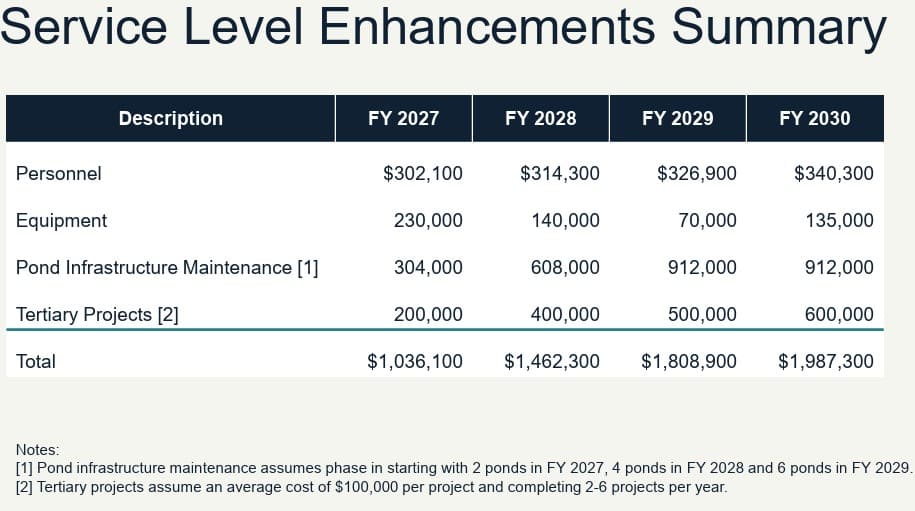
Diaz said he didn’t have a problem with the capital expenditures being paid for through the increased fee. The plan calls for buying new vehicles and equipment to do increased pond maintenance, budgeted at eventually maintaining six ponds every year, expected to cost $152,000 per pond.
There’s also funding for four new staff members to take on the added maintenance: three workers and a supervisor.
“Just [to] clarify, none of this budget here is administrative,” said Winter Springs City Manager Kevin Sweet. “This budget is boots-on-the-ground workers, to add an additional crew. That’s not something that can be automated.”
The budget also has a line-item for “tertiary items.” That could be surprise projects that come up unexpectedly, but it also includes doing preventive work on the creeks and streams.
“That would fold into that bucket,” said Clete Saunier, the Director of Public Works and Utilities for Winter Springs.
Looking regionally, Lake Mary has the lowest stormwater rate at $4 per month, while Apopka has the highest rates at $25 per month, followed by Orlando at $21. Oviedo currently charges $18.31 per month for stormwater service.
There are three kinds of stormwater ponds, according to definitions from the city:
- Public Pond: A pond on city-owned property or has a dedicated easement that receives stormwater from public infrastructure.
- Hybrid Pond : A pond on privately owned property that receives stormwater from public infrastructure.
- Private Pond : A pond on privately owned property that receives stormwater from private infrastructure.
At Wednesday’s meeting, the issue of the fish kill on Oak Forest Lake was raised by Commissioner Mark Caruso. Staff said Oak Forest is one of two hybrid water bodies with “unique” circumstances, where the city does more maintenance than other places in the city.
“With those ponds that are hybrid, the complaint a lot is the fertilizer, the runoff from the road that is causing those major issues of algae blooms and overgrowth and muck and whatnot, fish kills,” Commissioner Sarah Baker said. “How do we address that?
David Hamstra, an engineer with Pegasus Engineering, said one of the biggest culprits is residents fertilizing their lawns.
“The biggest culprit are the residents,” Hamstra said. “They overfertilize. Our streets go to the ponds, we’re not denying that. But all these homes that drain into the street and into the ponds – the biggest culprit is the over-fertilization of people’s yards.”
The Winter Springs City Commission will hold two votes on the proposed new rates. The meetings would be April 27, 2026 at 6:30 p.m. and May 11 at 6:30 p.m.
One question residents asked at Wednesday’s workshop: Will owners of hybrid ponds who would now be getting services from the city also be eligible for the 25% discount in stormwater rates offered to private ponds?
Saunier said he expects that the city could eventually come back with a draft policy that could change the rules for getting a discount.
Consequences of a pond failure can be expensive. In 2023, a retention pond at Tuskawilla Crossings failed, and the city is currently suing over the cost of repairs – at the time estimated at upwards of $1.8 million.
“The defendants have responded to the complaint, and the parties are currently engaged in the discovery process,” wrote City Attorney Anthony Garganese. “The projected trial period is July 2027.”
You can watch video of the workshop here. Other cities grappling with flooding have considered moratoriums on development to curb flooding.
The possible rate increases come during an election year.
“It’s not a good thing for me,” said McCann, who is running for re-election as mayor. “But the hard issues have to be dealt with. You’ve got to make the difficult decisions long term. I’ve got to put my big boy pants on.”
Want to contact your elected leaders and weigh in on this topic? Find their contact information here. Have a news tip or opinion to share with OCN? Do that here.
Abe Aboraya is a Report for America corps member.
Support critical, local news you rely on to stay informed, connected and empowered.
Choose a monthly amount
Hometown Hero
Community Champion
Rooster Society
Custom Amount
Thank you for your support!
Author

Related Articles
Attempted coop: Winter Springs makes first move to allow backyard chickens
Final vote at the end of the month to allow up to 20 backyard chickens in certain areas, but some residents want the city to wait.
Seminole County approval could pave the way for 300+ apartments near Lukas Nursery
Greeneway Preserve still needs a detailed site plan before construction would start, as commissioners warn the area is ‘prone to flooding.’
Watchdogs warn Amendment 3 may cut funding for flood control and drinking water
Florida’s water management districts depend on property taxes to fund about a third of their work preventing floods, securing the drinking water supply and conserving wetlands.