
Flood mitigation efforts continue across Seminole County ahead of hurricane season
As Seminole County hurricane prep ends, officials cite aging infrastructure and lessons learned from prior flooding.
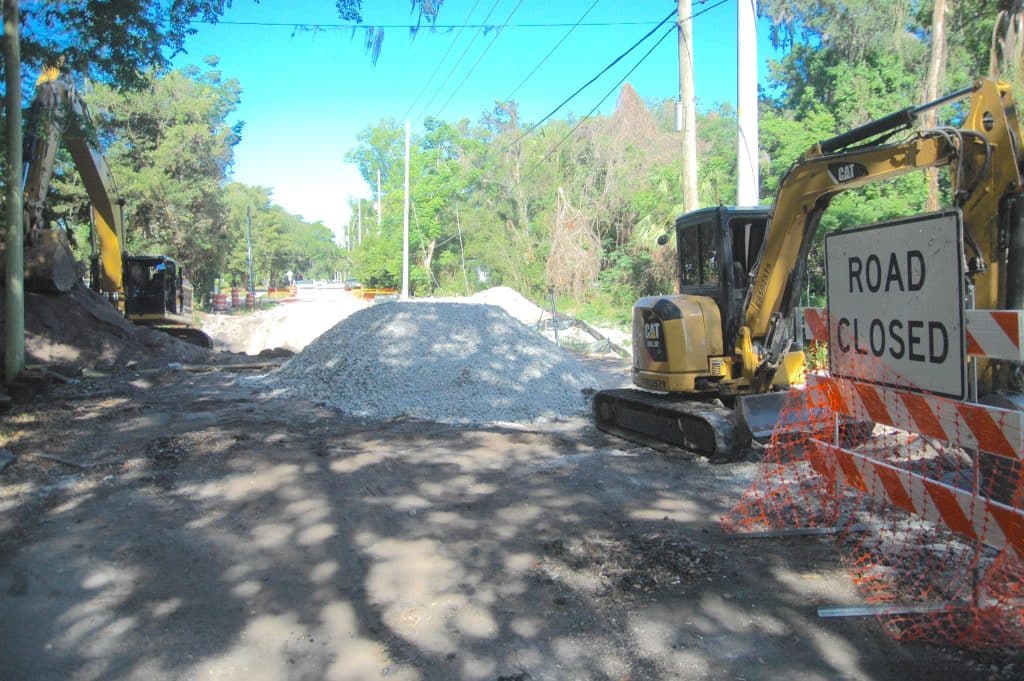
As excavators carved through mud-filled ditches along Midway’s Sipes Avenue this month, Seminole County roads and stormwater crews worked beneath overhead power lines to clear roadside stormwater channels as hurricane prep comes to an end.
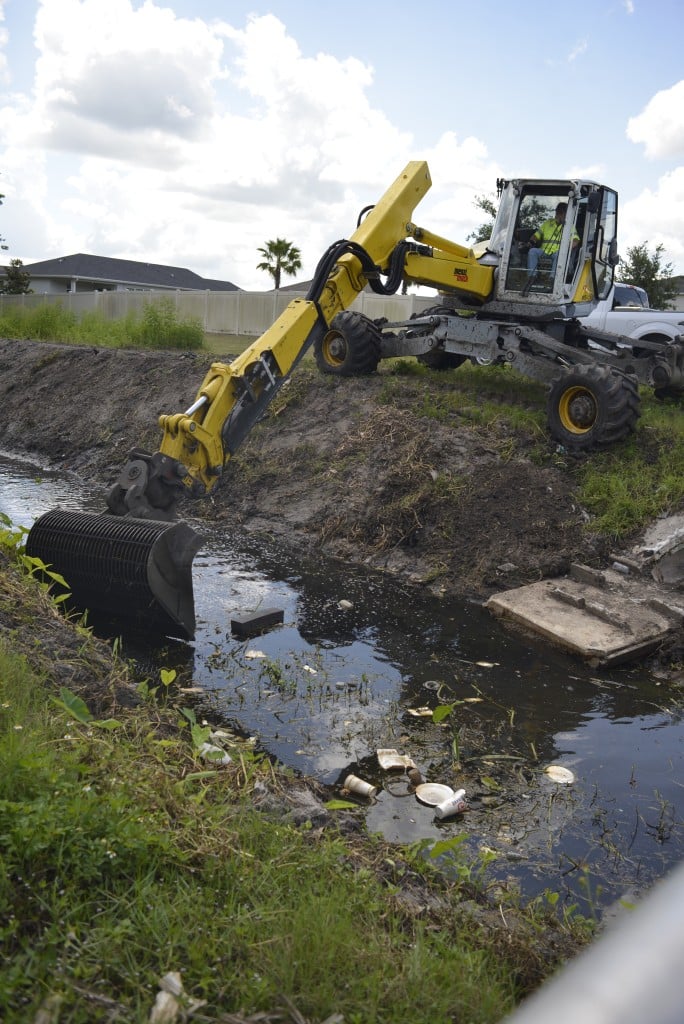
Nearby, along the Washington Street canal, a Menzi Muck M545x excavator crawled across steep canal banks connected to the St. Johns River basin, its spider-like legs gripping uneven terrain as the operator pulled 2,000 pounds of mud per bucketload from the waterway. Instead of hauling the material away, the mud was used to reshape and reinforce sections of the canal bank, restoring water flow through the channel.
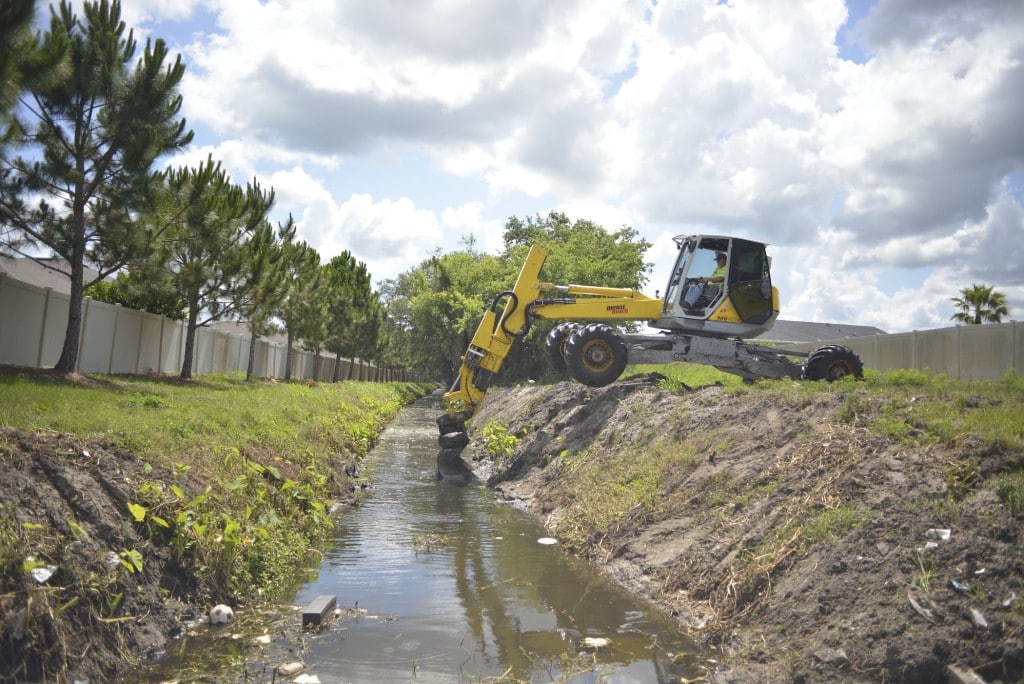
The work is part of a larger countywide effort to prepare drainage systems ahead of hurricane season and address long-term flooding concerns. Many of the county’s drainage ditches and creeks work together, forming a network guiding stormwater toward lakes, and ultimately the St. Johns River, to prevent flooding.
County roads and stormwater crews completed 127,728 feet of ditch and canal cleaning last year alone, according to Seminole County Spokesperson Katie Wigle.
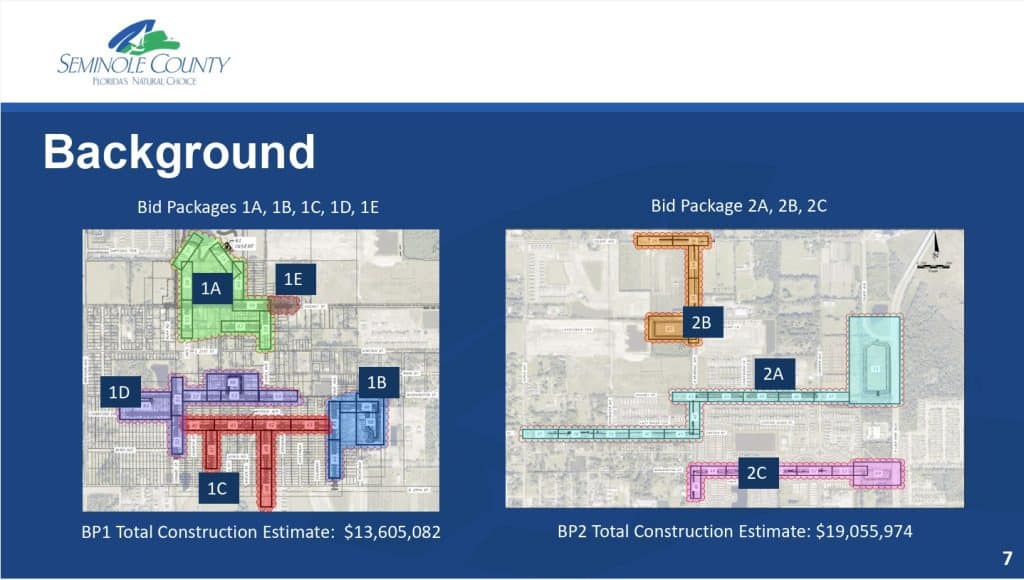
The Washington Street canal itself will eventually become part of Phase 2C of the county’s Midway Drainage Improvement Project, which includes widening portions of the ditch to increase drainage capacity and constructing a new pond near Lake Mary Boulevard.
Local governments across Seminole County continue facing aging infrastructure, increased development and more intense storms while trying to reduce flood risks before hurricane season begins.
Ian’s impacts still felt years later
On some roads near Lake Harney, the floodwaters during Hurricane Ian rose so high that street signs became some of the only visible markers above the water.
Residents watched as water spilled into roadways as storms inundated Central Florida in September 2022, dumping historic amounts of rainfall into neighborhoods within the St. Johns River basin.
In eastern Seminole County, roads disappeared beneath murky brown water, leaving stranded residents to rely on boats, lifted trucks and trailers to move supplies through the isolated community.
John Andrews, who lives by Lake Harney, said residents quickly realized they would need to rely on one another as rising water cut off access to parts of the community.
“We pretty much took care of each other,” Andrews said. “If anybody couldn’t get out and somebody was running into town, we’d pick up supplies for each other.”
Residents placed stakes along submerged streets to help drivers avoid hidden ditches and washed-out shoulders beneath the floodwaters.
Fellow Lake Harney resident Cindy Decker said she didn’t know if there was any road left beneath the water.
“We’ve been out here for 30 years, and our yard has never been flooded before, until that year,” Decker said. “We walked outside, and we were ankle deep in water all around our house, and it got up into the foundation of the home and ruined the floors.”
Horsepower Ranch owner Scott McElroy helped coordinate relief efforts alongside the Seminole County Airboat Club and the Cajun Navy after communities became isolated by floodwaters.
Airboats transported supplies into flooded neighborhoods while volunteers helped residents clean up and haul off debris.
“We all came together,” McElroy said. “We just repaired and did everything we could.”
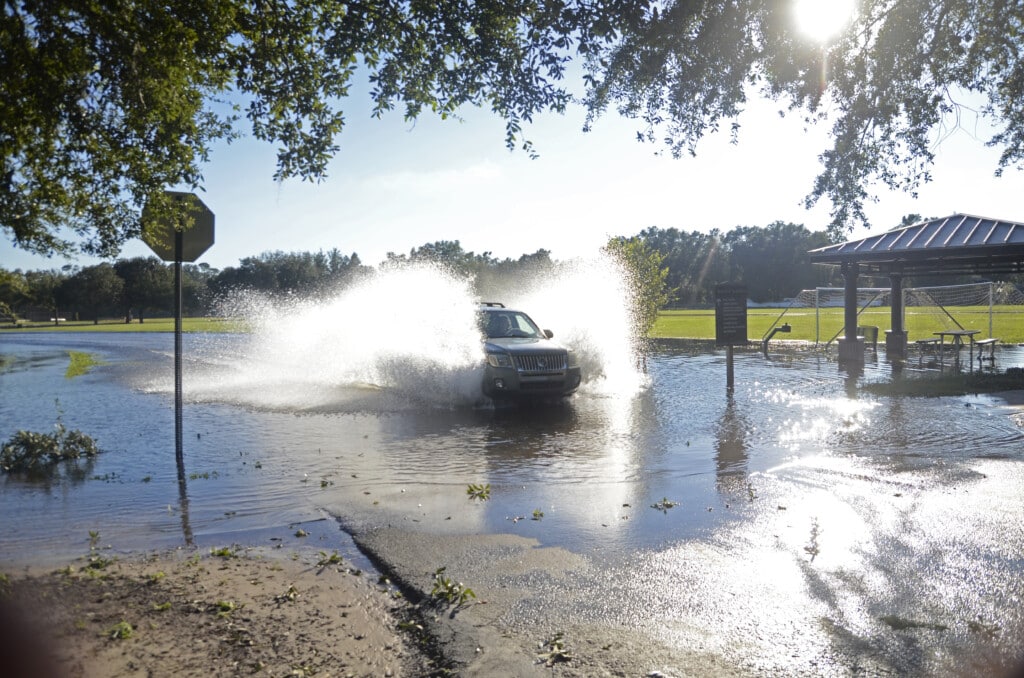
Even after water levels receded, many residents were left dealing with damaged roads and drainage systems overwhelmed by the scale of the storm.
County officials said the geography surrounding the St. Johns River basin creates unique flooding challenges because the river system drains slowly across the flat terrain of eastern Seminole County.
Assistant Seminole County Engineer Joseph LoFaso said storm surge near Jacksonville can even slow drainage farther south, causing the river to flow backward and causing water to back up throughout connected waterways.
“When it floods, the water comes up quickly,” LoFaso said. “It’s very slow to drain, because of the fact that you only have that 30 feet of drop between here and there, and it’s a long way from here to Jacksonville for it to drain out.”
LoFaso said Hurricane Ian exposed vulnerabilities throughout the county’s drainage infrastructure and reinforced the limits of manmade stormwater systems during extreme rainfall events.
“A lot of times we’re seeing storms that are 200-year or 500-year storms,” LoFaso said. “The system is just not designed really to handle that efficiently, because it overwhelms it.”
Winter Springs Spokesman Matt Reeser echoed similar concerns in an emailed statement.
“Hurricane Ian was a storm of historic proportions. One could argue no stormwater management system in the state could have handled the amount of rainfall it produced,” Reeser said.
Reeser said neighborhoods on the western side of Winter Springs, where infrastructure is generally older, continue generating some of the city’s most frequent drainage complaints.
Areas including Hacienda Village, The Highlands, Mockingbird Lane, Alton Road and Lido Road have been among the hardest hit during heavy rainfall events, Reeser wrote.
Aging infrastructure and growing development
Seminole County officials say maintaining drainage systems has become increasingly difficult as infrastructure ages and development continues throughout the region.
LoFaso said every new development adds drainage infrastructure that requires long-term maintenance.
“The more developments you have, the more infrastructure that has to be maintained,” LoFaso said. “That means there’s more possibility for failure.”
Stormwater officials also said increased pavement, rooftops and parking lots can intensify runoff during heavy storms by reducing the area of land that can naturally absorb rainfall.
“Whenever you add more impervious surfaces like roads, roofs and parking lots, it can impact drainage systems and how they manage runoff,” Reeser said.
Oviedo Assistant Public Works Director Paul Yeargain said aging stormwater pipes and infrastructure continue creating maintenance challenges across the city.
“We try to be proactive with stuff in advance,” Yeargain said. “But we’ve got thousands of feet of pipes, so it’s tough to keep up with.”
Oviedo Floodplain and Stormwater Administrator Amanda Kortus said many residents don’t know the scale of the city’s stormwater system.
“I don’t think residents realize the magnitude of stormwater,” Kortus said. “They don’t realize many storm pipes can possibly go bad.” She added that with 533 ponds to inspect, “minimal crew” is a challenge.
Kortus also pointed to debris entering drainage systems during storms as a recurring problem.
“We have roads that have these big two-foot piles of leaves on, and they didn’t just fall naturally like that,” Kortus said. “So, unfortunately, what happens is we have a heavy downpour, and suddenly the road is clean, but it’s now in the pipes.”
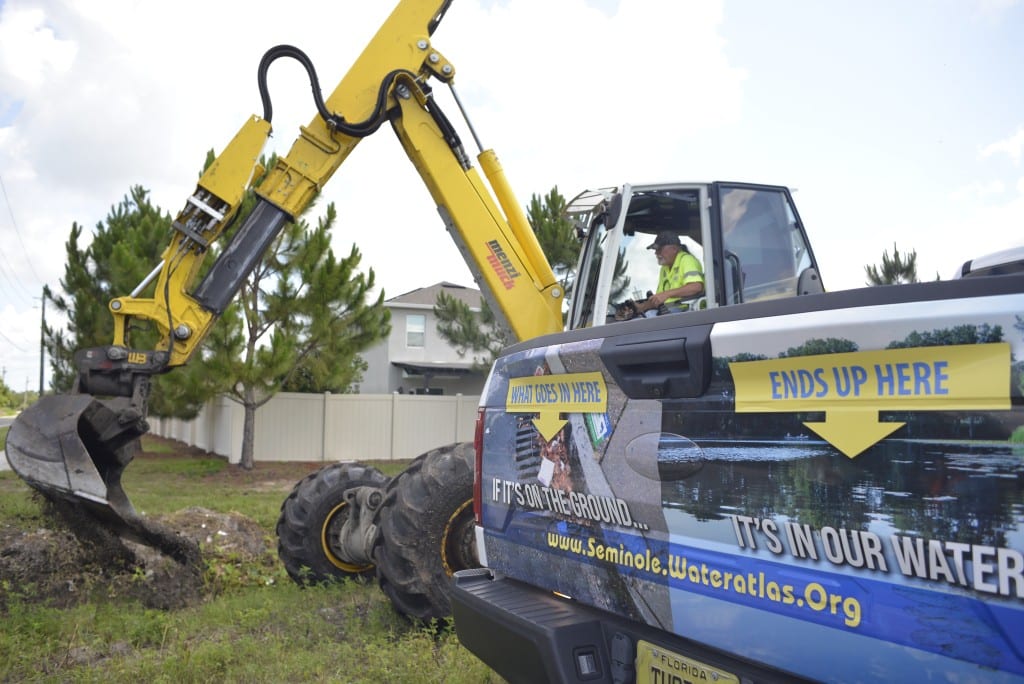
Seminole County Roads and Stormwater Senior Team Leader Derek Grieve said even small obstructions can create major drainage problems.
“Anything from lawn clippings to garbage can lids can block the drainage,” Grieve said. “One thing people don’t understand is the functionalized drainage with the storm water systems.”
Grieve encouraged residents to report drainage issues before storms worsen conditions.
“You’re our eyes,” Grieve said. “[Residents] live there, they live on that road, they see if something is wrong.”
Recovery and mitigation projects continue
In the years following Hurricane Ian, local governments across Seminole County have continued expanding drainage improvements and flood mitigation projects tied to recurring flooding concerns and storm recovery efforts.
One of the county’s largest efforts is the Midway Drainage Improvement Project, a multi-phase effort estimated to cost more than $30 million. The work is aimed to protect this small unincorporated community between Sanford and Geneva by upgrading an outdated stormwater system.
The project includes drainage ponds, storm sewer installations and roadway drainage improvements spread across eight phases. Construction could last through 2030, according to county officials.
“We’re very excited about improving the quality of the drainage in Midway,” LoFaso said. “It has been an issue for many years, and finally getting around to it has been just a really big win for us.”
Additional drainage and flood mitigation projects underway across Seminole County and Winter Springs include:
- The $943,000 Boland Drive Drainage Improvement project south of Oviedo
- The $4.7 million Willow Avenue-Alhambra Avenue Drainage Improvement Project in Forest City
- The $1.1 million Nebraska Avenue Bridge Drainage Project north of Sanford
- Culvert cleaning and planned culvert replacement work beneath Alton Road at Gee Creek in Winter Springs
- The Wetland Park Outfall Improvements project near Tuskawilla Road and Winter Springs High School
Some drainage and mitigation projects across Seminole County have received funding support through the FEMA Hazard Mitigation Grant Program and Resilient Florida grants.
In Oviedo, one of the city’s largest efforts is the East Magnolia Street project near Sweetwater Creek, where erosion from Hurricane Ian damaged the roadway crossing and reduced traffic to one lane for years.
The Oviedo City Council approved a $968,000 construction bid for the project in December 2025, bringing the total project budget to about $1.16 million after contingency costs. The project is being funded primarily through the Third Generation Penny Sales Tax, with a small portion covered by the Local Option Gas Tax. The city is continuing to work with FEMA to determine whether they will assist with funding.
According to the city, the project includes the installation of a new box culvert designed to increase stormwater flow capacity and improve the crossing’s resilience during future storms.
Oviedo Spokesperson Lisa McDonald also identified repairs along McKinnon Road, where floodwaters caused failures to the McKinnon Ditch system following Hurricane Ian.
Seminole County hurricane prep winds down as hurricane season winds up
Officials across Seminole County continue to emphasize the importance of preparation, maintenance and resident awareness before hurricane season begins.
Reeser said Winter Springs crews conduct routine inspections and maintenance throughout the year while clearing pipes, ditches and outfalls before severe weather arrives.
County and city officials encourage residents to clear debris around homes, avoid pushing leaves into roadways and understand their flood risk even outside FEMA-designated flood zones.
Perhaps more importantly, “please go get flood insurance,” LoFaso said. “It may not keep you from losing things, but you’ll at least be compensated.”
Kortus said many homes flooded during Hurricane Ian despite not being within traditional flood zones.
“That’s the laws of nature,” Kortus said of how a storm can swell a lake or a river beyond what you see on the map. “It’s not going to just stay on the drawn polygon.”
Support critical, local news you rely on to stay informed, connected and empowered.
Choose a monthly amount
Hometown Hero
Community Champion
Rooster Society
Custom Amount
Thank you for your support!
Author

Related Articles
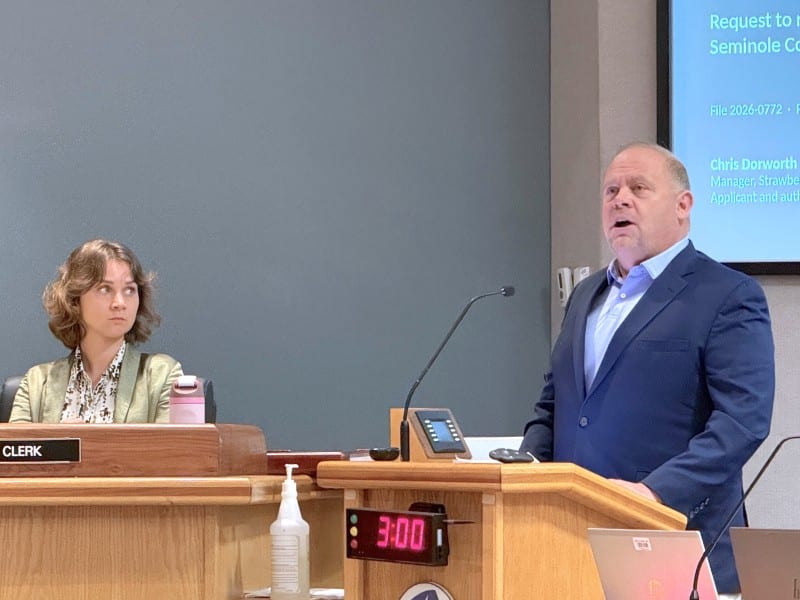
Zoning board: former Pappy’s Patch should remain inside rural boundary
Chris Dorworth’s proposed Strawberry Lane project at the former Pappy’s Patch near Oviedo now goes to the County Commission for a final decision.
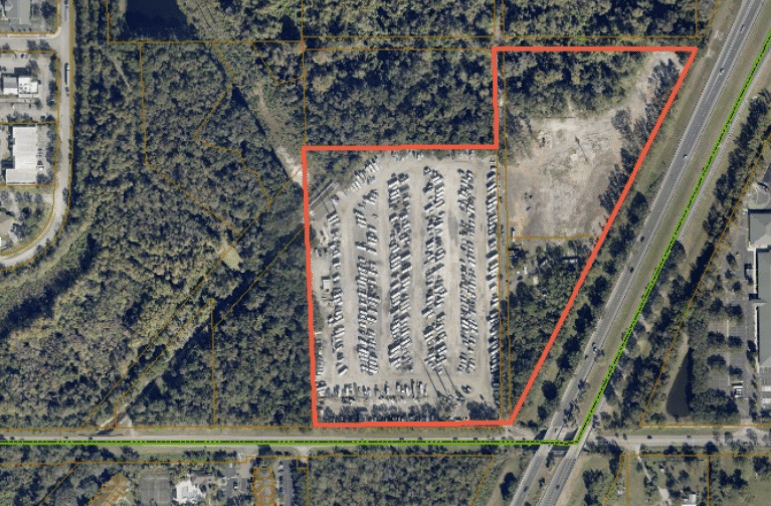
Apartments, townhomes on Seminole County agenda next week
Seminole County Commissioners could weigh in on two developments, including apartments near Lukas Nursery
Viva Oviedo! Festival gets special permit for upcoming event
An impassioned plea following months of delays and communication issues led to big changes for a major event in Oviedo.
The volunteer-run Viva Oviedo! Festival that celebrates Hispanic heritage saw thousands of people attend its inaugural event in October 2025. It’s set to take place again at Oviedo on the Park on Oct. 17. Organizers had hoped this year’s festival would be in partnership with the city, but despite having ongoing conversations with city officials since at least March, no decisions had been made until the Oct. 5 City Council meeting.