
Lost and found
When Eddie Meadows went missing, his wife feared the worst, the police called off the search, and that’s when the people who get lost for fun got started.
Dear adventurers: You’re in the third link off of the main story. Almost there! Remember, this story contains the third single bolded letter, part of a code word, and this story is part of the whole story, so read this story before continuing. After reading and finding the letter, go back to the main story and continue reading from where you left off until you find the next linked map symbol. Good luck!

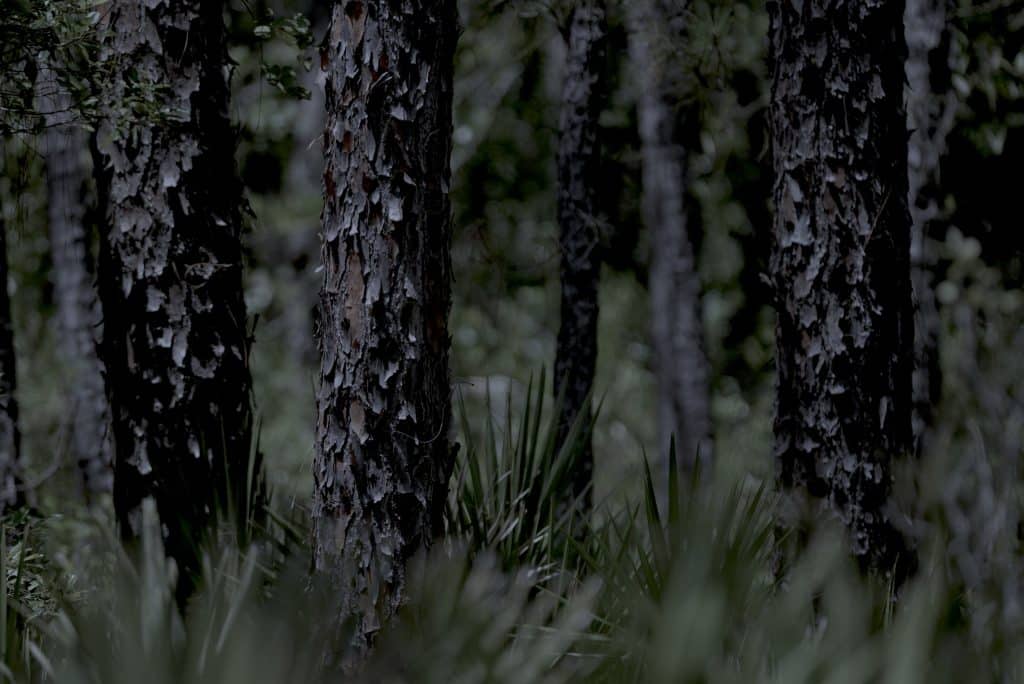
It was getting dark out when Eddie Meadows decided to hunker down in the thick underbrush of the UCF arboretum, the buzzing of insects already closing in. He’d taken a wrong turn in the woods, and had left his phone behind at work. As the night closed in, so did the reality of his situation.
“I just had on shorts and a tee-top and the bugs just loved the heck out of me that night,” Meadows said.
His wife, Ardis Meadows, knew something was wrong. Eddie was late for dinner, and it wasn’t like him to not call. So she called one of his co-workers.
Eddie and Ardis had moved to Central Florida when a lucky break at a job happened while they lived near the U.S. Army’s Aberdeen Proving Ground in Maryland. A simulation team with the company Eddie worked for was about to move to Florida, and one of the employees backed out. Eddie and Ardis jumped at the chance. He’d already been in the industry for decades at that point, and was planning on retiring soon, to devote more time to his hobbies of running and fast classic cars. But a decade later, he was still working there when he went missing.
“I said ‘Check downstairs in the locker room and see if his work clothes are still in the locker,’” Ardis said.
His clothes were still in that locker. The next call was to the police, who got a search helicopter in the air right after. Eddie saw it flying overhead that night but the crew didn’t see him.
On Friday Eddie tried to cut his way through the thick brush around him, breaking sticks off of trees to use as makeshift tools for clearing a path. That didn’t work either.
“It took me probably a good 30 minutes to go maybe 100 yards,” Eddie said. “That’s how bad it was.”
A new plan
By Saturday morning he was frustrated.
“I thought this is stupid, this isn’t that big an area.” Eddie said. “I said, ‘If I go in one direction somehow I’ve got to get to the edge of this thing.’ So I did that Saturday, I didn’t get out.”
Then the helicopter flew above him again. This time Eddie ran out into a clearing, took his shirt off and waved it above his head trying to draw the crew’s attention. That attempt at getting himself home failed too, ending with another night in the woods.
By Sunday Eddie had a new plan. He was still trying to head in one direction to find the edge of the wilderness where he was trapped, but now he resorted to using the sun and moon as his guides.
He left for his quick run with no cellphone and no water. Now facing dehydration and moving slower he relied on a fortunate shower of rain to keep him going.

“It was raining and I’m out there licking the leaves to get the water,” Eddie said.
Doctors later told him his liver and kidneys were beginning to shut down.
While Eddie spent days trying to find his way home Ardis was at their house in Oviedo joined by hundreds of friends, family and members of their church.
‘My biggest fear was that we would never find out what happened’
“We’re so blessed because we had so many people that came here to support the family,” Ardis said. “The house at the end of the road was for sale and the people that were looking at it asked their real estate agent, ‘What is it with these people here, do they party all the time?’ Because there were so many cars.”
During those four days of uncertainty Ardis leaned on the support of her community, but her faith gave her something she knew for sure. She would see Eddie again.
“My biggest fear was that we would never find out what happened to him,” Ardis said. “But because of my faith I figured okay in the worst scenario he wouldn’t be found but I would see him again in heaven and that made me feel a whole lot better knowing that.”
Ardis and Eddie Meadows have lived a life together for a lot longer than they’ve known a world without the other. They’re high school sweethearts who met during a play put on by their church in Charleston, West Virginia when they were 15. Eddie was cast as the lead role, the preacher’s son, and Ardis was his love interest.
Today, Ardis is 81 and Eddie is 82.
“We just kept playing boyfriend and girlfriend ever since,” Eddie said.
Eddie was found in the morning of Labor Day in 2006, not by the police helicopter that narrowly missed him twice before or by an army sized search party charging through the woods. Running out of options and time, news of the search for Eddie drew out the people who get lost for fun.
Far and away
Getting lost in the woods was Ron Eaglin’s expertise. It’s something he’s been doing whether for fun or competition for 30 years. He started out as a hasher, which is basically an orienteer playing hide-and-seek. Crowds of hashers would gather to drink beers and chase a person called the “hare’ or “rabbit”.
Eaglin took all his experience with him to find Eddie on Monday morning. He joined the search with Winter Springs’ Bob Putnam and another experienced woodsman. They split up, with Putnam and friend Jerry Sirmans heading one way, and Eaglin heading another.
Starting out near UCF’s water tower, Eaglin had a hunch about where Eddie might be.
“I’m like, ‘He’s got to be in the swamp,’” Eaglin said. “Because that’s the only place you would be able to get stuck and not get out.”
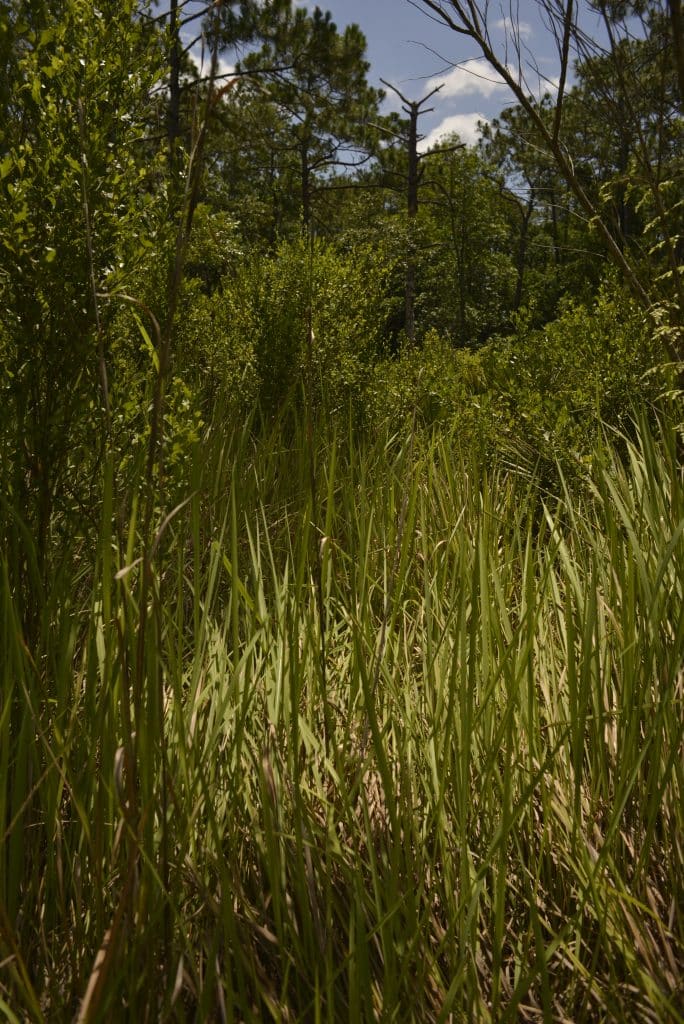
When he marched out into the swamp Eaglin was expecting to find a sad scene.
“We figured the guy’s dead by now,” Eaglin said. “I’m looking for buzzing flies and [stuff] like that. Then I hear somebody sloshing out, kaboosh in the swamp. I’m like, that is a human. That’s not a deer.”
Eaglin called out in the direction of the sloshing he heard.
“Hey, are you out here looking for Eddie Meadows?” Eaglin said.
The response came back with the three words he was looking for.
“I am Eddie,” Meadows yelled back.
Pushing through the swamp
“I was surprised because that water was crystal clear,” Eaglin said. “Lots of fish. It was beautiful, it was pristine.”
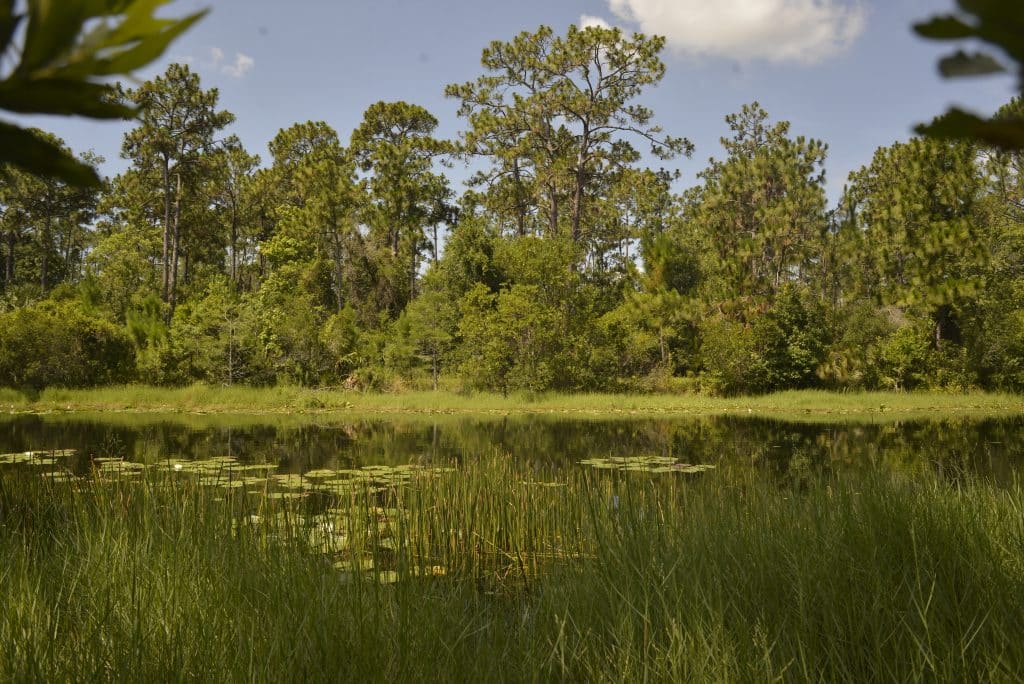
From there Eaglin used the sound of Eddie’s voice to get to him and pull him out. The UCF arboretum area can be thick with dense underbrush, saw palmetto, tall clumping grasses, vines and more blocking the way.
They worked their way back out toward the UCF Arboretum where they met up with an ambulance.
Sounds from the other side of the forest
For Putnam and Sirmans, the search had continued with shouting into the woods unrequited by anything but birds. Then came the call.
“Ron found Eddie,” the voice on the other end said. And that was it.
Putnam and Sirmans thought Eddie was dead.
“We were kind of disheartened at that,” Putnam said. “We didn’t run or anything, we just walked all the way back.”
Then as they came out of the woods, there he was, sitting in the back of an ambulance. Putnam said he and Sirmans jumped up and down when they saw him.
“It’s not the kind of thing that we civilians ever get to experience,” Putnam said, “It’s wonderful, really, we kind of validated the years of effort we put into this sport.”
Alive, but not unharmed
Severely dehydrated at that point, Eddie’s first act was to get a drink of water. The second was to borrow a paramedic’s phone to finally call home, where his son Chip answered.
“I said, ‘Hi Chip this is your dad,’ just like that.” Eddie said. “He thought it was a prank call, ‘I said no listen, there’s some rescuers out here. They found me, we’re gonna go to the hospital’ Then I heard a lot of yelling and, ‘Yeah he’s alive!’”
Eddie still gets emotional when he remembers what his family had to deal with.
“I was extremely embarrassed to put my family through that and see that crap that I did,” Eddie said as his voice shook and tears welled in his eyes. “I just wanted to get back to normal, I wanted to get back to work, I wanted to go to choir practice and I wanted to forget that I did such a stupid thing.”
Returning to the fast life of Eddie
So Eddie went back to the one thing he had in common with his rescuers: competition.
Competition in two completely different kinds of racing was also part of Eddie’s normal; he said he couldn’t get back to running fast enough. He’s ran 15 marathons and over 80 half-marathons in his life, but he didn’t just race on foot.
Eddie competed in Sports Car Club of America road races from the mid ’70s until just a few years ago, over 40 years, all in the same car. A 1966 Chevrolet Corvair Corsa modified by Don Yenko. Only 100 of those cars were ever made, Eddie’s was number 62.
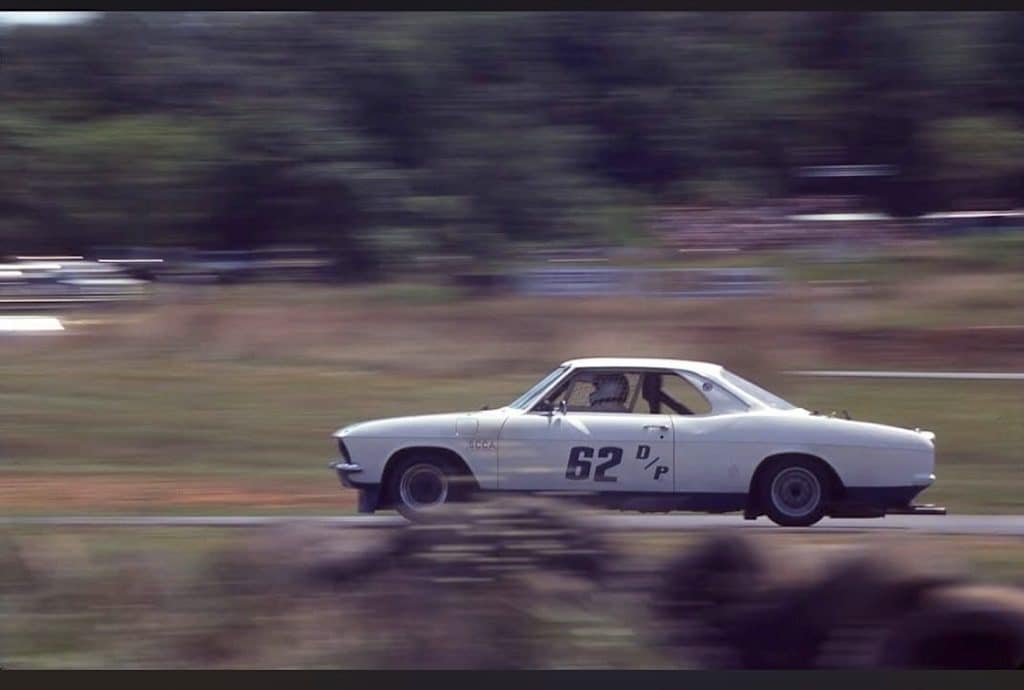
Finding that car took some luck, both good and bad.
Eddie had his first close call at 19 years old when his 1957 Chevy fell on his head while he was working on it, paralyzing half of his face.
“You know when a car tries to kill you, you should probably get rid of it,” Eddie said.
So he went to the car dealership and found a 1961 Corvair like the ones he had seen in Car and Driver Magazine, falling in love after the first test drive. In the mid-70’s when he decided to try his hand at SCCA Road Racing he learned the only approved Corvairs were those 100 Yenko Stingers. He set out to find one, but he wasn’t sure how he could afford the collectible.
“I thought, ‘Crap, on a government salary I can’t spend that,’” Eddie said. “At the time one of them went for like $8,000 to $10,000 I was going to gut it.”
Then there was a stroke of good luck. A friend from his car club tipped him off to a Yenko Stinger that might be for sale, but he said he probably wouldn’t want it since it was in rough shape.
“I thought, ‘Can this be a real Yenko Stinger?’” Eddie said. “Because I mean it was trashed.”
Someone had taken out the powertrain, it had a gasoline fire in the back, the rear window was gone and it was rusted from sitting in six inches of snow. Once Eddie opened the door though, he had seen everything he needed to see.
“I opened the door and in there was a little plate that said YSO 62.” Eddie said, “So I paid the guy 75 bucks because he had no idea what he had.”
Eddie still calls that car his baby; he worked on it and raced in it for years on end.
“That little Corvair went 142 miles an hour down the back straight at Daytona,” Eddie said. “Oh it was fast. It took me a while to get it there but every year I’d spend a little more and by the time it matured I’d win.”
He raced that car well into his 70’s.
“I only sold it because my family convinced me that my reflexes aren’t as good as they used to be,” Eddie said with a laugh.
While he doesn’t race anymore Eddie still spends most of his time around Corvairs. He shuffles his way over from his house to the 6 car garage on his property that looks a lot like a barn covered in fallen leaves to work on the cars for shows or for other SCCA members who still race. Some of the cars in the garage are his own projects, all in different states from rusty shells to looking fresh off the Chevy production line in the ‘60s.
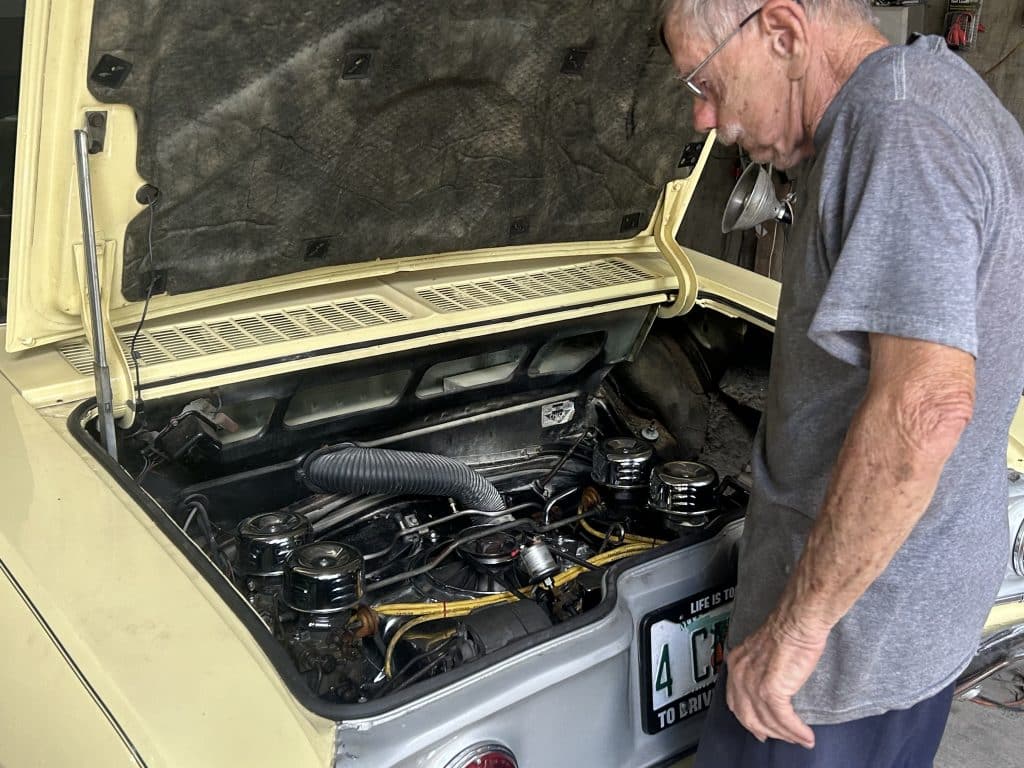
Eddie’s latest project sits parked in a trailer under the novelty “Corvair Court” street sign that hangs on his garage. It’s another Yenko Stinger he’s been preparing to tow to a car show over the weekend, freshly painted white with the classic blue Stinger racing stripe down the middle and a pristine black and blue leather interior.
On the side of the trailer there’s a bumper sticker caked with dirt that reads, “The Stinger is coming”.
That Stinger looks just like Eddie’s baby, but it can’t make up for the rush of the race or the void of the car he reminisces on under his breath.
“I really miss that car,” Eddie said before his wife cut him off from across the coffee table.
“I don’t,” Ardis said.
All photos, unless otherwise noted, by Isaac Benjamin Babcock
Support local news!
Choose a monthly amount
Hometown Hero
Community Champion
Rooster Society
Custom Amount
Thank you for your support!
Author

Related Articles
Greeneway Preserve gets first approval for four-story, 308-unit apartment complex near Lukas Nursery
Lukas Nursery officials asked for a pause on approval, citing flooding and traffic concerns. Voting isn’t done yet to decide whether the development, which is currently a storage lot, goes forward.

LYNX bus replacement Scout’s wait times surge as schools start
Increased rush-hour fee kicks in this month. ‘They’re saving them money,’ said one resident who wants to see buses come back. ‘They’re not saving the people money.’
Oviedo’s controversial Flock cameras have been removed. Now what?
A single curious Oviedo resident spoke up about the Flock cameras a month ago. Within weeks there was more public concern. Then in one night at the end of August the system was gone.