
Central Florida supervisors of elections talk election security
Combating fears of election tampering by bringing voters in on the security process.
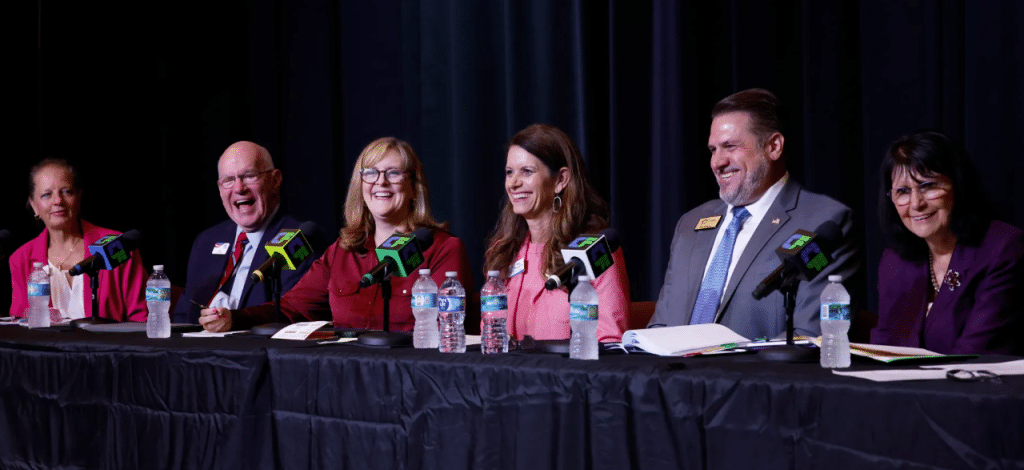
Six Central Florida Supervisors of Elections gave voters an inside look at how their offices maintain election integrity and keep the polls safe during a panel discussion hosted by the News Collaborative of Central Florida on Tuesday morning. The goal: easing election security fears and answering questions in the runup to the primary and general elections this year.
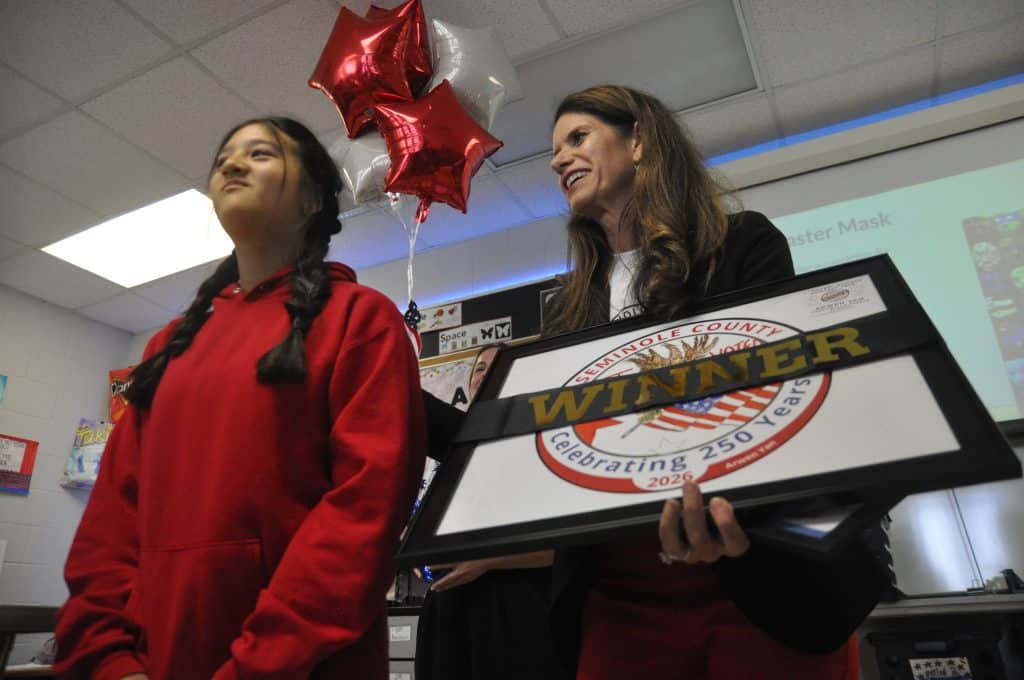
In the lead up to President Donald Trump’s address to the nation on Thursday night that’s reportedly centered on election security and interference allegations, Osceola County Supervisor of Elections Mary Jane Arrington invited voters into the process inside her own office.
“Our elections have always been secure, and we have gone to great lengths to make sure that they are,” Arrington said, “Not only our physical security, but the security of the ballots and transparency. I invite every voter, if they are in doubt, to come watch what we do.”
Election security with a live studio audience
The Florida Division of Elections requires that every Supervisor of Elections office complete a public Logic and Accuracy Test or L&A within 25 days of the start of early voting in the county.
After voting equipment maintenance and programming is complete, every single machine must be tested for its accuracy both privately and publicly. The FDE guidelines suggest for the public L&A test to be done after it’s completed privately.
In Volusia county, just after Trump’s original claims of a stolen election in 2020, the transparency of the public L&A Testing helped Volusia County Supervisor of Elections Lisa Lewis ease the minds of voters in the largest turnout she had seen for a test.
It was Aug. 2022, and 65 people showed up.
“We could barely fit them in our room, and once they saw the process, they asked all the questions, we showed them everything and went through all the questions,” Lewis said, “We had the longest L&A we’ve ever had.”
When it came time for the 2022 midterm elections in November, none of them came back. When Lewis asked why, their response was simple.
“‘We saw your process,’” Lewis said, “‘We don’t need to.’”
While they invite the public in for the tests, most of the supervisors’ offices don’t allow any recording for fear of security breaches. The exceptions are in Orange and Seminole County. The Orange County Supervisor of Elections Office livestreams L&A tests on their website, and in Seminole County they’re broadcast live on Seminole Government Television.
Seminole County Supervisor of Elections Amy Pennock said cameras were first introduced to record canvassing boards in 2024 due to “issues” in the election office.
“We’ve committed to keep doing that,” Pennock said, “So you will be able to watch Logic and Accuracy on SGTV in Seminole County. We are space constrained, so it makes it easier for people to watch it rather than having to come in and sit in a very, very tight space we have in our office.”
‘An honest mistake’
Pennock also addressed the concern that people who were not U.S. citizens commit fraud in order to vote in elections. Since she took office in January, 168 individuals have been identified and removed from voter rolls. Most, Pennock said, made an honest mistake.
“We’ve had several come in and say, ‘Absolutely, I’m a U.S. citizen. My parents were naturalized. I have documents,’” Pennock said, “It’s not intentional for the most part. We’ve helped guide them to go to the courthouse and make sure you start the process to become a naturalized citizen.”
According to the most recent demographics report from Pennock’s office, there are 366,158 voters registered in Seminole County. The 168 individuals removed represent 0.04% of voters.
Brevard County Supervisor of Elections Tim Bobanic had 77 such voters on his rolls.
“When you have elections that are decided by one vote or tie votes none of us ever want to have an ineligible voter on the voter rolls,” Bobanic said, “So, again, I don’t think it’s thousands, but it’s not none. Forty-one of those 77 voters actually voted in elections.”
Federal intervention
Another election interference concern many voters have is not a foreign entity or individual fraudulent voter, but federal agents being deployed to the polls.
When the panel was asked about the possibility, Bobanic flipped through his notes to find Title 18 U.S. Code 592.
“Armed federal agents are prohibited from conducting investigative activity in any place where election activity is being held,” Bobanic said, “I’ve spoken with our local Sheriff, Wayne Ivey, who has worked hand-in-hand and has assured us that there will not be any kind of actions or things going on on election day with ICE agents or any of his deputies.”
The law was highlighted during a presentation by the FBI at the most recent conference Bobanic attended.
Battling low voter turnout
According to Pennock the average voter turnout during primary elections in the county is usually 17 to 24%, compared to between 50 and 60% during general elections. A contributing factor to the depressed primary turnout, she said, is the national media and general “rhetoric” that polling places are not safe.
“It really only decreases the turnout in the most important elections,” Pennock said, “Yes, the president is an important election. Yes, the governor, the general [election], but they’re not the ones worrying about your potholes, your schools, your roadways, your stormwater issues.”
Safety concerns haven’t just driven voters away from the polls, they’ve also driven at least one poll away from voters.
“I had a synagogue that was very concerned because of the issues that are going on with Iran,” Pennock said,”We even said, ‘You know what? For safety reasons, let’s not put anyone at risk and have a polling location there. Let’s not bring attention.’”
The synagogue is one of 11 polling places in Seminole County that have been “collapsed” into another location. It was the only one that gave safety as the reason, with the rest being a combination of scheduling conflicts, disinterest from the host site or cost cutting measures.
“We also looked at the fact that we have to start looking at cost savings methods if this property tax referendum goes through,” Pennock said, “We’re going to have to start looking at ways to make sure that we’re effectively using our tax dollars to get people out to the polls, so lots of challenges made us go into that.”
According to the Seminole County precinct and polling location map, 27 out of 82 precincts in the county have a polling location that is outside of their boundary. There are 120,488 registered voters in those 27 precincts, or just over 32% of eligible Seminole County voters, who would have to make the trip outside of their precinct to cast a vote on election day.
Check here for a map with the new polling locations.
“Polling places are selected to provide the most convenient access for the greatest number of voters — not simply the geographic center of a precinct,” the election’s office wrote in a statement.
Support local news!
Choose a monthly amount
Hometown Hero
Community Champion
Rooster Society
Custom Amount
Thank you for your support!
Author
Related Articles
Seminole County approves $1.27 billion budget – without Flock cameras
One resident would rather the county put savings ‘back to residents’ ahead of property tax vote.
Seminole County could lose 475 police, fire workers if Amendment 3 passes
Property tax reform a ‘threat’ to public safety, as officials predict longer 911 response times, loss of ‘no-kill’ shelter status for pets if Amendment 3 passes.
Want to meet Seminole County candidates? OCN moderating two forums Thursday
Candidates for Winter Springs City Commission and the Florida House, Senate take the stage in two Seminole County forums. Oviedo Community News’ Megan Stokes and Abe Aboraya will be moderating.