
What are the three proposed constitutional amendments in Florida?
One Florida constitutional amendment would allow the state to raise saving levels for its rainy day fund, another would cut taxes on agricultural equipment and a third would reduce property taxes, but two of them would reduce state and local revenues.
Voters getting a ballot for the November election will have three constitutional amendments to vote on. So what are they, and what would they do?
The general election is Tuesday, Nov. 3, 2026. The deadline to register to vote is Oct. 3, and early voting runs from Oct. 19 to Nov. 1.
Constitutional amendments in Florida must get 60% of the vote to pass. All three amendments this year were put on the ballot by Florida lawmakers.
Aubrey Jewett, associate professor and associate school director at the University of Central Florida’s School of Politics, Security and International Affairs, said voters will need to do their research on the amendments.
“We are voting whether or not to put things into the Constitution,” Jewett said. “And what we put in there really does matter.”
What is Amendment 1 in Florida?
Amendment 1 would require the Florida Legislature to increase budget reserves from the current 10% to a 25% reserve.
It would require the Legislature to put $750 million into reserves annually until the threshold is reached, except in years when there’s a budget shortfall or an emergency, like a hurricane. Advocates for the bill said it’s a hedge against a downturn in the economy, while critics say it’s unnecessary, and that surpluses should go back to residents in the form of tax breaks.
The Republican Party of Florida has endorsed Amendment 1.
“This amendment will help strengthen Florida’s rainy day fund so the state can handle storms, downturns, and other emergencies without raising taxes or raiding the budget,” the state’s GOP wrote on X, the platform formerly known as Twitter.
Other groups have come out against the amendment, saying the money could be better spent elsewhere. That includes some union representatives, and Gov. Ron DeSantis.
DeSantis recommended a no vote, calling it a “foolish” constitutional amendment.
“We already have a maxed out rainy day fund and have run the largest surpluses in state history,” DeSantis wrote on X, the platform formerly known as Twitter. “Any additional revenue should be used for lower taxes, including assisting local governments with grants so that homestead properties can be exempt from local property tax. Surplus revenue could also be used to remove tolls once the property tax issue is settled.”
Text on the ballot:
Proposing an amendment to the State Constitution to increase the amount of funds that may be retained in the budget stabilization fund from 10% to 25% of general revenue collections, require the legislature to transfer the lesser of $750 million or the amount required to reach 25% of the general revenue collections each year unless certain conditions are met, and allow the legislature to withdraw funds for critical state needs.
Check here for the full text of the amendment. Check here for an analysis of the bill
What is Amendment 2 in Florida?
Amendment 2 deals with property taxes, but specifically for farms and agritourism businesses.
In Florida, businesses pay property taxes on the value of the land and buildings. But they also pay a property tax on the value of all the business equipment. It’s called Tangible Personal Property, and can include the value of furniture, tools, appliances and other equipment.
That includes farm equipment, like tractors. Amendment 2 would eliminate the property taxes for that farm equipment across the state.
“The Tangible Personal Property tax literally handicaps a struggling sector of our society that we so desperately rely on,” wrote Republican Rep. Danny Alvarez when he filed the bill. “Getting rid of it allows Farmers and Ranchers the chance to reinvest their money in themselves in order to ensure we all have a better tomorrow.”
The state’s economists estimate that statewide it would cut $31 million from local governments if approved.
Text on the ballot:
Proposing an amendment to the State Constitution to exempt tangible personal property habitually located or typically present on land classified as agricultural, used in the production of agricultural products or for agritourism activities, and owned by the landowner or leaseholder of the agricultural land from ad valorem taxation. If approved this amendment would first apply for tax years beginning January 1, 2027.

Check here for the full text of the amendment. Check here for an analysis of the bill
What is Amendment 3 in Florida?
Amendment 3 is the amendment getting the most discussion in Florida.
The bill has two main impacts. First, it would increase the property tax exemption for homesteaded properties from the current $50,000 to $150,000 in 2027 and then $250,000 in 2028; afterwards, the exemption would increase with inflation.
Those exemptions would not apply to taxes for schools.
The amendment only applies to a person’s homesteaded property; it does not apply to commercial property or, crucially, to rental properties. The bill would cap the annual increase in assessed property value from going up by more than 5% annually; currently, increases in value are capped at 10%.
The bill would save taxpayers an estimated $12 billion annually at full implementation. But that savings will also leave a $12 billion hole in local government budgets, which depend on property taxes to fund services.
In Seminole County, Amendment 3 could lead to 475 police and firefighters losing their jobs. It’s also led to discussions about consolidating police departments, and increasing other fees and cutting services to balance budgets.
Text on the ballot:
This amendment increases the homestead exemption, for all non-school taxes, to $150,000 in 2027 and $250,000 in 2028, and adjusts for inflation thereafter. It requires the Legislature to prescribe a uniform procedure for counties and municipalities, for their respective levies, to increase the homestead exemption up to full assessed value, and allows special districts, subject to referendum approval, to do the same. Persons who are not Florida residents on December 31, 2026, will receive the existing homestead exemption upon qualifying for a homestead exemption, with the increased homestead exemption beginning with the fifth year of exemption, to the extent permitted by the U.S. Constitution. This amendment reduces the annual cap on assessment increases for non-homestead properties from 10% to 5%. This amendment requires counties and municipalities to use property taxes solely for public safety, education and schools, infrastructure, natural resources, bond debt service, retirement benefits for employees, and operations and administration. Other expenditures may be approved by county officers or county or municipal governing bodies unless prohibited by general law, notwithstanding Article VII, Section 9(a) of the Florida Constitution, which allows counties and municipalities to levy property taxes for their respective purposes. This amendment takes effect January 1, 2027.
Check here for the full text of the amendment. Check here for an analysis of the bill
Support critical, local news you rely on to stay informed, connected and empowered.
Choose a monthly amount
Hometown Hero
Community Champion
Rooster Society
Custom Amount
Thank you for your support!
Author

Related Articles

Attempted coop: Winter Springs makes first move to allow backyard chickens
Final vote at the end of the month to allow up to 20 backyard chickens in certain areas, but some residents want the city to wait.
Seminole County approval could pave the way for 300+ apartments near Lukas Nursery
Greeneway Preserve still needs a detailed site plan before construction would start, as commissioners warn the area is ‘prone to flooding.’
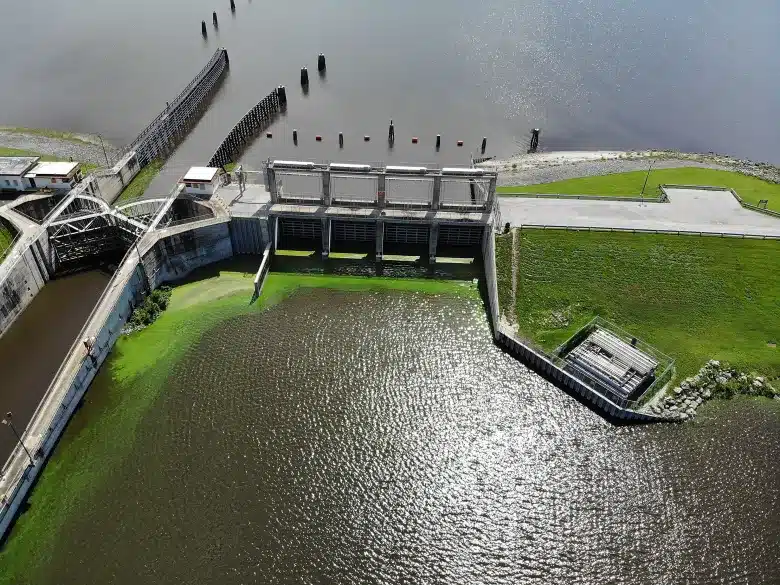
Watchdogs warn Amendment 3 may cut funding for flood control and drinking water
Florida’s water management districts depend on property taxes to fund about a third of their work preventing floods, securing the drinking water supply and conserving wetlands.