
Voter Guide – General Election 2026

About this guide
Oviedo Community News’ mission is to empower readers with trustworthy, local information to help you make decisions. This nonpartisan voter guide has information on all of the local candidates running in the 2026 General Election, happening Nov. 3.
The OCN team has spent months learning about Greater Oviedo and Winter Springs’ priorities and questions for the candidates through our online survey, hosting group discussions and through one-on-one interviews. We posed voter-submitted questions as well as questions based on your priorities to the local candidates.
We asked candidates in each race the same questions in writing and they were given a deadline to answer in their own words. Those who did not answer got multiple emails, phone calls and text messages from our reporters. Candidates who did not respond are identified in their profiles below.
OCN is a nonprofit and does not endorse candidates or provide opinions. Find our ethics policy here.
This guide would not be possible without the vital work of OCN reporters Abe Aboraya, Eric Orvieto; Senior Editor Alex Babcock; Managing Editor Isaac Babcock and Editor-in-chief Megan Stokes and editorial interns Emiliana Chávez, Mason Gray, Gio Gonzalez, Sophie Jackson, Sarah Morelli, Azlyn Cato and Demetrius Montero. Countless hours were spent reporting, fact checking, reaching out to candidates, laying out the guide and deliberating on how to produce the most useful, fair and equitable resource possible.
To make local elections even more accessible, this year OCN teamed up with the News Collaborative of Central Florida to share election content, helping the entire region be more informed at the ballot box.
This guide would also not be possible without contributions from OCN’s individual donors and our business and major donors. Thank you for helping us to provide this critical community service. Contribute here to keep work like this possible.
Thank you to those candidates who participated in the guide. It’s noted which candidates did not return the multiple phone calls and emails. Also of note, OCN used BillTrack50 to help you see how your representatives have voted on issues in the past. This resource was not available for those who have never previously been elected to office nor for those in local office.
Click buttons to jump down
Voting information (click arrows drop-down)
Election Day information
Register to vote
- Deadline to register for General Election: Oct. 5, 2026
- Register to vote here.
- Check your voter registration status and record here.
- Fill out the Voter Registration Application here to update your signature, change your name, or if the online form provided by the state is not working.
Mail-in voting
- Deadline to request a mail ballot to be mailed for the General Election: Oct. 22, 2026
- Ballots must be received by the Supervisor of Elections Office by Election Day.
- Drop off mail-in ballots in person at Seminole County Supervisor of Elections, 1500 E. Airport Blvd. in Sanford. Alternatively, drop off mail-in ballots at any early voting location (find below).
- Have questions about your mail-in ballot? Find answers here.
- Did you know that you can track your ballot? Do that here.
Early voting
- Seminole County General Election Early Voting days and times: Oct. 19 – Nov. 1, 7 a.m. to 7 p.m.
- During the Early Voting period, you can vote at any Seminole County Early Voting Site, regardless of your residential precinct.
- Locations:
- Supervisor of Elections: 1500 E. Airport Blvd., Sanford
- West Branch Library: 245 N. Hunt Club Blvd., Longwood
- Jean Rhein Central Branch Library: 215 Oxford Road, Casselberry
- Northwest Branch Library: 580 Green Way Blvd., Lake Mary
- Oviedo Aquatic Center: 148 Oviedo Blvd., Oviedo
- East Branch Library: 310 N. Division St., Oviedo
- North Branch Library: 150 N. Palmetto Ave., Sanford
Candidates (click arrows for drop-down)
U.S. Congressional candidates
What does this office do?
Representatives, or congressmen and congresswomen, represent a set number of constituents within a defined district within their respective state. There are 435 members of the House who each serve two-year terms for a maximum of four consecutive terms. U.S. Representatives make $174,000.
The U.S. House of Representatives oversees:
- Representatives introduce bills and resolutions
- Offer amendments
- Serve on committees
- Disburse government funding for functions and programs
- Oversee the executive branch
- Make and pass federal laws
U.S. House of Representatives Dist. 7
Florida House of Representatives
What does this office do?
The Florida House of Representatives is a part of the state’s legislature. Representatives serve two-year terms for a maximum of four consecutive terms in which they vote on bills that affect the state. There are a total of 120 members. Their annual salary is $29,697.
State representatives oversee:
- Draft and pass state laws and bills that impacts education, healthcare, and more
- Draft and pass amendments to existing laws
- Create public policy based on engagement with the public and stakeholders.
- Draft and pass the state budget and the portion that goes to each municipality
- Raise or lower taxes
- Oversee the performance and efficacy of state agencies such as the Florida Department of Transportation, the Department of Education, etc.
- Vote to override or uphold a gubernatorial veto
State representatives work to represent their municipalities’ interests at the state level. They often work in committees to sponsor bills and introduce budget amendments to earn funding for their city.
Florida House of Representatives Dist. 36
Florida House of Representatives Dist. 37
Florida House of Representatives Dist. 38
Florida House of Representatives Dist. 39
Florida Senate
What does this office do?
Florida state senators serve four-year terms for a maximum of two consecutive terms. There are 40 senators in Florida. Their annual salary is $29,697.
Florida Senators oversee:
- Draft and pass legislation that impacts education, healthcare, and more
- Draft and pass amendments to existing laws
- Draft and pass the state budget and the portion that goes to each municipality
- Raise or lower taxes
- Vote to override or uphold a gubernatorial veto
Florida State Senate District 10
Seminole County Commission candidates
What does this office do?
Supervisors of elections are in charge of the election proceedings within their county jurisdiction, which tends to cover the entire county. They’re designated to do so by state law and county charter.
The responsibilities of the Supervisor of Elections includes:
- Accepting and certifying local ballot initiatives
- Sending and receiving mail-in ballots, including to those in the military and overseas
- Conducting elections, including determining precincts, organizing precinct operations, handling staff and volunteers, and making sure voters are aware of their precincts
- Qualifying candidates to run for office
- Receiving campaign finance documents and making them available to the public
- Registering voters, maintaining voter rolls and removing inactive voters or those who’ve moved
- Conducting all public elections in the county
- Sending advance notice of elections
The Seminole County Supervisor of Elections in 2023-2024 fiscal year was paid $180,332.
Seminole County
County Judge
What does this office do?
County judgeships are non-partisan. They serve six-year terms.
The responsibilities of Seminole County Judges includes:
- Deciding nonviolent cases, including misdemeanors, local ordinance violations, civil claims up to and including $50,000, tenant evictions, and traffic violations.
County Judge
Winter Springs Mayor
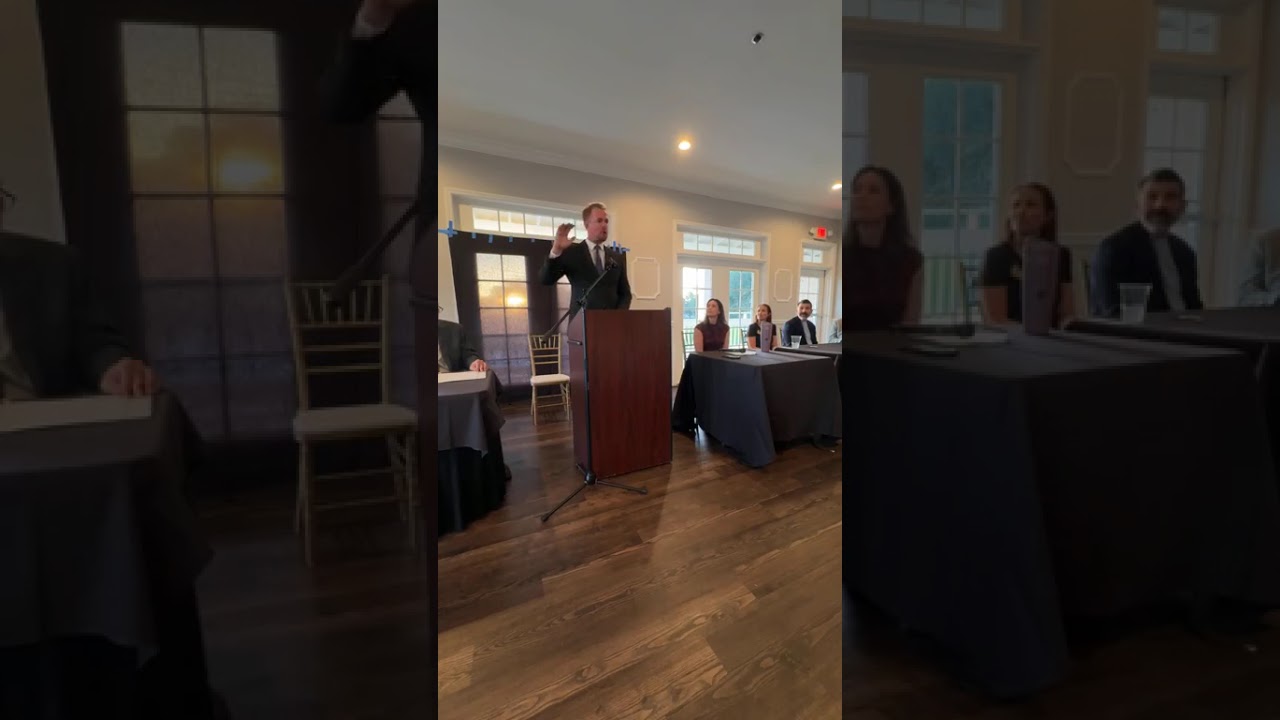
See the video below to watch a Winter Springs candidate forum moderated by Oviedo Community News’ Megan Stokes:
What does this office do?
Winter Springs has a weak mayor system, though the mayor has the power to veto Commission votes. Currently, there are five voting city commissioners, and the mayor leads meetings and speaks on topics being discussed and deliberated by the Commission, but only votes in the rare case of a tie vote, which can occur in the instance of an abstention from a vote or absence of a Commission member.
The responsibilities of the Winter Springs Mayor include:
- Preside over over City Commission meetings
- Act as master of ceremonies for city events
- Work as a liaison to the community and to outside officials
- Provide a veto over legislation voted on by the Commission
Mayor
Winter Springs City Commission Candidates
What does this office do?
Winter Springs has its legislative powers held by the Mayor and the City Commission, functioning under a Commission/Manager form of government. The Mayor and five City Commissioners are elected at large, with each City Commissioner coming from a different district and serving four-year terms.
The responsibilities of the Winter Springs City Commission includes:
- Attend meetings and workshops. The commission meets at 6:30 p.m. on the second and fourth Monday of each month in the City Hall.
- City Commission meeting agendas are posted five days before the meeting.
- Draft, approve, and amend policies, laws and ordinances for the city
- Make decisions on land use matters by considering land zoning change requests and development proposals. They also guide growth and development by approving a comprehensive plan.
- Approve the annual budget and set the tax rate
- Set and adjust fees such as water, wastewater and trash pick up
District 2
District 4
Oviedo City Council candidates
Editor’s note: None of the three Oviedo City Council seats up for election were contested, so there will be no election in Oviedo. However, at Oviedo Community News, we believe that elections serve as a time for constituents to connect with the leaders the entrust to make decisions for their community so we still press those leaders on the issues that matter to you. Only one elected official responded to questions (included below).
What does this office do?
Oviedo’s City Council is made up of five members, the mayor, deputy mayor and three council members. They are elected every two years. Each council member must live within the city limits of Oviedo in order to be elected.
Examples of what the Oviedo City Council does:
- Meets at 6:30 p.m. on the first and third Monday of each month in the City Hall.
- City Council meeting agendas are posted five days before the meeting.
- Work to establish policies, manage land use and growth, approve the annual budget and tax rate and adjust water and wastewater rates along with other fees for services provided by the city.
- Approve laws and ordinances
- Supervise the city manager
Group 3
Amendments
State Amendments
Click here to read Oviedo Community News article breaking down the state amendments that will be in the ballot.
Oviedo Amendments
Click here to read Oviedo Community News article breaking down the Oviedo amendments that will be in the ballot.
Editor’s note: For any candidates not found within this guide, check the guides from our partners at the News Collaborative of Central Florida.
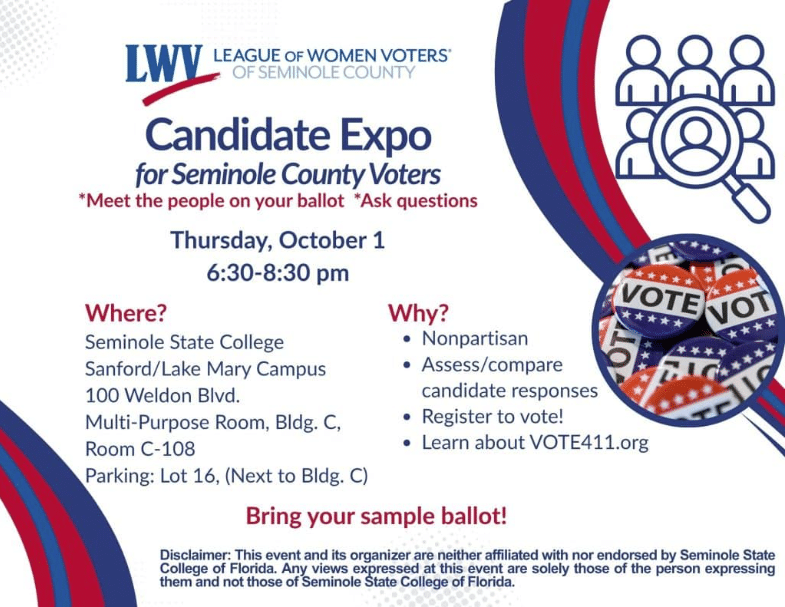
Upcoming election events
Questions?
If you have questions about this guide, find that something is missing or have additional election-related information that you would like to provide the OCN team, contact us.
Election-related articles
Voter Guide 2026
Watch Florida House candidates field questions from kids
Winter Springs City Commission candidate Kyle Stewart: ‘I’m not a Christian nationalist’

What are the three proposed constitutional amendments in Florida?
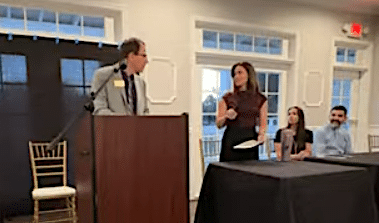
Winter Springs City Commission Candidates Make their Pitch to Voters
Seminole County could lose 475 police, fire workers if Amendment 3 passes

Oviedo could end holiday events, cut services if Amendment 3 passes

Winter Springs mayoral race takes a turn for the negative

Property tax amendment leads to hiring freeze in Winter Springs
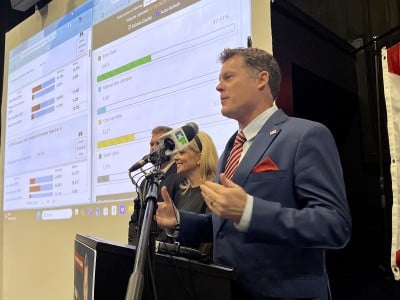
Ryan Elijah upsets Rep. Cory Mills for U.S. House District 7

Election results: Primary Election 2026

Watch: Seminole County judicial candidates answer questions about Supreme Court cases
How neighbors’ water bills are shaping votes on the property tax amendment

Oviedo prepares outreach plan for upcoming property tax amendment vote

Key differences split board candidates for Seminole County Public Schools

Diving into Seminole County August primary candidates’ financial reports
Voter Guide 2024

Election results: General Election 2024

Election results: Primary Election 2024
Voter Guide 2023
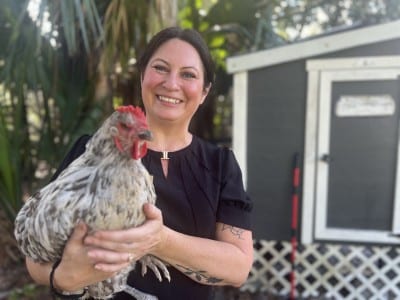
Attempted coop: Winter Springs makes first move to allow backyard chickens
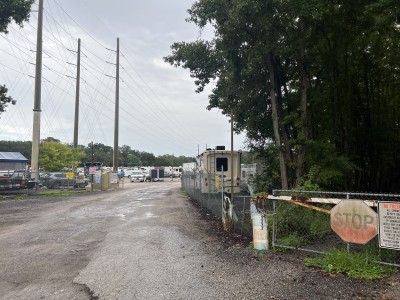
Seminole County approval could pave the way for 300+ apartments near Lukas Nursery