
McCann, Phillips debate in election for Winter Springs mayor
Mayor Kevin McCann touts a water association award that Winter Springs won this month in a blind taste test involving six Central Florida counties.
Water quality dominated a debate between Winter Springs Mayor Kevin McCann and candidate Jesse Phillips on Oct. 13 at the Winter Springs Senior Center, as the mayor touted advancements the city has made in improving its water systems, and Phillips criticized the city’s handling of water issues.
The debate was held on October 13 at the Winter Springs Senior Center. Dozens of residents attended the event and asked McCann and Phillips questions directly. Martin Comas, who covers Seminole County for the Orlando Sentinel, moderated the event.
What residents were experiencing frequently came up for debate, as audience members and candidates disagreed over the extent of the city’s water issues.
“I’ve lived here off and on since 1976 and there’s nothing wrong with our water,” one resident said early on in the debate, gesturing to Phillips. “I’d like to know why you think our water’s so bad.”
Residents in the audience disagreed on whether they worried about the quality of the water at all, and whether they liked the taste.
“I’ve lived all over the world and never had water that tasted this bad,” another resident said.
That issue was given an extra spotlight in the past month as a blind taste test conducted by the American Water Works Association awarded Winter Springs for water quality and the People’s Choice Award for the best tasting water 2026 in the AWWA’s Florida Region 3, comprising six Central Florida counties.
“We’re not pulling Rocky Mountain spring water out of our acquifer; we are living in Florida,” McCann said. “But compared to our neighbors, we are significantly better.”
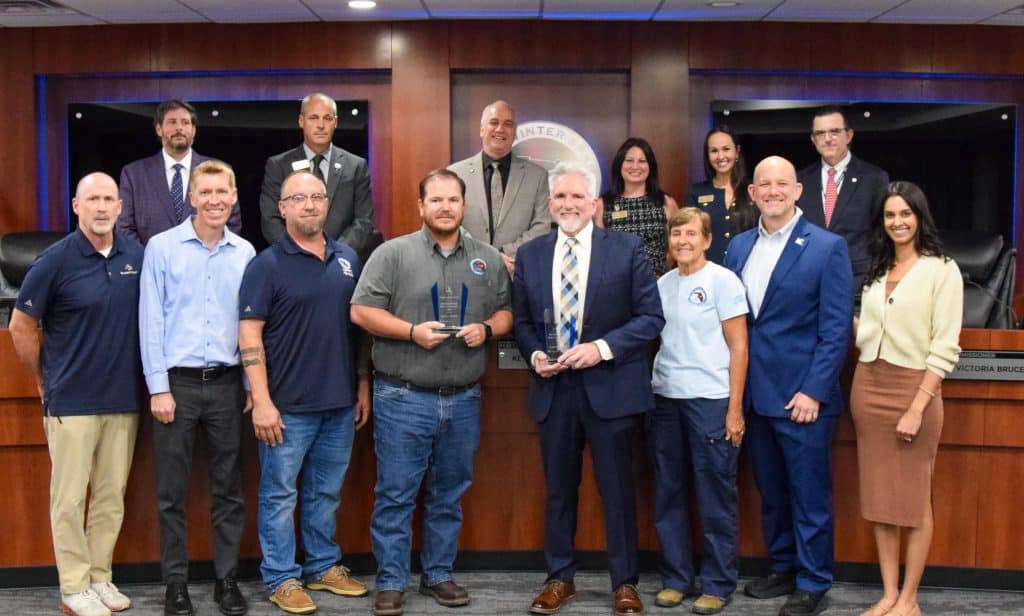
Phillips, known for his frequent criticisms of the city’s handling of its water systems, referred to the awards as an “October surprise,” saying that the city “presented a couple trophies to themselves” weeks before the election. The awards were given by the AWWA, a national organization founded in 1881 which touts itself as “the world’s largest organization of water professionals.”
The two candidates debated the quality of the city’s drinking water and what’s in it, particularly in regard to regulated chemicals. In terms of trihalomethanes, which are a byproduct of the breakdown of chemicals that sanitize drinking water, McCann said the city had worked to reduce them since 2017 and they were now “at the lowest level in city history.” The U.S. Environmental Protection Agency limit for trihalomethanes in municipal water supplies is 80 parts per billion. Winter Springs’ level in its 2025 analysis was below that limit at 61.65 ppb.
“We must continue to improve our water,” McCann said. “We must acknowledge there are issues. Mr. Phillips is bringing them up, but I commit to you we will not take our foot off the gas pedal.”
Check here to see the Oviedo Community News voter guide, which includes answers from Phillips and McCann on a wide range of topics. Check here for a story fact checking claims about the Winter Springs mayoral race.
According to the United States Environmental Protection Agency, a first-ever set of standards for perfluoroalkyl substances, better known as PFAS or “forever chemicals,” published in 2024, sets a recommended level, depending on the specific chemical, ranging from 4 to 10 parts per trillion, or a ratio of between 1 to 2.5 drops of the liquid into a water volume of 5 Olympic sized swimming pools, in municipal water systems. Enforcement of the level won’t take effect until 2029, or 2031 if cities apply for an extension.
On a measure of three of the more common of the five PFAS with suggested standards set by the EPA, Winter Springs’ water supply in 2025 contained between 3.4 and 7.5 parts per trillion. Phillips accused the city of violating the new standard, though the EPA has yet to begin enforcing it.
“If you look at the EPA standards, [the city] is in violation of a rule that was passed in 2024,” Phillips said. “The only reason it wasn’t flagged as a violation is because the EPA delayed enforcement of that rule until 2029. If we were sitting here in 2029, we would be in violation.”
McCann, who said the city is continuously working to improve its water quality, said that the two PFAS chemicals in excess of the new standard are “just barely over.”
“They’re still significantly less than in our neighboring communities,” McCann said. “In Miami they’re at 38 parts per [trillion], where we’re just over four [parts per trillion].”
To see the complete debate, watch here:

Support critical, local news you rely on to stay informed, connected and empowered.
Choose a monthly amount
Hometown Hero
Community Champion
Rooster Society
Custom Amount
Thank you for your support!
Author

Related Articles
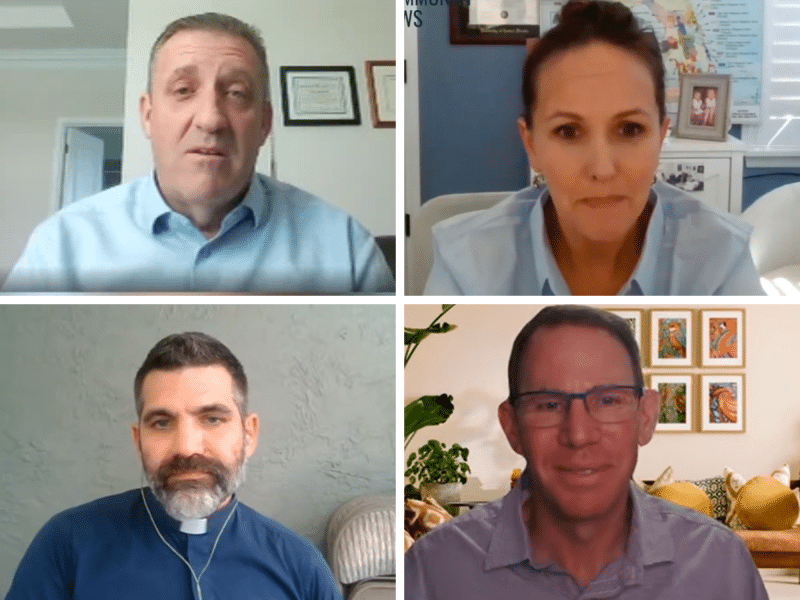
Watch: Winter Springs election candidates talk water quality, Amendment 3 and controversies
Oviedo Community News is adding video interviews with candidates from Oviedo, Winter Springs, Seminole County and beyond to its 2026 voter guide.
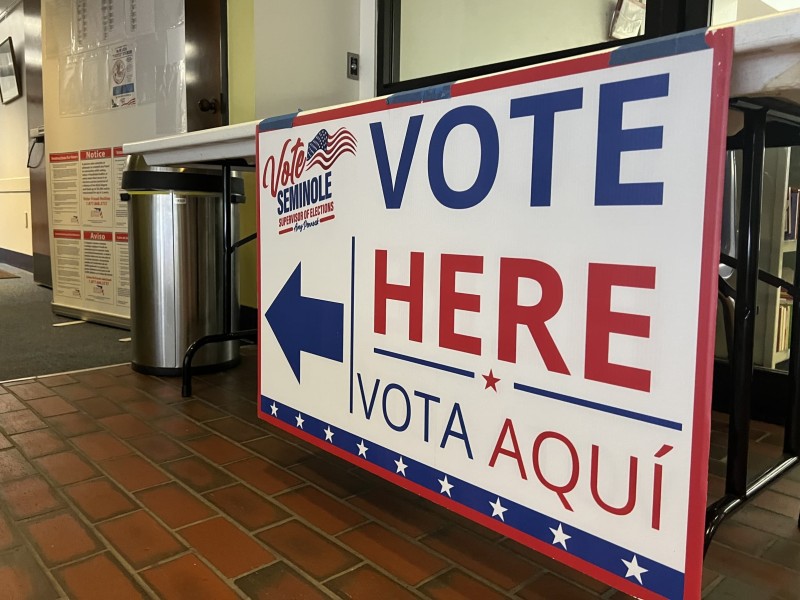
Elections supervisor: Check your polling location, as 14 Seminole County voting locations closed since 2024
That includes 5 polling sites in Oviedo and Winter Springs, with three of those changes coming since the August primary election. Supervisor of Elections Amy Pennock sent out new voter ID cards reassigning voters to other existing polling locations.

Development, explained: How local governments plan for growth
How Oviedo, Winter Springs and Seminole County plan for growth, determine what can be built and navigate Florida law.