
You asked, we answered: A Q&A on proposals to end property taxes in Florida
The Florida Legislative Session is drawing to a close, and one question remains unanswered: What about calls to end property taxes?
Lawmakers have not yet passed a budget for 2026, meaning the session could get extended or reconvened. The Florida House passed its version late in February, and Oviedo Community News published a story about how eliminating property taxes could impact Oviedo and Winter Springs especially hard because of the makeup of the tax base.
The story garnered dozens of comments and questions online. We took those (turning some of the comments into questions for the sake of other readers) and provided vetted and verified answers so that you can form your own, informed opinion.
Question: If the Florida Legislature passes a bill, does that make it law?
Answer: If the Florida Legislature approves a bill to reduce or eliminate property taxes, it would then have to be approved by Florida voters in November. Additionally, it would need to be approved by 60% of voters in November to go into effect.
Question: Will the proposal eliminate property taxes? Or will the counties keep their property taxes and make up the difference?
Answer: The house’s proposal is a blanket elimination of all “non-school” property taxes. That means it would eliminate Seminole County’s millage rate for homesteaded property owners. That also includes the additional rates charged to residents of Winter Springs, Casselberry and Altamonte Springs to provide fire services there.
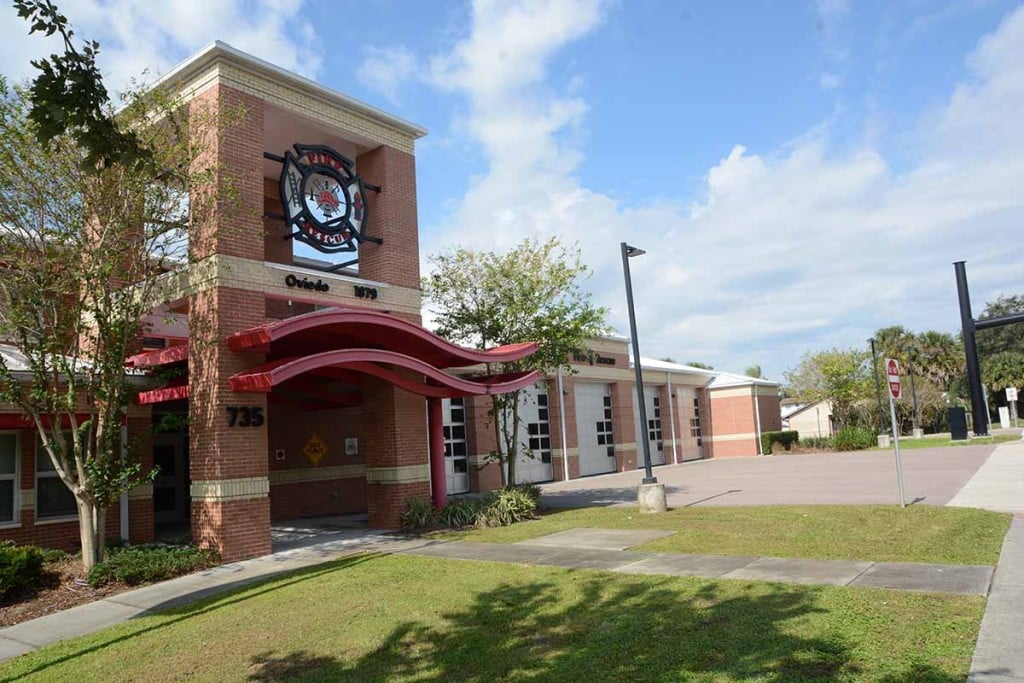
Seminole County also charges a separate millage rate for roads in the unincorporated areas, and that would be eliminated as well.
Theoretically, the county could increase the property tax millage rate and commercial properties would have to pay more. But there’s a catch there too. Apartment complexes are, for tax purposes, considered commercial. And so there’s a concern that if that were to happen, companies would pass the increased costs along in the form of increased rent.
The law passed by the house does give lawmakers the ability to provide relief to renters – but that would have to come in its own separate bill and isn’t included in the possible constitutional amendment.
Question: Is this a tax break for the wealthy?
Answer: The commenter here was referring to what Oviedo Mayor Megan Sladek said: That the county can charge flat fees for police and fire to make up the difference, but cities can’t.
The argument against flat fees is that, since everyone pays the same “flat” amount no matter their income, the less money you make, the higher a percentage of your income the flat fee will be. A person making $10,000 a year and paying a $1,000 a year flat public safety fee will pay 10% of their income into it, while someone making $100,000 and paying a $1,000 a year flat public safety fee will only pay 1% of their income into it. But others have also argued that eliminating property taxes could make homeownership attainable for more families.
In Seminole County, the average homesteaded family pays $3,260 for property tax. The highest-priced home in Seminole County would save about $25,500 annually. Florida does not charge state income tax. The state does charge sales tax, but that money mostly goes toward state funding and not local.
Question: How can I form an opinion without seeing the numbers?
Answer: Right now, we don’t have concrete numbers at a granular level. We know the bill passed by the Florida House is expected to cost local governments a total of $13.3 billion annually, including $260 million just in Seminole County. The bill does not allow cuts to law enforcement and public safety – which is the bulk of where local governments spend their property tax dollars.
Question: There’s plenty of money coming in. Don’t we just need a real budget and take out the waste?
Answer: Let’s look at the budget in Winter Springs. The city does not have a fire department, but it does have a police department.
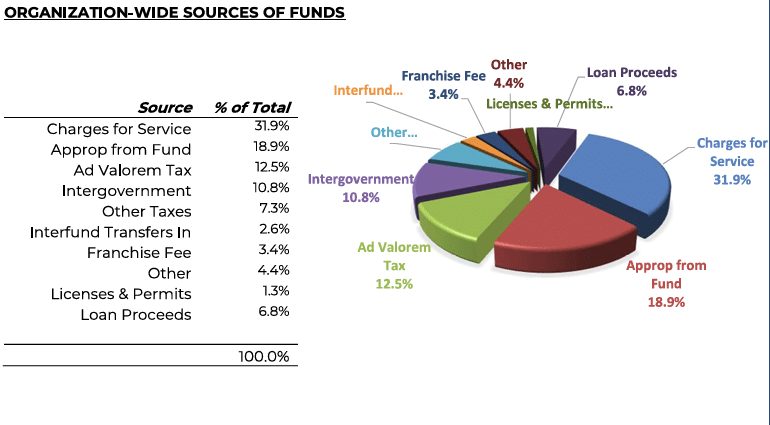
Overall, about 32% of tax revenue in Winter Springs actually comes from fee-for-services – things like your garbage and water bill. Property taxes are about 12.5% of all the money coming into Winter Springs, or $10 million annually. But that property tax money accounts for 38% of the Winter Springs General Fund, which is money set aside from the overall budget that the city can spend without restrictions.
And out of that $26.5 million general fund, Winter Springs already spends $10.9 million on the Police Department – and that department funding can’t be touched, according to the proposed constitutional amendment. So without property taxes, the city would be short about $10 million, and have $15.6 million remaining in the general fund for every other department.
Those remaining departments include Parks and Recreation at $3.1 million, Public Works at $1.6 million, Community Development at $2.4 million. The other departments include the executive team (funding for the City Manager, City Clerk and the City Commission), information services, legal services and the finance department.
Question: Is this cut only for permanent residents with zero mortgage, not for vacation homes or rental properties?
Answer: There have been multiple proposals that were floating in the Florida Legislature, but the one that passed says that homesteaded property owners are not subject to property taxes, except those for schools. So yes, the owners of rental properties and vacation homes would still have to pay the property tax. But the bill does not have any requirements on age or whether people are still paying a mortgage.
Question: I don’t understand why we have a city and a county that do the same thing. Can anyone explain that? The city has cops, but if the city didn’t exist we would get county cops so why are we paying twice?
Answer: Cities exist because there were enough residents to build one, and then those residents voted to form their own government. But this is a common complaint about city governments. If you live in a municipality, you pay property taxes to Seminole County and to the city. But they are separate governments that provide their own services and, depending on where residents live, split the share of services they provide. Cities also provide services, like water and roads, to residents. And there can be major differences in the zoning allowed in a city versus county areas.
Dissolving a city can happen if a city is financially insolvent, or if residents hold a referendum to do so. But it gets tricky because local governments almost always have debt – and figuring out what happens there is difficult. In Winter Springs last year, four out of five commissioners voted for a resolution that they wanted to see Winter Springs continue as a city.
Question: We have billions in collected surplus tourist tax money. Can we use it toward our Homestead Property Taxes?
Answer: This is another common argument. In Florida, taxes collected on hotel stays can only be used for tourism promotion. Any change there would require Florida lawmakers to weigh in.
Abe Aboraya is a Report for America corps member
Sorry for the interruption but please take 1 minute to read this. The news depends on it.
Did you know each article on Oviedo Community News takes anywhere from 10-15 hours to produce and edit and costs between $325 and $600? Your support makes it possible.
We believe that access to local news is a right, not a privilege, which is why our journalism is free for everyone. But we rely on readers like you to keep this work going. Your contribution keeps us independent and dedicated to our community.
If you believe in the value of local journalism, please make a tax-deductible contribution today or choose a monthly gift to help us plan for the future.
Thank you for supporting Oviedo Community News!
With gratitude,
Megan Stokes, OCN editor-in-chief
Thank you for reading! Before you go...
We are interested about hearing news in our community! Let us know what's happening!
Share a story!
Author

Related Articles

A one-shot deal: Jerry Vaughan honors veterans’ last wishes nationwide
Chuluota veteran Jerry Vaughan crafts reconstructed military uniforms to give deceased veterans a dignified final salute. His hope is, with a new federal bill, he could put himself out of a job.
Winter Springs approves $600,000 in emergency repairs to wastewater system
Officials say they’re 90 days away from breaking ground on a treatment plant – but equipment failures have the city keeping the environmental regulators appraised
Seminole County Public Schools approves county’s first community school
Seminole County Public Schools finalized an agreement Tuesday to bring the county’s first community school to Sanford.