
The hounds and Zippy the hare
Hash House Harriers: The “drinking club with a running problem” connects members from Oviedo to Malaysia. And it may have helped find a man who disappeared.
Congratulations, adventurer! You’re in the first link off of the main story. Remember, this story contains the first single bolded letter, part of a code word, and it’s also part of the whole story, so be sure to read it. After reading and finding the first letter, go back to the main story and continue reading from where you left off until you find the next linked map symbol. Good luck!
Ron Eaglin was an engineering professor at UCF when he found Eddie Meadows after Meadows spent 4 days lost in the woods right next to the campus.
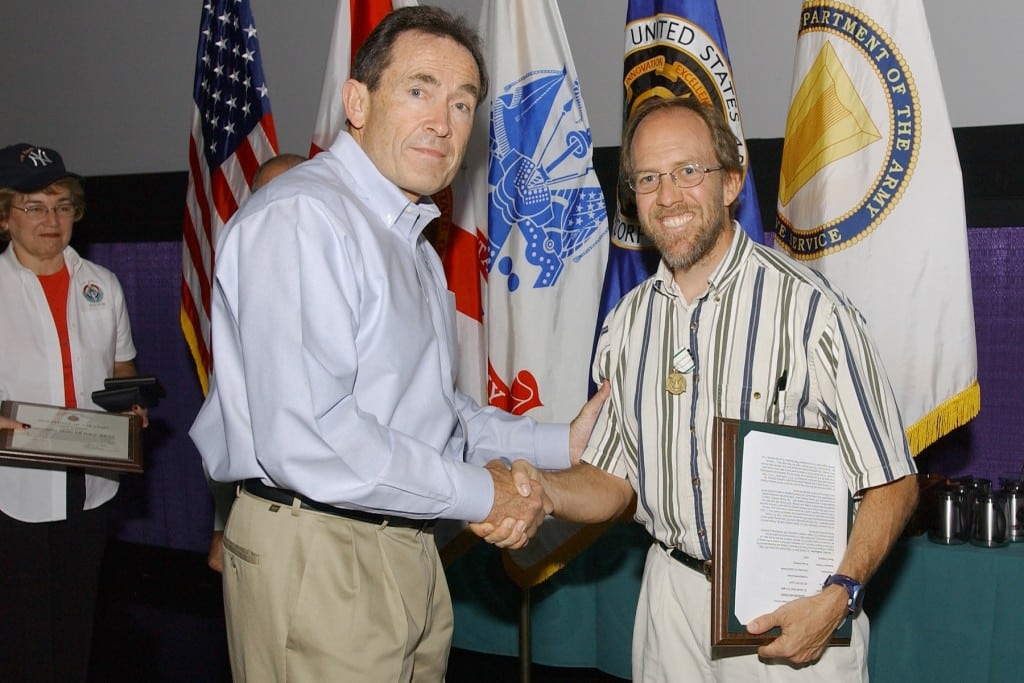
Eaglin’s first job was as a “Nuke” in the U.S. Navy, a nickname for the technicians responsible for operating and maintaining the on-ship nuclear propulsion plants that power aircraft carriers and submarines.
Eaglin is also an expert in getting lost in the woods.
ON-ON
It’s something he’s been doing whether for fun or competition for 30 years. He started out as a hasher, which is basically an orienteer playing hide-and-seek. Crowds of hashers would gather to drink beers and chase a person called the “hare’ or “rabbit”.
The rabbit gets a five-minute head start from the group to get lost, marking symbols on trees with pieces of chalk to declare a change in direction and dropping handfuls of flour behind them every so often as a trail of breadcrumbs for the group trying to track them down.
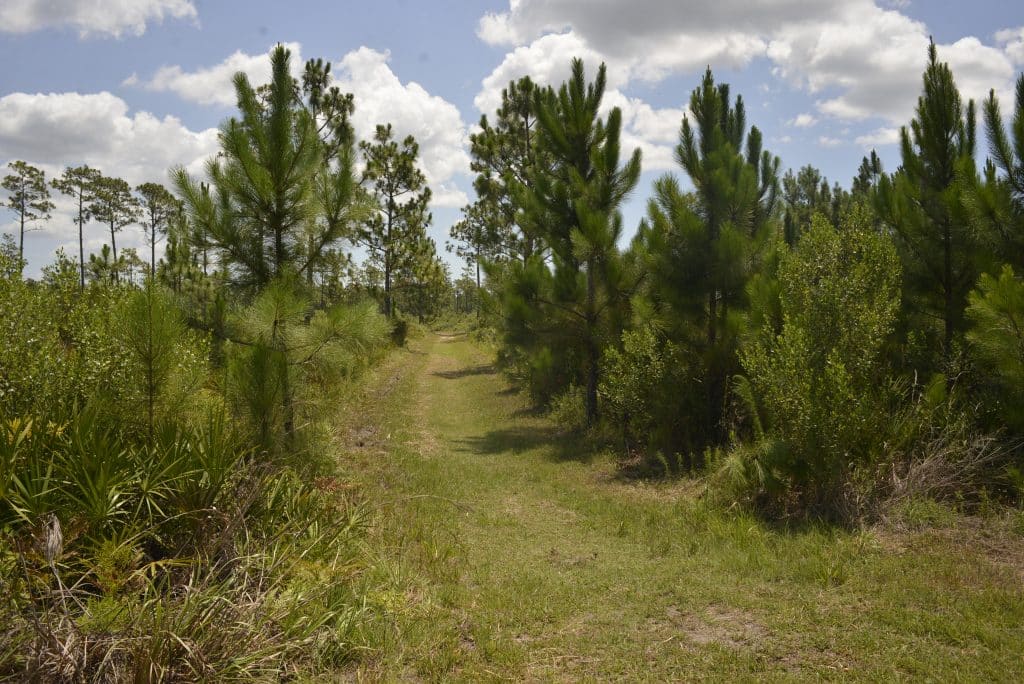
“That was basically people who drink beer and run through swamps,” Eaglin said. “A rabbit takes a bag of flour and runs out and throws down a handful of flour every 20, 30 yards or so. You just go and then everybody chases you. Oddly enough, it ends up in a bar every time.”
Eaglin said he made a pretty good rabbit because he had a knack for getting lost. He would even stash a second bag of flour out in the woods because he knew he wouldn’t be caught before his first ran out.
“The longest one I ever set was like 13 miles,” Eaglin said. “That was mostly because I got to an area where I couldn’t figure out how to get out.”
The symbols scratched in chalk on tree trunks are called hashmarks, and Eaglin finds them all over the world. As an avid traveler, his first order of business in a new place is usually to run a trail in the woods. When Eaglin comes across the evidence of a recent hash run, he’ll follow the markings to find the end. Sometimes the finish line is someone’s house, sometimes it’s a local bar and other times it’s an empty keg sitting in the woods.
“Drinking club with a running problem,” Eaglin said, “I mean, you always pretty much end in a bar.”
Hashing started with a group of British colonial officers trying to shake hangovers in Malaysia just before World War ll kicked off. Since then it’s grown into an international but informal community that connects the engineering professor in Central Florida to hashers across the world from all walks of life through shared experience.
Central to that experience is the hasher’s congregation, “the circle.”
In his history of hashing culture “True Trail: How Hashing Migrated Around the World” longtime hasher Ed Howell writes, “The circle, although not conceived until the 1970s, has become a mainstay for the majority of hash clubs around the world. It has turned into a mock form of religion to some, including any number of various down-downs (chugging a beer) for perpetrated actions, failures, or made-up offenses.”
The circle is also where hashers shed their title from daily life and join the global community after going through a naming ceremony where a crowd of local hashers surrounds a newcomer and different suggested nicknames fly out of the chorus until they finally sing the same tune. From then on out, no one is allowed to call the newly-named member by anything else or they risk facing the penalty of a chug.

The names are always a joke, sometimes x-rated, what the Chicago Hash House Harriers website calls “usually of debaucherous or humorous nature.” Eaglin goes by “Zippy.” To hashers, that name might as well be a passport into a global subculture.
“It’s all over the world,” Eaglin said, “If you go to an international hash and you’re a named hasher then you’re always welcome.”
Rabbit in the Snow
Eaglin is also an adventure racer. Adventure racing is a map sport a lot like orienteering, but on a much larger scale.
“You get a time limit and you try to go to as many checkpoints as you can inside the time limit,” Eaglin said. “And you have different ways you get there. You might paddle to it, you might bike to it, run to it. You might have to climb, you might have to do all sorts of stuff.”
For Eaglin, 24 hours out in the woods is a short race. Many adventure races can last anywhere from 3 to 10 days.
The most memorable was Expedition Alaska, a 350 mile race over 7 days through the wilderness during a midnight sun Alaskan summer.
Eaglin had met his team only two days before the race. Of the four members he was the only experienced adventure racer, so he served as a guide. As they crossed a river of rushing whitewater, Eaglin went first but lost his footing and was swept away almost 20 yards forced down by 34 degrees of icewater and foam before he could cling on to a safety rope and pull himself out.
Then his team’s inexperience showed; they couldn’t get across. So Eaglin jumped back into icy danger to help. His reward for helping his teammates cross successfully was two of them being taken over by the uncontrollable shivering that comes with going hypothermic.
It didn’t get any easier from there. Now it was time to cross a glacier with crevasses well over 20 feet deep. Falling into one of those resulted in a dislocated shoulder and an intense rescue effort for a competitor on another team.
Already dealing with inexperienced and hypothermic teammates, Eaglin couldn’t risk it.
“I was really worried about taking the people onto the glacier because there were three people that actually fell into crevasses on the glacier that had to be rescued by their teammates,” Eaglin said, “I was like, ‘If I fall I don’t know if they know how to get me out and if they fall then I’ve got to figure out how to get them out.”
He chose to lead his team on a trail up a mountain and around the glacier. It was a longer distance but saved time and the worry of a one-man rescue effort.
That’s where, in a sport filling his memories with cinematic moments, he saw an unforgettable picture most people won’t ever get to experience.
In the perpetual day the full moon rose, balancing with the sun low on the edge of the horizon, turning the bowl of mountains and glaciers into a hall of mirrors with an icy blue glow.
Support critical, local news you rely on to stay informed, connected and empowered.
Choose a monthly amount
Hometown Hero
Community Champion
Rooster Society
Custom Amount
Thank you for your support!
Author

Related Articles

Watch: Winter Springs election candidates talk water quality, Amendment 3 and controversies
Oviedo Community News is adding video interviews with candidates from Oviedo, Winter Springs, Seminole County and beyond to its 2026 voter guide.

Development, explained: How local governments plan for growth
How Oviedo, Winter Springs and Seminole County plan for growth, determine what can be built and navigate Florida law.
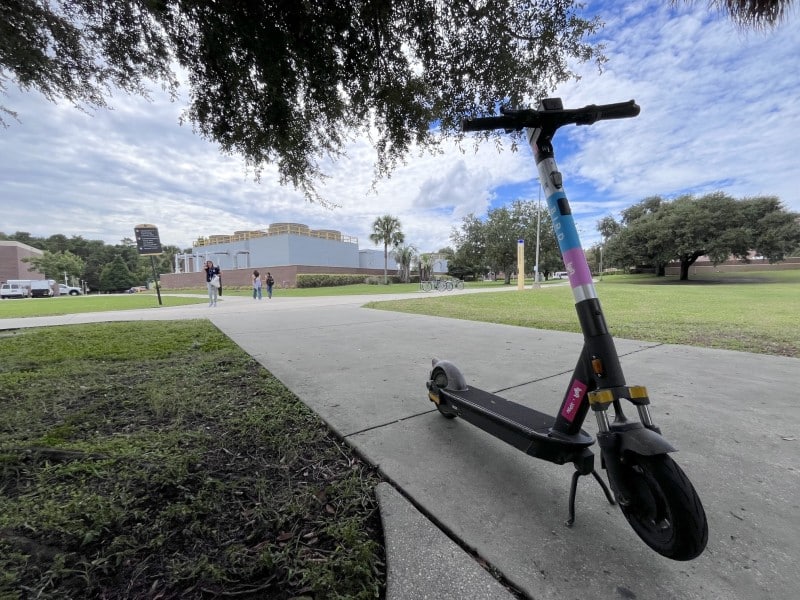
Oviedo implements regulations, penalties for e-bikes, other micromobility devices
Speed limits, helmet rules and bans on headphones among the new regulations, but police say enforcement won’t work the same way as traffic laws.