
Attempted coop: Winter Springs makes first move to allow backyard chickens
Final vote at the end of the month to allow up to 20 backyard chickens in certain areas, but some residents want the city to wait.
Winter Springs City Commissioner Sarah Baker has nine chickens. See if you can spot the pattern with some of the names: There’s Pot Pie, Marsala, Parmesan and Nugget.
But don’t worry – the chickens aren’t for dinner. They’re pets.
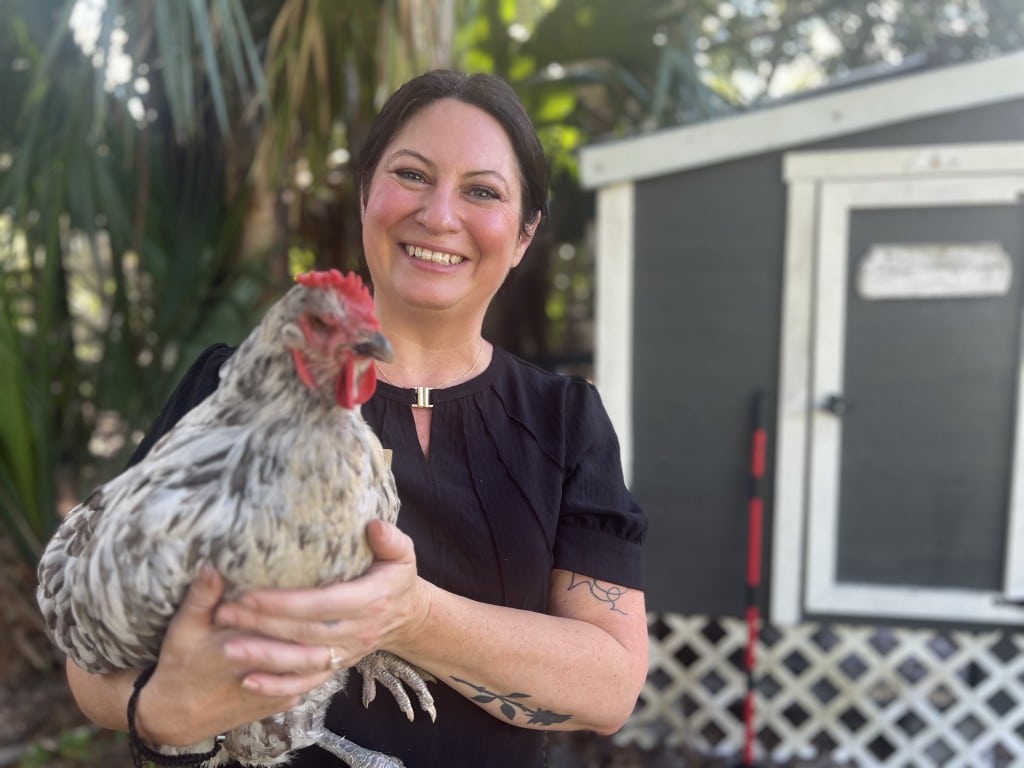
“These are all just egg-laying hens, and when they stop they’re just pets,” Baker said. “Each one of them has a name, each one has a different personality. I’ve had some that will fly to my shoulder and sit with me and walk around. … They’re very much pets. Every single one of these, I raised in the house. ”
Baker’s husband wanted to get her chickens for Christmas five years ago, and that’s when Baker realized she was in a loophole in Winter Springs law that allowed her to have chickens.
Chickens and livestock are prohibited in residential areas, but her house is technically in a Planned Unit Development, or PUD; this is a kind of master-planned development that usually comes with shared common spaces and a mandatory homeowner’s association.
But about a third of Tuscawilla is estimated to not have a mandatory HOA – so there was no one to ban Baker’s backyard chickens.
“So we were basically a loophole in our city ordinances,” Baker said, adding that she was lucky. “For instance, some people may have ducks, some people might have geese. I’ve even heard (some) in Winter Springs have goats.”
More residents could soon be able to have backyard chickens in Winter Springs under a proposal spearheaded by Baker. The Winter Springs City Commission on Monday voted to approve a backyard chicken program in the city.
Residents could soon be allowed to have up to 20 backyard chickens – with limitations.
This was the first of two votes needed on the ordinance, or city law.
Two residents spoke against the measure. One said the city needed to have more public input before making a decision, and another cited concerns about the smell and the sound.
Winter Springs Village resident Gina Shafer pointed to issues with the former 7-Eleven site, which took months of code enforcement action before things were cleaned up.
“Maybe this needs to go back to Planning and Zoning and get some more information before approving it,” Shafer said. “You know how long it took us to get the 7-Eleven taken care of. What if we get a rogue chicken outbreak?”
What the ordinance would allow
The proposal would allow detached single-family homes to have anywhere from four to 20 chickens, depending on how big the property is.
| Lot Size | Maximum Number of Chickens Allowed |
| 0.15 or fewer acres | Chickens not allowed |
| 0.151 – 0.5 acres | 4 chickens |
| 0.51 – 1.0 acres | 6 chickens |
| 1.01 – 2.0 acres | 12 chickens |
| Greater than 2.0 acres | 20 chickens |
The owners would be limited to female chickens (hens) only – no roosters, because of the noise. And other livestock are prohibited, so no ducks, geese or goats. Residents would need a chicken coop and a fenced and covered area for the chickens to roam in.
Crucially, a homeowners association can still prohibit backyard chickens.
“Persons keeping backyard chickens are completely and solely responsible for compliance with all applicable restrictive covenants and homeowners association rules and regulations,” the ordinance reads.
Commissioner Victoria Bruce said she advocates for letting people get food from their own backyard, including eggs, with that caveat.
“If you are in a homeowner’s association that prohibits chickens, you are still prohibited,” Bruce said. “I advocate for being able to recreate and get our food from our own backyard. So I’m in favor of it.”
Additionally, the chickens must be kept for personal use. People can’t sell chicken eggs, feathers, manure, or breed the chickens.
The required chicken coop would have to be in the backyard of the home and screened from the neighbors’ view, either with a fence or landscaping. No permit is needed, unless a chicken coop is more than 120 square feet.
The chickens could be allowed to free-roam inside the fenced and covered area, but only under supervision in the backyard.
“We do have setback requirements if the chicken coop is large enough to require a building permit to meet code requirements and safety, but most of these chicken coops are going to be the size of a doghouse,” Baker said. “There are things that you buy at tractor supply that are like three by three feet and maybe three feet tall, with an enclosed tiny run (fence).”
Winter Springs Mayor Kevin McCann said he’s had neighbors with chickens and had no issues. But the requirements in the law would be there for the “lowest common denominator.”
“This is about protecting neighbors from the worst or the lowest common denominator, right? My neighbors, I never heard them. Like I’ve heard them very rarely, and it’s so quiet. It’s nothing like their barking dog, I can tell you that. I don’t smell them. I don’t see them. But that’s not what this is about. This is about the lowest common denominator, and the people who end up with a dozen chickens and a couple of roosters and sorry, ducks are not as quiet as a chicken.”
City officials are still trying to figure out if there would be a grandfather provision for residents who have animals under the current loophole.
Ultimately, Commissioners Baker, Bruce and Mark Caruso voted for the proposal. Commissioner Paul Diaz voted against it, but didn’t discuss why at the meeting or respond to a request for comment. Commissioner Cade Resnick was not at the meeting.
Want to contact your elected leaders and weigh in on this topic? Find their contact information here. Have a news tip or opinion to share with OCN? Do that here.
The second and final vote will be Monday, Oct. 26, starting at 6:30 p.m.
Back in Commissioner Baker’s backyard, her favorite chicken Pepper runs away from her – scared of the reporter in her backyard.
She catches Pepper and cradles the hen in her in her arms. She’s a silkie breed of chicken, with fluffy feathers like bangs, short legs and a fluffy rear end.
“A lot of people call them the muppets of chickens because they’re so quirky and fun,” Baker said, giving the hen a kiss before setting her down.
Pepper immediately goes back to foraging for bugs in the dirt.
“I’ve enjoyed my chickens so much, and a lot of homes in Winter Springs do have pretty sizable yards,” Baker said. “And I’m fully in support of sustainable living and growing your own food and knowing where things come from.”
She points to her Amish-built coop and the fenced in area that’s tall enough for an adult to comfortably stand in. At one point, she and her husband decided to expand the area so the chickens can have a place to get sun.
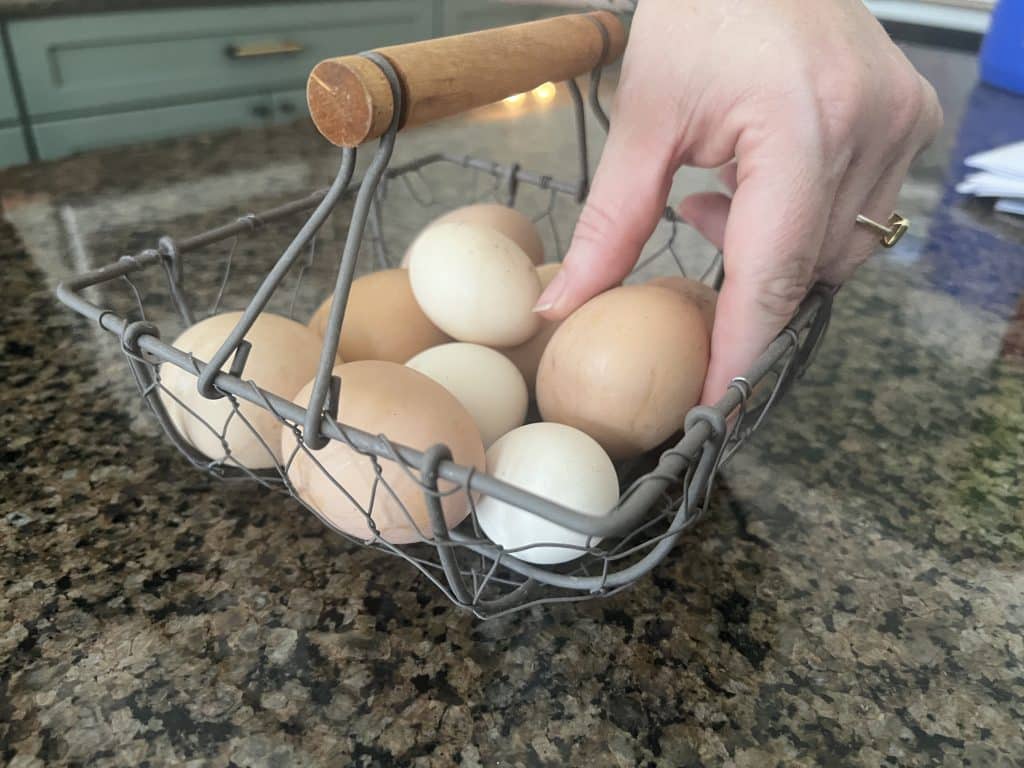
“I can say that having chickens is not less expensive than buying eggs at the grocery store,” Baker said with a laugh. “I’ve put a decent amount of money into my chickens. Which you don’t have to do. But for me, it has not yielded a better cost of living. But I do know where my food comes from.”
Abe Aboraya is a Report for America corps member.
Support critical, local news you rely on to stay informed, connected and empowered.
Choose a monthly amount
Hometown Hero
Community Champion
Rooster Society
Custom Amount
Thank you for your support!
Author

Related Articles

Winter Springs charter school gets key approval to add middle school
Some board members question the wisdom of approving a new middle school as traditional public school enrollment declines.

Winter Springs City Commission candidate Kyle Stewart: ‘I’m not a Christian nationalist’
Five-year-old podcast resurfaces where Stewart says ‘Amen’ after the host says non-Christians should be barred from office.
Winter Springs Commissioner Paul Diaz wants to see comparisons for county to provide police
In the wake of Amendment 3, Diaz says the big-ticket items – parks and police – should be on the table.