
George Cole Gaspard
Age: 42 years old
Registered political party: Non-partisan
Where they live: Rockledge, Brevard County, Florida
Where they work: Currently employed by the Brevard County Sheriff’s Office as Legal Counsel
Prior work experience: Brevard County Sheriff’s Office as Legal Counsel (October 2020- Present); Assistant State Attorney, 18th Judicial Circuit of Florida— Sex Crimes, Child Abuse, and Homicides Division (February 2019- October 2020); Assistant State Attorney, 18th Judicial Circuit of Florida— Felony Division (April 2017-February 2019); Assistant State Attorney, 18th Judicial Circuit of Florida—Misdemeanor Division (February 2014-April 2017); Florida Supreme Court Certified Legal Intern, 9th Judicial Circuit of Florida— Misdemeanor Division (August 2011-June 2012); Graduate Externship as a Florida Supreme Court Certified Legal Intern, 9th Judicial Circuit of Florida— Misdemeanor Division (January 2011-May 2011); Independent Contractor, 9th Judicial Circuit of Florida— Florida Supreme Court Certified County Court Mediator (January 2008-May 2011).
Prior political experience: Never previously run for political office
Platform: “I am a litigator, educator, and public servant seeking to continue serving our community as a Circuit Judge. I have served the community as an Assistant State Attorney, I have served the community as Legal Counsel for the Brevard County Sheriff’s Office, and I will continue serving the community by fairly and impartially applying the law as your next Circuit Judge.”
Why they are running, in three sentences: “I am running for Circuit Judge because experience, temperament, and professionalism matter on the bench. When elected, I will work every day to uphold the Constitutions of the United States of America and the State of Florida, preserve due process, and ensure that the courtroom remains a place where justice is administered fairly and efficiently. In short, I am running because public service is my calling— it is all I have done and all I have ever wanted to do.”
Most recent campaign finance report: $26,556.84 in contributions.
Endorsements:
Elected Officials: Sheriff Dennis Lemma, Sheriff of Seminole County, Florida; Sheriff Wayne Ivey, Sheriff of Brevard County, Florida; Will Scheiner, Esq., State Attorney of the 18th Judicial Circuit of Florida; Phil Archer, Esq., Former State Attorney of the 18th Judicial Circuit of Florida; Rachel M. Sadoff, CFCC, Brevard County Clerk of Courts and Comptroller; Dana Blickley, Brevard County Property Appraiser; Lisa Cullen, Brevard County Tax Collector; Rob Medina, Mayor of the City of Palm Bay; Scott Nickle, Mayor of the City of Indian Harbour Beach; Kay Jackson, Mayor Pro Tem of the City of Cape Canaveral
Attorneys: Philip B. Williams, Esq. (Sheriff of Brevard County 1997-2005); William G. Respess, Esq.; Michael R. Hunt, Esq.; Michael J. Lynch, Esq.; Alan S. Diamond, Esq. (Past President of the Brevard County Bar Association); Keith F. Szachacz, Esq. (Past President of the Brevard County Bar Association); Kepler B. Funk, Esq.; Michael W. Doyle, Esq.; Douglas R. Beam, Esq. (Past President of the Brevard County Bar Association); Kevin J. Mawn, Esq.; Jason Arthur, Esq.; Stephen G. Charpentier, Esq.; Richard G. Canina, Esq.; Lauren Canina Roberson, Esq.; Jay Fowler, Esq. (Past President of the Brevard County Bar Association); Kipp V. Vugteveen, Esq.; David A. Webster, Esq.;
Community Members: Coastal Florida Police Benevolent Association; Mr. Doug Waller; Commander (Ret.) Byron Keck; Commander (Ret.) Victor DeSantis; Mr. Melvin G. Mills, Jr.; Mr. Donald “Don” Pearsall; Mr. Ted Pagonis (Proprietor of the Grecian Garden Cafe); Mr. Van Moore, LCAM (President of Advanced Property Management of Central Florida); Mr. Jay Church; Mr. Jason Estes (Proprietor of the Village Idiot Pub); Mr. Stephen G. Kennedy (Proprietor of The Gunsite Range, Inc.); Dr. Keith R. Hurley (Proprietor of Coastline Family Chiropractic Melbourne, LLC);
Fun fact about the candidate: “I was a music education major prior to pursuing law. My love of classical music has kept me active in the arts—including having spent years singing a church choir and regularly attending productions at The Henegar Center for the Performing Arts in Melbourne.”
Candidate Q&A: The questions below are based on voter questions and expressed priorities. Each of the candidates within a race were asked the same questions and given the same amount of time to respond. The candidates’ answers were fact checked, checked for spelling and grammar but otherwise unedited.
What professional experiences have best prepared you for the bench?
My qualifications to serve as a Circuit Judge are founded upon more than a decade of public service, extensive courtroom experience, a commitment to the rule of law, and a demonstrated ability to fairly evaluate complex legal issues. Throughout my career, I have dedicated myself to ensuring justice is administered fairly and serving the citizens of Florida with integrity and professionalism.
Since October 2020, I have served as Legal Counsel for the Brevard County Sheriff’s Office, providing legal guidance on constitutional, statutory, and administrative issues. In this role, I regularly analyze complex legal questions, advise agency leadership on matters requiring careful consideration of competing interests, and litigate Risk Protection Orders and Civil Asset Forfeitures.
Prior to joining the Sheriff’s Office, I was an Assistant State Attorney in the Eighteenth Judicial Circuit for over six years. During that time, I prosecuted cases ranging from misdemeanors to serious felonies, including homicide, child abuse, and sex crimes. This experience provided me with a deep understanding of criminal law, courtroom procedure, evidentiary issues, and the profound impact judicial decisions have on victims, defendants, and the community.
My experience as a former Florida Supreme Court Certified County and Circuit Mediator further strengthened my ability to listen carefully, remain impartial, and facilitate the fair resolution of disputes. Mediation taught me the importance of patience, professionalism, and ensuring that all parties feel heard and respected; qualities that are essential to effective judicial service.
In addition to my litigation and advisory work, I have devoted considerable time to legal education. I currently instruct legal courses for law enforcement and correctional officers, school resource officers, and police recruits. I have authored numerous internal legal training publications and have presented continuing legal education programs for attorneys and professional organizations. These experiences reflect my commitment to the law and my ability to communicate complex legal concepts clearly and effectively.
Combined with my reputation for integrity, fairness, judicial temperament, and public service, these experiences have prepared me to serve as an effective Circuit Judge who will uphold the Constitution, apply the law impartially, and treat every person who appears before the court with dignity and respect.
What role should personal values play in judicial decision-making?
It would depend on which values are being discussed. If the values are diligence, candor, thoughtfulness, patience, humility, and competence, among others: they should be at the forefront of judicial decision-making. If, however, the judicial values discussed are pertaining to personal feelings, political views, cultural views, and the like, then they have no place in the judiciary.
A judge is there to apply the law fairly and impartially, protect the constitutional rights of everyone who appears before the court, and decide each case based solely on the facts as applied to the law; not based on personal opinions. Our citizens deserve to know that when they walk into a courtroom, they’ll be heard, treated with respect, and have a judge who will fairly and impartially apply the law to the facts of each case.
Justice Antonin Scalia once opined that the judge who always likes the results he reaches is a bad judge. It is not for judges to legislate from the bench or bend the law to reach a preferred outcome. The responsibility of a judge is to faithfully apply the law as it is written; even when the result may not be popular.
What’s your education?
I earned my Associate of Arts Degree from Palm Beach State College (formerly Palm Beach Community College), Lake Worth, Florida; Bachelor of Science in Legal Studies with a Certificate in Trial Advocacy from the University of Central Florida, Orlando, Florida; and Juris Doctor with a Certificate in Children and Family Law and Book Awards in Trial Advocacy and Legal History from the Barry University Dwayne O. Andreas School of Law, Orlando, Florida.
How do you balance precedent with evolving societal standards?
Precedent which is binding on the Court should always prevail over evolving societal standards. Courts are bound to the people that they serve to faithfully apply the law as it is written without regard for personal feelings; including precedent set by case law. In the event, however, that no such binding precedent exists, a court may find it appropriate to consider evolving societal standards in weighing certain decisions. Such balancing is often done, for example, when analyzing the prohibition of cruel and unusual punishment contained in the Eighth Amendment to the United States Constitution. At the time of its drafting, a variety of modes of execution were permissible. Today, however, when taking into consideration our evolving societal standards, certain methods of execution have been deemed unconstitutional.
What steps do you take to avoid conflicts of interest?
Avoiding conflicts of interest as a judge starts with being intentional about what might create even the appearance of bias. That means taking a close look at financial interests, prior professional relationships, former law partners, and personal relationships that could reasonably come before the court. If something could cause a fair-minded person to question impartiality, it needs to be taken seriously from the outset.
Just as important is being candid when a potential issue does arise. Disclosure on the record allows the parties to address it and, when appropriate, seek recusal. That kind of transparency is essential to maintaining trust in the process.
There are also times when recusal is simply the right call. Even if a judge believes they can be fair, the question is whether the circumstances might cause others to reasonably doubt it. Protecting confidence in the judiciary sometimes means stepping aside.
Finally, good habits matter. Avoiding financial entanglements, outside relationships, or public positions that could reasonably intersect with cases before the court goes a long way toward preventing problems before they ever arise.
What barriers to justice do you see in the current system, and how would you address them?
If one had to identify the greatest obstacle to justice, I would say it would be meeting an ever-growing demand for judicial services while ensuring that every person who comes before the court receives the time, attention, and fairness that justice requires.
Brevard and Seminole Counties continue to grow, and with that growth comes an increase in the number of criminal cases, family disputes, civil litigation, and other demands on the judicial system. While each of those cases represents someone’s life, livelihood, or liberty, the challenge for any judge is ensuring that, despite a busy docket, each person who walks into the courtroom knows that they have been provided a meaningful opportunity to be heard.
Justice delayed is justice denied. Victims wait for closure, families remain in limbo, businesses are left without answers, and defendants live with the uncertainty of pending charges. Cases must move efficiently, but never at the expense of due process.
Another challenge is ensuring that the community has meaningful access to justice. More people are appearing in court without attorneys because they cannot afford one. While judges must remain impartial and cannot advocate for either side, they can make sure that courtrooms remain respectful, procedures are understandable, and everyone has access to timely justice.
Additionally, the work of our courts has also become substantially more complex than it was even a decade ago. Today’s judges are tasked with evaluating digital evidence and addressing issues pertaining to rapidly evolving technology. Those challenges reinforce the need for continuing education and careful preparation–the law evolves and judges have an obligation to keep pace.
Related Articles
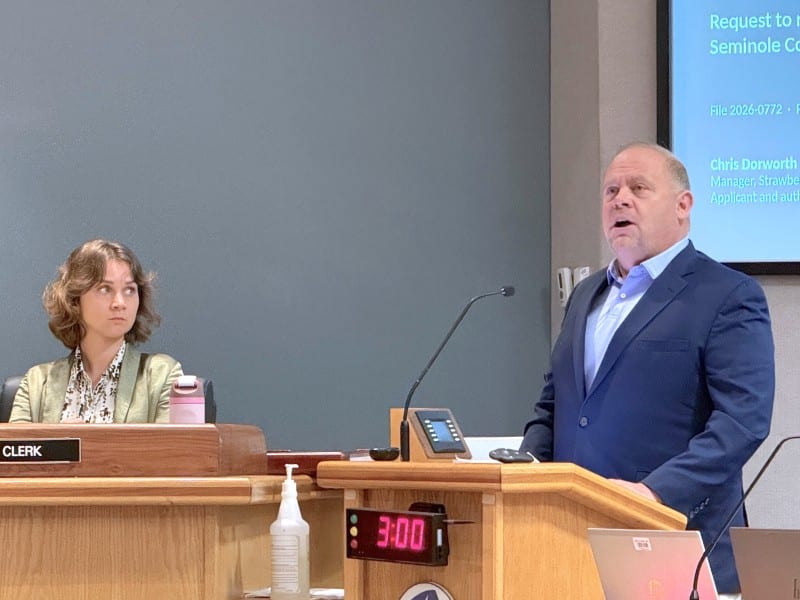
Zoning board: former Pappy’s Patch should remain inside rural boundary
Chris Dorworth’s proposed Strawberry Lane project at the former Pappy’s Patch near Oviedo now goes to the County Commission for a final decision.
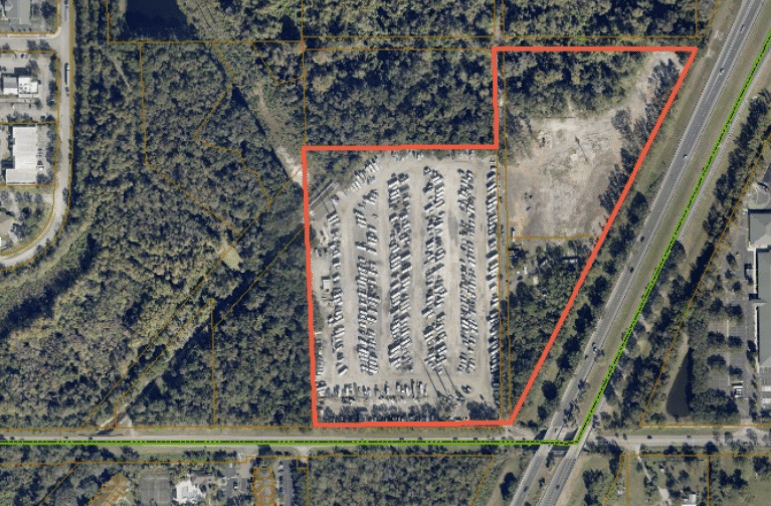
Apartments, townhomes on Seminole County agenda next week
Seminole County Commissioners could weigh in on two developments, including apartments near Lukas Nursery
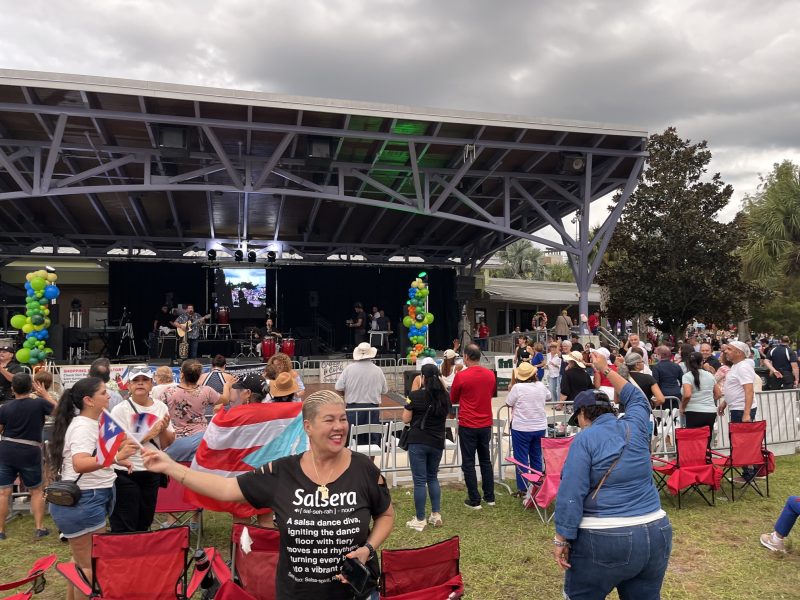
Viva Oviedo! Festival gets special permit for upcoming event
An impassioned plea following months of delays and communication issues led to big changes for a major event in Oviedo.
The volunteer-run Viva Oviedo! Festival that celebrates Hispanic heritage saw thousands of people attend its inaugural event in October 2025. It’s set to take place again at Oviedo on the Park on Oct. 17. Organizers had hoped this year’s festival would be in partnership with the city, but despite having ongoing conversations with city officials since at least March, no decisions had been made until the Oct. 5 City Council meeting.