
Local governments feel rising gas prices too
One resident says cities will have to raise taxes. ‘Are you going to stop garbage collection?’
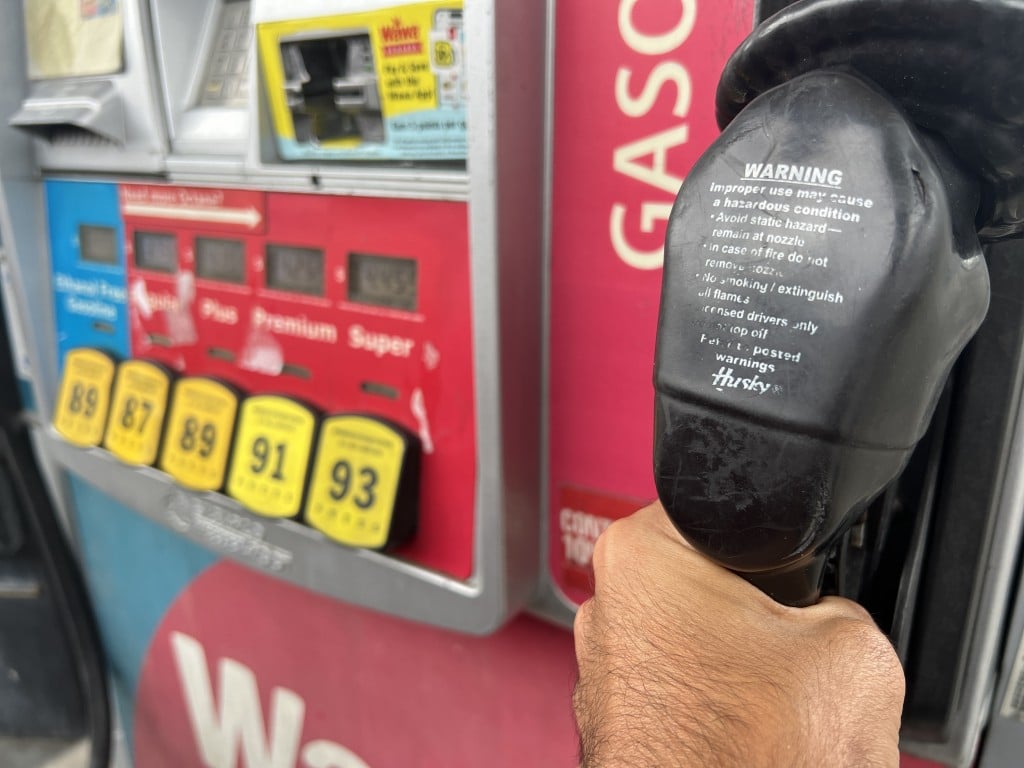
As the summer months roll in and thermometers creep higher, gas prices are doing the same. Local governments pay more when gas prices rise, and leaders taxes and rates for essential services could be following suit.
The Oviedo City Council voted unanimously to increase solid waste collection fees by 17% on May 18. In an email to Oviedo Community News, Oviedo Mayor Megan Sladek cast a wide net when it comes to what could be next.
A grim outlook
“When existing contracts have an escalation clause tied to fuel, the price goes up,” Sladek wrote.
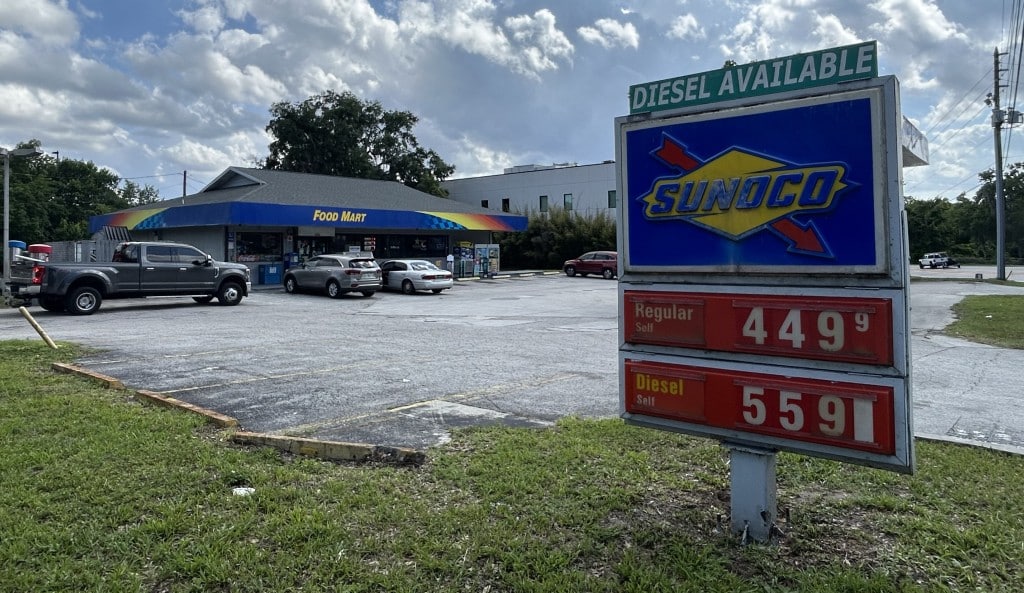
Across Florida, the average price of diesel fuel dropped nearly 70 cents on Sunday to $5.15 per gallon since the highest recorded average of $5.82 was set in early April, according to AAA. The recent dip in price is still 51% higher than this time last year. Seminole County had some of the lowest rates in the state.
Nationally, the U.S. Energy Information Administration recorded the average cost of no. 2 diesel fuel at $5.52 in its latest report for the week ending May 25, marking a 45% increase from just before America’s war with Iran began on Feb. 28.
In its May short-term energy outlook forecast, the EIA expects the Strait of Hormuz to remain closed through early June, with oil production in the Persian Gulf taking until late 2026 or early 2027 to return to pre-war levels.
Patrick De Haan, head of petroleum analysis at gas station price comparison app GasBuddy, told Yahoo Finance it’s going to be an expensive summer.
“Americans are going to pay billions more to get where they’re going this summer, and even after the Strait reopens, it could take a year or more for prices to fully recover,” De Hann said. “This is the most volatile summer at the pump in years.”
He also left the door open for prices to drop.
“I still tend to believe that things could normalize three to six months from now,” De Hann said. “Our previous 2026 fuel outlook called for gas prices falling below the $3 mark later this year.”
Commuters adapting to a more expensive reality
Chuluota resident Kurt Jones has a lot of gas tanks to fill: a 2001 Chevy Silverado, a 2005 Audi A4, two street motorcycles and a dirtbike he likes to take for runs on the track.
“The car used to be about 55 bucks to fill, but now it’s about $85 with how much gas has gone up,” Jones said, “In the truck, if it’s completely empty, it would be about $180 to fill.”
The Silverado pickup truck was his daily driver, but Jones said recently he has had to switch it up by riding his motorcycles to work because they get better gas mileage and a full tank costs about $15.
“If I’m going to work and it starts raining, I just ride through it,” Jones said.
John Marcos, a Winter Springs resident for six years, has been largely insulated from increased gas prices because he works from home. But at his job sourcing materials for defense contractors, he may help buy 20,000 pounds of aluminum at the same time.
A 20% increase in price is a “big change.”
The way Marcos sees it, if people want the city government to keep running, there’s no choice but to pick up the bill.
“I mean, are you going to stop garbage collection? You need water, right? We might complain and scream and shout, but the city must raise the taxes,” Marcos said. “Sooner or later.”
He acknowledges these are difficult problems to solve, and doesn’t believe everyday people can deal with high gas prices long term. But Marcos said he’s seen worse.
As a young man in Puerto Rico, just before he started driving himself, Marcos remembers seeing lines at gas stations nearly a hundred cars long during the oil crisis in 1974.
Rather than getting a car and waiting in line, Marcos chose to walk everywhere.
Actively avoiding the lines, he said he never even got in the car with someone who needed to fill their tank.
“You would see the arguments. Can you imagine a gas station [with] a hundred cars in line, and the gas station ran out of fuel?” Marcos said. “Many people thought they were doing it on purpose to hold some gas for the next day, or to hold gas for their friends. It gets scary.”
Marcos said that although no one knows what the price is, there is a tipping point, a number, that would cause the same kind of pressure. Until then, he’s not worried.
“When you [have] 80, 100 cars waiting in a line, that catches your attention,” Marcos said, “This is nothing.”
Taxes could be dropped, but ‘no promises‘
During a news conference in Jacksonville on May, 22, Florida Gov. Ron Desantis said he was open to signing a bill that would save consumers money on the state gasoline tax.
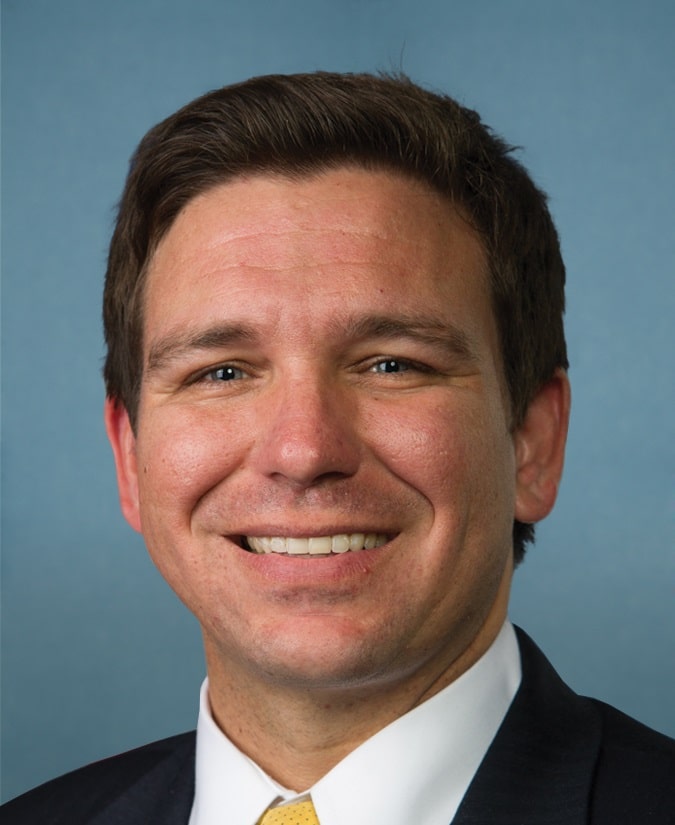
“If they [the Legislature] put that gas tax holiday in, I’ll happily sign it, but I don’t want to promise people that if you do that, you’ll suddenly see a huge change for the positive, in the price,” Desantis said.
He said his skepticism comes from an analysis of the month-long gas tax holiday in October 2022.
“Quite frankly, we weren’t as happy because what happened was the tax would go down, but then the gas stations largely raised the price,” Desantis said. “The total amount of tax cut was about 17%, that actually went into consumer pocket and the rest was effectively just subsidizing the gas stations.”
Winter Springs Mayor Kevin McCann stressed that many residents might not be aware of just how much of the city’s budget is dedicated to fuel costs.
“I think people would be surprised if they realize how much their tax dollars go just to pay for gas,” McCann said. “So when those prices are skyrocketing, we feel it too.”
The best the city government can do, he said, is be conscious of the added financial strain.
“I don’t know that there is much we can do at a city level with an issue like this. With the exception of acknowledging and being fully aware, when we consider fees increasing in any way, that families are under a particular stress,” McCann said. “We have to be mindful of that reality.”
Support critical, local news you rely on to stay informed, connected and empowered.
Choose a monthly amount
Hometown Hero
Community Champion
Rooster Society
Custom Amount
Thank you for your support!
Author

Related Articles
Watch: Winter Springs election candidates talk water quality, Amendment 3 and controversies
Oviedo Community News is adding video interviews with candidates from Oviedo, Winter Springs, Seminole County and beyond to its 2026 voter guide.
McCann, Phillips debate in election for Winter Springs mayor
Mayor Kevin McCann touts a water association award that Winter Springs won this month in a blind taste test involving six Central Florida counties.
Elections supervisor: Check your polling location, as 14 Seminole County voting locations closed since 2024
That includes 5 polling sites in Oviedo and Winter Springs, with three of those changes coming since the August primary election. Supervisor of Elections Amy Pennock sent out new voter ID cards reassigning voters to other existing polling locations.