
After 35 years of teaching, coaching and directing, Hagerty’s Jay Getty crosses the finish line
Coach Jay Getty retires, leaving behind decades of championships and stories at Oviedo and Hagerty High schools.
It starts right here, in this chilly spring twilight, and many laps later it ends on the same spot. A dozen or so runners pull back into a slight crouch on a white line, their legs compressed wiry springs ready to fire as the final sprinkles of passing rainclouds fall. Cue Vangelis’ score to “Chariots of Fire.”
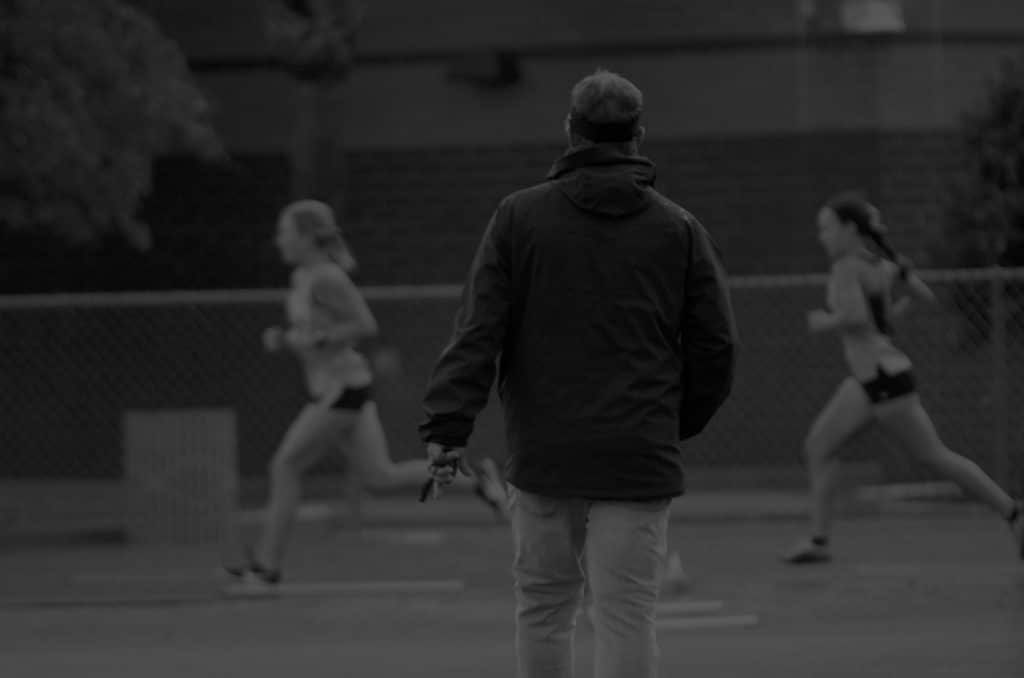
Jay Getty’s final lap
“Runners on your marks,” the man with the starting pistol aimed at the sky says. “Set.”
A gunshot cracks the darkening sky and they’re gone, hurtling around that first left curve faster than they think they can, then forcing that pace for as long as they dare, hoping something doesn’t give out before the finish line.
On the high school track, this is the distance race of distance races, the 3200 meter run, always one of the last races of the night. Eight laps, an interminable burn to the lungs and legs and 2,000 rapid-fire heartbeats, give or take. Only the athletes who can endure that burn and pressure for the longest are sent out here.
This isn’t so much the cat-and-mouse game of varying pace and attempts to break up the pack and leave them for dead that frequently engulfs the entire race on a college or professional track. Often here it’s pure speed and will. Gradually those less willing or less prepared drop off, one by one, as the leaders push on.
On this unsettled night in April the stage is Seminole High School, the Seminole Athletic Conference Championship, where an Allegiant A320 on final approach eastbound to Orlando Sanford International howls by only a few hundred feet overhead, ducking a passing deck of clouds. It’s cool and gusty amid the dying embers of a cold front sunset, remnants of a passing storm whipping windproof jackets as Jay Getty stands in the grassy midfield alone, the red digits on the big race clock speeding forward unregarded over his right shoulder.
But Getty knows. As he prepares to walk away from 35 years in the business, “Coach” as thousands call him has lived this quarter mile ovoid rhythm so long he could likely count a 67-second split blind, which Hagerty senior Ricardo Hernandez is about to click off as the lead pack, already spreading out, whooshes by on Lap 1. Getty in the midfield is instantly recognizable: perennial beach-bum tan, dark sandy hair, faded jeans, dark windbreaker, black and white Nikes, an ever-present visor on his head and a clean shave, just like on most Friday nights in the stormy uncertainty of spring in Florida.
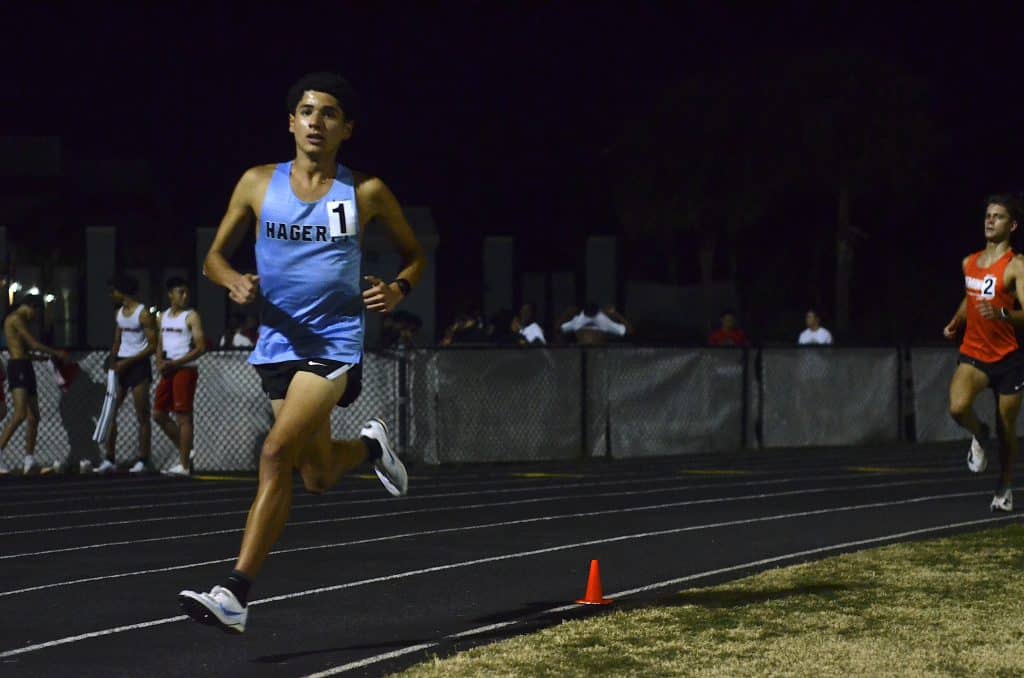
There are no tears tonight, though in the back of his head he knows he’s watching his last conference championship, maybe ever. Tonight it’s business for Getty. But Getty’s business, buried under minutes, seconds and milliseconds, has always been people, he says, thousands of them. There’s still a race or two left before the night’s over. The tears come later.
Every coach, as with every racer, eventually has to step away from the track.
“This year, he’s definitely slowed down, and it’s starting to hit that it’s his last year,” his daughter, Leah Getty, said. “He’s staying in one place for more than five minutes.”
Lyman track coach Fred Finke sidles up with a perpetual smile on his face and they talk about their greatest trip together for a few seconds: what would end up the building wave of one of Getty’s greatest triumphs as a coach, an ocean away from Seminole County.
“I took you to France,” Finke says, referencing their trip shepherding Oviedo High School middle distance phenom Jenny Barringer, now three-time Olympian Jenny Barringer Simpson, to her first international meet in Europe.
“And it was my job to not screw it up,” Getty says.
Finke’s one of Getty’s longtime mentors, in a venerated group of coaches that would form Getty’s introduction to what Finke called one of the most hyper-competitive counties in the country in the realm of cross country running and track and field. And in Florida, often if you coach one of those sports, you’re coaching both.
The two Seminole County mentors Getty mentions most, Finke and Seminole High School coach Ken Brauman, have been inducted into nearly a dozen halls of fame locally, statewide, and nationally. They’ve coached countless state champion athletes. Finke alone coached three future Olympians. To this day Brauman is the only high school coach in U.S. history to be the head manager of the U.S. Olympic team, which he did in 2012 in London.
“Our county was so far above everybody else in the state, I don’t think there’s a county in the country that can match what Jay walked into,” Finke later said of Getty’s 1991 beginning as a volunteer track and field coach. “What he walked into, it was a place that had three coaches in the county that were world class coaches, that just happened to all be good friends.”
Those two, along with ever-competitive Lake Brantley Coach Charlie Harris, Lake Howell’s (later Oviedo’s) Tom Hammontree, Lake Mary’s Mike Gibson and later Winter Springs’ Ocky Clark also happened to win or come close to the district track and cross country championships nearly every year. But the man Getty has called “Coach” the longest is a long way from Oviedo.
Far from home
A few weeks before this year’s conference championship, Getty was standing in the same spot on Seminole’s infield, as the stadium lights powered up, buzzing from a dim orange to a blinding blueish white as evening set in. Next to him stood a man in the same relaxed but contemplative stance, in a nearly identical outfit, a race schedule folded into the same back-right pocket of an identical pair of stonewashed jeans. And the pair are standing there almost silently, watching the finish line, a word or two occasionally escaping one of them.
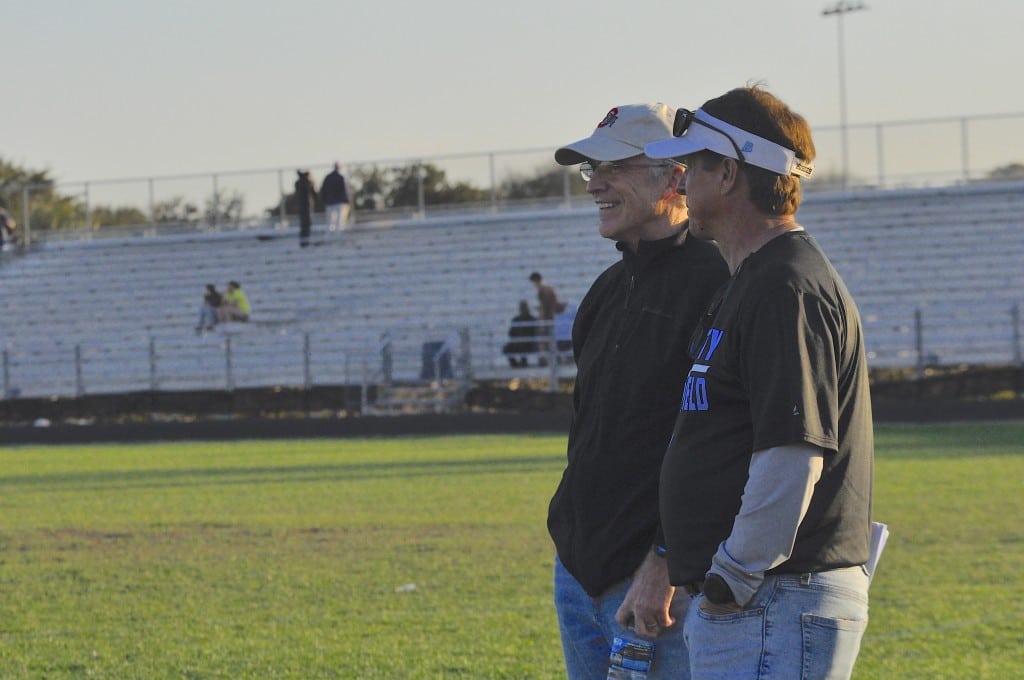
One came here in 1987 bound for the University of Central Florida and a destiny in coaching. The other just got here this week to visit. But both of them come from the same Ohio town.
Just two and a half miles inland from the south shore of Lake Erie, where it spreads as if an ocean to Canada on the other side, lies Amherst, Ohio. A farmtown connected to Cleveland by century-thick strands of two-lane and the inevitable distant hum of the long Great Lakes beltway of Interstate 90, it’s more governed by the rural area surrounding it, yet its fate remains ever-connected to the great lake that’s frozen for much of its breadth each winter. Like so many rustbelt cities, its motto “The Sandstone Center of the World” boasts of headier days past; the hollowed out countryside now bears the machine-dug scars of an industry that once supplied grindstones to the Union Army. The sandstone, it was said, and still is, is exceptionally durable.
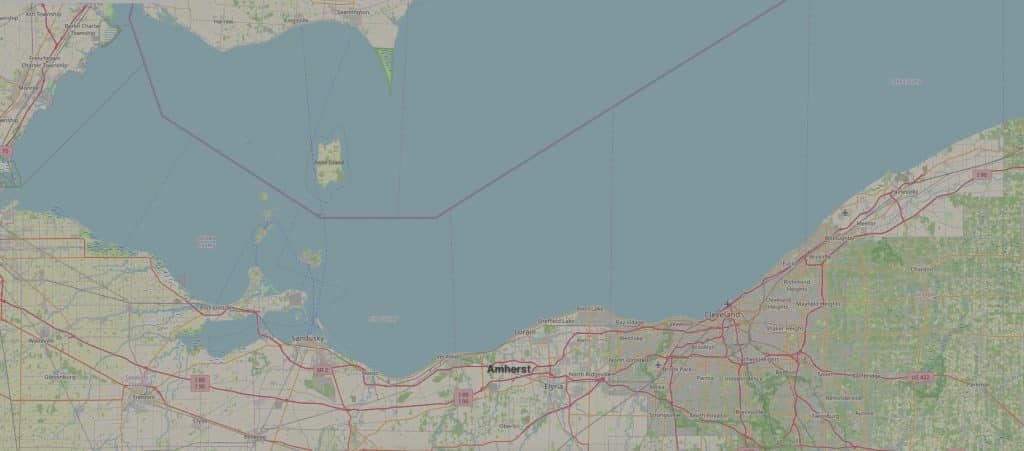
Getty was raised in the kind of place with a bar that opened in the 1800s and where people build ice sailboats for fun. He still visits on occasion. Thirty-nine years later, he’s still naturally polite and sometimes says “pry” when he’s saying the word “probably.”
“It looks a lot like Norman Rockwell’s paintings,” Getty said. “A little tiny town, old, old buildings in the downtown area, country roads. Once you get a mile and a half outside of downtown you’re in cornfields and farms.”
Amherst Steele High School is where Getty met Carl “Denis” Schneider, the man in nearly identical clothes who would become his coach, mentor and friend for life.
At the corner of Amherst’s North Ridge and Claus roads two gigantic maple trees stand as if for eternity itself, guarding a white colonial home at the corner, their branches nearly reaching over to the other side of the road. There’s an American flag hanging directly off a power pole out by the corner. And then you spin the steering wheel left and trees give way to a long view of flat and green. The yards stretch into football fields and the buildings, shrunken away from the road in their pastoral hermitage, turn barn red at the rare sight of a visitor. Here, just about 4 miles from downtown Amherst, lawns are mowed by a tractor powering blades the span of a small helicopter. Go for a run there and you might pass one.
“It is cornfields and soybeans on both sides,” Getty said. Near the wall of trees lined up so straight they’re seemingly intent to march across the road, Schneider’s house is on the left. Getty’s taken that drive, along with his wife and Schneider, over and over again to visit. They stay at Schneider’s house.
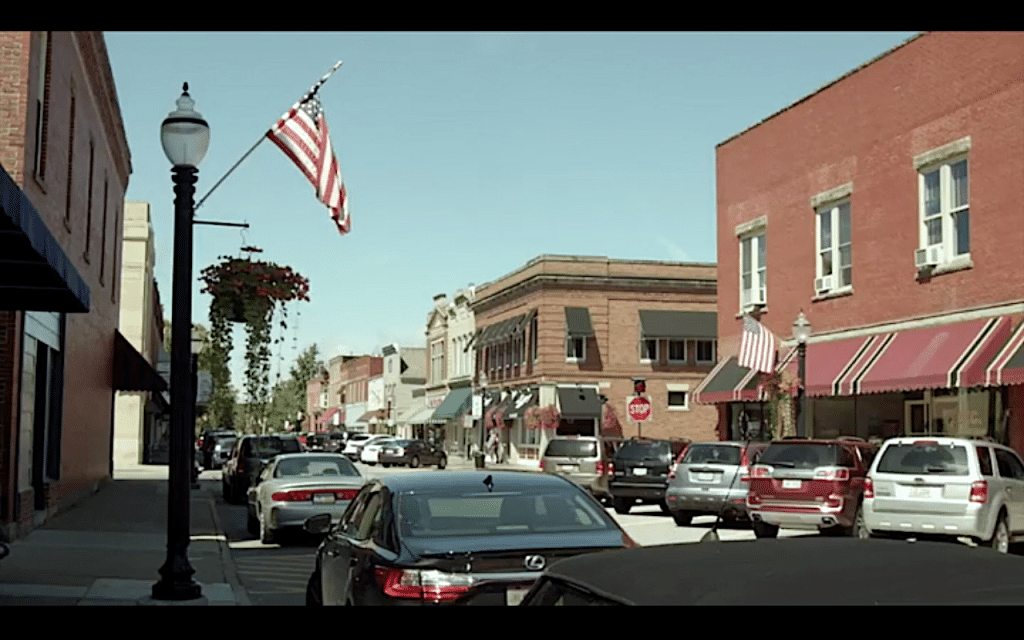
“It’s nice,” Getty said. “I was fortunate to grow up in a small town, very similar to what Oviedo was when I first started,” Getty said. “Oviedo was still small. That’s probably why I never left.”
On the north side of Amherst, just around the corner from the childhood home of wrestling legend Jerry Lawler, is the stadium for the Steele High Comets, where a teenaged Getty used to circle the track. Schneider, watching and giving pointers back then, was and is a man of few words. The kind of man who communicates ambition and hope in verbal nudges.
“He was pretty good,” Schneider said of a young Getty, the runner. “He got better as he aged.”
But when graduation came, Getty may have left with more than Schneider thought. Asked whether he thought Getty could have made a good coach at that point, Getty’s coach, the man of few words, was reticent.
“I couldn’t say yes or no,” he said. “He’s a good thinker, and he’s good with people. I never gave it a thought because I was just wondering if he was going to go to college.”
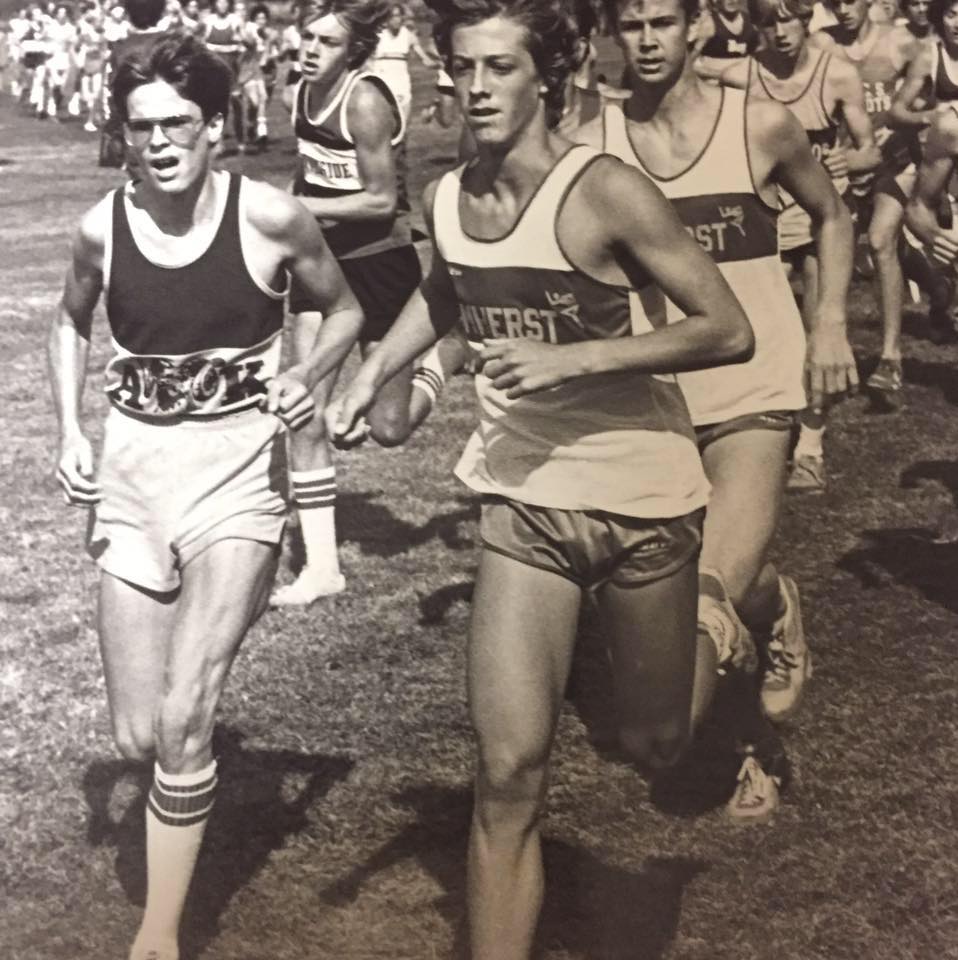
Getty did, traveling about 100 miles from home to find it. Mount Union College, now called Mount Union University, in Alliance Ohio is almost closer to Pittsburgh than it is to Cleveland. About an hour away from the lake, home of the Welsh-styled Glamorgan Castle and a home that was a stop on the underground railroad for fugitive slaves of the 1800s. He only lasted a year before transferring to UCF, exactly 1,001 miles south.
“I fell in love with Oviedo when I ended up there for my internship and I really haven’t left about a 10-mile radius from UCF since 1987.”
Getty had followed his heart to UCF. Not because Florida called to him. It was a girlfriend, he admits, who had decided to go to UCF first. That didn’t work out in the long run, but Oviedo did.
Into the fire
Near the end of getting his teaching degree Getty was at Oviedo High School interning when he decided to ask the track coach an impromptu question.
“I just popped out at the track to see if they needed help,” Getty said. “So I volunteered in the spring of ‘91 and I haven’t left since then.”
By pure coincidence Joe Janson, who would approach Getty for an assistant coaching job that first fall, happened to be from Ohio too. Cleveland, as a matter of fact. He’d come to ask because his daughter, a freshman, decided she wanted to run cross country. He would coach alongside Getty on cross country teams for 30 years. Janson, he freely admits, knew nothing about running. But the four-sport high school athlete knew training, and he knew competition, and was eager to learn from Getty, the natural-born runner.
“I learned very quickly that cross country is not for the weak-willed,” Janson said.
And Getty had no idea what he was getting into, Finke said, but Getty’s success, he added, is exactly because of how hard it was to be a coach in Seminole County in 1991. By that year Finke, now 74, as head coach of multiple schools had already won a cross country and a track state championship. He’d win two more, plus runner up three more times. Brauman had already won five state championships, entirely in track, and would go on to be state champion or runner up 12 times.
Imagine competing in the conference championship in a field like that, Finke said.
“So Jay walked into an environment where one of two things was going to happen,” Finke said. “Either he was going to be eaten alive, or he was going to take his role as rookie and run with it and bleed us dry for info, and that’s what he did.”
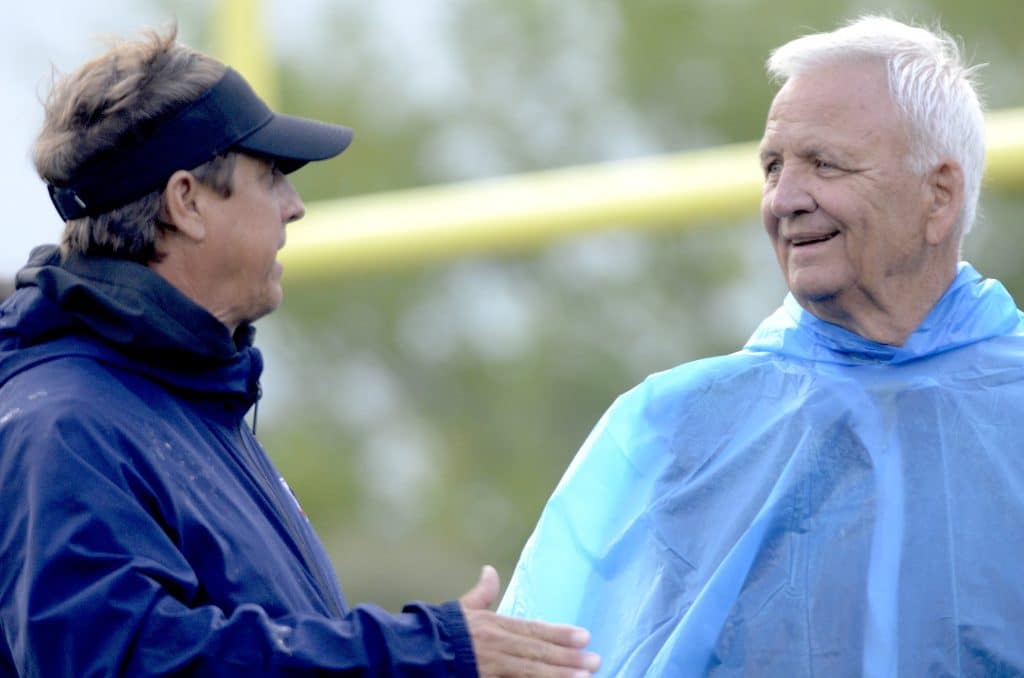
Brauman, now 79, laughs as he talks about the first time he ever saw Getty, at an invitational track meet in what would be Getty’s first ever season as an assistant coach.
“I was on the field and I noticed what looked like some high school kid down there officiating the high jump,” Brauman said. “And I went to the head coach at Oviedo High School, who was John Thomas at the time, and I said ‘John you’re supposed to have a coach down there, not some student.’ And he says to me ‘That’s not a student. That’s our new coach.’ So that’s when I first met Jay.”
More than 35 years later Finke still sometimes jokingly calls Getty “Rookie.” He’s also well aware of what Getty has done.
In that time, the teams the Rookie have helmed have finished in the state top 10 in cross country 10 times. In track and field they’ve finished in the top 10 six times, including Miguel Pantojas’ state champion 1:50.30 800 meter race in 2023. In 21 years as head coach at Hagerty, Getty’s cross country teams have qualified for the state meet in 20 of them. His Oviedo girls soccer teams in 1998, 2000, 2001 and 2002 won the district championship outright and reached the state semifinals all four years.
In the span of 2010-2025 his cross country and track teams amassed 20 conference, district and regional championships.
In the heavily competitive 2024 boys cross country state championship, with a field so tight the winning team’s runners averaged a 29th place finish, Getty’s Hagerty team finished runner up, coming within a few places of capturing the state title themselves.
“I don’t think there’s a hall of fame in the state of Florida that he is not in,” Janson, said.
And that’s just what he did as a head coach.
Back at the Seminole Athletic Conference meet this season, one of the last he’d ever coach directly in the run up to the state meet, he watched senior Ricardo Hernandez blast to a second place finish in that distance race of distance races, 3200 meters in 9:50.27, seconds behind the winner and a photo finish ahead of third place, Oviedo rival and fellow senior Colin Aysun.
“It always feels good to beat your cross-town rival,” Getty later said.
By that hour the crowd, save those waiting to ride the cheddar bus home, had long since thinned, leaving just a few runners circling in and out of the stadium lights. Getty was on his 16th hour on the go by then. Fridays are especially long-winded, sometimes Saturdays too, full of glories, triumphs, cheers and exhaustion. A bit earlier a Lyman runner crossed the finish line and collapsed into the infield just a few steps away from the track.
For Getty, the excitement of the track or cross country course hasn’t been his only responsibility for a long time. This might be his tenth job of the day. At one point Getty was coaching four teams, teaching biology classes, running an athletic department, and serving on multiple local and state athletic association boards and committees in the same year.
“Jay’s so active all the time, when he sits down at night, it’s really hard for him not to fall asleep,” his wife, Kelley, said. “There have been nights where a meet goes late, and he’s only slept two hours.”
But come Monday he’ll be up just like he always is, usually far before anyone else.
Waking to the waves
The stillness these days breaks at 4 a.m. for Getty, undaunted by the calming waves that call to him from his third floor balcony. There’s an Atlantic Surf Design longboard waiting for him in the couple’s new condo in Ponce Inlet, but Getty floats upon that warm Atlantic water less now.
Wakeup used to be 5 a.m. in Oviedo, but in the last year, the Gettys found a chance to accelerate the coach’s retirement plan, so they moved to the beach a year early.

“That’s where I was gonna finish up after I retired,” Getty said of his home by the beach. “I spend a lot of time out there in the summer. It’s quiet. I’ve got some friends who live out there. It’s a solid chance for me to disconnect a little bit, and start to realize that there’s another part of life out there that I’ve heard about and may eventually get to experience. It’s a chance for me to in a way be the chameleon I’ve always been, to adapt in different ways.”
The drive to and from Oviedo takes an hour or so, set to the tune of SiriusXM’s Classic Vinyl, Classic Rewind, or maybe just nonstop Tom Petty.
“My goal is to be two hours ahead of everybody by the time school starts,” Getty said. The reason is to cut down on stress, he said. The more he has done before chaos starts to arrive, the less he has to worry.
Sometimes he wakes up to an alarm, one of those standard issue Echo alarms that gradually calls out louder, louder until you can’t take it anymore. Getty said he can tell he’s tired if it takes him a little longer than a few seconds.
“One time I woke up at 4:01, so that alarm was going off for a while,” he said.
But often he wakes up all on his own, hours before daybreak, drinking his coffee to the calm yet unrelenting sound of waves and those swaying palm trees brushing each other in the breeze.
Sometimes that’s with his kids, all young adults now, all having trodden at least tenuously into the footsteps of their father. All three know those quiet moments with their dad. The calm before the storm of the coming day.
“Just being up there, drinking our coffee, and just starting the day off like that, I’ve done what I wanted already, just waking up and seeing that sunrise, just how peaceful that is,” his son Noah, 23, said. “That’s something he’s definitely taught us is how to take everything in. There’s a lot of stress in this world. He’s been able to push us to take a moment, just sit there for 10-15 minutes and reset.”
Then, for Getty, it’s off to the races.
The streak
Every morning, for a very long time, Getty would lace up his shoes – New Balances for the longest time, then Nikes – and head out to do the thing he teaches others to do: run.
“The streak” as he calls it has actually been three streaks. Running every day, at least a mile, no breaking the streak. That is, until he does.
“One of them I almost got to 500 days and I literally forgot to run that day,” Getty said.
The next day one of his friends asked him how his streak was going when he realized, to his horror, what had happened. In between countless coaching and athletic director jobs in a 24-hour span, that reminder disappeared. Then a week later Simpson, inadvertently wielding salt for the wound as the coach and the Olympian prepared to head out together, asked him which day he was on.
“Day one.”
Then he just started again, with his greatest distance runner by his side. The streak to end all streaks.
He doesn’t say it out loud but it’s one of his proudest accomplishments. At one point in Getty’s life, between one day in 2009 and January of 2025, he ran at least a mile every single day, unbroken. Most of them started with a step out the door of his Crystal Drive two-story built in 1976, back when most of Oviedo was still dirt roads.
“We moved to that house when I was pregnant with Noah,” Kelley Getty said. “It has a back patio, it has a lake, it’s quiet, and we would have fires back there, and that was our happy place and our space as they were growing up.”
From there Getty’s feet could carry him anywhere. He’s taken his kids on runs along the Cross Seminole Trail, where the old railroad line passes over a heavy-duty covered bridge that’s stood for a century. Then there’s Simmons Road near Hagerty, which parallels Twin Rivers Golf Club’s hole 12, one of the shortest holes on the course that hooks left and disappears into a boggy cut through the tree line. Getty remembers decades ago, gliding along that stretch of sandy Oviedo soil mixed with river clay, his feet churning it to dust with every striding step east until the road nears the vast expanse of forest surrounding the Econ River on its long journey to the sea. It’s different now, though the feeling toward the Oviedo he arrived in remains the same.
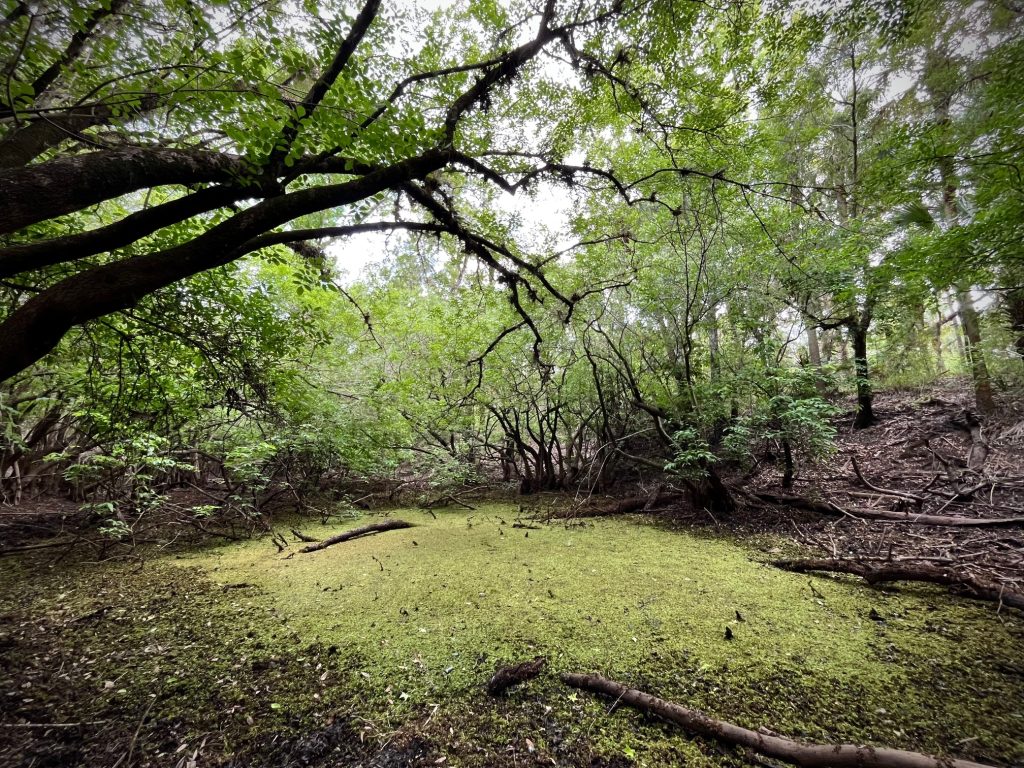
When time was short, he headed toward one of the oldest neighborhoods in Oviedo, passing by the oldest house in the city, owned for many years by Mayor Megan Sladek, on his way around the Lake Charm loop then back home again. He knows exactly what it takes to do a mile, because that’s the minimum he’d accept to call it a real run for the day.
He’s done that run in the rain. He’s done that run in a hurricane. He’s done that run on a nearly broken ankle.
“Maybe 5:30 in the morning, Lake Charm, a half mile in I caught a stick in the road, made it back to the house, and I’m on the phone with Bill [Sheridan] from Cora Rehabilitative and I say ‘Bill, I think it’s broken,’” Getty said. Scanned and diagnosed as a bad sprain, one of Getty’s first thoughts was the streak. But Cora had a machine he could use, a zero-gravity treadmill initially designed for astronauts which straps to your hips and pulls up to remove anywhere between 1 and 100% of your bodyweight from pressing down on your feet as you walk or run.
“I ran in the AlterG at about 33% bodyweight, just so I could get that mile in,” he said. “The next day, I was at maybe 40%. I knocked out like a 15-minute mile and my ankle went right back to swollen. It was a long, slow, 3-week process.”
But then the coach who’d shepherded so many athletes through the craggy woods, undulating fields, loose sand and even muddy bogs of cross country courses only to injure himself in the middle of the road was back, and off to the races again.
He can’t count how many races he’s done in his life, but he’s done eight marathons and countless 5Ks. Not quite as many as Oviedo’s 81-year-old Giles Williams, who won his division crossing the line at his 1,000th 5K, at The Oviedo Run Club’s Spring Rising in Oviedo March 21. But he’s done more than a few.
Almost offhand Getty mentions the time, in service of the streak, he ran in a hurricane, and got pulled over by the Oviedo Fire Department.
“One of the guys is like ‘Coach, what are you doing?,’” Getty said of the firefighter who, in a city of 40,000 people, inevitably recognized Getty on sight.
Getty and his name has become so well-traveled on athletic fields and in classrooms that his family say they find themselves regularly being tasked with “Say hi to Coach Getty for me,” at a cash register, in a restaurant, anywhere they say their name and someone remembers a day on a track, a field or a classroom many years ago, and smiles.
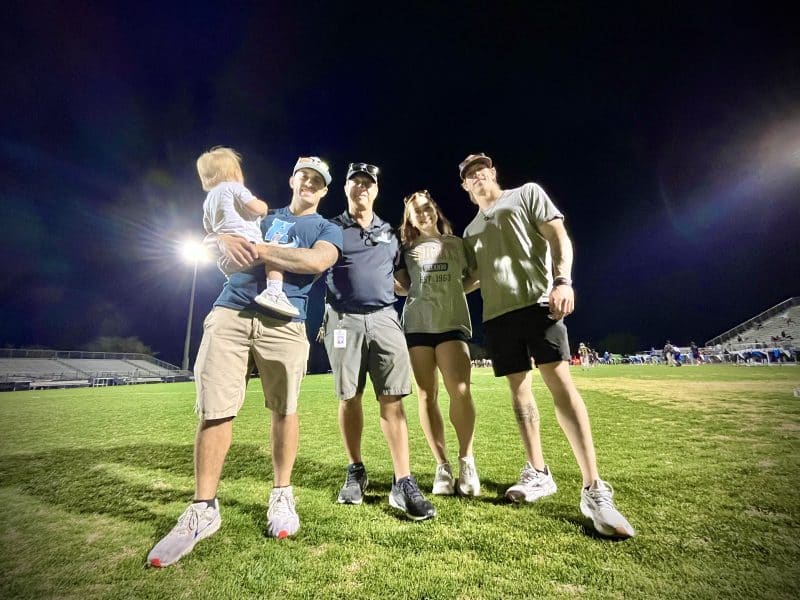
His oldest son, Caleb, is a firefighter now. So’s his younger brother, Noah.
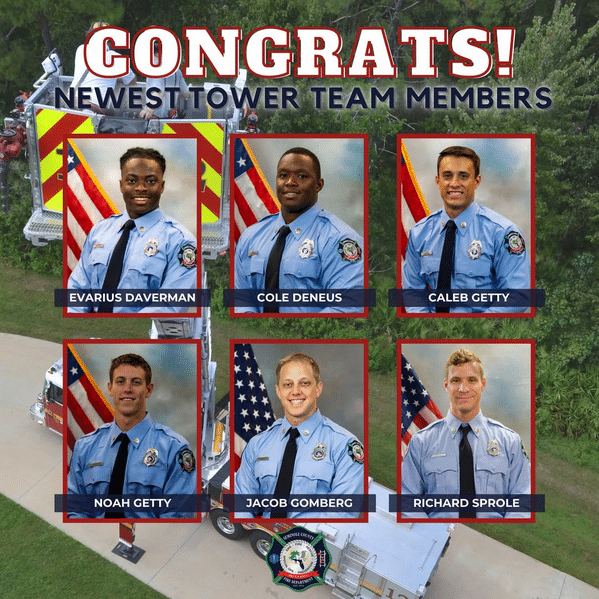
“I have five supervisors above me who have all been taught by [Getty],” Noah said.
So as the rain and wind swept through Oviedo during the hurricane, “I told them, ‘Look guys, I have ⅓ of a mile to go. Please just let me finish,’” Getty said. The firefighters let him finish.
That dedication to the streak took him nationwide. He’s run in Oregon before watching Simpson at all three of her U.S. Olympic Trials appearances there. He’s run when she came down for her final Olympic Trials appearance in 2024 in Orlando, in her dark horse bid to compete for the first time in the marathon, in an unexpected homecoming for one of the most decorated middle distance runners in U.S. history. He’s run in airport parking garages with her en route to races on the other side of the country.
And when Simpson, nearly 40, made her final professional running return to Central Florida, on her own terms with the 2025 Jenny and Jason Run USA Tour, a love letter to running authored on two feet, Getty was there too, ready to end one of the longest chapters of his own story.
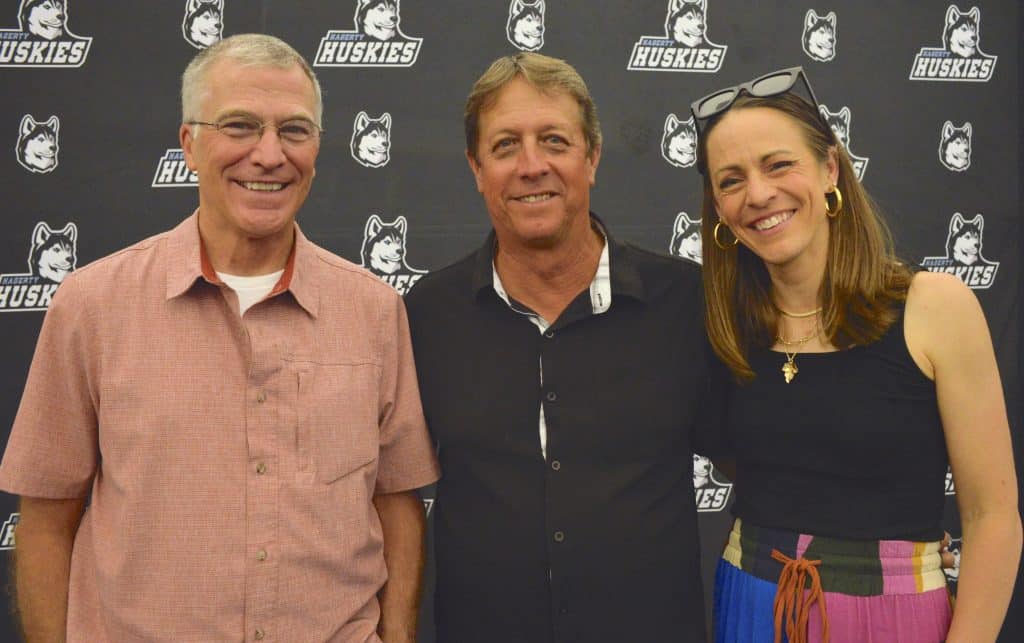
“I told her ‘Jen, the streak kind of started with you. If retirement’s looming, when you start your run USA tour and pop down to Florida, let’s go catch a run, and I’m going to retire the streak on that visit. Then we’ll, in a sense, we’ll retire together,’” he said.
And so off into the distance they went, ringing the bell for the final lap, feeling like they’d only toed the starting line a moment ago.
Jenny
It’s mid-afternoon in the fall of 2004 and a 17-year-old Jenny Barringer is stretching on a stretch of crushed shell trail at Oviedo High School, talking to a young reporter from the Seminole Chronicle Newspaper, ready to defend another season in cross country, quietly exuding an already well-earned confidence. She says she wasn’t really a competitive runner in middle school, though she’d tried it out to see how it went. But now she’s already won the high school state championship twice. And Getty has coached her both times.
But something big happened between her first state championship in 2002 – a 5K race at Tampa’s Ed Radice Sports Complex, which she won in a time of 18:26 – and her second championship in the fall of 2003: She lopped a minute and a half off her time, an eternity in the cross country world. Her 16:55 at Ed Radice became the course’s all-time record for a girl – nearly a minute faster than the next-fastest girl in course history at the time. To this day, more than 20 years later, it’s the single fastest girls high school 5K state championship race in state history. The only state championship race to come close, by astonishing coincidence: in 2021, by Caroline Wells, who went to Winter Springs High School less than 5 miles away. Her coach: Ocky Clark.

How that almost incredible leap between 2002 and 2003 happened is a bit of a secret, Finke said, but it came down to making a young Jenny believe she could go faster, and not just a little bit. And it worked after a single race.
In a video of her preparing for her first ever national championship race in San Diego on Dec. 13, 2003, she’s smiling through braces. In the lineup introducing her before the race alongside the three other regional champions, live on ESPN, she’s the only one of the four who’s not visibly animated with nervous energy. The commentators had just spent the last several minutes talking up the others, except for the South Region champion from Oviedo. Staring into the camera, she’s standing completely still.
She would jump out at the start, propelling the pace and leading almost the entire distance before falling back on the kick in the final 600 yards. Alongside her other past and current coaches Ken Rohr, Scott Waisanen and Joe Janson, Getty was there too.
There were only a few words she remembers, but she remembers the energy. So does Janson.
“He ran everywhere,” Janson said of Getty on race day – the race day for his kids, not himself. “He was at every spot where he figured nobody else would be so he’d be able to yell and encourage them to get them to run faster. He would run 7-8 miles while he’s running back and forth across the woods during the girls’ races, just to encourage them.”
“I think what athletes pick up on the most is their coach’s energy,” Simpson said. “And when you have energy as a coach in the middle of the race, what that communicates is ‘I believe in you. I’m yelling into the void because I know the energy you’re putting out there and I’m there with you.’ And he was always very good at that. Coach Getty is crouched down, he’s yelling, he might jog a couple of steps. You can’t run alongside your athletes, but you can just tell that a coach that’s so invested in their athletes they’re just overflowing with anticipation and energy and Coach Getty’s body language always communicated that.”
That energy extended to Getty’s wife, who remembers the one desolate stretch of the only marathon she’s ever ran, in Chicago. Marathons, experts in distance running have said, are so different from any other race that they may as well be their own sport, taxing the body’s every ability to sustain energy conversion, muscle fueling and cardiovascular effort for hours without stopping. Then there’s the mental element. Kelley Getty was running this race alone. Her husband was just here to cheer her on.
“I was doing ok until the 17th mile,” Kelley Getty said. “The way the course ran, you have people everywhere, but then at mile 17 it’s in the warehouse section. So there’s nobody really cheering. There’s nothing there. I was going to quit. I was like ‘I can’t do this anymore. I know I only have a few miles left, but I can’t do this.’ All the sudden I see Jay, right there. He was right there with me. He ran from mile 17-20 with me. I never would have finished without him.”
Then the race left the empty warehouse district, back out into the cheering crowds, where Getty, the coach and the husband at once, blended in and slipped away.
“He knew,” Kelley Getty said. “I don’t know if I said something or he just felt it; he knew he wanted to see me at the finish line.”
She crossed the line, and there he was.
In her time at Oviedo High School, Simpson only ran one season of eight without Getty as her head coach, and that freshman cross country season is the only season she didn’t win a state championship. She would go on to win the Foot Locker South Regional Championship twice.
On a back shelf off to the left side of Getty’s desk at Hagerty there’s a fuzzy photo in a 3”x3” brass clamshell frame. Getty’s back in a midwest winter and he’s running in the snow. Matching his stride is the girl he’d trained for more than three years at that point.
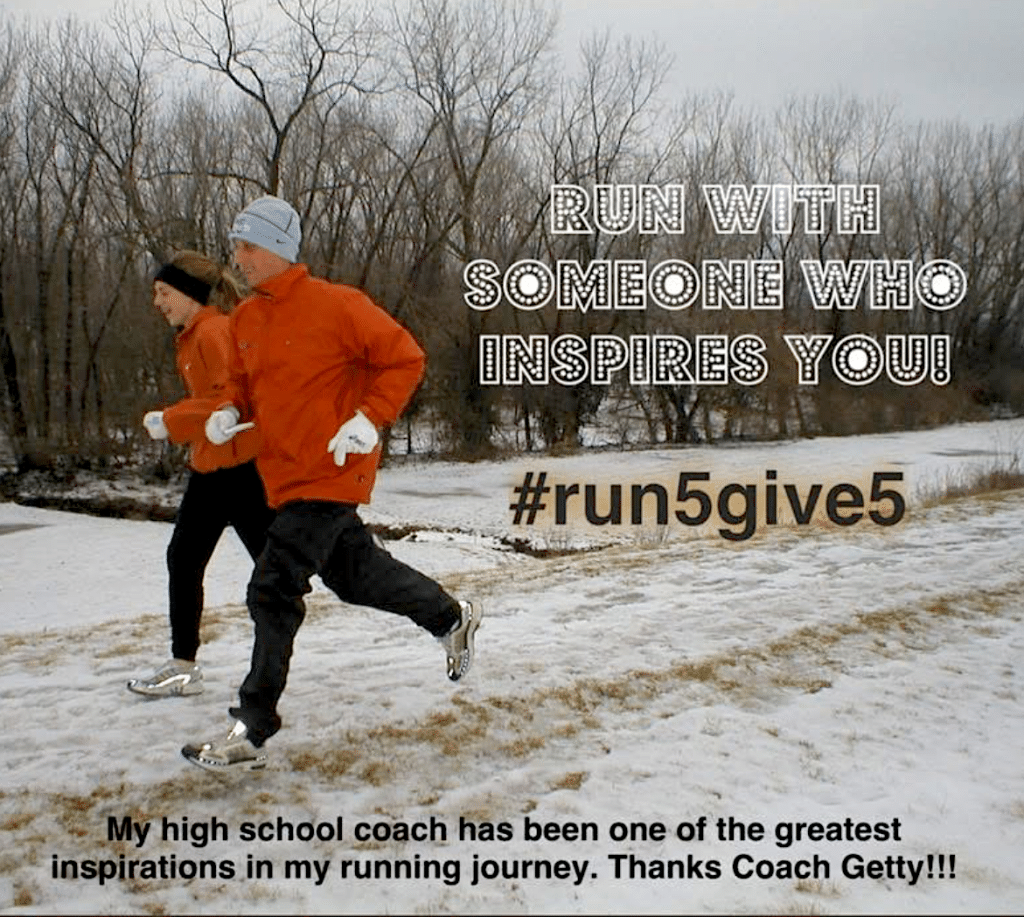
On that day they’re prepping for the USA Track and Field Junior Cross Country Championships in Indianapolis, where, as Simpson would later say, she had no idea how she compared to everybody else. She finished on the podium in her first try.
What happened next, she said, may have come from a secret Getty kept from her up until that moment.
“I remember I came across the finish line and they handed me this piece of paper that said ‘Congratulations you’re eligible for the junior world championship team. Please proceed to drug testing or whatever,’” Simpson, thinking back to that moment more than 20 years ago, said. “I thought this sheet of paper was an ad for a running camp. I threw it away. I had no idea that what I had done was going to take me to a world championship. Jay is like trying to get to me as quickly as possible because ‘Oh no, now I’ve got to explain.’”
He hadn’t told her what was at stake before the race, she surmised, because he was afraid of making her nervous.
“[After the race] he was quick to tell me ‘Now you’ve run us into a whole new adventure, Barringer,’” she said.
From there, she was off to take on the world. And for those first few races, Getty went with her.
“I feel like the stage got bigger, but it didn’t get better,” Simpson said. “The feeling of winning states when that was the highest stakes, highest pressure thing as a high schooler, that felt a lot like standing at the starting line of the NCAAs, and standing at the starting line of the world championships. The work is harder, the margins are slimmer, it gets harder and harder, but man that feeling of pulling it off and being the right horse to bet on, that feeling is good at every stage.”
She would go on to win the world championship in the 1500 meters in 2011 and punched her ticket to the Olympics three times, including medaling in Rio in 2016 in the 1500, which by then had become her specialty. But she can and has gone farther. Simpson holds the all-time American women’s record for the 2-mile. She has won the annual Fifth Avenue Mile eight times – more than any woman in history. She has set numerous NCAA track and field records, including her all-time 1500 meter record, set in 2009, which still stands at 3:59.90 – the longest-held record in NCAA women’s running in a race that’s still being regularly contested. Of the five closest NCAA races in middle distance, four have seen new records since the start of 2025.
But staring at that photo, all Getty chooses to remember is that moment before the race, gliding along in the snow, giddy for what could be: a finish line and a starting line all at once.
“I told him I learned how to win in high school,” Simpson said. “And then I went and did the same thing in college and then I did it as a pro.”
He came to her graduation from Oviedo in 2005. At that point they both knew she had a scholarship to the University of Colorado, just a short drive to the U.S. Olympic Training Center.
“He said ‘For four years it’s been a privilege to be your coach, and now it’s a privilege to be your friend,’” she said.
“You can call me Jay,” he told her.
It might be months between calls, but there are those moments, she says, when the phone rings, either on her end or his.
“If I find myself with 30 minutes sitting in an airport, that’s when you call someone you just like to talk to in life, like you don’t have to have a reason,” she said. “That’s Coach Getty for me.”
That’s not an uncommon sentiment. Ask any of his seniors on the track this season and the words blend together in a familiar refrain.
“There’s still a fine line where he’s your coach, but you can just talk to him about anything, not even running related, but life related,” Hagerty middle distance runner Ava Howell, in her fourth year being coached by Getty, said. “I know I’ll always have him, forever.”
Simpson still calls him “Coach.” But with a caveat, she says. “When I pick up the phone I’ll say ‘Hey Jay, how’s it going?’ but when we sign off, it’s always. ‘Talk to you soon, Coach.’”
Simpson said she doesn’t even know what Getty’s outgoing voicemail message sounds like. He always picks up.
Not just wins
The difference between just a coach and the type of coach Getty became, several of his seniors point out, is it’s not about a team winning a meet.
“There are lots of coaches where they don’t figure out that it’s not about the team winning until they win their first state championship,” Finke said. “Until then, they’re team centric, coach centric, not athlete centric. The thing that impressed me about Getty is he figured that out before he won one in anything.”
That’s because with the coaching job, other jobs come with it, Brauman said. And that might include jobs coaches didn’t know they’d signed up for.
“When you do this, you’re not in the business to just try to specifically coach an athlete to an elite level,” Brauman said. “You do your best to develop them athletically, socially, intellectually. They might be having problems at home. You get calls from their parents saying ‘I can’t do anything with Johnny. Can you please help me?’”
A line Getty says, repeatedly, is “teaching athletes to be able to coach themselves.”
That’s not just in sports, he says, but in life.
“He makes us believe in ourselves, that we can really do it,” Hagerty senior Peyton Shemas said. “He really cares about us and wants us to succeed.”
That includes his own kids. When Getty says “my kids,” he clarifies “‘my’ my kids.”
“I don’t think I’ve ever seen him disappointed in us,” Caleb said. “It’s just if he saw us lagging behind our potential, he’d say ‘what could you have done better?’”
That includes a few words “You won’t really know until you put one foot in front of the other,” that helped push Caleb, 27, to finishing his pre-med degree at Florida State University while working three days a week on hospital shifts in Orlando at the same time.
The idea of bringing out kids’ inner coach tends to repeat itself with Getty.
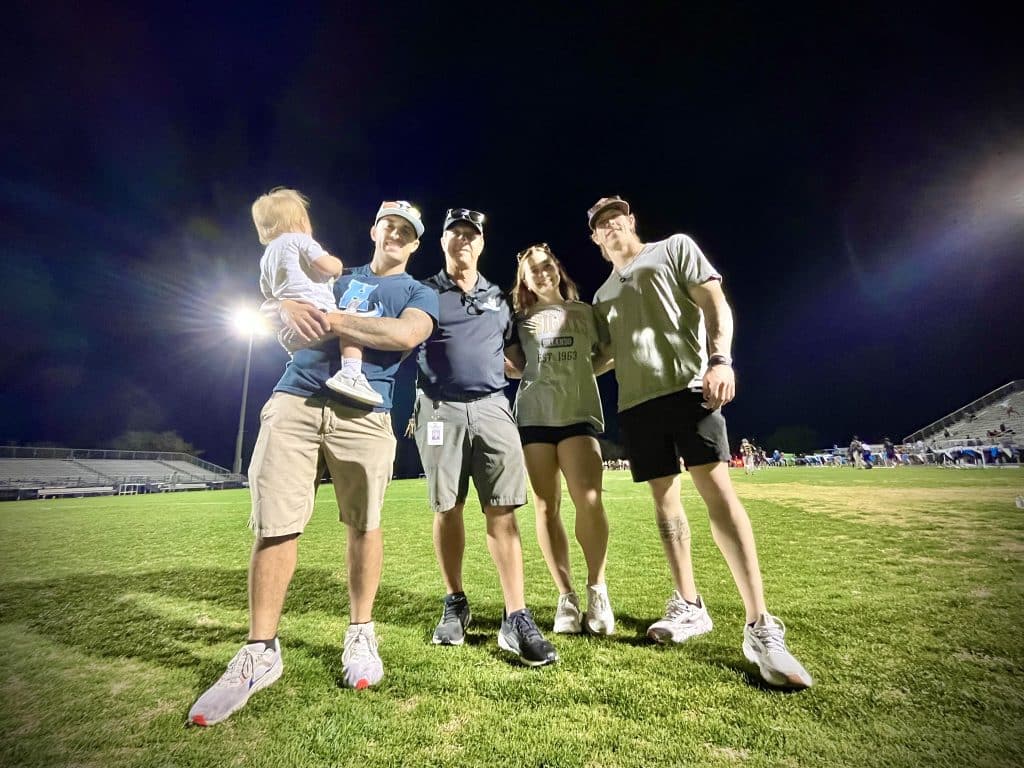
His daughter Leah, 20, the champion weightlifter and dancer, remembers those nervous moments in competition where she’d look across the room, see her dad there and, with a few words and a look, everything would be alright.
“He would be on the floor with me, and his presence is a very easing presence,” Leah Getty said. “He doesn’t even have to say anything, he’d just give me a look. He’d say ‘just breathe, go, you know what you’re doing.’ And I’d say to myself ‘OK, just breathe, go.” She made it to the state championships in weightlifting. In dance she went even farther.
Maybe they’re born with something, Leah Getty said. Or maybe, she wondered, it’s that he made them want to keep going. Whatever it is, she knows it pushed her after she graduated from Hagerty.
“After I stopped my sports, I realized ‘I’m free. But what am I supposed to do now?’” she said. “Even on the weekend I’m thinking ‘There’s got to be something I need to do.’ It’s a curse but it’s also a really good thing in my book.”
The word “win” doesn’t escape Getty’s mouth often. But Getty can name offhand what former students are up to now. Kyle Burton, from Getty’s first year at Hagerty, is a radiologist. Shannon Compher works in hospital administration.
“Success does a lot of good things for people,” Brauman said. “But that’s not everything. There’s a saying in track and field that ‘sometimes you win and sometimes you learn.’”
But getting his kids and his athletes Getty calls his kids to keep pushing to get better has led Getty to one of his biggest conundrums in life, as he approaches the end of his career.
“The ultimate fear for all of us as coaches, is all we’ve done is preach ‘Don’t quit,’ and that’s what I’m doing,” Getty said. “It’s just rephrased as retirement.”
That’s something his friends, many of whom happen to be coaches, know too well. Every Friday morning, for 25 years, Getty, Janson and fellow coaches Scott Waisanen and Rob Williams have eaten breakfast at the same place – The Town House – at the same table, except for the time it moved 100 yards northwest. When Getty announced he was retiring, that’s where they were, Janson said.
“I didn’t believe him,” Janson added. “I don’t think any of us did.”
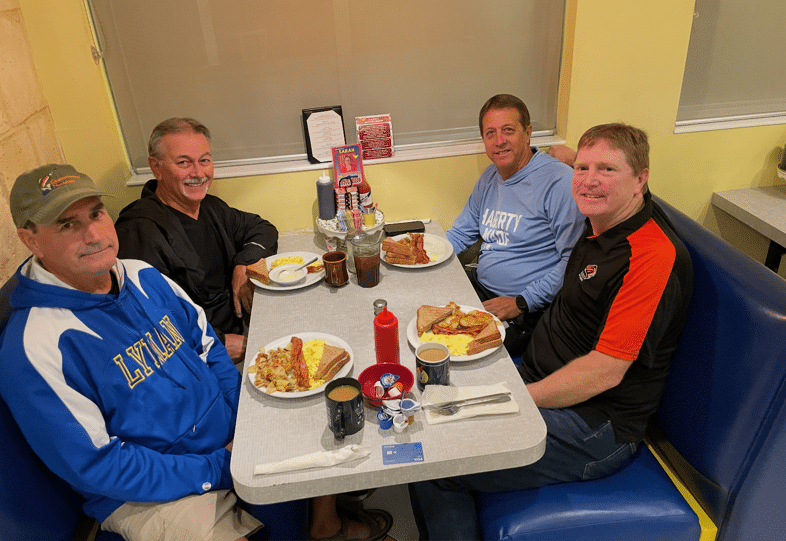
When Getty doesn’t come back this fall, he knows not all of him will be gone from Hagerty. Getty’s parting gift to the school might be something he has the least control over. When Getty walks out the doors for the last time, the Getty name won’t leave with him.
“He’s always there”
But the never sick, never out of commission, always ready to help reliability of Getty will be hard to replace regardless of who does it, his colleagues said.
Christy Tibbits-Bryce, now an assistant principal at Hagerty, remembers the times that someone dropped the ball. When it happened, Getty was always there, she said, rushing to pick something up and bear whatever weight weaker legs couldn’t carry.
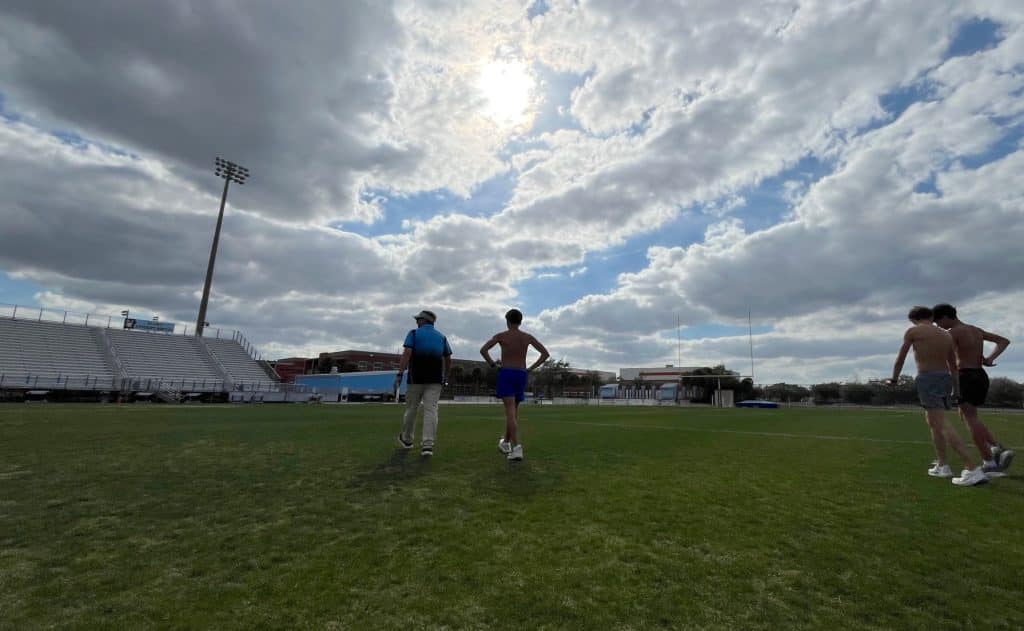
On a Wednesday in February he flings open a 6-foot-wide door of a Hagerty sports equipment trailer, picks up a handful of pylons and heads back out into the unseasonably warm midday sun, dozens of keys jingling away. As he talks he’s dropping the orange corner markers in their spots on the big field ringed by the track, directing some runners to help move benches and tables into place for a lacrosse game that night.
“Some of these coaches, their real money job is somewhere else,” Getty said. “So I want to make it easier for them when they get here.”
Even things that aren’t his job, he still makes his job, Tibbits-Bryce said.
“It’ll be different to be here without him here,” she said. “We don’t know this place without him.”
The two of them first met when they were both in school at UCF, then worked together as intramural sports supervisors. They’ve now worked on and off together for more than two decades.
“I started the athletic program here, but he really took it over and did all the rest,” Tibbits-Bryce said.
She remembers the Getty who was always there to help. Getty, the guy who can seemingly coach any sport. Getty the lifesaver.
She’s seen him run across the school when the call came over the radio that a student was down and needed a medic. That’s pretty much every time it’s happened, she said.
“On campus when there’s a medical emergency, he’s the first to get there, he’s the guy who’s down on the ground with them,” she said. “A kid who’s having a panic attack, can’t breathe, he can bring them down like that. He has that ability.”
In Getty’s office, hanging near the door, there’s a framed award among all his personal photos and sports accolades. This one’s different.
“Life Saving Award Awarded to Jay Getty,” it reads.
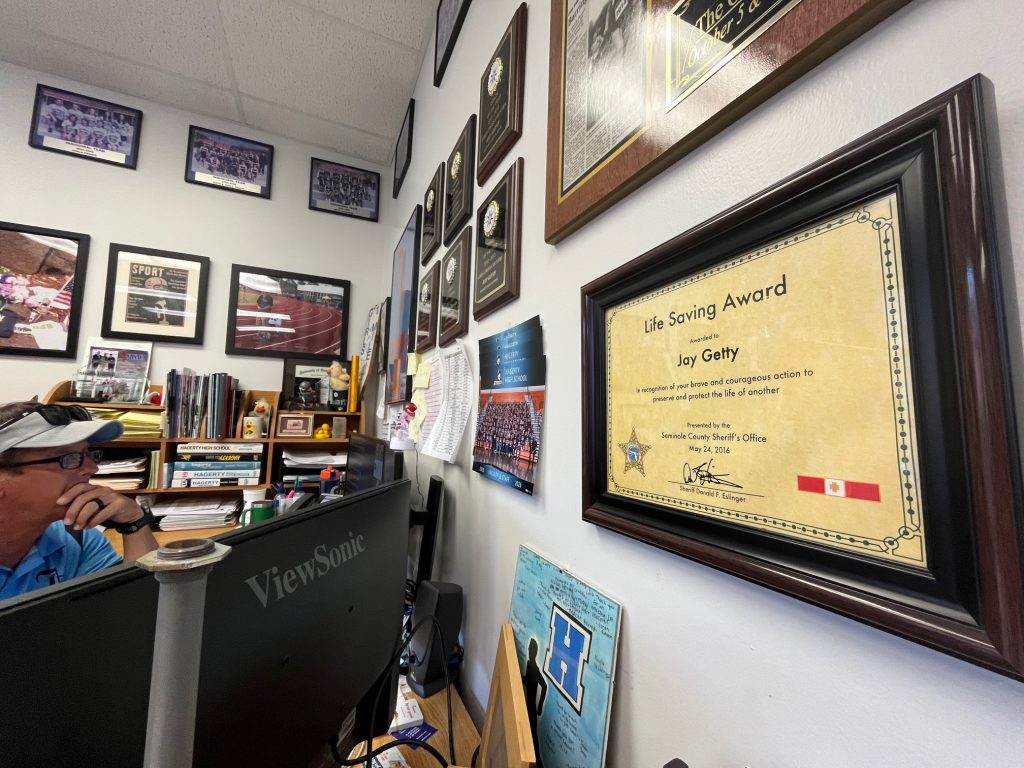
Coaches and teams were at the Lake Nona High School, scouting the cross country course before a race when someone dropped.
“I was measuring something, and I look up and there’s these people crowded around somebody clearly on the ground,” Getty said.
What Getty, a former college lifeguard, didn’t know then was the man on the ground was the father of one of the Lake Mary High School runners, relatively young, then boom. Like a switch.
“I’m just reviewing what I’m going to do on the walk up there,” Getty said. “As I get there, I recognize a couple of coaches there, and the one looked really hesitant, really nervous, and I said, I’m willing to go, if you want me to go. I told them, you keep talking to 911, and I just started. 30 compressions into the breaths. 911 told me to just switch to compressions.”
So he did. Up and down, pumping the dying man’s chest for 10 minutes as they waited for the ambulance to arrive and dozens of cross country runners and coaches looked on.
“10 minutes is a long time to do compressions,” Getty said. “The rescue gets there, they hit him 3 times on the ground, and I don’t know if this guy’s alive or not, and I walk over to my team, and [assistant coach Joe Janson] greets me and looks at me and says “are you ok?” and I said “To be perfectly honest, Joe? I don’t know. But we have a job to do and I’ve got to talk to the team.”
His oldest son, Caleb, a varsity cross country runner, had just seen everything.
“And Caleb is just staring at me, and I said, alright, so remember, which box are we in?” Getty said.
In an instant, Getty the lifesaver switched back to Getty the parent and Getty the coach, what he called “redirecting” the team to get them back into a headspace where they weren’t thinking about the near-death experience they just witnessed.
“Then later [Joe] says ‘I’m gonna ask you one more time: Are you ok?,’” Getty said. “And I said ‘If he lives, absolutely. If he doesn’t, then what did I do wrong?’ And I probably didn’t do anything wrong. But that’s what I’m stuck with as I contemplate what the hell just happened. We had a good talk, warmed up, had a good race, and went on about our business.”
The next night, Getty’s at a Hagerty football game against Edgewater when he got the call. Getty’s patient had made it.
“They called super excited, so I got to meet him, the whole family, wife, kids,” Getty said. “Every time I see Shawn he’s like ‘thank you so much for letting me be a part of my kids’ lives.’”
Getty, Shawn O’Brien, and Jorge Fleitas, the coach on the phone with 911 while Getty pumped O’Brien’s heart, ended up in Runner’s World magazine for the rescue.
That year, at the state championships, the Lake Mary and Hagerty cross country teams wore the same shirts, all one team.
Later on Getty was up for national coach of the year, which he’s now been a finalist for twice. He didn’t win.
“My mom was mad because she thought I should have won it for saving that guy’s life, and I’m like ‘Mom, the guy who won has won the state championship like 15 times,” Getty said.
And that wasn’t the only time Getty used his medical training to save someone’s life at a sports event. It’s happened three times, including Getty shocking somebody back to life with an automated defibrillator. All three survived.
Finke remembers one of those times, not because of seeing it, but from what he learned about Getty later that day.
“It happened at the meet, but before it started; I was there at that meet, and he didn’t mention it at all,” Finke said. “What stuck out to me in my mind was the meet was over, we had won, and literally he had never said a thing. I found out about it after the meet. He was that humble about it.”
“I had a job to do,” Getty said.
“A coach raises other people’s children”
But that level of dedication comes at a cost. Getty’s mentors, the coaches with more than a century of experience between them, mostly said the same thing, tinged with the same understanding mixed with restrained emotion about a trade they know they’ve made.
For Getty, those 4 or 5 a.m. wakeups, after the pre-dawn moments on the back patio or the balcony by the waves, the streak of runs in twilight, always ended the same way for five, six or seven days a week. Frequently before his three kids were awake, he’d get in his truck filled with a job to do in the back, fire it up and drive away. Be back sometime tonight.
They understood, he said.
“I think so.”
Kelley Getty, who works from home in healthcare administration these days, said she did, before most of it even started.
“When we got engaged, I knew I was marrying a coach,” she said.
Their first child, Caleb, was born during the winter soccer season when Getty was head coach of Oviedo’s varsity girls team. The due date was Christmas Day, almost a lucky number; there were no soccer games on Christmas. But fate had other plans. Kelley went into labor Dec. 21 at Florida Hospital Altamonte, just before a soccer game in Lake Mary.
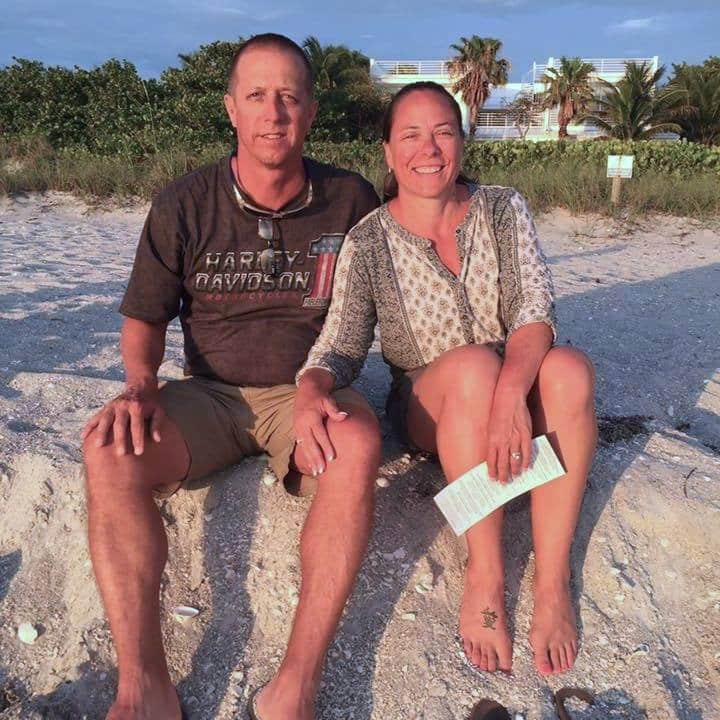
“He kept looking at his watch,” she said. “Eventually Caleb was born, I think it was 6:07 p.m. he was doing well, and now I know Jay’s looking at his watch. I know he’s wondering ‘Is it warmups now?’ So we get in our room, we get settled, the baby’s fine, and I say ‘Leave. Go. Go coach.’ It was time for him to go, because he was driving me crazy.”
“People say ‘Don’t you get mad at him?’ No. I knew I married a coach. He was there for me all three of my births. He was in the room for all three of our babies. He was always there for me, and so I’m very lucky. Wouldn’t you know it, after the game he comes back, and maybe half the team is there to see Caleb and I. It was awesome.”
He raised all three of his own kids to be runners while dabbling in other sports. And they’re all eager to tell stories about camping at the beach or along the Wekiva River with their mom and dad growing up, even on Thanksgiving. Growing up a Getty wasn’t so much about gifts as experiences and memories, they said.
But Getty admits that over the years, as his kids grew, the commitment of the job made him miss big moments. He missed the last baseball game Noah ever pitched in a Hagerty uniform.
That comes with the territory, Brauman said. Now 79, he’s well past his children graduating, but he still remembers.
“A lot of things are understood when you’re talking about your own children,” Brauman said. “I know that I missed high school graduations because I was at the state track meet. Those are things that come up. You can’t schedule when graduation is going to be and you can’t schedule when the state track meet is going to be. You have a responsibility to your own children. You have a responsibility to the track kids. You make those decisions not because you want to, but because you have to sometimes. There’s an old saying in coaching, and I’m big on old sayings, that a high school coach spends their career raising other people’s children, and to a certain extent that’s very true. You have a ton of kids out there that you have helped raise.”
But there are moments when Getty’s dedication to his other kids found itself paid back in odd ways. Like that time he heard a commotion just after 4 a.m. from the people who’d come in the cover of darkness.
“One day I woke up on a Sunday morning and I’m like ‘What on Earth is going on outside,’ because there’s a bunch of noise outside my house,” Getty said. “So I go to the window and I look out, and the entire girls [cross country] team is camped out in my front yard.”
They’d arrived overnight at some point, after Getty and his wife had gone to bed.
“They made their own shirts, it said “Camp Getty” that year. It was a great team bonding thing for them. I didn’t know anything about it until I walked out, and there they are. They’d pitched a bunch of tents, right there in the front yard.”
At practice one day early this track season, a few minutes after Getty, testing the audio system at Hagerty’s stadium, blasted Led Zeppelin’s “Black Dog”, Ava Howell, his middle distance jack of all trades, trades a back-and-forth with him and as she starts to jog away, says, “See ya Coach Git.” Or maybe it’s Jit, Getty says. He’d only ever heard out loud.
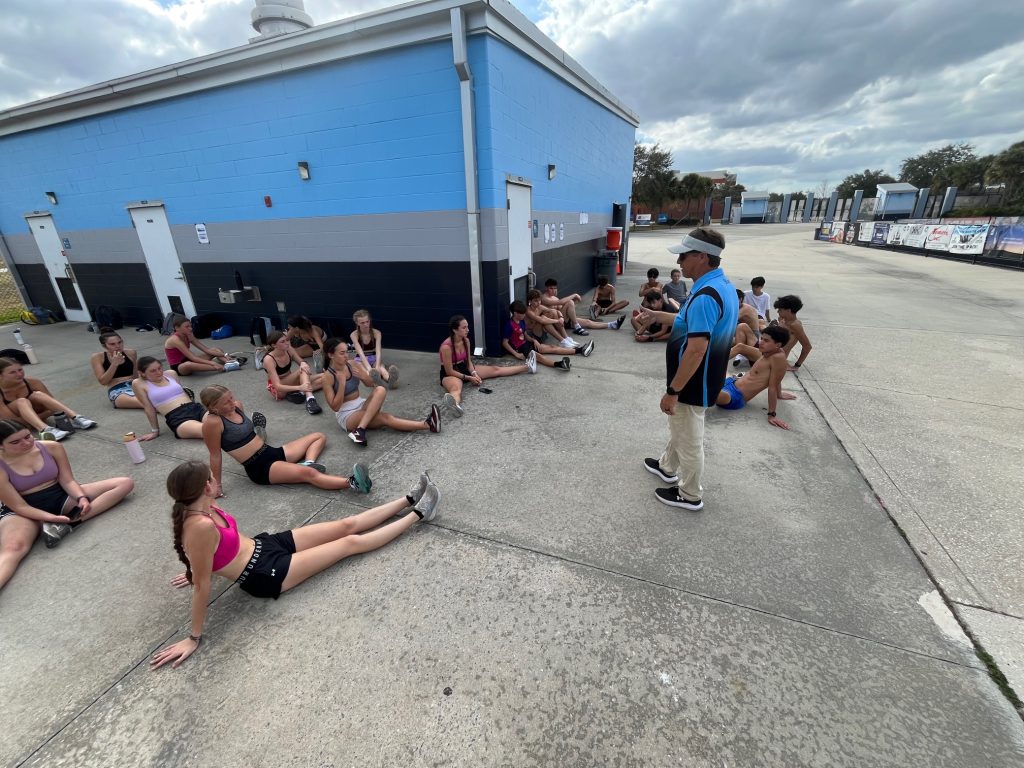
The first time she said it, he told her “as long as it’s not bad, it’s fine.” They eventually looked up the “git” spelling, just in case. Whoops. “Well, that’s not what I expected when I looked it up, but I’m using it in a positive way,” Getty said. “So it kind of stuck.”
Over the years there have been a few nicknames, he said, including from him. At one point the team decided that if somebody was running past so fast that Getty couldn’t recognize them in time, he could just yell “good job, Audrey,” no matter who it was. The team agreed. It happens when you coach a few thousand people, he said.
An imperfect circle
There are just over 3,200 meters in two miles. Before an issue with staffing led Getty to have to coach the school lacrosse team for the past two years, that’s exactly how many athletes he calculates that he’s coached in 35 years; 3,200. Tack on the two bonus years of lacrosse, and it bumps up to 3,280. Close enough.
That math comes in his head, by the way. Probed by the sudden subject change, he calculates it all with an arresting accuracy on the spot, as if some part of his brain had kept that tally perpetually live in some shadowy corner of his cerebral RAM.
That’s 36 seasons of track and 35 of cross country, 16 years of soccer, and 2 seasons of lacrosse, while helping run the athletic departments of Oviedo and Hagerty High School for most of those years. Not both at the same time, of course. The switch to Oviedo came as Seminole County Public Schools was spinning up the operating machinery of an entirely new high school in the summer and fall of 2005.
Oviedo’s small population that had in the 1990s traveled dusty one or two-lane roads between farms and scrub forests had exploded to more than 30,000 by the mid-aughts. The school district wanted Getty to help build the program from the ground up, working with Tibbets-Bryce, who was the first to extend him the offer.
“Switching schools was a super tough decision to make,” he said. “You’re in a town that already had a school. The community really didn’t buy in at first. It was not a ‘Great, we’re building another high school!’ It was a ‘oh, we’re building another high school.’”
He also had to wrestle with the fact that, if he left the school he’d taught, coached and led for 14 years, he might be taking important parts of the OHS athletic department with him.
Janson said that at the time he was disappointed Getty was leaving Oviedo.
“We’d become pretty good friends at that point,” Janson said. “So I thought, ‘What the heck.’”
So Janson went with him. But that was just one lieutenant in an army of coaches.
“This was an opportunity to build a staff; it really could be a big cutthroat decision,” Getty said. “I was already entrenched in the other school. One of my best friends said, ‘Hey, anybody can be successful at one place. Nobody gets to start on square one. You’re always taking over for somebody else.’”
The irony of that line may not be lost on him. Getty’s always looking for the next group coming up, hoping that one day one of his students might come back, the circle completing, and take his place.
“I’ve told Denis that before: our relationship that still exists today after I graduated in 1986 is what helps drive me here with these guys, hoping that one of them is going to materialize into the same thing,” Getty said. “Someone who’s going to care about them and get them to the goals they need to meet.”
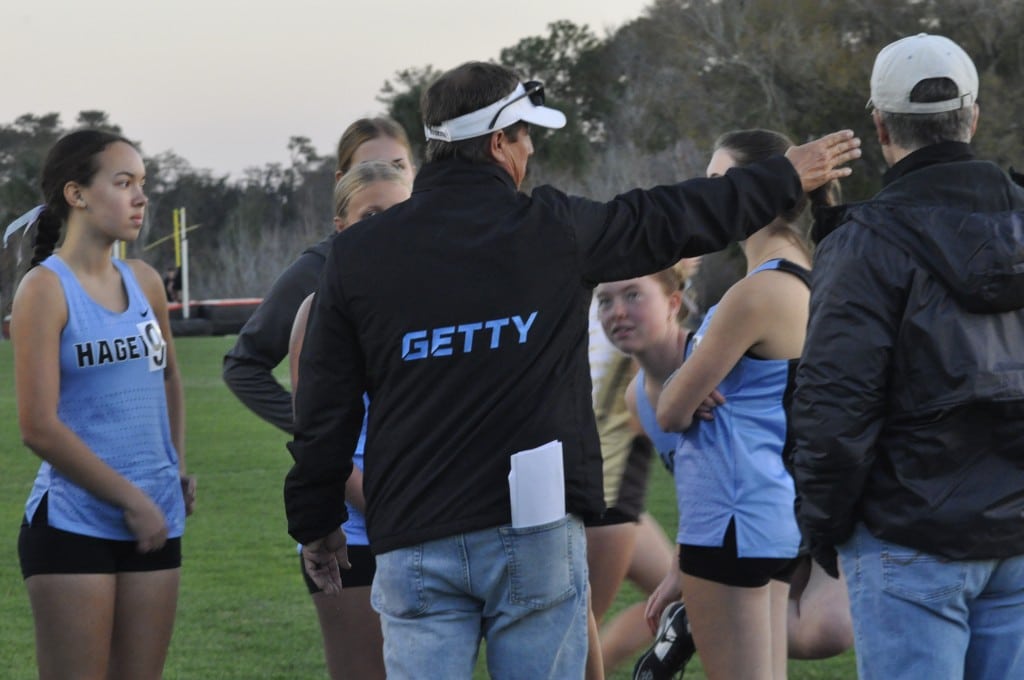
The first few runners at Hagerty are among the ones Getty remembers best, recalling them instantly by name 21 years later. When Getty started his first Hagerty cross country team from scratch in 2005, it was only three runners; one boy, two girls.
“The five of us could get in his truck and go to a meet,” Janson said. “He and I in the front, the three kids in the back, and that was it.”
Janson retired after 2021, after 30 years as Getty’s assistant. He swears he won’t be back. “I miss the kids sometimes,” he says. But when Getty’s Huskies once again qualified for the state championship last fall, just a few months after announcing he was retiring, he lured Janson back out of retirement for one last cross country meet, in Tallahassee.
That invitation is when Janson said he knew Getty was serious. This was the last year.
They didn’t win the championship – girls or boys – but on the long drive back to Oviedo Getty and Janson talked about years past, about the future. Maybe Getty un-retires one day, he said. But whatever he does next, Janson pleaded with Getty not to make that daily drive from Ponce Inlet to Seminole County and back again, with one caveat.
“See you next Friday,” Janson said.
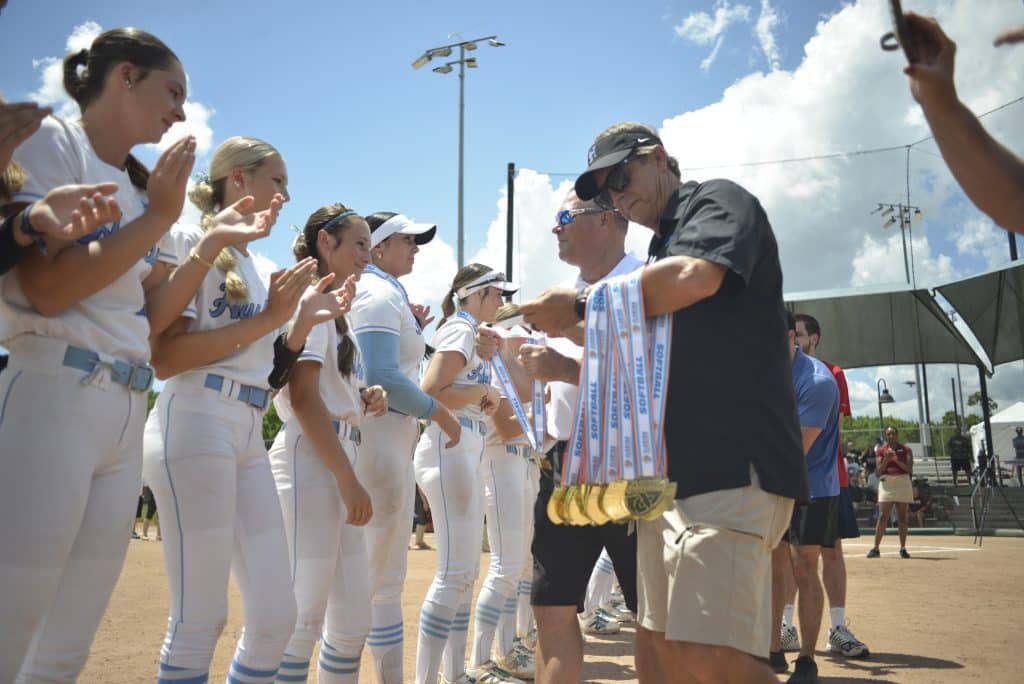
A few months later, Getty was in the bleachers watching the last game he would ever be the school’s top coach for. The Hagerty softball team had a wild run through the FHSAA playoffs, punching their ticket to the state title game. When they took the field on May 20, win or lose, this would be it.
In a dramatic final inning, as pitcher Bella Ortiz struck out the last batter to win the championsip, Getty jumped out of the bleachers, still unflappably stoic, as tears welled behind dark sunglasses. One final banner for the wall.
The peril of standing still
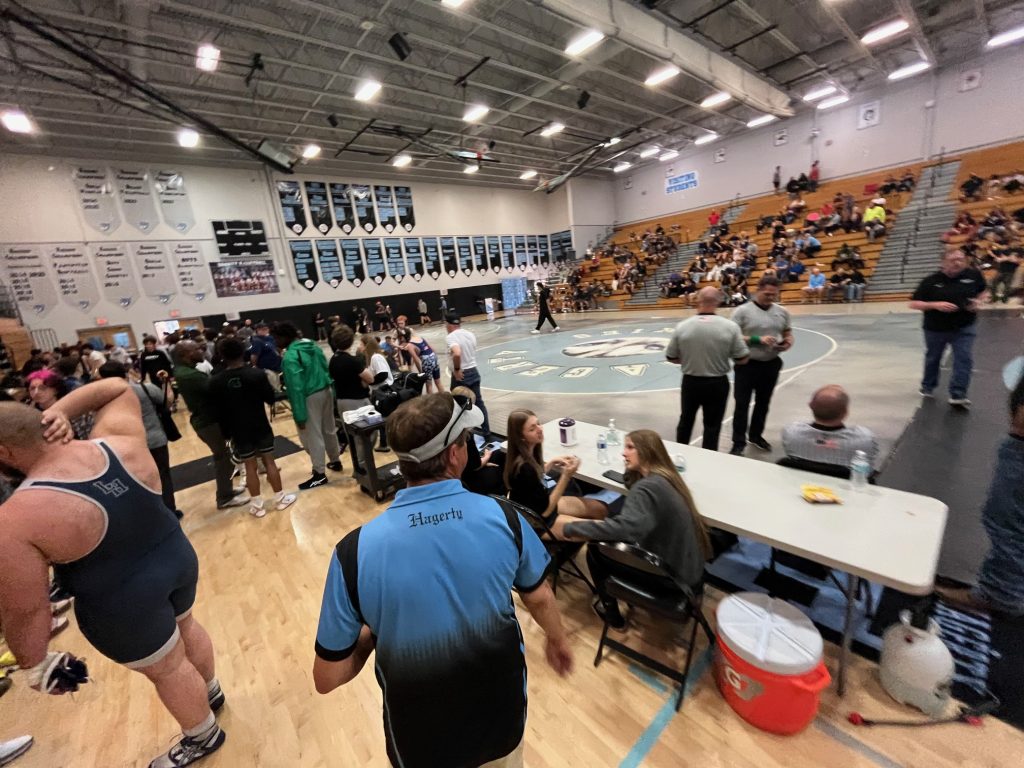
On a late Wednesday afternoon this spring he leads the way out of his office, takes a turn or two, opens a set of doors and then he’s down a towering hallway lined with athletic accomplishments, doing his best not to show pride in it all. He’s got more work to do before the day is done. There’s a wrestling tournament echoing in the gymnasium just a few dozen steps away, filled with far more banners. There are more to be hung from this final season, the only time in his career his daughter said she’s seen him stop to take it all in.
“The last football game, last home game, we were talking, and he was getting teary eyed,” she said. “And I’ve never seen him cry, ever. At our last glow-in-the-dark pep rally, I think it was last October, he was getting choked up, and I was like ‘Oh my gosh, you have emotions.’”
Getty’s fear, though he doesn’t say it directly, is that he might be forgotten, that his final footsteps on dusty athletic fields may resolve into unbroken ground the moment he’s gone. One of his close friends, longtime champion football coach Phil Ziglar, died in early February after gradually easing away from coaching for nearly a decade.
“What do people remember about you?” Getty wondered aloud. “How long do they remember that about you?”
Ziglar’s first retirement wasn’t his only retirement. By the time he departed coaching forever he was on his second retirement job at his third school in a decade. Getty intimates that he knows himself too well to have any illusions of not coming back somehow.
Finke retired from coaching only to find himself starting a business, un-retiring from coaching at Lyman and, improbably, becoming a world-class poker player at the same time. Brauman has retired, moved to Italy in 2022 and still finds himself returning to coach at Seminole during track season, where he once again helped lead some of his athletes to state championships this year.
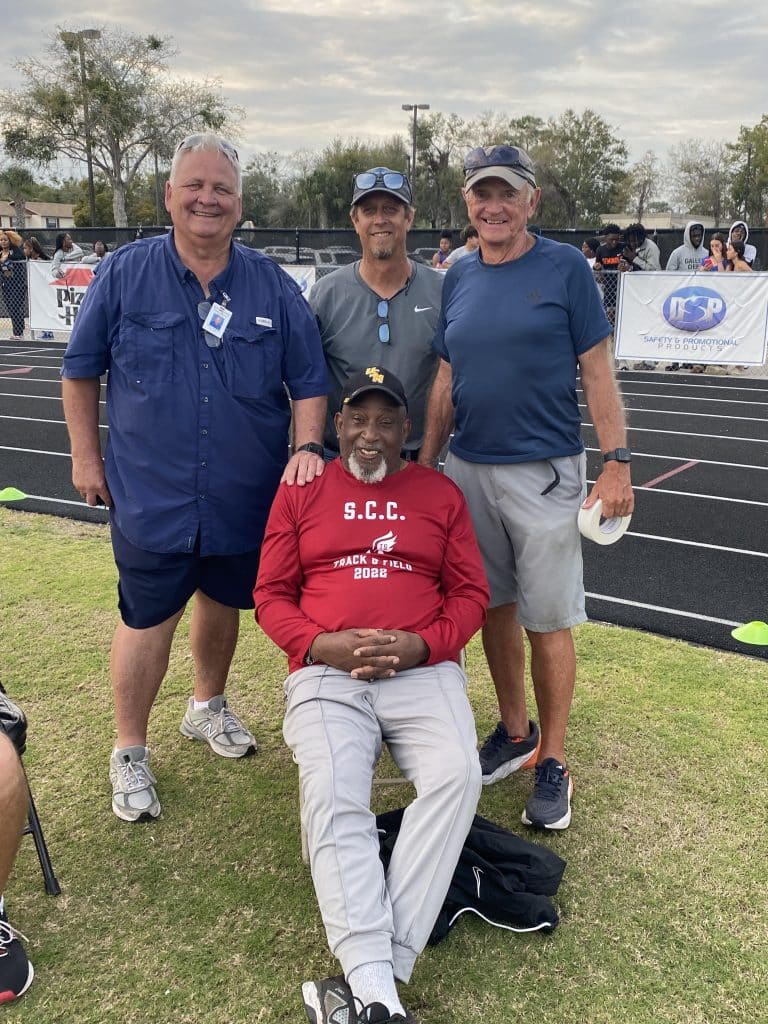
“When [Getty] told me he was going to retire, I told him ‘You’ve got to find something now, because you’re going to go crazy,’” Finke said.
Getty’s already wondering how quickly he’ll get tired of it, when the mornings on the balcony, serenaded to consciousness by the ever-churning sea, will exhaust more than they invigorate. But he sees it coming. There’s a moment, he imagines, listening to those palm trees sway in a gentle breeze in darkness before the sunrise, and it’s perfect, but still he’ll see himself somewhere else, feeling at home again, surrounded by the wonders of a circular existence on short-cropped infield grass, blissfully unaware of the digits ticking away behind him.
“Do you just retire for it to be gone in a heartbeat?” he mused out loud, knowing full well the coaches he’s known who were gone at a young age. Gibson, the Lake Mary cross country and track coach Getty credits for taking him under his wing early in his career, died at 67.
“In our profession there are so many who retired and were gone in a year,” Getty said.
He knows that Hagerty’s championship-winning athletic programs will continue on, of course. The fields are there, the coaches remain, always a new cohort of athletes to replace those who’ve moved onward or upward. But with that relentless churn comes a fear: that the architect is forgotten the moment he leaves, simply ceasing to be.
Every cross country season, the Seabreeze High School beach run takes off south toward a Daytona Beach pier that’s agonizingly far away. The finish line is always right ahead, but seems invisible until it comes rushing up in the last half mile, the pier suddenly, rapidly filling runners’ field of vision. Every step takes a bit more effort in the wet sand. And every evidence of effort is instantly washed away into the sea. But the runners carry on, the finish line beckoning ever more urgently toward tired legs, lungs and hearts.
For Getty, who’s almost certain he’s done at Hagerty, the solace against that fear comes in knowing what’s already been started in thousands of lives, echoing in thousands more.
“I’m happy for what I’ve accomplished with the kids,” he said. “And I’m happy for what they’ve accomplished for themselves.”
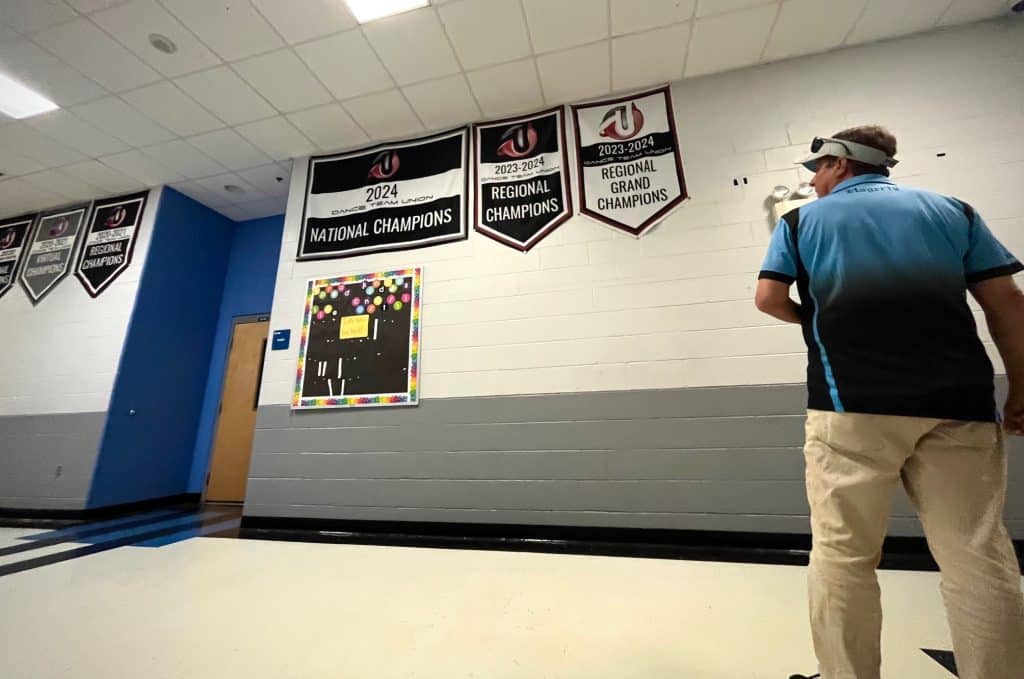
In that long corridor toward the gym, his daughter Leah is part of one of those banners, hanging high above him, for dance. “National Champions.” He tries not to smile while talking about it, his feet moving him closer to the cavernous room where his history is already enshrined, but the future is forever in doubt. Cue The Verve’s “Bittersweet Symphony.”
“I know he probably thought he worked too hard and thought he missed out on a lot, but to us he was always there for us,” said Noah Getty, echoing similar words from his older brother and younger sister. “I’ve seen him pull up in his work uniform lots of times. He’ll pull up from that meet, to our practice, then back to his meet. He always found a way.”
With every step here he unwillingly casts himself a participant in an impromptu parade back through time cheering on his own life, ending with a big finale in the gym. In this hall, painted blue, black and white, Getty walks alone, the district, regional, state and national title banners lit the brightest by the corridor lights.
The cheers are already long gone from those winning moments, authored by the successes of thousands of students over decades. But the ink remains on Hagerty’s walls, just as it does at Oviedo High School, repeating that same word over and over again, “champions,” ushering Getty down to a room where the heavy double doors open, the crowd roars for another point scored, and everyone in the room knows his name.
“He’s just such a great model of a person who has just given their life to their work,” Simpson said. “His work has been to launch young people into the world as more confident, better-equipped young people. And he’s done it for 35 years.”
On the Friday ahead of Memorial Day weekend, he was early to school again. He tried, against the pleading of his coworkers, to help set up his own retirement party, in a room that soon filled with coaches, staff, his parents, kids, friends and former students, laughing at video clips and photos on the big screen of the media center.
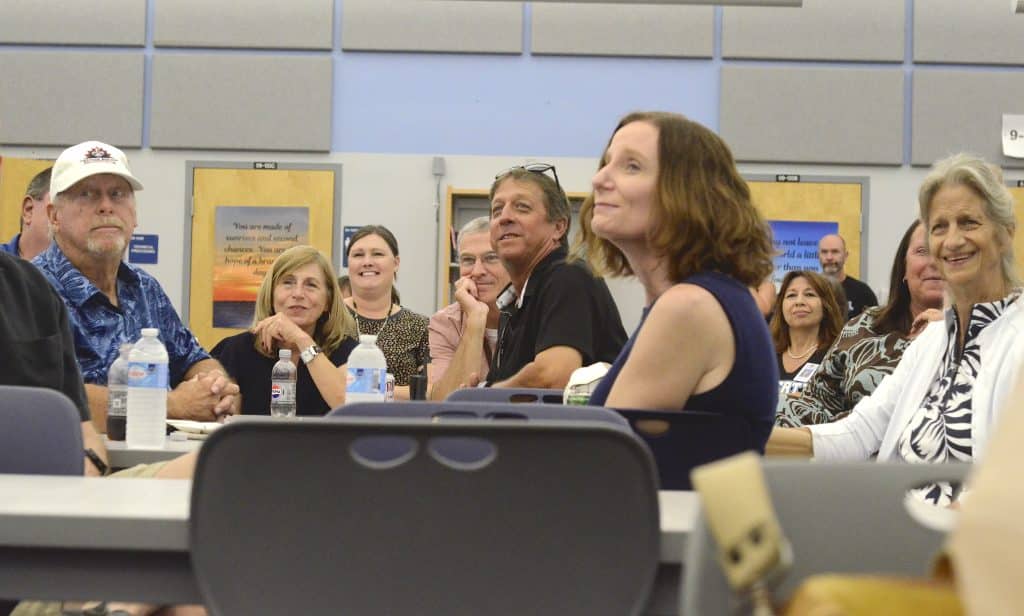
Simpson flew down from her new job at the headquarters of the running outfitter company Fleet Feet in North Carolina, as its first “Chief Running Officer.” Schneider made the long jaunt from Ohio. They ate buffet food and cupcakes. And then Principal Robert Frasca led Getty outside to see the sign unveiled naming the school’s sprawling sports facilities “The Jay Getty Athletic Complex,” with both of his parents watching. Wearing sunglasses, he may have choked up a little.
By then Getty was already almost done clearing out his office of everything personal, everything with the words “Coach Getty” on them, the room rendered a blank slate for incoming athletic director Jacob Colquhoun, who’s been a coach of multiple sports since 2017 and then, among a few subjects at Hagerty, teaching history. Getty called him “by far one of the most genuine people I’ve met.”
“I’m very excited,” Colquhoun told the Hagerty High School Blueprint in March. “But I also know there are big shoes to fill.”
He’s not just speaking for himself. One of Getty’s final decisions on the job, when going over staffing for the next school year, came with the welcome stroke of a pen. One of the school’s newest assistant coaches had just finished her first year on the job, helping the dance team to a regional championship. So Hagerty’s athletic director decided the school should renew the contract for Leah Getty or, as the dancers call her, “Coach.”
Words and photos, unless otherwise noted, by Isaac Benjamin Babcock
Support critical, local news you rely on to stay informed, connected and empowered.
Choose a monthly amount
Hometown Hero
Community Champion
Rooster Society
Custom Amount
Thank you for your support!
Author

Related Articles
Why I wrote a ‘book’ about Jay Getty by accident
I set out to write a retirement story on Jay Getty, but what it turned into, over the course of months, was much more than that.