
Racing in the Woods: Competition and Finding the Way Home
Here’s Oviedo Community News’ three-part tale of how a quirky community of people who get lost on purpose saved a man trapped in a swamp with no water for four days.
ATTENTION ADVENTURERS: MUST READ THIS FIRST! We decided to make a reading adventure for you, in this special three-part story about orienteering in Oviedo, a lost man, and a rescue. You’re in the main story now. Within it are orienteering map symbols (green, white and yellow bars), in order (top to bottom), to help guide you. Each one is a button linked to another page on our site. The main text of each linked page contains a single bolded letter, part of a code word. Besides containing clues, note that the stories the links lead to are part of the whole story. Once you collect all the letters, in order, send the word to the OCN team to see if you got it right!
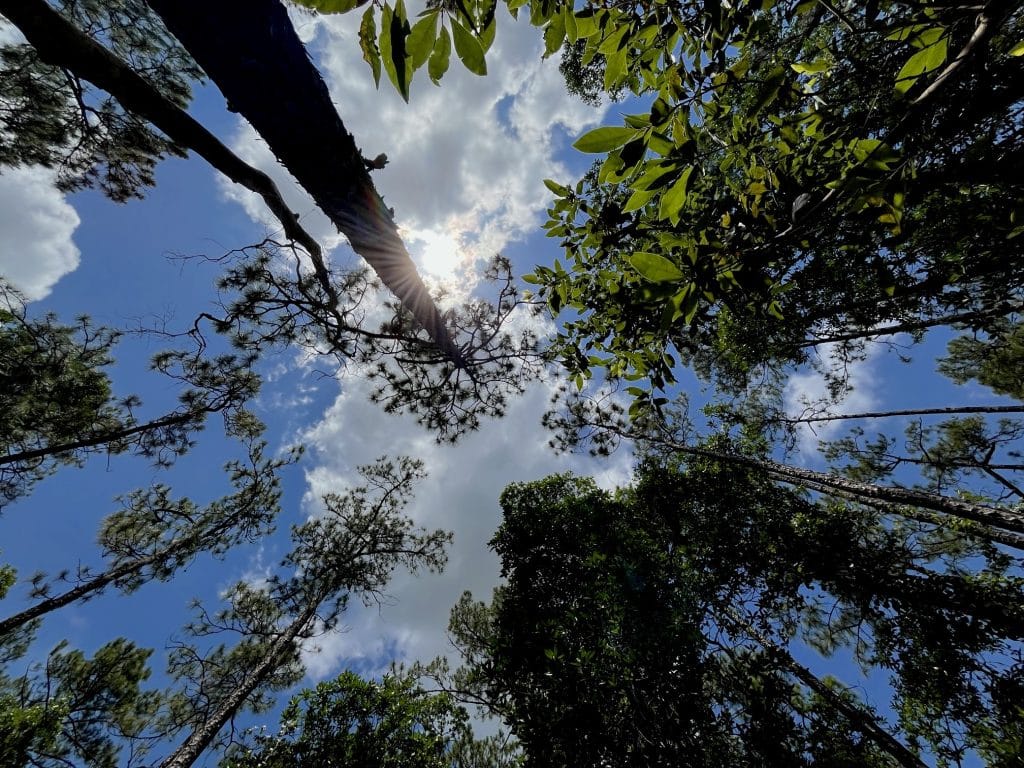
On Thursday, Aug. 31, 2006 Eddie Meadows went for a run during his lunch break from his job near the University of Central Florida. He didn’t come back.
Meadows, training for a marathon, ran his normal route from his job in Research Park up around the edge of UCF’s campus. This time he was running late, so Meadows decided to take a shortcut.
“I looked at my watch and said, ‘Oh great I’m way behind where I should be,’” Meadows said. “So I came back and rather than go all the way around I cut through what I thought was a trail.”
Eventually that path came to an end at a wall of nearly impenetrable forest. Meadows tried turning around but couldn’t figure out where he came from.
He had started his run at noon on Thursday. By then it was already 90 degrees and rising. An hour later he was lost, and by 7 p.m. Meadows realized he wasn’t going to find a way out.
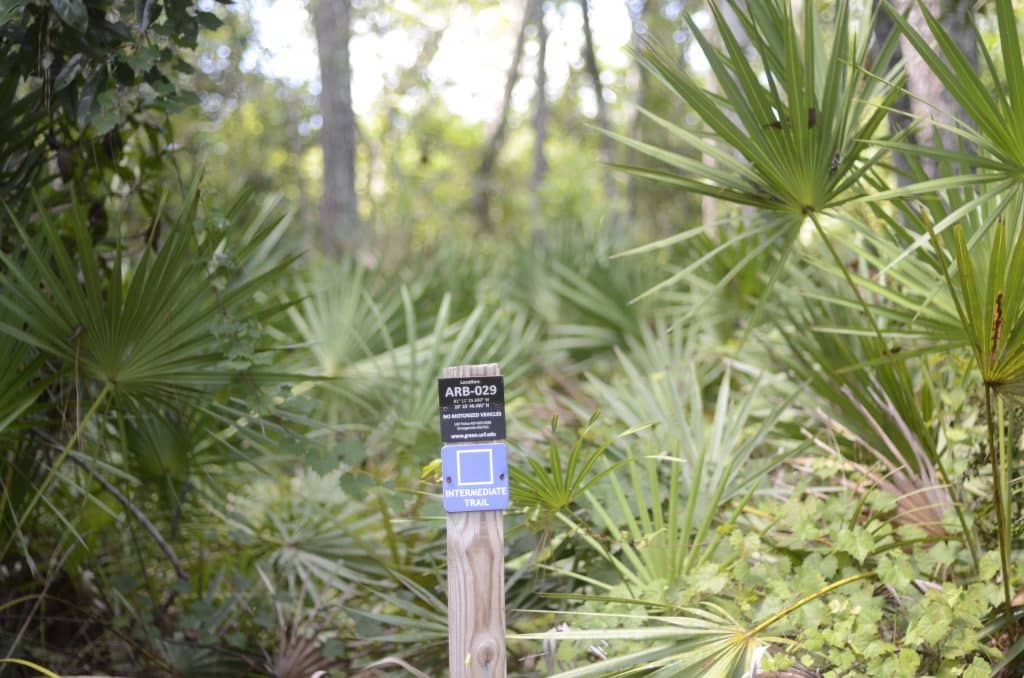
What would become a multi-day search by police involving multiple officers and a helicopter came up with nothing. The search was called off. But with options and time running out on Eddie, news of the search found an unlikely type of rescuer: the people who get lost for fun.

‘The crossing of unknown land’
“I went out to find out what it was like, got hooked the 1st day,” Florida Orienteering Club Founder Bob Putnam said of his first time on an orienteering mission in the woods. “I thought to myself ‘This is the game I’ve been trying to invent since growing up in the North Central Appalachians in Pennsylvania.’”

But by the time he tried it, the sport of orienteering had been around for most of a century.
Orienteering started in 1886 in Sweden as a military training exercise. The sport’s name meant “the crossing of unknown land with the aid of a map and compass.” But it’s more complicated than that.
Standard orienteering competitions are pretty straightforward. Contestants have to navigate from the safety of common cleared paths in the forest into the thick bushes and mud, where wild boars and snakes find comfort, to find designated points called “controls” or “control points” or “checkpoints” on a printed map, in the correct order, with participants’ only tools being that map and a compass. After a staggered start, whoever posts the fastest time to complete the route wins the race.
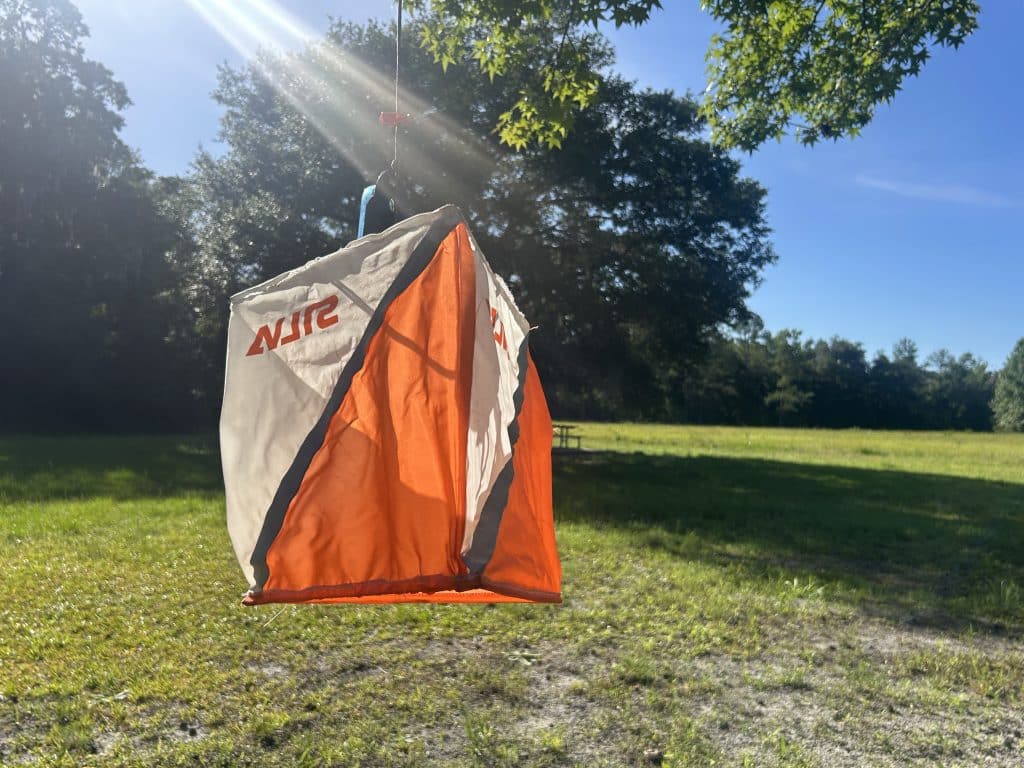
The first public competition was held in Norway 11 years after the sport’s founding. It took until World War II for it to spread to the rest of Europe, Asia and North America.
The first event in North America was at Dartmouth college in New Hampshire, organized by Finnish Army officer Piltti Heiskanen in 1946.
It didn’t immediately catch on, but in the 1960s the Delaware Valley Orienteering Club became the first to host regular events in the United States.
Putnam and his wife Janet were early DVOC members. Putnam has been competing for a lifetime, running in the club’s first orienteering event in 1967. It was a hike through Valley Forge National Park in Pennsylvania when the maps were still vague-as-can-be in black and white, and the proof of finding a “control” was a series of unique hole punches on paper cards.
An adventure sport for young or old
Putnam wasn’t alone on his trek through Valley Forge. It was his second try at orienteering, and this time Janet came along carrying their tiny one-and-a-half-year-old daughter Anne tucked into a backpack. The course began and ended in the shadow of then-General George Washington’s headquarters, the centuries-old greystone and mortar house that served as Washington’s home during the six-month encampment of the Continental Army at Valley Forge.
“You can’t step into Valley Forge, especially if you’re into history, like my wife and I are, without just being overwhelmed,” Putnam said.
They were hooked. Almost 60 years later the family still goes out on trails together when Anne pays a visit.
Putnam started the Florida Orienteering Club just after he moved to Central Florida in 1991.
“The results tent was always just chaos,” Putnam said. “Because if you had 100 people with these coded needle punches, they’d be finishing every minute and someone had to check.”
Back then it took a team of six or more people constantly flipping through stacks of cards in a secluded tent to validate times.
Today everything is electronic, all able to be managed by one person, but in the woods between control points, the year could just as well be 1886.
Lost in the woods
In 2006, Eddie didn’t have any communications or navigation equipment with him at all. The first iPhone’s launch was a year away. He had no compass. Not that he could see far ahead anyway, cutting through head-high vegetation with sticks.
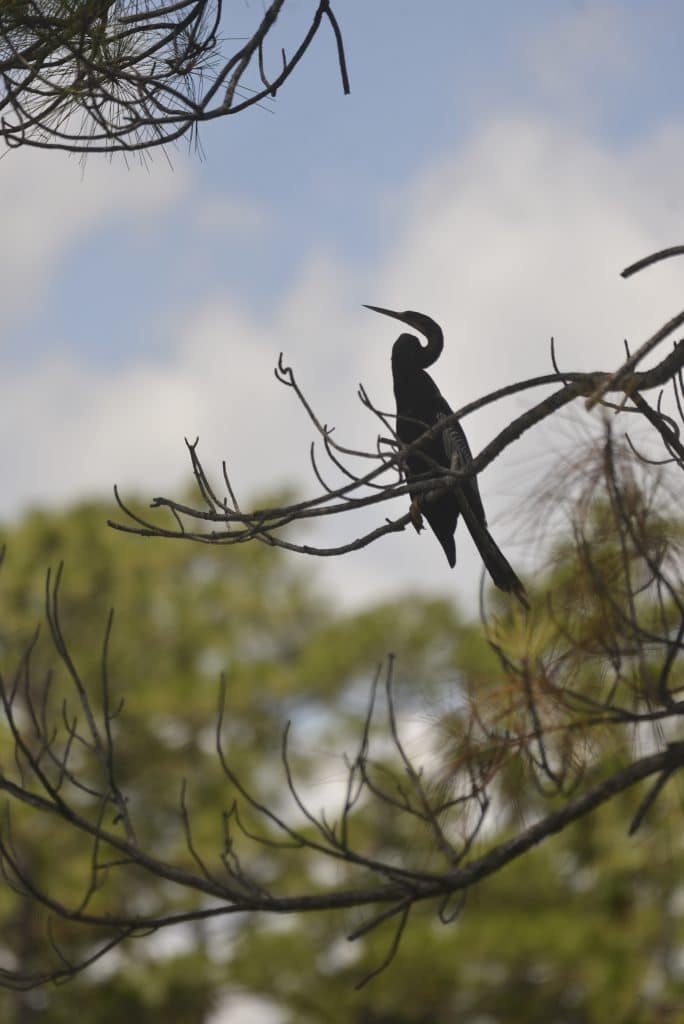
“It took me probably a good 30 minutes to go maybe 100 yards,” Eddie said about his second day in the forest. “That’s how bad it was.”
He had no idea that the rescue that had been launched would cross his path twice and not see him at all.
Connecting the dots
Some experienced orienteers have been using the same trusty compass for decades. Jacob Stepanek, 15 years old and heading into his junior year at C. Leon King High School, cuts through some brush and dives under a fallen oak tree guided by his phone. His hands and shins already show the signs of doing battle with the elements, painted with dirt and etched with scrapes from the branches and thorns he’s fought through.
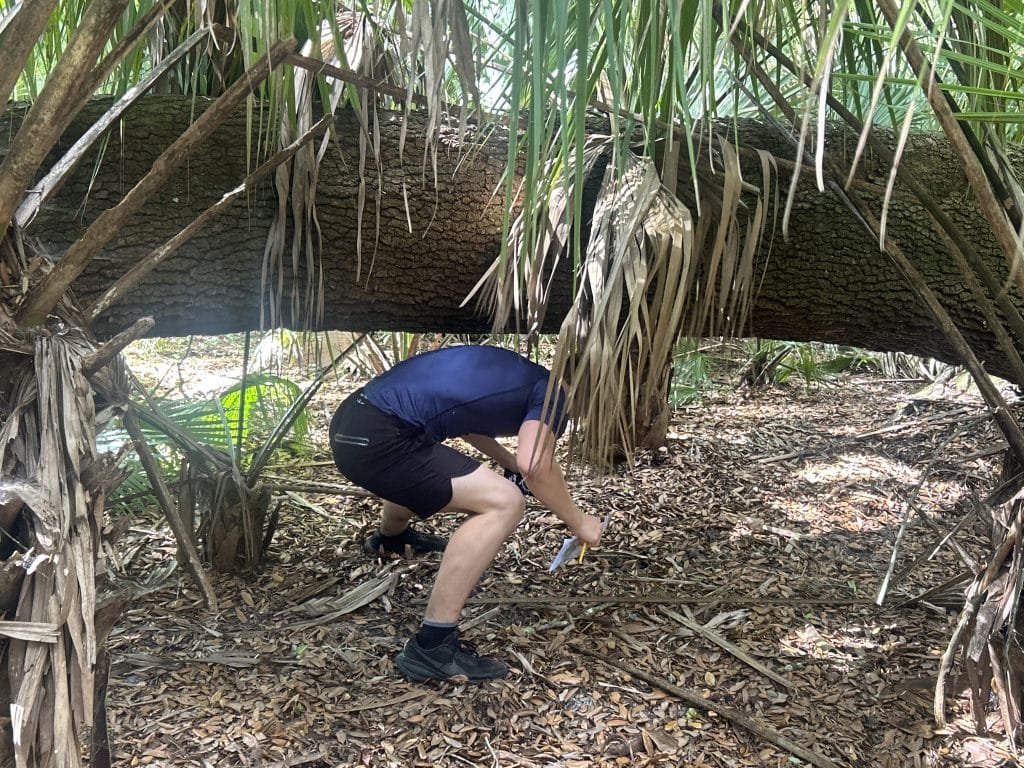
Stepanek had his older brother Evan drive him the two hours from Tampa to the Little Big Econ Barr Street Trail Head in Oviedo to run in an orienteering event unlike any he’s done before. They left home just after 6 a.m. and were the first participants to arrive on this summer Saturday morning.
This was his fourth orienteering event. Stepanek usually competes in these races as a member of his school’s Junior Reserve Officer’s Training Corps Orienteering team. This time he ventures through the woods alone.
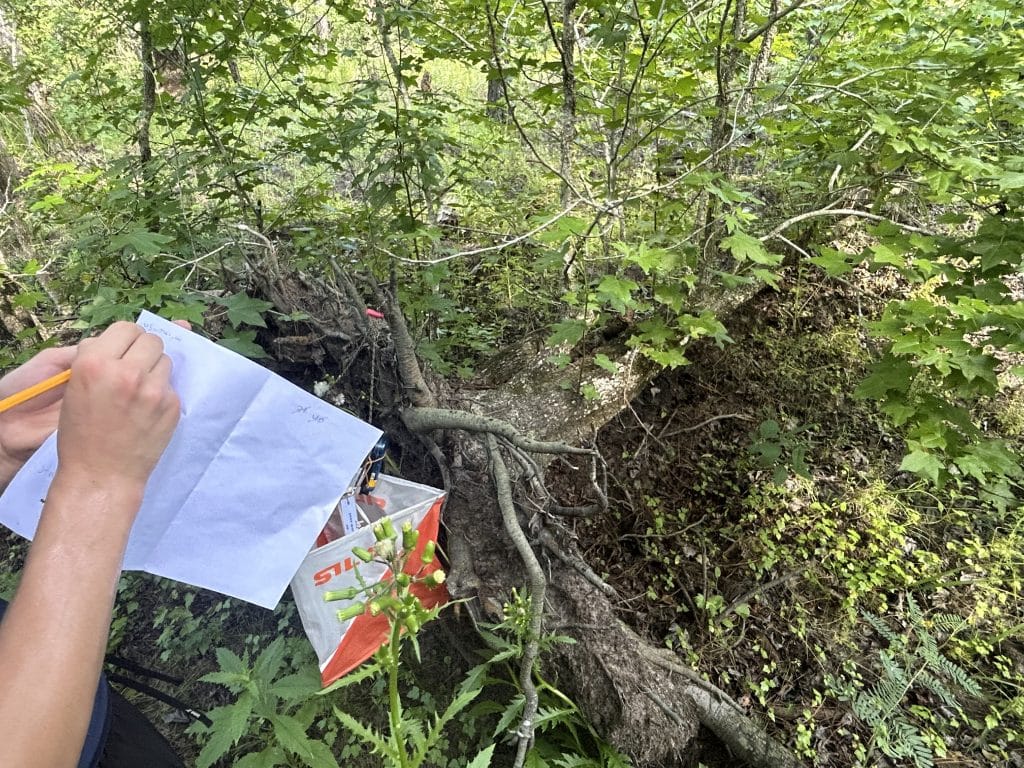
On Stepanek’s left ring finger he carries a “finger stick”, amounting to a flash drive with a strap on it. When he reaches each control Stepanek has a quick moment of triumph and a short shaded rest as he plugs it into a receiver attached to the point to mark it complete.
Most of the events Putnam’s club holds now are large-scale JROTC competitions. Usually twice a month, anywhere from 200 to 400 contestants flood their courses across the state.
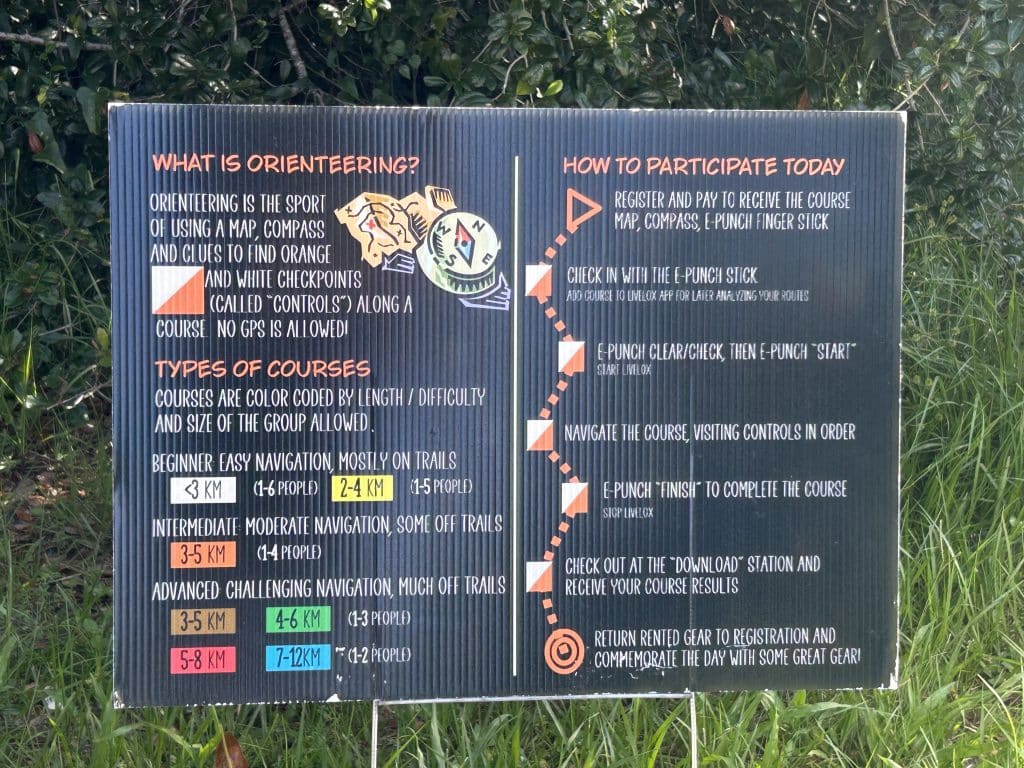
To make sure no one gets lost, every racer logs into the GPS tracking app Livelox. On big race weekends the app allows the hosts to set up a flat-screen TV at the starting point with the live position of every contestant being shown moving across the map of the trail.
Stepanek had found every control in the maze except one. He walked in circles for a while, looking at the map and flipping it over to see the scribbles he made at each point detailing which controls connected and which were dead ends.
By this time he was wishing he ate a bigger breakfast than the two kiwis he had for the electrolytes.
Then he ran into another orienteer, and asked for help.
It was Ron Eaglin, a member of the club and an experienced outdoorsman.
Not all who wander are lost
Getting lost in the woods was Eaglin’s expertise. It’s something he’s been doing whether for fun or competition for 30 years. He started out as a hasher, which is basically an orienteer playing hide-and-seek. Crowds of hashers would gather to drink beers and chase a person called the “hare’ or “rabbit” who marks a trail behind them.
“That was basically people who drink beer and run through swamps,” Eaglin said. “A rabbit takes a bag of flour and runs out and throws down a handful of flour every 20, 30 yards or so. You just go and then everybody chases you. Oddly enough, it ends up in a bar every time.”
Eaglin said he made a pretty good rabbit because he had a knack for getting lost, he would even stash a second bag of flour out in the woods because he knew he wouldn’t be caught before his first ran out.
“The longest one I ever set was like 13 miles,” Eaglin said. “That was mostly because I got to an area where I couldn’t figure out how to get out.”
Eaglin is also an adventure racer. Adventure racing is a map sport a lot like orienteering, but on a much larger scale. For Eaglin, 24 hours out in the woods is a short race. Many adventure races can last anywhere from 3 to 10 days.
When Putnam saw the struggle to find Eddie on the Sunday night news back in September of 2006, he knew just who to call. It was Eaglin.

Running out of time
Eaglin had struggled to find the same control that was stumping Stepanek for a while, so he showed him the way.
Instead of taking the teenager directly to it, Eaglin, a college engineering professor by trade, had Stepanek follow close behind him. Showing the route he originally took on the map and explaining why he was wrong, as he pointed out every clearing that he could’ve confused for a distinct trail marked on the map.
After they got to the elusive control, Eaglin flipped over his map and showed Stepanek how to draw his own key to the maze for his final run.
The heat index was racing toward 100 degrees and beyond as Stepanek tried to complete the maze laid out in the forest surrounding him. At first completing the maze was more fun than challenging for Stepanek, but with each control he found the heat wore on him more and more. The race started to creep up his list of most difficult orienteering events, into second place on his personal medal stand.
The toughest course he had run to that point was just after Hurricane Ian battered Florida. His detailed orienteering map was useless. All the carefully drawn out trails and markers were warped by the storm, with fallen trees and floodwaters covering and washing away what would normally be clear paths.
After Eaglin helped him crack the Little Big Econ State Forest maze, Stepanek disappeared into the trees for his final run. By the time he came out the other side, sweating, panting, covered in dirt and surprised he had just barely beat the three hour time limit, the maze had taken the top spot. This was the hardest.
“This was just blistering sun, so it made me tired a lot quicker.” Stepanek said. “This is the longest course I’ve ever done.”
By then Eaglin, the adventure endurance racer, had long since finished. Chalk up another search over.
Found
Not far away, a week after the orienteering race, on a steaming Saturday afternoon Eddie Meadows, now long since retired, was working on a friend’s car. It was a 1965 Corvair convertible, painted the kind of soft yellow you might see someone wearing as their Easter Sunday best. He still remembers the emotions of that moment Ron Eaglin pulled him out of the woods that fourth day, the day some searchers were certain he was already dead.
He was about to pull out for a test drive when he noticed a car parked on the side of the road in front of his house.
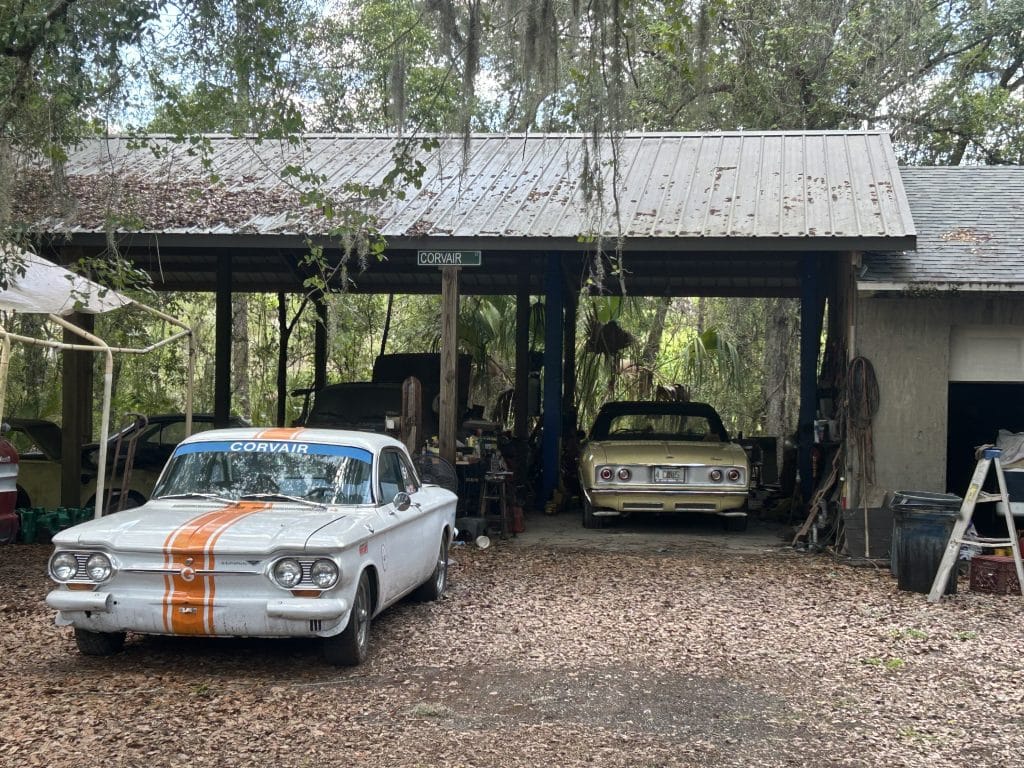
It was a reporter who had just knocked on his front door. His wife of 51 years, Ardis, had answered. She thought he wasn’t home, so the reporter left a business card and walked back to his car.
Eddie drove off his lot and onto the narrow road with just enough room for the two cars to be half on the grass and half on the asphalt. He stopped door-to-door with the other car to roll down his window and ask a question over the rumble of the Corvair’s engine.
“Are you looking for someone?” Eddie said.

Isaac Benjamin Babcock and Megan Stokes contributed to this story. Unless otherwise noted, photos by Isaac Benjamin Babcock
Dear adventurer, if you’ve collected all the letters, in order, send the word to the OCN team to see if you got it right!
Support critical, local news you rely on to stay informed, connected and empowered.
Choose a monthly amount
Hometown Hero
Community Champion
Rooster Society
Custom Amount
Thank you for your support!
Author

Related Articles

Watch: Winter Springs election candidates talk water quality, Amendment 3 and controversies
Oviedo Community News is adding video interviews with candidates from Oviedo, Winter Springs, Seminole County and beyond to its 2026 voter guide.
McCann, Phillips debate in election for Winter Springs mayor
Mayor Kevin McCann touts a water association award that Winter Springs won this month in a blind taste test involving six Central Florida counties.

Elections supervisor: Check your polling location, as 14 Seminole County voting locations closed since 2024
That includes 5 polling sites in Oviedo and Winter Springs, with three of those changes coming since the August primary election. Supervisor of Elections Amy Pennock sent out new voter ID cards reassigning voters to other existing polling locations.