
LYNX bus replacement Scout’s wait times surge as schools start
Increased rush-hour fee kicks in this month. ‘They’re saving them money,’ said one resident who wants to see buses come back. ‘They’re not saving the people money.’
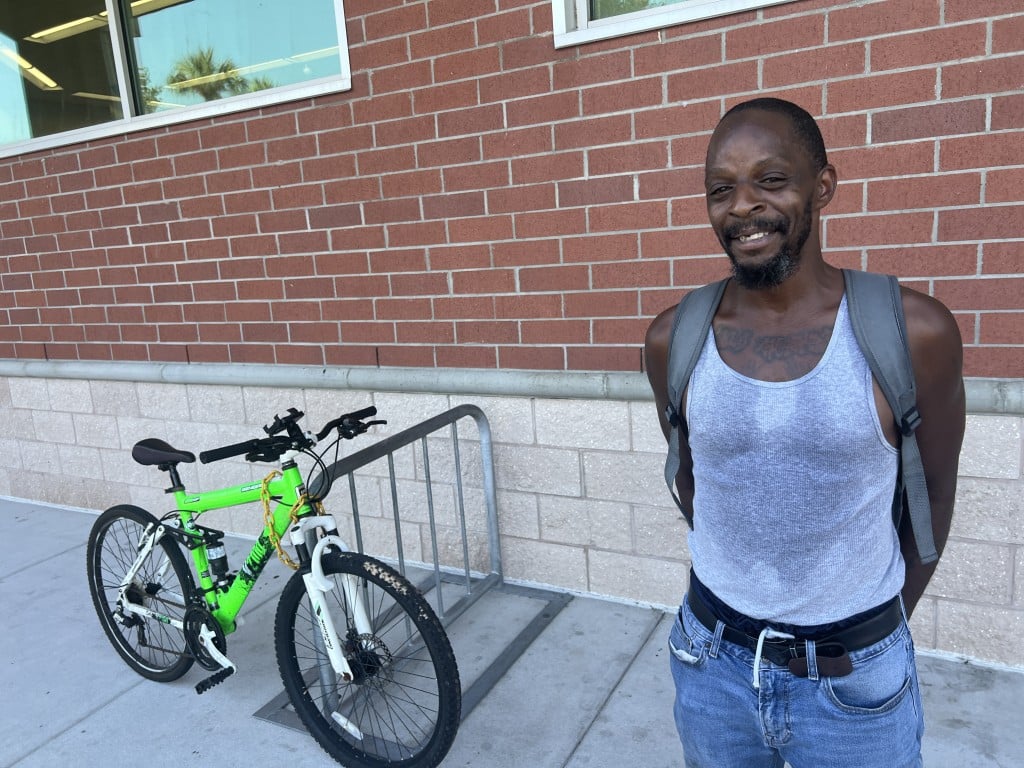
It’s a hot morning, and Sanford resident Gary Caviness is sweating.
He’s on his way to work, coming from Sanford to his job at MacroCaps in Longwood. He used to take the bus, but with most LYNX bus routes discontinued this year, Caviness’ commute has changed.
Initially, he tried three times to use Scout, the county’s microtransit alternative to the buses. It operates much more like Uber or Lyft, where you use an app to ask for a ride, except this service may pick up several different people along the way, and that takes time.
“Once [I saw] how long the wait times were, I’m like, ‘I can’t do that. They take too long,’” Caviness said. “First time was two hours. The second time it was like an hour and thirty minutes, but they [were]there in like 45 minutes. And the third time it was another two-hour wait.”
So on this day, Caviness took the Sunrail train from Sanford to Longwood. And once he got off the train in Longwood, he rode his bike to work.
That way is cheaper, too. Scout cost him about $10 for the same trip.
“[Before]they took the buses out, it would have just cost me $2,” Caviness said. “Bring the city buses back. Why would you take the city buses from people who work every day? To me, that was the dumbest thing you could have ever done.”
In January, Seminole County did away with most public buses – known as LYNX – to save the county money. The county has instead moved to this on-demand system, which is run through an app called Freebee.
Users can book a ride, end-to-end, from a fleet of mostly electric vehicles operated by contractor Freebee. The Scout vans are distinctively painted and noticeable from a distance. Uber offers a service akin to this called “Uber Pool,” where strangers share the same vehicle along an improvised route.
This month, costs went up for about half of Scout riders. The Seminole County Commission voted in July to increase the peak-time surcharge from $1 to $2.50 during rush hour times, from 6 to 9 a.m. and 4 to 7 p.m.
Want to contact your elected leaders and weigh in on this topic? Find their contact information here. Have a news tip or opinion to share with OCN? Do that here.
Kristian Swenson, assistant county manager, said the increased surcharge does not apply to anyone getting a discount. People eligible for discounts include: Low-income residents (those getting food assistance or housing assistance), students, seniors over 65, and those with disabilities.
The idea is to push more users who can use an alternate mode of transportation or can book appointments outside of peak hours to do that.
“If you’re part of the vulnerable population this was targeted to, you’re not affected,” Swenson told county commissioners. “You don’t get charged for that. If you have the means to possibly do something else, and you’re close on the bubble, and we’d like you to maybe take something else to free it up for the vulnerable population to be able to get places during the peak times in a timely manner.”
At the same time, Seminole County increased the discount given for rides that start or end at a Sunrail station to $1. The idea, Swenson said, is to make it cost effective, where taking Scout to and from the Sunrail station is cheaper than booking one ride on Scout.
The county got a draft agreement from the Florida Department of Transportation Sept. 1, which will pave the way for getting an additional $1.5 million grant to add seven more vehicles to the fleet. The idea is with more vehicles, wait times will go down.
“Freebee has already begun the driver-hiring process so we can move forward as quickly as possible with adding the additional vehicles once the agreement is finalized,” wrote Seminole County spokesman Chris Patton.
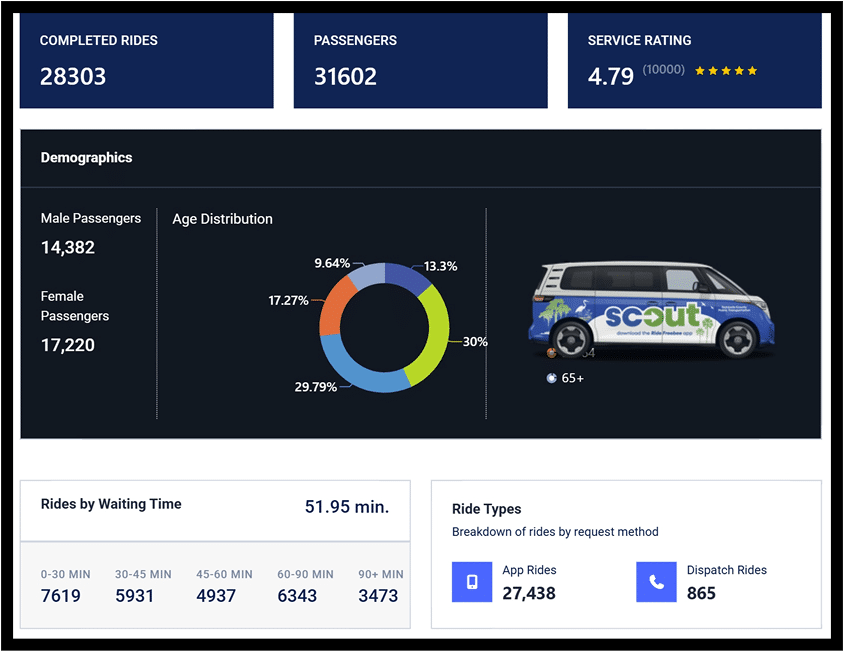
In July, the county had just shy of 3,500 unique passengers, who took more than 32,600 trips total. Scout had an average wait time of 42 minutes, which is less than in previous months, but still above the average 30-minute wait time required in the contract.
But even with the wait times down, there were still 1,850 trips that had wait times over 90 minutes.
And the start of the 2026-27 school year has increased the wait times as well. The rider load on the system in August increased to 3,655 unique riders, and 3,743 trips – or 12 percent – took more than 90 minutes. The average wait time increased to more than 50 minutes.
“The start of the school year also brought an approximately 5% increase in traffic congestion,” Patton said. “Together, increased demand and congestion contributed to longer wait times, with the average increasing from 43.2 minutes in May to 52.3 minutes in August.”
Why the county ditched buses
So why did Seminole County get rid of most LYNX buses?
Seminole County commissioners have complained for years that LYNX buses cost the county too much money and weren’t being used enough to justify the cost. The county also said data on how many unique visitors were using the LYNX bus service wasn’t readily available.
Swenson said Scout is saving Seminole County money in its first year.
“The value of that (LYNX bus) service today would have gone from the $17 million to $20.7 million. That gives us a net savings of $1.7 million dollars,” Swenson said. “We knew going into it that the first few years, until [federal and state funding] got in place, it could be an upside down cost. We could be paying more. This is a massive win from at least my perspective, the fact we’re not upside down, we actually are $1.7 million to the good.”
County commissioners seem happy with the changes.
“We are leading the region in getting people onto Sunrail,” said Seminole County Chairperson Andria Herr. “Congrats to the whole team.”
For Caviness, though, trying to get to work without a bus, he said the county’s decisions aren’t helping him. He’s planning on moving to Orange County, and one of the benefits will be a cheaper commute where he can use the bus again.
“They’re saving them money,” Caviness said about Seminole County’s budget savings. “They’re not saving the people money.”
Abe Aboraya is a Report for America corps member.
Support critical, local news you rely on to stay informed, connected and empowered.
Choose a monthly amount
Hometown Hero
Community Champion
Rooster Society
Custom Amount
Thank you for your support!
Author

Related Articles
Attempted coop: Winter Springs makes first move to allow backyard chickens
Final vote at the end of the month to allow up to 20 backyard chickens in certain areas, but some residents want the city to wait.
Seminole County approval could pave the way for 300+ apartments near Lukas Nursery
Greeneway Preserve still needs a detailed site plan before construction would start, as commissioners warn the area is ‘prone to flooding.’
Watchdogs warn Amendment 3 may cut funding for flood control and drinking water
Florida’s water management districts depend on property taxes to fund about a third of their work preventing floods, securing the drinking water supply and conserving wetlands.