
Oviedo transportation plan approved, moved to public hearings
The newly proposed Oviedo transportation plan balances walkability, cycle-ability, mass transit and forms of transit that may not have even been invented yet.
Key updates to Oviedo’s 2045 mobility plan, which lays out key projects to enhance and envision the city’s long-range transportation system, are on their way to finalization after approvals from the City Council in its Aug. 19 meeting. And now the Oviedo transportation plan is closer to a reality in which “micromobility” becomes a more significant factor.
The mobility plan, which has been developed based on an increase in travel demand as the city continues to grow, lays out how the city will help people move in and around Oviedo by various modes, such as walking, bicycling, driving and public transit through major infrastructure projects and updates. The approved plans identify the vision and projects necessary for reaching the city’s goal, as well as change how they will be funded.
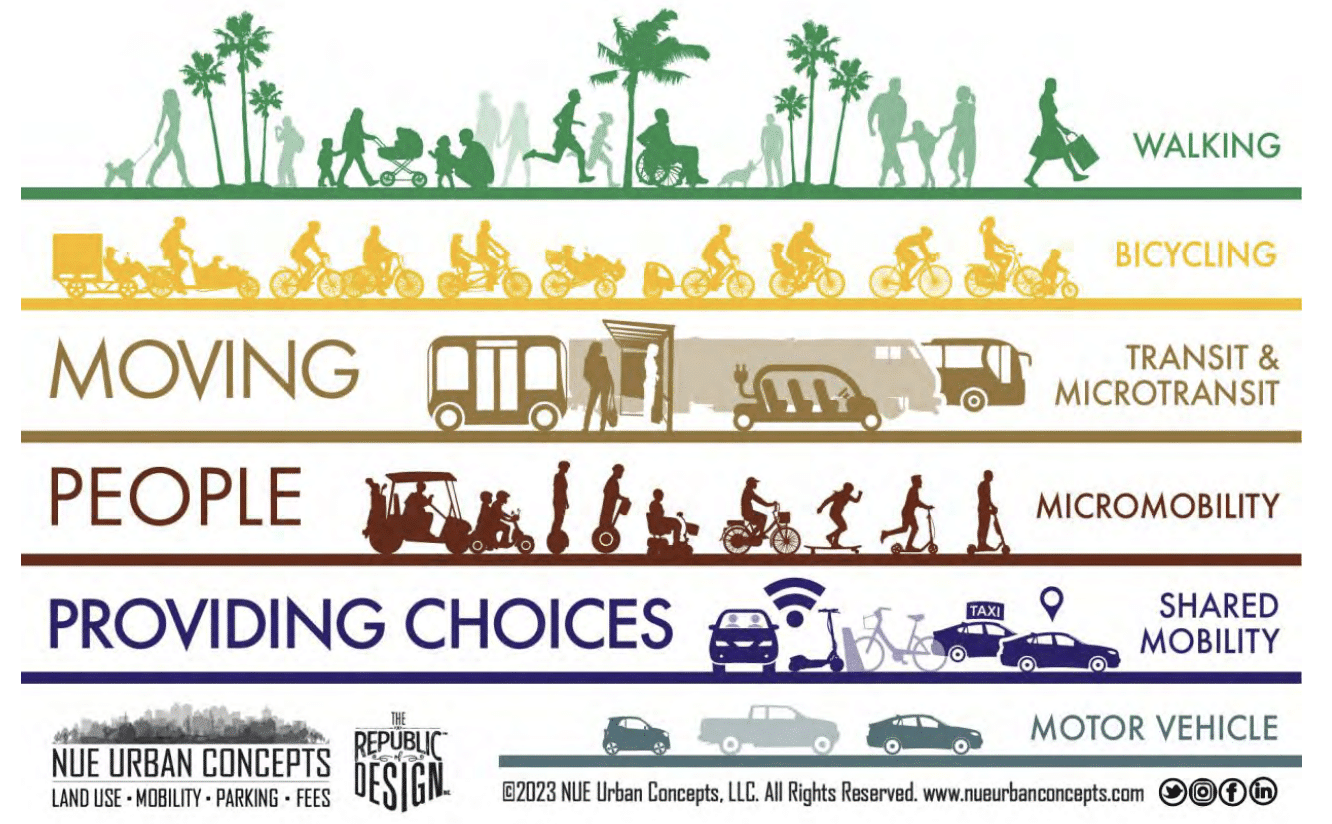
In total, there were three ordinances related to the mobility plan that Council voted to move to public hearings on Sept. 16. Among the issues they address are mobility fees, the land development code and the adoption of the plan.
The city’s stated goal of the mobility plan is to “provide a sustainable multimodal transportation system that aims to: balance pedestrian, motorized and non-motorized vehicular traffic through safe, efficient, aesthetically pleasing, feasible and cost-effective improvements; reduce pollution by encouraging the use of alternative fuels and nonmotorized transportation modes; and preserve the quality of life and unique character of the City’s neighborhoods through traffic calming and other strategies.”
New development and redevelopment throughout the city will be affected by the proposed changes. Mobility fees will replace the current combination of the city’s transportation impact fees assessed to developers and Seminole County’s mobility fee. The change streamlines the fee schedule based on the most recent and local data, according to the analysis done by NueUrban Concepts, the urban planning firm that worked with the city on the plans analysis.
The mobility fees are assessed to new developments, and are not taxes on existing homeowners. They are paid at the time building permits are acquired to help fund the multimodal projects in the mobility plan, according to Jonathan Paul of NueUrban Concepts.
It’s expected that there will be lower mobility fee programs for affordable housing, small retail and mixed-use projects.
The entirety of the Oviedo transportation plan, or “mobility plan,” consists of six individual plans for city improvement (maps via NueUrban Concepts):
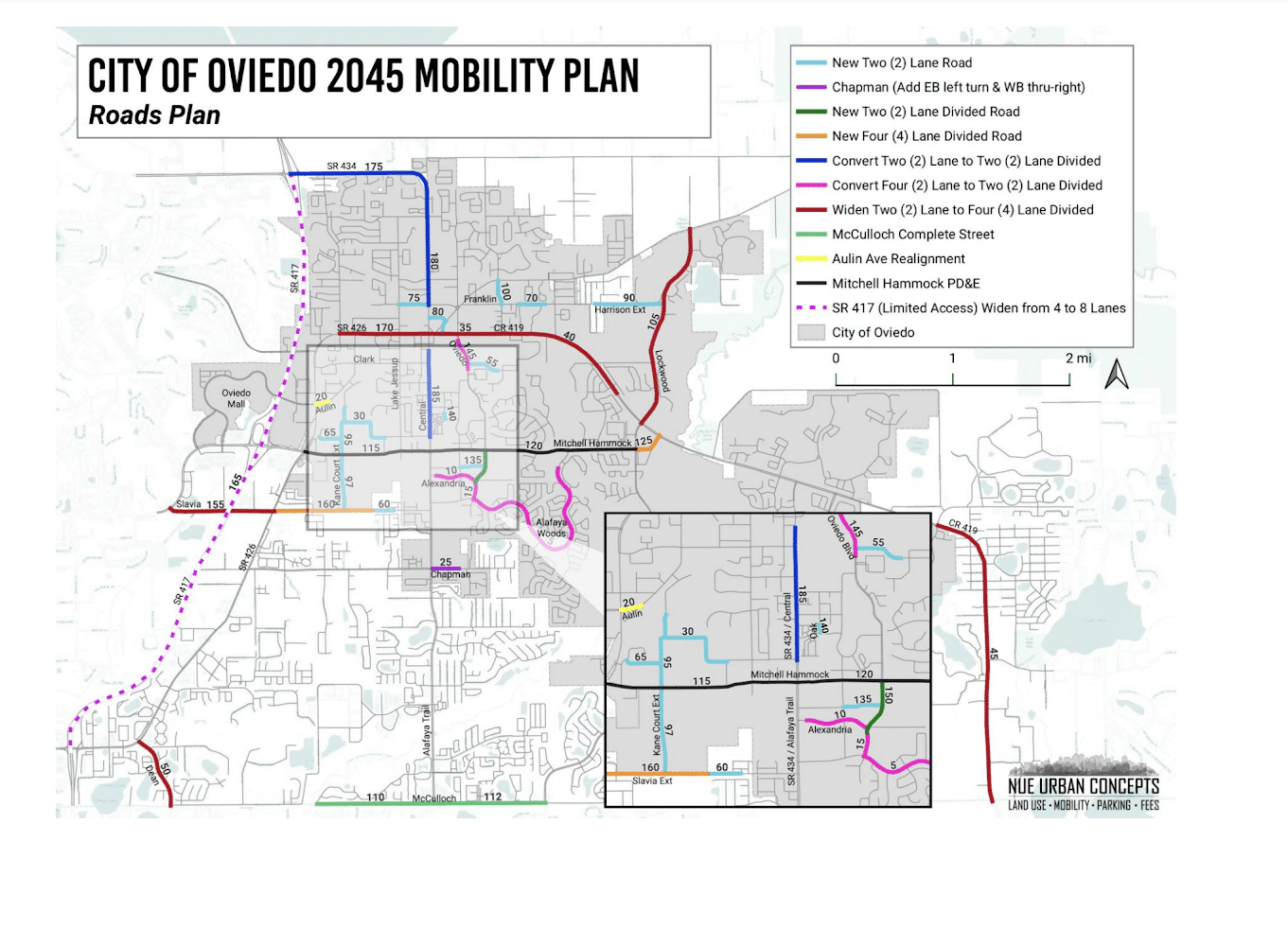
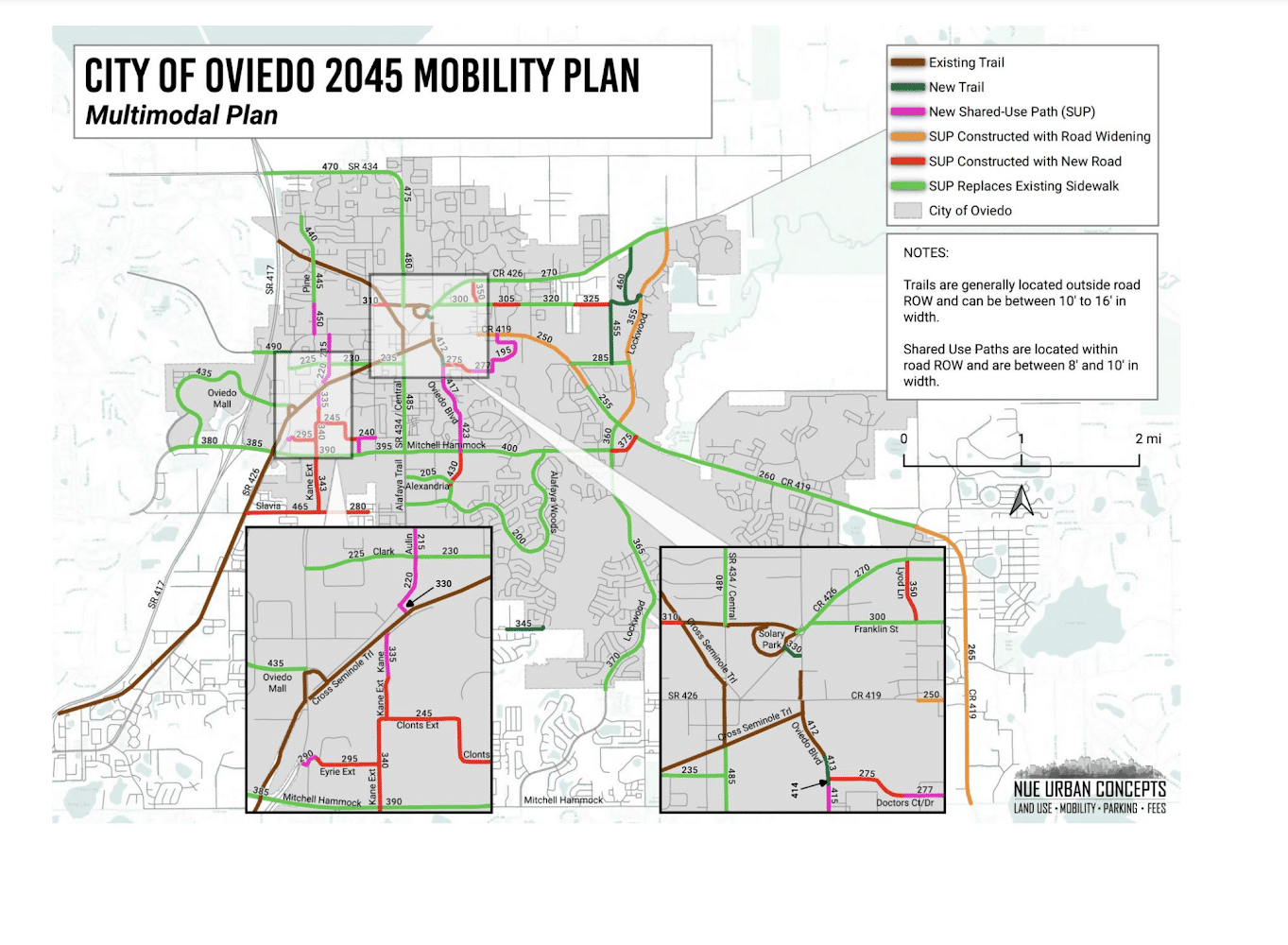
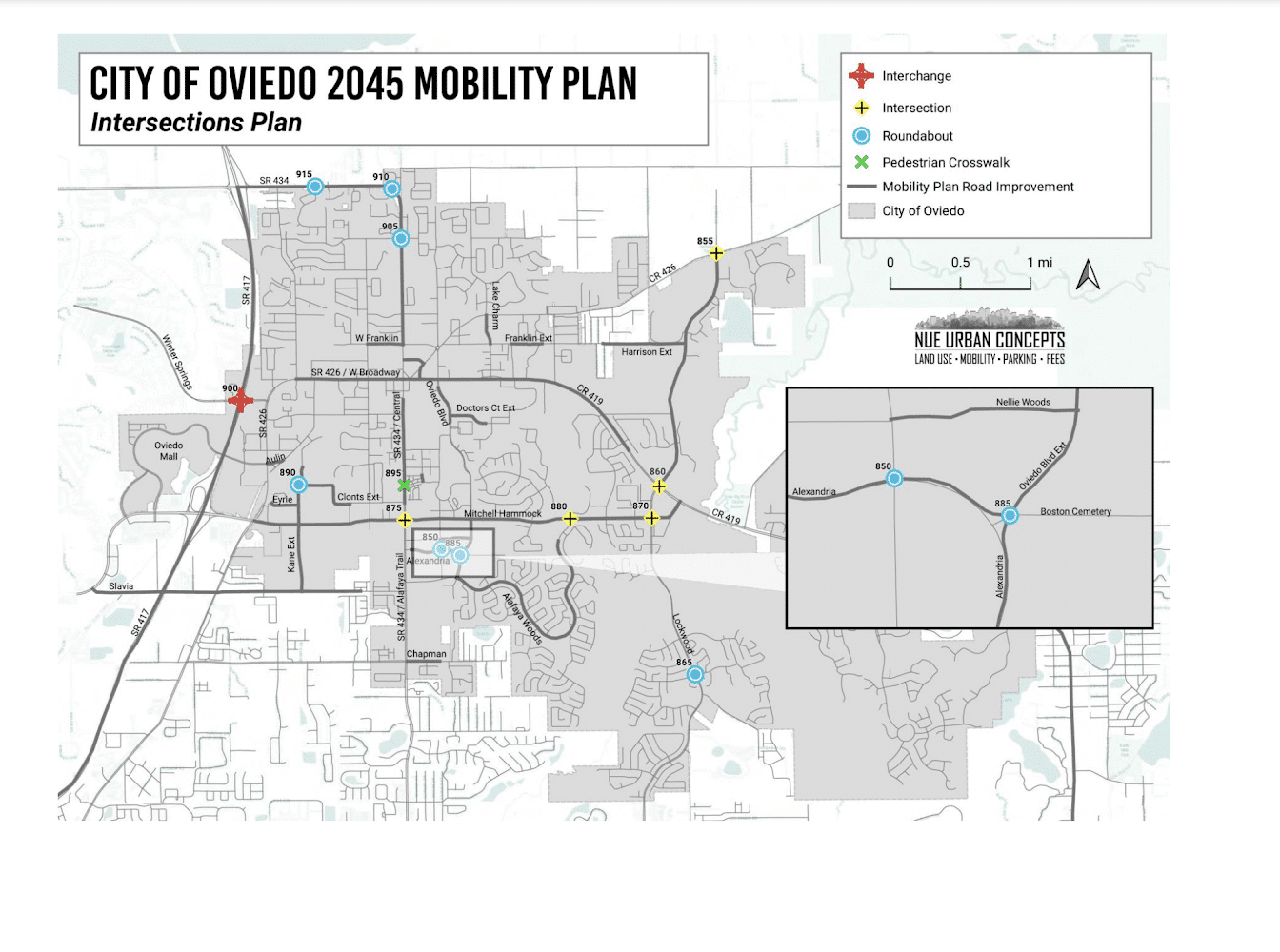
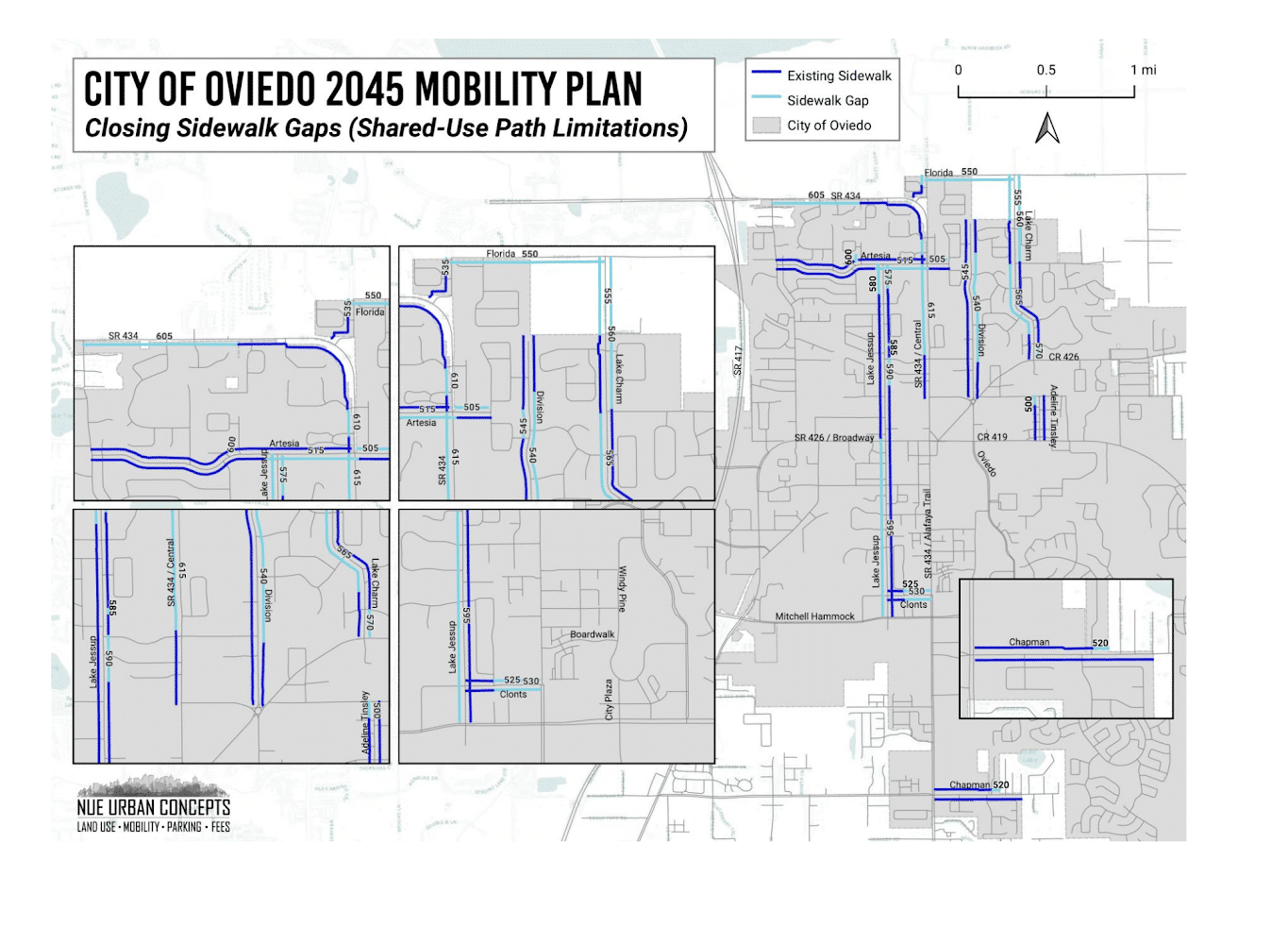
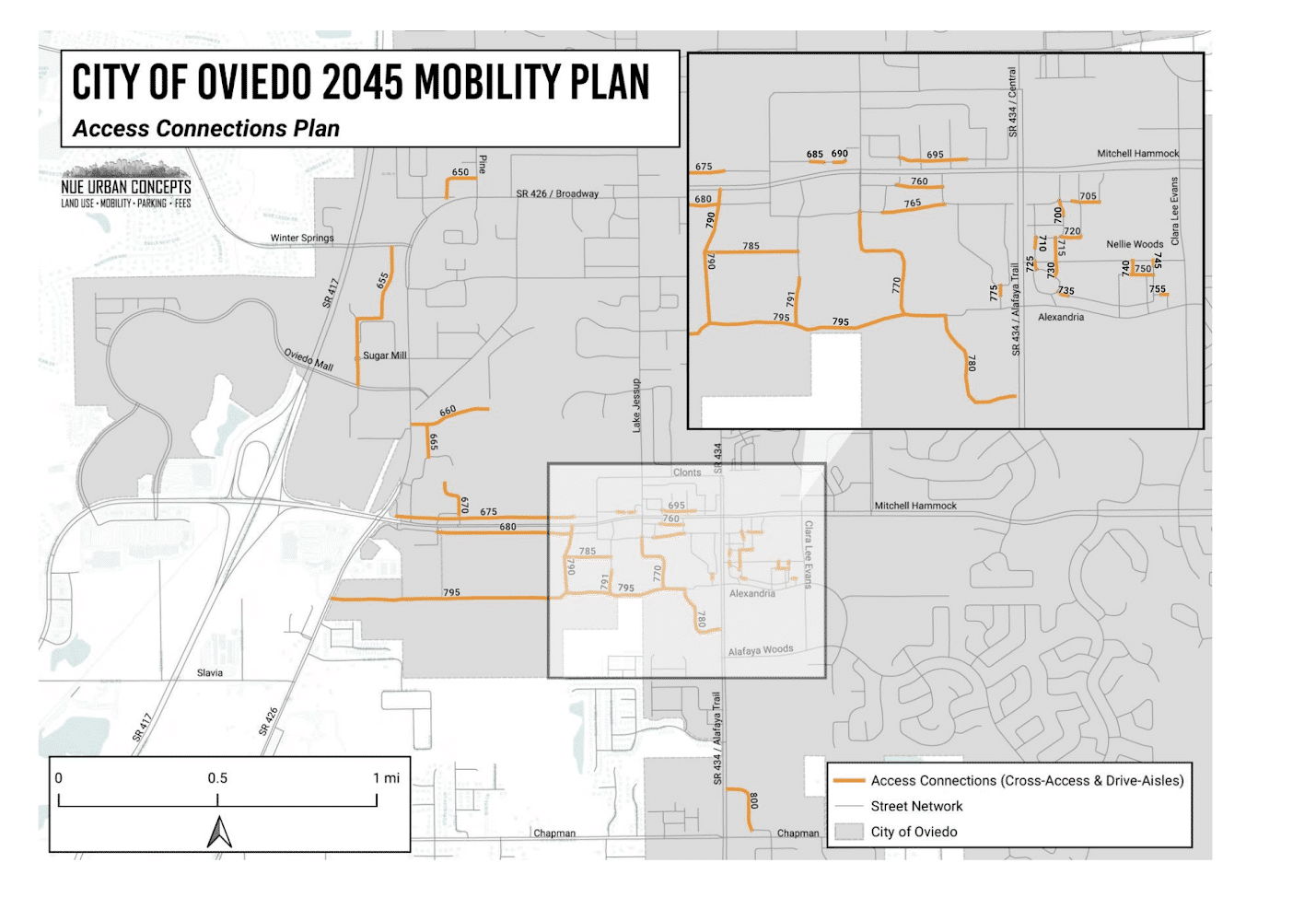
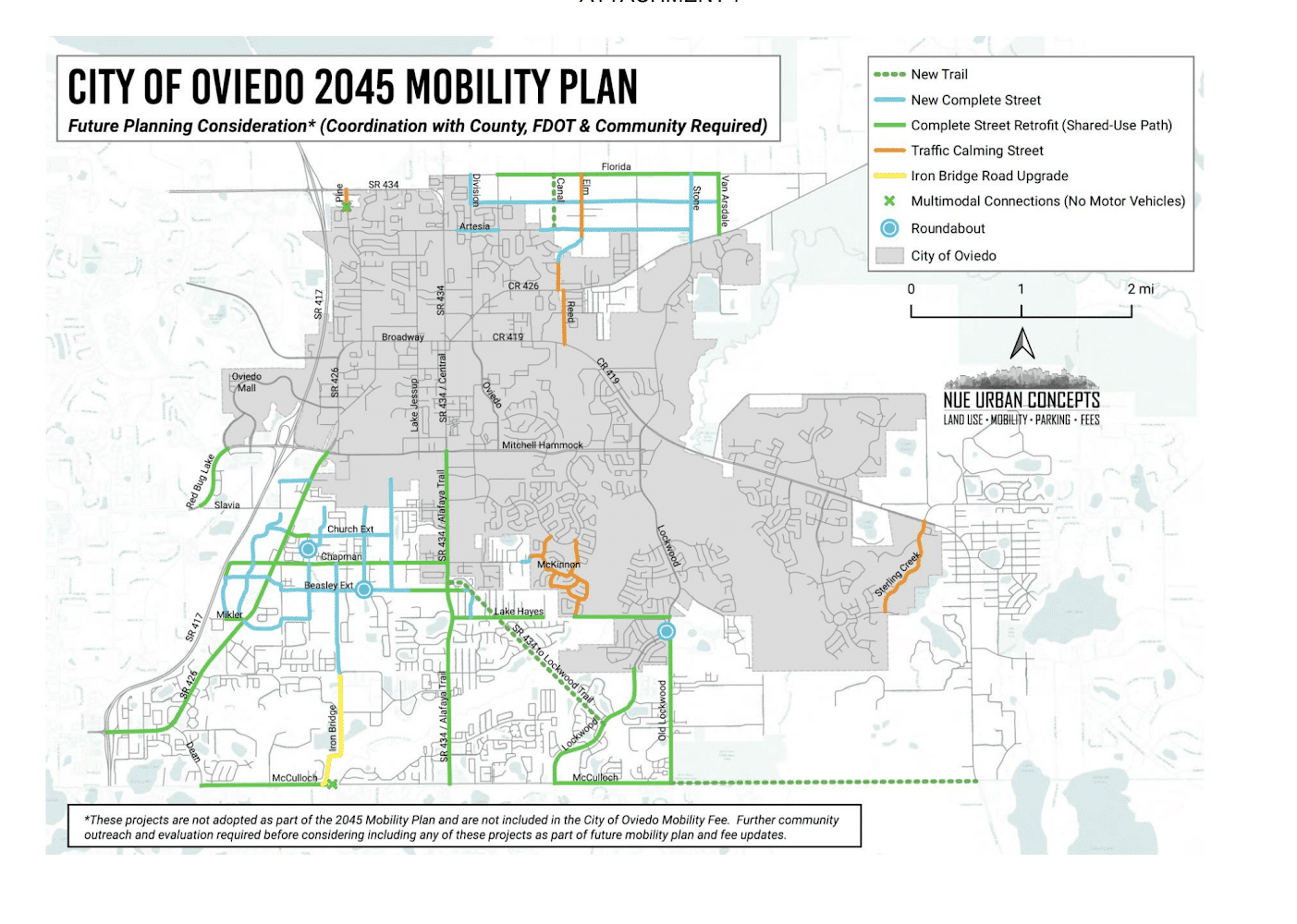
A more detailed list of the projects and the actual proposed mobility fee schedules are available here.
The improvements laid out in the plan are important, as NueUrban Concepts’ analysis found that Oviedo is a hub for the entire county.
”The core of Oviedo, and specifically its downtown area, functions as the downtown of eastern Seminole County,” Paul said. “It is the main draw for the areas to the east of us to the surrounding cities around us.
”It functions in much the same way as a Sanford would, or an Altamonte [Springs] in the western portion of the [county].”
Want to let your elected officials know what you think of this plan? Find contacts for the Oviedo City Council here.
Support critical, local news you rely on to stay informed, connected and empowered.
Choose a monthly amount
Hometown Hero
Community Champion
Rooster Society
Custom Amount
Thank you for your support!
Author

Related Articles
Watch: Congressional candidates Ryan Elijah, Bale Dalton, Chris Dennison differ on affordability solutions
Dalton, Libertarian Chris Dennison do video interviews with Oviedo Community News, talking Amendment 3 and more as Election Day nears.
Winter Springs shuts down talk of dissolving police department
Commissioner Paul Diaz wanted to have a cost comparison discussion of Seminole County taking over the police department. The mayor said that talking about shuttering the police department before the Amendment 3 vote could cause officers to leave.

Florida Department of Education passes law regulating AI
‘I am in complete non-support for it,” a senior at Oviedo High School said about AI in schools. ‘I think it impacts their intelligence.’