
After Clubhouse Deli failures, does Winter Springs code enforcement need an update?
Commissioner Diaz says current Winter Springs code enforcement system creates ‘illusion of oversight,’ has proposal for city manager to update codes
Does Winter Springs need an update to code enforcement after what happened at The Clubhouse Deli in Tuscawilla?
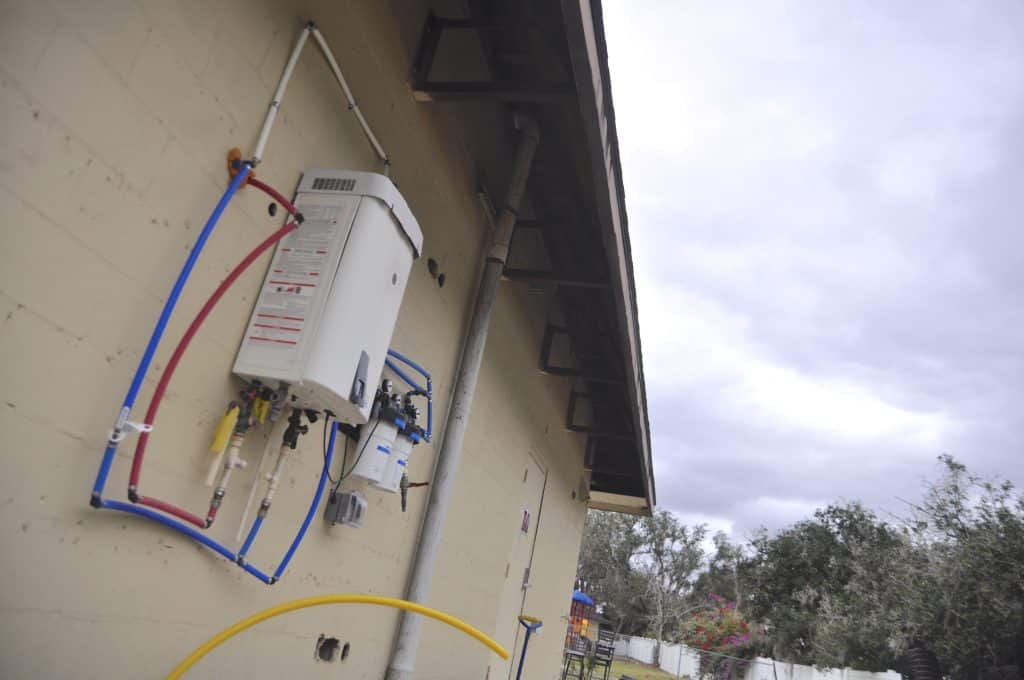
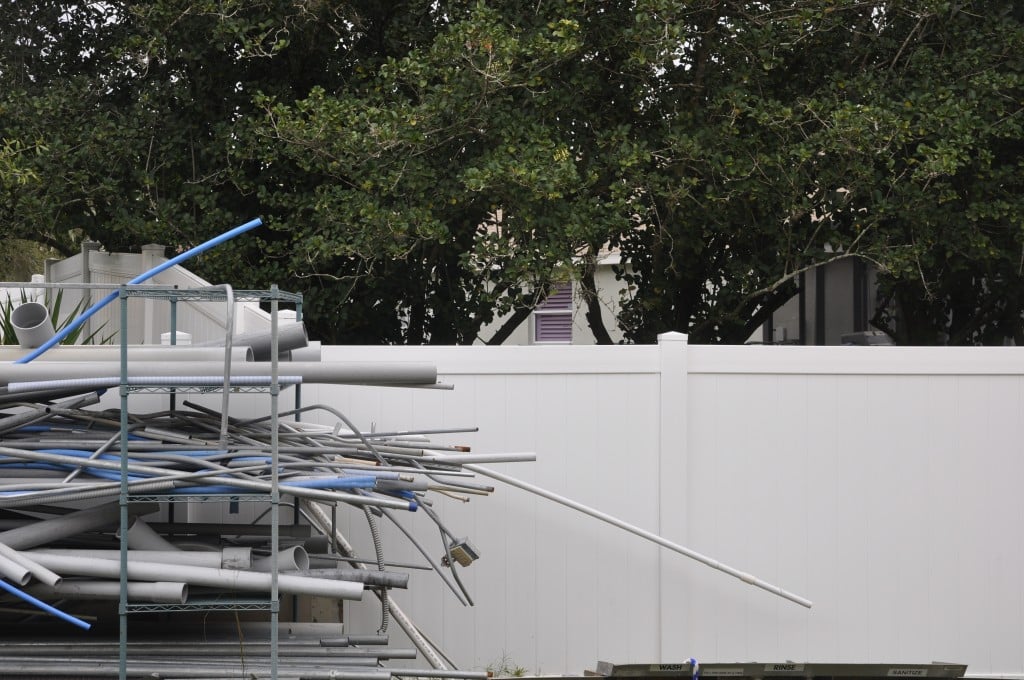
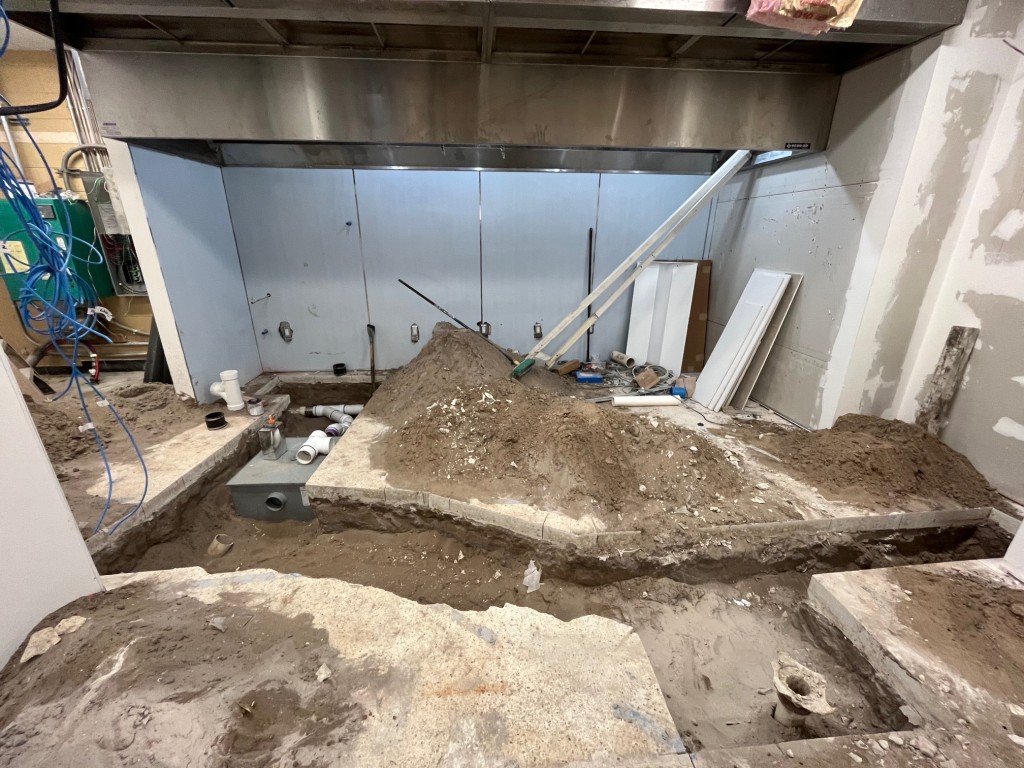
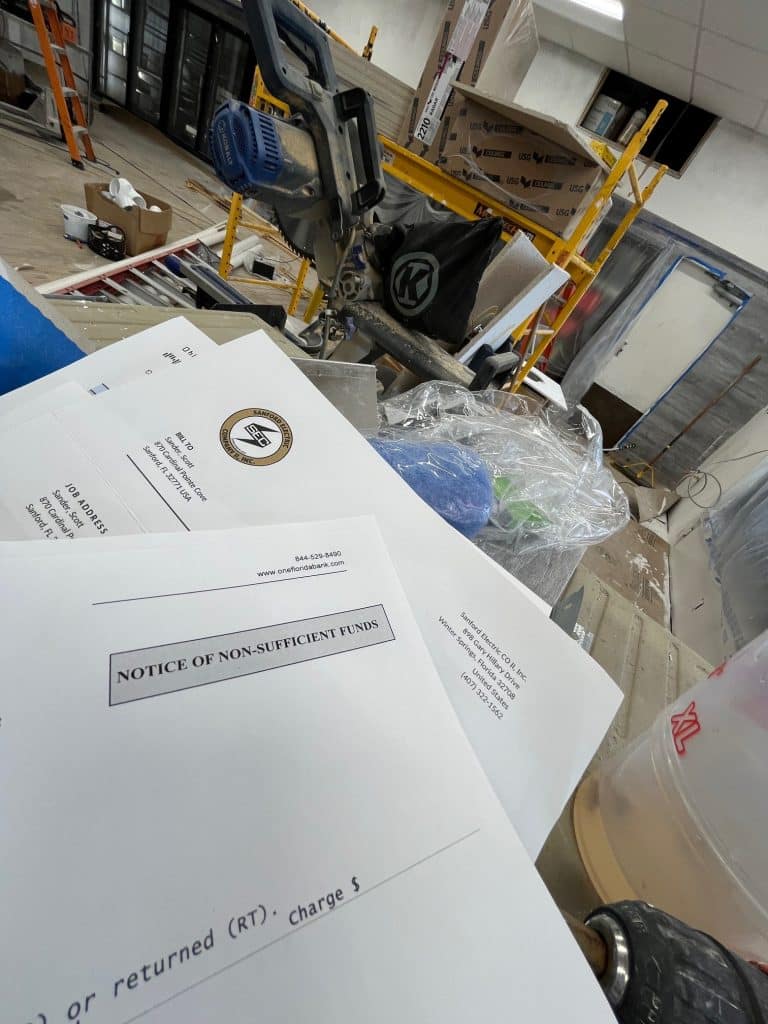
The Clubhouse Deli was a planned restaurant and retail business in the old 7-Eleven building off of Winter Springs Boulevard in Tuscawilla. Winter Springs issued a ‘stop work order’ in April of 2025 – which should have halted construction on the new business – but work continued for most of 2025.
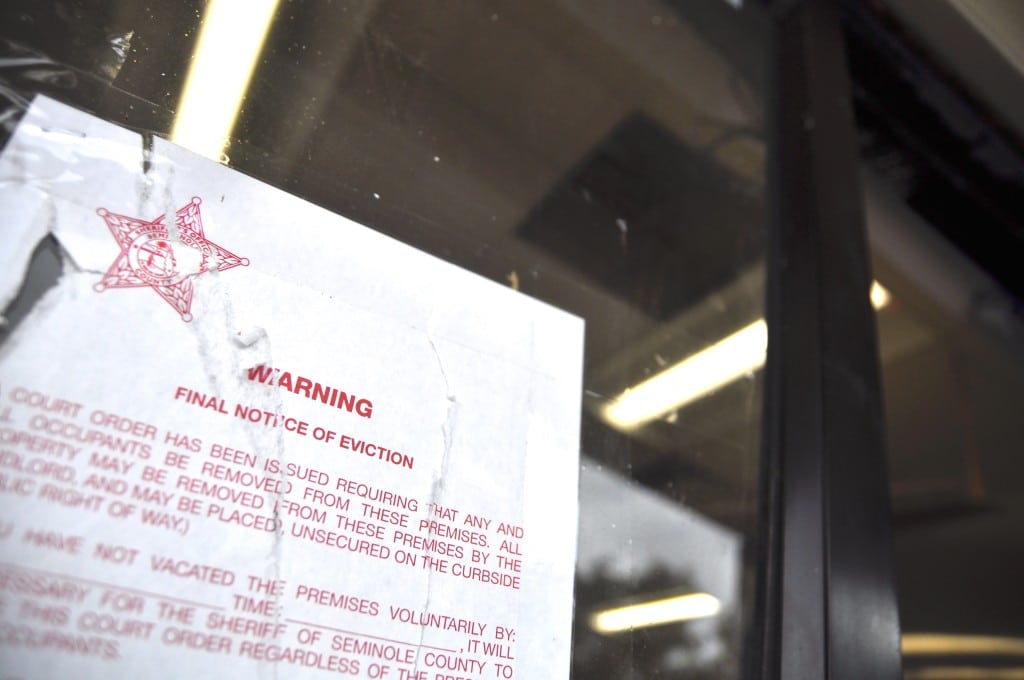
The event raises questions about Winter Springs’ code enforcement. Zaya “Z” Givargidze, who owns the building but not the proposed business, put the blame on the city for lack of enforcement.
“The fault here is Winter Springs and the courts. They let him do all this without a permit,” Givargidze said. “You see him doing work (afterwards)? Cuff him. They let him get away with murder.”
Robin Neilen, the tenant, also blamed the city, saying it took six months to get a permit, which “bled me out” until he was out of cash.
“The city strung me out for six months to get a permit,” Neilen said. “Now I have eight months of rent that wasn’t in my business plan.”
Oviedo Community News reached out to the entire Winter Springs City Commission and Winter Springs Code Enforcement Board (CEB) to see if local lawmakers feel an update is needed. We also reached out to city staff and management to see if they are planning to ask commissioners for any updates to code or enforcement.
Winter Springs City Commissioner Paul Diaz said he’s doing the “legwork” to bring a proposal to the city manager to update how the city enforces its codes. He said he wants to see most code enforcement moved out of the police department’s purview, and make it easier to get basic work approved.
But compliance is still an issue, he said.
“Code enforcement cannot rely solely on voluntary compliance,” Diaz said. “When someone ignores a stop work order, there must be swift, proportional escalation: fines that actually matter, utility cutoffs if safety is at risk, or immediate legal action. The current gap between issuing orders and enforcing them creates the illusion of oversight without the substance.”
Want to contact your elected leaders and weigh in on this topic? Find their contact information here. Have a news tip or opinion to share with OCN? Do that here.
Winter Springs Mayor Kevin McCann said he doesn’t necessarily think Winter Springs needs to update its codes, but the city might need to update its enforcement mechanisms. He said he’s particularly troubled that code enforcement actions impact a property’s owner while a tenant can be the one breaking code.
“I am seeing a troubling trend where property owners clear land or begin major work without permits, possibly knowing the work would not meet code,” McCann said.
When penalties are minimal, it can encourage doing the work first and asking for forgiveness later. – Winter Springs Mayor Kevin McCann
“Any changes would require a public process, City Commission approval, and must comply with state law,” he added.
Art Gallo, CEB member, said in November, 262 code enforcement cases were resolved without having to come to the board for action. That means the system is working.
“We have a great [CEB] process,” Gallo said. “It works, and I offer as evidence the hundreds of cases resolved each month without ever going to the board. Those that do make it to the [CEB] are handled fairly without bias, based on the evidence and the city code.”
Miguel Martin, a member of the CEB, commented as a private citizen. He said there are examples in state law that would allow the city to fine a contractor who is willfully disregarding stop work orders.
“The city should consider an ordinance that gives code enforcement officers the ability to identify violation of (Florida Building Code 115.3) and allow the Code Enforcement Board (CEB) the ability to discern and if necessary, assess penalties to licensed contractors … who willfully disregard notices,” Martin said. “Currently the [Code Enforcement Board] focuses on the property owner, not those contracted to work on it.”
Those full responses are below, edited for clarity and length.
Winter Springs Mayor Kevin McCann
Q: Are you satisfied with the current building codes in Winter Springs?
A: Yes. Winter Springs enforces the Florida Building Code, which provides strong, statewide life safety standards. At the same time, Winter Springs is a special community, and our residents value thoughtful growth and preservation of our character.
Q: Do you think Winter Springs needs to go above and beyond the state minimum building codes?
A: In limited circumstances, yes. While consistency across Florida is important, Winter Springs has intentionally avoided unrestricted development. Any local standards must be lawful, reasonable, and directly tied to protecting safety and community character.
Q: If so, what do you think needs to change? What mechanism would you use to change it?
A: I am less concerned about changing the building code itself and more concerned about enforcement tools. I am seeing a troubling trend where property owners clear land or begin major work without permits, possibly knowing the work would not meet code. When penalties are minimal, it can encourage doing the work first and asking for forgiveness later. Any changes would require a public process, City Commission approval, and must comply with state law.
Q: Are you satisfied with how this specific case was handled from a code enforcement aspect?
A: Code enforcement is focused on compliance and public safety, not private business disputes. Once violations were identified, staff acted within their authority and followed established procedures. Please keep in mind that penalties may hurt the property owner and not the tenant that created the problem. I, for one, am not interested in creating more pain for the property owner in this case, or [making] it harder for a new tenant to succeed.
Q: Are you satisfied with how this case was handled from a building permit process?
A: The permitting process requires that work not begin until permits are issued and that complete and accurate information be provided. In this case, work occurred at times without permits, and there were instances where required information was not provided to obtain those permits. When that happens, the city is obligated to intervene with the limited tools at its disposal to stop the work.
Q: What changes, if any, do you think need to happen in Winter Springs as a result of this case?
A: This case highlights the need to review whether our enforcement penalties are strong enough and applicable to the correct party to deter unpermitted work.
Q: What do you want residents to know about this case?
A: Residents should know that Winter Springs applies its codes fairly and consistently. We do not support cutting corners or unapproved development. Even as state law restricts local authority, we will continue to do everything legally possible to protect our neighborhoods and the character of our city.
When our local businesses succeed, our community succeeds. We want entrepreneurs to choose Winter Springs and to grow here, but that growth must happen responsibly, in a way that honors our city codes, state laws and protects the character of our neighborhoods.
Winter Springs City Commissioner Cade Resnick
Q: Are you satisfied with the current building codes in Winter Springs?
A: We are going through the building codes, and for the most part, the building codes are satisfied by state standards. All of our building codes have to be following state standards.
Q: Do you think Winter Springs needs to go above and beyond the state minimum building codes?
A: That’s a hard question to answer. So if it comes to safety, I think we need to consider what is safe for Winter Springs, differentiated by what is safe for perhaps a different city. So in those situations, yes, I think as long as safety is our consideration … then yes, we should go to that safety standard.
Q: If so, what do you think needs to change? What mechanism would you do to change it?
A: It might be just a timeframe we get things back to applicants. I would like applicants to get responses back from us, depending on the size of the project, between 48 hours and one week.
Q: Are you satisfied with how this specific case was handled, from a code enforcement aspect?
A: I was intimately involved in this. Am I satisfied with how it was processed? Yes, because at each step, the city did what it needed to do; the applicant was the one that was not following through. And so when I said I want us to get back to applicants, we were getting back to the applicant. They just didn’t like the answers.
Q: What changes, if any, do you think need to happen in Winter Springs as a result of this case?
A: I think that is a unique situation. The biggest thing if we’re going to change anything is just the time to get things back to applicants.
Q: What do you want residents to know about this case?
A: The biggest thing I want residents to know about this case is that the city actually did do what it was supposed to do, and it followed up the way it was supposed to.
Winter Springs City Commissioner Paul Diaz
Q: Are you satisfied with the current building codes in Winter Springs?
A: This case illustrates systemic issues that transcend any single property owner or tenant. The codes themselves are adequate — Florida’s statewide standards post-Hurricane Andrew are among the nation’s strongest. My concern is not whether safety standards exist, but whether our administrative processes make compliance unnecessarily difficult for good actors while providing insufficient deterrence for bad actors.
Q: Do you think Winter Springs needs to go above and beyond the state minimum building codes?
A: No. Florida’s building code already exceeds most national standards. What we need is better administration of existing codes, not more restrictive local amendments. The goal should be making it easy to comply and hard to fail accidentally — not adding layers that increase friction without improving safety outcomes.
Q: If so, what do you think needs to change? What mechanism would you do to change it?
A: The real reform opportunity is in our permitting process, not our code standards. We should implement:
Pre-Approved “Off-the-Rack” Permit Plans
- For common, low-risk projects (wheelchair ramps, small decks, standard tenant improvements), publish standardized plans that meet code and can be approved immediately
- This reduces staff time reviewing repetitive submissions and eliminates the “six-month wait” problem for straightforward work
- Inspections still occur—but applicants know upfront exactly what will pass
Clear “How to Comply” Guidance
- Free online access to all applicable codes (not paywalled)
- Published checklists showing what triggers permit requirements
- Plain-language guides reducing reliance on institutional memory or paid consultants
This protects legitimate operators while making it harder for bad actors to claim ignorance.
More fundamentally: Code Enforcement Should Not Be Under the Police Department
This is the structural reform that would prevent situations like the 7-Eleven case from escalating the way they did.
Code compliance for sheds, ramps, paint, unpermitted construction, and administrative violations:
- Does not require armed authority
- Does not require criminal posture
- Does not improve outcomes through intimidation
It’s intimidating enough to have the government knocking on your door. Adding a police badge and uniform to routine code compliance unnecessarily criminalizes civil administrative matters and creates an adversarial dynamic from first contact.
Police involvement should be limited to:
- Immediate safety threats (exposed electrical, structural collapse risk)
- Criminal activity (fraud, willful destruction)
- Obstruction or refusal to allow inspection after proper notice
Reframe Code Enforcement as Code Assistance
The first contact should be education and guidance, not citation and threat. Staff should be measured on the compliance achieved, not the tickets issued. This creates better outcomes:
- Higher voluntary compliance
- Fewer disputes
- Less staff time per case
- Lower legal and political risk
Enforcement authority remains — but it becomes the backstop, not the front door. This is an appropriate use of government power: help people comply first, penalize only those who refuse.
This isn’t anti-law enforcement. It’s the proper deployment of authority. Firefighters don’t issue building permits. Building inspectors don’t respond to armed robberies. Code compliance officers shouldn’t carry police credentials for paperwork violations.
Q: Are you satisfied with how this specific case was handled, from a code enforcement aspect?
A: No. The city issued a Stop Work Order on April 16, 2025, and work continued for months with no meaningful consequence until Seminole County Fire Marshal intervened in October. When a Code Enforcement Board member asks, “What’s the purpose of the stop work order if there’s no penalty for violating it?” — that’s a legitimate question that deserves a policy answer.
Code enforcement cannot rely solely on voluntary compliance. When someone ignores a stop work order, there must be swift, proportional escalation: fines that actually matter, utility cutoffs if safety is at risk, or immediate legal action. The current gap between issuing orders and enforcing them creates the illusion of oversight without the substance.
Q: Are you satisfied with how this case was handled from a building permit process?
A: Also, no — but for different reasons. If Mr. Neilen’s account is accurate, that he waited six months for permit approval on what should have been a straightforward tenant improvement, that’s unacceptable. If the city’s account is accurate, that he was doing unpermitted work and attempting to circumvent safety requirements, that’s also unacceptable.
What’s clear is this: Both narratives point to the same underlying problem — our permitting system lacks the transparency and predictability that would have prevented this situation entirely.
With standardized pre-approved plans for common commercial buildouts, Neilen would have known immediately whether his project fit the template or required custom review. With clear published guidance on ADA requirements, mechanical permits, and fire suppression systems, there would be no dispute about “what the city told me.”
Q: What changes, if any, do you think need to happen in Winter Springs as a result of this case?
A: Short-term (Administrative):
- Codify clear escalation protocols when stop work orders are violated (fines, utility cutoffs, immediate injunctive relief)
- Improve first-contact transparency in the permitting process—every applicant should leave with a written checklist of requirements, not verbal guidance that can be disputed later
- Remove code enforcement from the police department organizational structure
Medium-term (Operational):
- Develop pre-approved plan sets for the 20 most common permit applications
- Publish “Fast Track” vs. “Custom Review” pathways so applicants know upfront which lane they’re in
- Implement compliance-first workflow: education and assistance before citation
- Create a civilian Code Assistance function separate from law enforcement
Long-term (Policy/Cultural):
- Recognize that government power should be proportional to the problem
- Civil administrative compliance doesn’t require police authority
- Make it easy to comply, expensive to refuse — not expensive to try
Q: What do you want residents to know about this case?
A: This situation had multiple points of failure:
- A tenant with a documented history of financial disputes, undertaking work he may not have been equipped to complete
- A landlord unable to protect his property despite clear warning signs
- A permitting process that either moved too slowly (if Neilen’s account is true) or was circumvented entirely (if the city’s account is true)
- A code enforcement system that issued orders but couldn’t enforce them
The lesson is not “government failed,” or “the property owner failed,” or “the tenant failed.” The lesson is that our systems must be designed to handle exactly this kind of situation — and right now, they aren’t.
Good government makes it easy to do the right thing and expensive to do the wrong thing. We currently make it expensive to do both, which benefits no one except those willing to ignore the rules entirely. – Winter Springs Commissioner Paul Diaz
As a commissioner who believes in limited but effective government, I believe we can maintain rigorous safety standards while treating citizens as adults who want to comply, not criminals who need intimidation. That starts with separating police power from administrative compliance and making the rules clear, accessible, and enforceable.
That’s what needs to change.
Miguel Antonio Martín, Code Enforcement Board member
Note: My comments are mine alone, I do not speak for the [Code Enforcement Board] nor am I offering bias or casting opinion on case materials as this case remains open and tabled per the last board meeting and can be brought back before the board at our next scheduled meeting. Per due process concerns and Sunshine Laws I will not comment on the particular case.
Q: Are you satisfied with the current building codes in Winter Springs?
A: The building codes enforced by the City of Winter Springs are standard statewide codes enforced regardless of jurisdiction. The Florida Building Code (FBC) Suite (eighth edition) are currently based upon nationally recognized International Code Council (ICC) Building Codes adopted by state statute with Florida specific amendments. These model codes are scrutinized by organizations that consist of Building Owners, Designers, Contractors, and Building Officials. The work performed by the ICC and NFPA in the development of the codes is done in a manner that I feel is inclusive, logical and has safety of occupancy held at the highest concern. I currently participate in both groups as a member at large offering my experience and expertise where appropriate. These model codes – whether written by ICC or NFPA – are accepted in all 50 states (albeit as different editions and with local amendments).
Q: Do you think Winter Springs needs to go above and beyond the state minimum building codes?
A: The city already has ordinances in effect that provide additional requirements to the properties in city limits. Namely the IPMC, or international property maintenance code. The IPMC is in the ICC family of model codes which stated above are nationally recognized. The combination of the Florida Building Code and the IPMC do not impose undue hardship on residents or businesses that routinely maintain their property in a safe manner and condition.
Q: If so, what do you think needs to change? What mechanism would you do to change it?
A: If alternatives are available for consideration any mechanism for change would be that of a city ordinance voted and approved by the city commission. I do feel though that any change would need to come from a model code organization to be fair and have legal basis for the city to adopt it. An arbitrary rule or ordinance could easily be struck down if there was not an accepted model [on] which it is based. Any city-specific ordinance would need to be justifiable with city specific needs.
Q: Are you satisfied with how this specific case was handled, from a code enforcement aspect?
A: I cannot speak to the specific case.
Q: Are you satisfied with how this case was handled from a building permit process?
A: I cannot speak to the specific case, although the issues here and in other cases have been that the proper permits were not applied for prior to the start of work. I have been on record prior as stating this is not (in my opinion) a scenario of the city imposing overreach to collect fees. This is about public safety and the welfare of occupants of structures. People can be seriously harmed if something is not built in a manner conforming to code or built without oversight. A second pair of eyes (in this case a building inspector) provides the opportunity to ensure things are done correctly.
Q: What changes, if any, do you think need to happen in Winter Springs as a result of this case?
A: The city needs to address Enforcement of FBC 115.3 “Unlawful Continuance – Any person who shall continue any work after having been served with a stop work order, except such work as that person is directed to perform to remove a violation or unsafe condition, shall be subject to penalties as prescribed by law.” State statute 489.127(5)(f) has prescribed penalties for licensed contractors continuing in willful disregard to stop work notices: “If the enforcement or licensing board or designated special magistrate finds that a violation exists, the enforcement or licensing board or designated special magistrate may order the violator to pay a civil penalty of not less than the amount set forth on the citation but not more than $2,500 per day for each violation. In determining the amount of the penalty, the enforcement or licensing board or designated special magistrate shall consider the following factors:
1. The gravity of the violation.
2. Any actions taken by the violator to correct the violation.
3. Any previous violations committed by the violator.
The city should consider an ordinance that gives code enforcement officers the ability to identify violation of FBC 115.3 and allow the Code Enforcement Board (CEB) the ability to discern and if necessary, assess penalties to licensed contractors under authority of SS 489.127(5)(f) who willfully disregard notices. Currently the CEB focuses on the property owner, not those contracted to work on it.
Q: What do you want residents to know about this case?
A: I cannot speak to the specific case. I can say the city and, by extension, the [Code Enforcement Board] is not out to impede the use, development, or occupancy of any property. We must, as a community, though, ensure that we are safe when using or entering any building or structure. Additionally, as a community, we must impose the same requirements on all, there is no bias or selective enforcement.
I live relatively close to the location in question, I don’t want to see it sit empty or unused, I also don’t want something to be stuck in the condition where it looks like a construction site and not an extension of the neighborhood. As I do in my professional capacities, I expect others in the Construction Industry to act as professionals and advise their clients of the legal constraints and obligations for projects before they begin work. All Licensed Architects, Engineers and Contractors have Moral obligations not only to their clients, we must act in the care and benefit of Health Safety and Welfare. To ignore our moral obligations erodes trust in the community and degrades our collective profession.
Again, my comments are mine alone, I do not speak for the Code Enforcement Board nor am I offering bias or casting opinion on (the) case at hand. I am speaking as a Winter Springs Resident.
Art Gallo, Code Enforcement Board member
I can only speak for myself in this matter. Frankly, I have given much thought to responding to your email request, but decided to at least briefly address this from my perspective as a member of the City’s Code Enforcement Board (CEB). It is important to me that you know the facts. This information is also available to the public.
This case was presented to the [Code Enforcement Board] on July 22 2025. The case itself began on April 16, 2025 with the official notice of code violation being sent to the respondents. This is part of the normal [Code Enforcement Board] process, which allows every respondent sufficient time to address the issues presented.
When this case came up as a part of our published [Code Enforcement Board] Agenda, the respondents chose not to attend and were not present. Unfortunately, this then does not provide the [Code Enforcement Board] with an opportunity to hear the case from the respondent’s perspective, or to ask questions of the respondents, or even to find out if there might be extenuating circumstances relevant to the case. Therefore, the [Code Enforcement Board] has to do its best to understand the case from the evidence presented.
The [Code Enforcement Board] is only interested in bringing the cases brought before it into compliance. That is our sole purpose, and we work very hard to be fair, and to understand the cases before us as best that we can based on the evidence presented to us. All of our [Code Enforcement Board] members take this job very seriously. To perform our job to the best of our ability takes work, and this especially takes our personal time in advance of every [Code Enforcement Board] meeting to read and understand all of the evidence. Frankly, I am very proud of the work and fairness of our [Code Enforcement Board] members, and especially for the hard work and dedication of our City’s Code Compliance Officers. They have a tough job which they handle fairly, professionally without bias, and with much aplomb.
If you review this particular case, you will find that the [Code Enforcement Board] determined that the respondents were in violation of the City Code, (FBC 105.1 – Permits Required), and that the [Code Enforcement Board] ruled unanimously (5-0) on the permit violation, based on the evidence presented. …I can only speculate that had the respondent been present to address the [Code Enforcement Board], or satisfactorily answered the Permitting Department’s questions, or provided the documents requested, or even read the applicable City Code in advance (the complete listing of all City Codes is available to the Public on-line, within the City’s website), that completing any one, or all of those things might have resulted in a better outcome for the respondent.
The [Code Enforcement Board] can only address City Code violations based on evidence presented by our Code Compliance Officers. We are asked to make rulings based on the City Code so that we can bring cases into compliance. That is all.
You should also know that most code compliance cases never make it to the [Code Enforcement Board]. For example, in November 2025 there were 262 Code Enforcement Cases and none of them were ever presented to the [Code Enforcement Board] . This means that our Code Enforcement Department is doing all of the work to bring cases into compliance without ever having to go before the [Code Enforcement Board]. This is very typical, and truly demonstrates the dedication and hard work of our Code Compliance Officers to team with the Public to bring cases into compliance without ever having to go to the [Code Enforcement Board]. This is a very good thing, and is perhaps not well known or even appreciated.
We have a great [Code Enforcement Board] Process! It works, and I offer as evidence the hundreds of cases resolved each month without ever going to the board. Those that do make it to the [Code Enforcement Board] are handled fairly without bias, based on the evidence and the City Code as I have stated above.
Support critical, local news you rely on to stay informed, connected and empowered.
Choose a monthly amount
Hometown Hero
Community Champion
Rooster Society
Custom Amount
Thank you for your support!
Author

Related Articles

Attempted coop: Winter Springs makes first move to allow backyard chickens
Final vote at the end of the month to allow up to 20 backyard chickens in certain areas, but some residents want the city to wait.
Seminole County approval could pave the way for 300+ apartments near Lukas Nursery
Greeneway Preserve still needs a detailed site plan before construction would start, as commissioners warn the area is ‘prone to flooding.’

Watchdogs warn Amendment 3 may cut funding for flood control and drinking water
Florida’s water management districts depend on property taxes to fund about a third of their work preventing floods, securing the drinking water supply and conserving wetlands.