
Winter Springs approves eminent domain for 10 acres of old golf course
The city says it needs the land to expand its wastewater treatment site
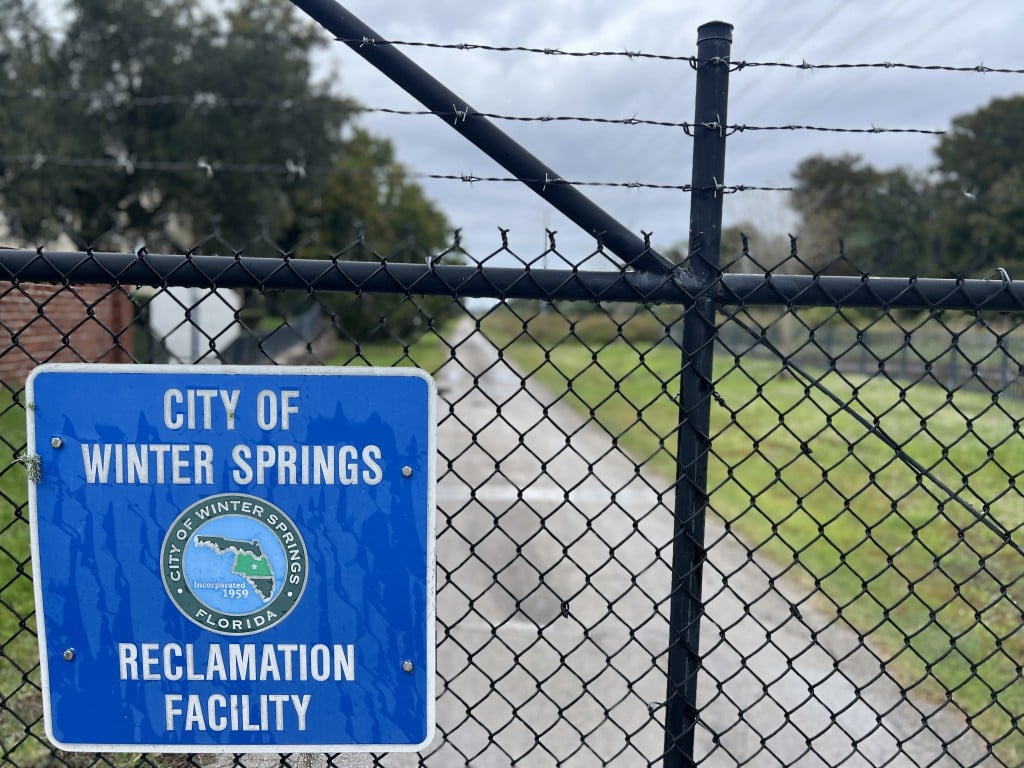
Winter Springs voted 3-2 to force a landowner to sell 10 acres of land for a new wastewater treatment site on the east side of town.
The 10-acre parcel is part of a 133-acre site, formerly the Winter Springs Golf Club. The club shut down two decades ago, but the city has a conservation easement on the site, which prevents development unless three commissioners vote to remove the conservation easement.
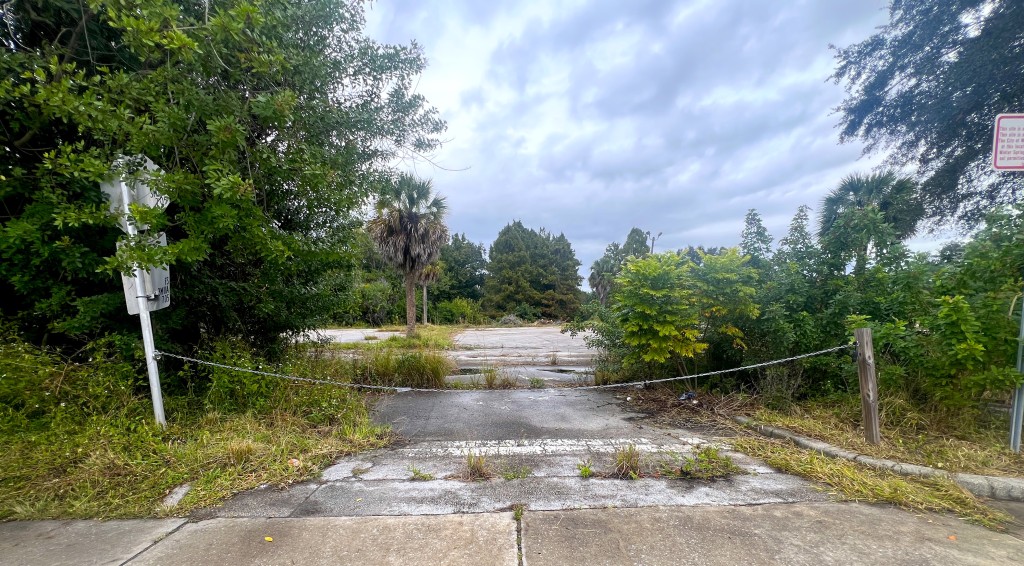
The city has for years wanted to buy the 10 acres for the wastewater plant. The legal process to take it is called eminent domain, where a government takes private land for a public purpose. The government must pay the fair market value for the land and attorney’s fees.
The item was approved 3-2, with commissioners Mark Caruso and Paul Diaz voting against it. Both Diaz and Caruso wanted the city to wait until an appraisal was done on the property.
“We don’t know what we’re moving forward on, and then we’re being told, ‘Hurry up and vote,’ because if not, you can’t even do it,” Diaz said. “Take a deep breath. What’s this going to cost us? You’re asking me to vote on something. I have no idea [what it’s] going to cost us.”
City staff wanted permission to get an appraisal, make a final offer and then file a lawsuit if it’s rejected – which staff said is the typical process. Waiting to get an appraisal and then have the Winter Springs City Commission approve it would mean missing deadlines for the project.
In particular, the city would miss the application window to apply for $20 million in low-interest state loans known as State Revolving Fund loans. That would then put the city behind another year to get the plant designed and built.
Director of Public Works and Utilities Clete Saunier said the city spent months negotiating with the landowner to try to avoid eminent domain. But the owner wanted to negotiate for other items.
“I wish we had a crystal ball six, nine months ago when we were doing all this work,” Saunier said. “I apologize that you’re being asked and pressed on this. I think that, based on what I’m seeing, you’re not going to get sticker shock from the end result of this. If anything, it’ll be better than what we were actually trying to negotiate with the landowner before we came to you today.”
Scott Richards, an infrastructure design engineer with Carollo Engineers, told commissioners acquiring the 10 acres of land would give the city the lowest construction costs at $66 million, as well as the fastest construction timeline of 29 months.
It would also allow the construction of the new plant to happen while the old plant operates, so there would be fewer disruptions and fewer chances for failure.
“If we kind of lag a year, that can have a domino effect on construction,” Richards said. “And certainly, as you know, the more we wait, the cost numbers keep increasing with inflation.”
Arman Rahbarian, the owner of the property, did not respond to a phone call and text message seeking comment. Previously he said the issue was being handled by an attorney.
Officials previously said the city offered around $4 million for the land, and Rahbarian wanted over $10 million.
“We do have numbers from what we’ve previously offered, and he’s declined, and what he has countered with,” City Commissioner Sarah Baker said. “But with a conservation easement on it, we know one thing: it’s going to be significantly less than what he wants to sell it to us for.”
Separately, Winter Springs Mayor Kevin McCann is also asking the city’s Charter Review Committee to require a supermajority to remove any conservation easements.
Golf course predates the name Winter Springs
The Winter Springs Golf Course started in the 1970s, back when Winter Springs was the Village of North Orlando.
Jason Byrne, the president of the Longwood Historical Society, said the golf club was founded in 1971 and opened in 1973 by Australian professional golfer Bruce Devlin. It was originally called Sheoah Golf Course and Country Club.
In 1981 it was renamed “Big Cypress,” and then “Winter Springs Golf Club,” according to Orlando Sentinel archives.
“The course was in financial trouble time and time again,” Byrne wrote in an email. “It only took two years for its first foreclosure in 1975. It was sold several times. That in itself is a little confusing because the Tuskawilla course was originally called “Winter Springs” in the 1970s.
The former golf course has been the rumored subject of development over the years. In 2023, the full 133-acre former Winter Springs Golf Course site was considered for a 492-unit housing development.
Former Winter Springs Mayor Paul Partyka had previously spoke in favor of the city lifting the conservation easement to allow a development in 2023. He said the city should keep trying to negotiate now so it doesn’t have to go to court.
Partyka said at one point, he tried to see if the residents of The Highlands would be interested in buying the golf course land to protect it as a park or open land and assessing themselves to pay for it.
“At the end of it, they didn’t have enough people interested to do that, and it would it would have been something along the lines of maybe a $200 or $300 assessment for whatever number of years they were going to do that,” Partyka said.
One downside to the proposal is the environmental impact of losing more than six acres of wetlands. Residents and commissioners talked about flooding concerns on the site. Shelly McLaughlin is a resident of the Highlands neighborhood and said that her home has flooded twice, most recently because of Hurricane Ian. She said that while a lot of people say that these floods from hurricanes are anomalies, the city’s standards are only required to make sure the runoff can handle a 25-year, 24-hour event.
“Every new development, especially development that takes over wetlands, is adding to the problem,” McLaughlin said. “There’s no way it can’t. Because they’re not building for 100- or 500-year storms, and they can’t promise another one won’t happen.”
McLaughlin said she doesn’t know what a possible solution to the issue could be, but that the city needs to go back to the drawing board and think outside the box.
“The flooding needs to be a priority, and I don’t ever hear it be a priority,” she said.
Abe Aboraya is a Report for America corps member.
Support critical, local news you rely on to stay informed, connected and empowered.
Choose a monthly amount
Hometown Hero
Community Champion
Rooster Society
Custom Amount
Thank you for your support!
Author

Related Articles
SCPS approves its first public K-8 magnet school
Goldsboro Elementary School, an aerospace magnet part of the Seminole County Public Schools system, to add sixth grade by next school year.

Operation ‘Dark Shell’: Oviedo American Legion to break ground on expansion – without enough money to finish
Seminole County’s only dry American Legion post looks to expand services, checking up on veterans who need it.

Oviedo begins difficult Amendment 3 discussions about city-sponsored events
Oviedo is facing a tough future for the city’s holiday events after the passage of Amendment 3. Seminole County voters had the fourth lowest approval rate in the state for the controversial budget measure.


