
Oviedo may adjust road widening aesthetics as prices skyrocket
Oviedo City Council members have reconsidered the look of the State Road 426 and County Road 419 widening project after prices in patterned pavement soared by more than $408,000 to $725,475.
Oviedo City Council members have reconsidered the look of the State Road 426 and County Road 419 widening project after prices in patterned pavement soared by more than $408,000 to $725,475.
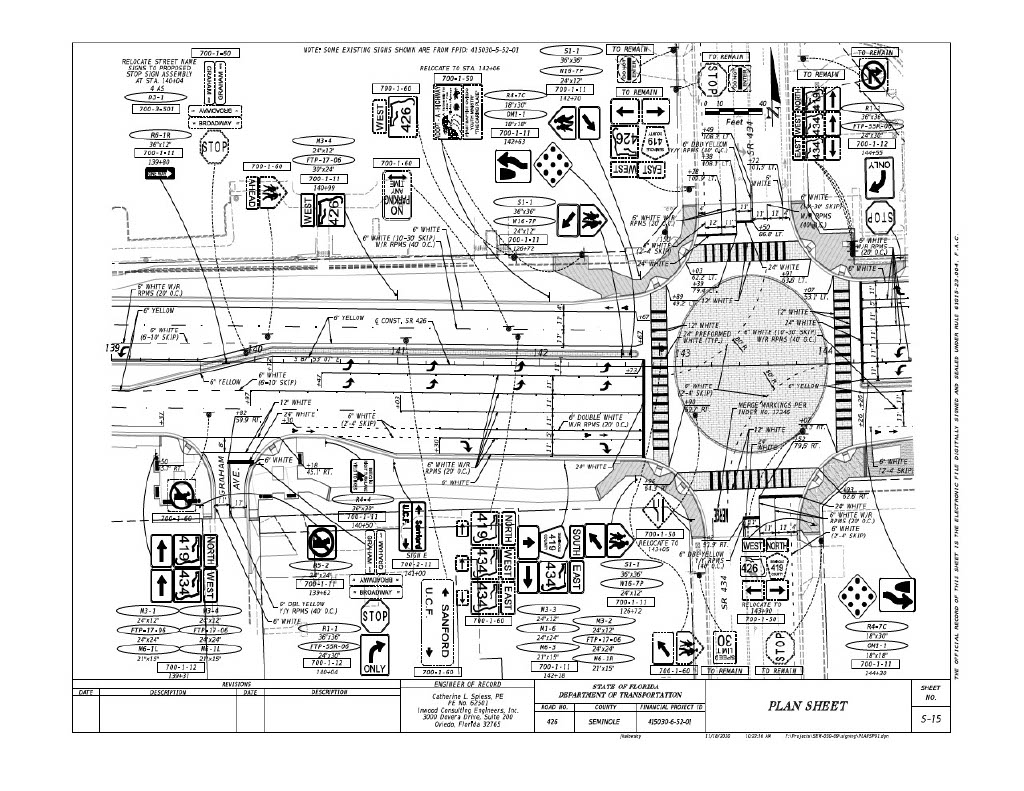
In the original design, the four intersections – S.R. 426 and Lake Jessup Avenue, State Road 426 and State Road 434, C.R. 419 and the realigned Geneva Drive, and C.R. 419 and Oviedo Boulevard – were to have patterned pavement on the crosswalks and corners, as well as a patterned pavement circle in the middle. The design was purely for aesthetics, according to city officials.
During a Council workshop meeting on Aug. 28, members debated different ways to alter this design to use less of the patterned pavement and cut costs, one of which was to omit the circle in the middle of the intersections, and just have standard solid concrete.
“There’s an aesthetic quality to adding the patterned pavement, but there’s a price associated with it,” Public Works Director Bobby Wyatt said. “The benefit for leaving it in is it provides an aesthetic quality, helps to promote a sense of place with the river corridor [Solary Park area] with other improvements that are going on, and the benefit of not having it is just cost savings.”
Regardless of cuts, the project is estimated to be completed by the summer of 2024.
Project background
The Council first discussed using patterned pavement, a color-infused concrete that has been stamped with a design, in a meeting on April 28, 2014, discussing the widening project.
In 2017, phase one of the project was completed with brick pavers in select areas, but omitted the patterned pavement elements and only included typical striping along the crosswalks. The S.R. 426 and C.R. 419 intersection was expanded in phase one, but was to undergo additional construction in phase two.
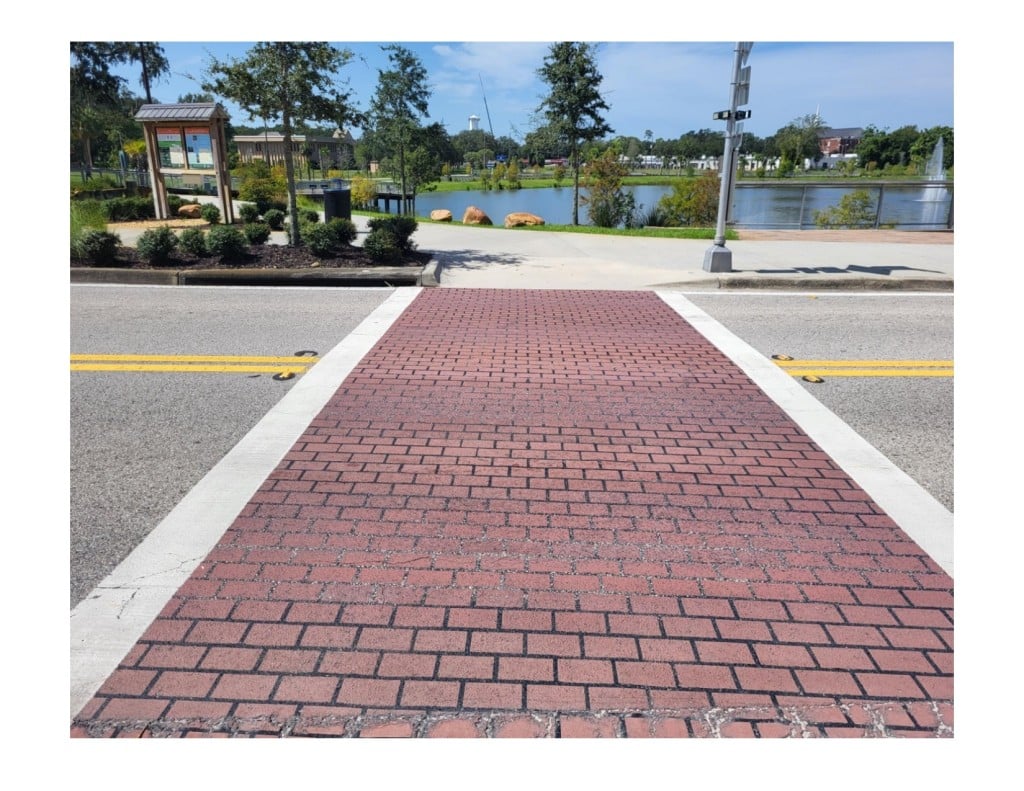
“There wasn’t any patterned pavement [in phase one,] that was to be saved for phase two. Really why we didn’t do it in phase one was because of the intersection of [State Road] 434 and [State Road] 426 we knew ultimately was going to be torn up again [in construction],” Wyatt said.
The project is currently in phase two, where patterned pavement is to be installed along with lighting features and traffic signals.
Phase two construction began in January of last year, and was put on hold until a decision was met regarding the patterned pavement placing. Landscaping will be a separate project after the widening has been completed.
Cost Concerns
According to city documents, phase two includes 2,845 square yards of patterned pavement in the proposed design. The original engineer’s estimate for the patterned pavement when the project was proposed was $85 per square yard. The bid made with the contractor in June of 2021 was $111 per square yard, which amounts to $316,705. However, because the project began in January of 2022, the price has grown to $255 per square yard. This results in future replacement costs resting at $725,475.
The bid price has already been paid for by using third generation sales tax, a voter-approved discretionary sales surtax that expires in 2024. This tax was approved in 2014 by Seminole County voters, and is applied at a one percent rate on taxable transactions throughout the county, aka a “penny sales tax.”
“I worry about a funding source in the future because if we don’t get a fourth generation sales tax, I don’t know how the state pays for that,” Wyatt said.
If not used, the $316,705 will be returned – with interest – after the project is closed and completed. Because it consists of sales tax money, this amount, if returned, is required to be put toward capital improvements.
Omitting the circle
Deputy Mayor Jeff Boddiford suggested eliminating the circle, and keeping the patterned pavement on the crosswalks. This idea became a consensus among the Council, as it would not only cut down the cost of the project, but add to the urbanization of the area as well.
“I’m on board with cutting out the circle,” Councilwoman Natalie Teuchert said. “I do think we should keep the ends because we are trying to also prioritize people moving instead of cars. So that does invite you a lot more to walk and enjoy the downtown, which is what the goal is.”
Councilmember Bob Pollack said he believes eliminating the circle is beneficial, and that having just the crosswalks with the patterned pavement will make the area more pedestrian friendly.
“When you have those and you’re driving and see it, instinctively it causes you to slow down a little bit and kind of look and be a little bit more proactive, rather than just the [painted] ladders that are faded in the center of the road or something,” he said.
Despite having the patterned pavement, the white laddering must remain on the crosswalks since they are a Florida Department of Transportation requirement for pedestrian safety, according to Wyatt.
What happens to the money now
By eliminating the circle from the design, savings are estimated to be around $150,000. There is no definite plan in place on where the money will be spent. Oviedo Mayor Megan Sladek hopes to reinvest it on the sidewalks.
“Replacing broken existing sidewalks would be, I think, a logical place to put it,” Sladek said. “I hope there is enough to do all of [Oviedo on the Park] and have a little extra for other sidewalks. But the places where people walk the most are probably the most pressing to address.”
Do you have an opinion on the proposed road design or want to weigh in on how the construction projects is going so far? Consider submitting a Letter to the Editor!
Support local news!
Choose a monthly amount
Hometown Hero
Community Champion
Rooster Society
Custom Amount
Thank you for your support!
Author

Related Articles
Seminole County approves $1.27 billion budget – without Flock cameras
One resident would rather the county put savings ‘back to residents’ ahead of property tax vote.
Winter Springs City Commission Candidates Make their Pitch to Voters
Oviedo Community News’ Megan Stokes moderated the Winter Springs forum that remained composed but ended in a pointed challenge to a one-on-one debate.