
Oviedo reboots centennial mural contest after deluge of AI-generated proposals causes uproar
Oviedo Council sets clear guidelines banning the use of AI in a new call for artists for the mural competition.
Oviedo asked artists to compete to design a new mural celebrating the city’s 100th anniversary, but was dismayed to find that many of the submitted designs appeared to be AI-generated, including one featuring a bird-headed turtle. The city is reopening the contest, with an important new rule: The designs need to be human-made.
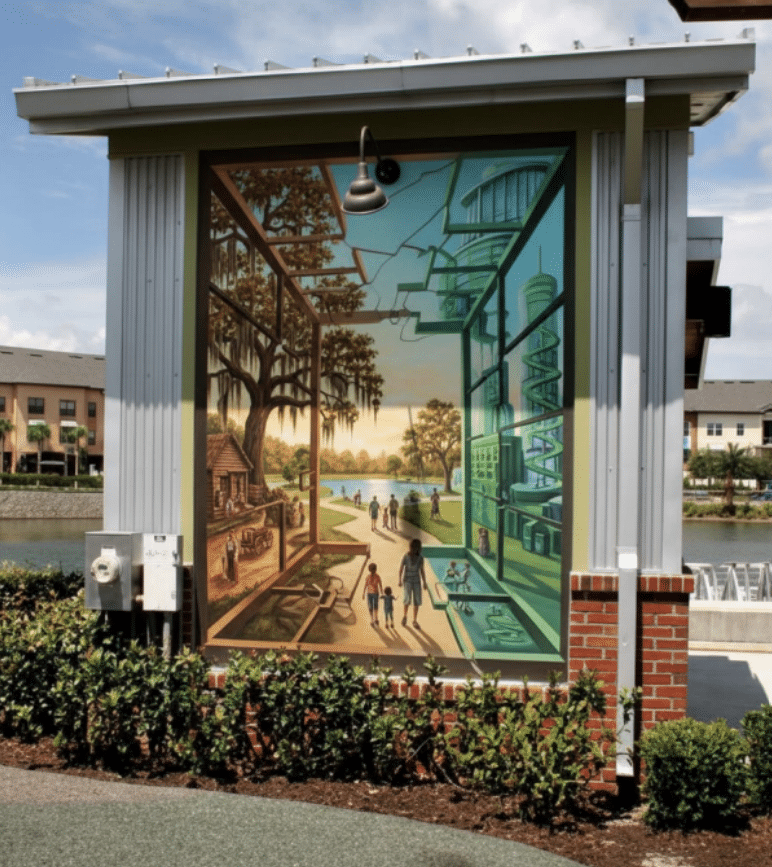
During the Oviedo City Council’s Feb. 16 meeting, the Council was supposed to approve the winner of the competition, as judged by a Public Arts Board, and proceed with creating the mural. However, the Council and CRA board had concerns that some of the artwork had the hallmarks of AI-generated designs, including the most popular entry.
“If we paint this in Center Lake Park we will be mocked,” Councilmember Alan Ott said of the top-ranked design.
The board was in agreement that the mural should be designed by a human, not an algorithm.
“It’s a problem; we don’t have any regulation [and] we need to fix that. I don’t want to pick an artist who’s selling their artwork by stealing other people‘s artwork, which is currently where AI is unregulated,” Councilmember Natalie Teuchert said.
“It’s clear that half of them were generated by the internet, but that’s not who is going to be painting it on the wall,” Teuchert said.
Teresa Correa, Oviedo’s development services director, said she ran the 15 submitted designs through an AI-detecting software, but was uncomfortable saying for certain which ones were AI-generated since the detectors are unreliable.
“We did not have criteria in the call to artists,” she said. “…it was kind of an open-air question and we just realized when we [saw] the submissions and people started raising the questions.”
While looking through the designs, the councilmembers were quick to point out elements that seemed similar in each of the different designs, along with unfinished lines and buildings.
“I don’t know how closely you looked at the one that they had selected, but there was all kinds of stuff wrong with it … there was just all these very weird shapes and stuff and that’s what AI makes a lot of times,” Ott said.
The city received two emails from contest applicants who did not place in the top four, who raised questions on the integrity of using AI in an artistic competition.
“For example, in submission No. 11 there appears to be a turtle body with a bird head, and some of the lighting, textures and blended anatomy in a few entries look more like AI than manual drawing or painting … it feels uneven if some artists are creating everything manually while others may be using AI tools to generate large portions of their work,” artist Brianna Schwebs wrote.
Shae Monahan also used the bird-headed turtle as an example of AI generated content in the submissions in an email to the city, writing that they were “very alarmed” by what they saw. Monahan expressed that it was “not right” since some artists submitted “real designs” for the competition.
“Turning in AI generated designs shows a lack of skill, professionalism and research on this project. It also shows a complete lack of care altogether,” Monahan wrote. “It discounts other artists’ abilities as well.”
“… it is becoming a bigger and bigger problem due to artists not having the ability to design and create like they say they can. [Those contestants] have paragraphs explaining designs they did not come up with. If you cannot design a mural then you are not qualified to paint a mural,” Monahan wrote.
Councilmembers expressed their concerns over the artists’ abilities to execute the AI-generated designs, since a human would be painting the mural in Center Lake Park. They questioned the potential difference between the AI designs and what it would really look like on the wall, since some of the artists did not make the design on paper.
“It’s an interesting problem because people are submitting a design on a computer, but they have to execute that on a wall with paint,” Ott said.
Correa said she asked the top three artists, responsible for the top four designs, if AI was used in the creation process of the mural design.
Sitki Dogan, the artist whose designs rank No. 1 and No. 2, submitted a portfolio of previously completed murals in other cities. He told Correa that the design was his, but that he used different softwares to “enhance the final design.” Correa said she did not know which software he used.
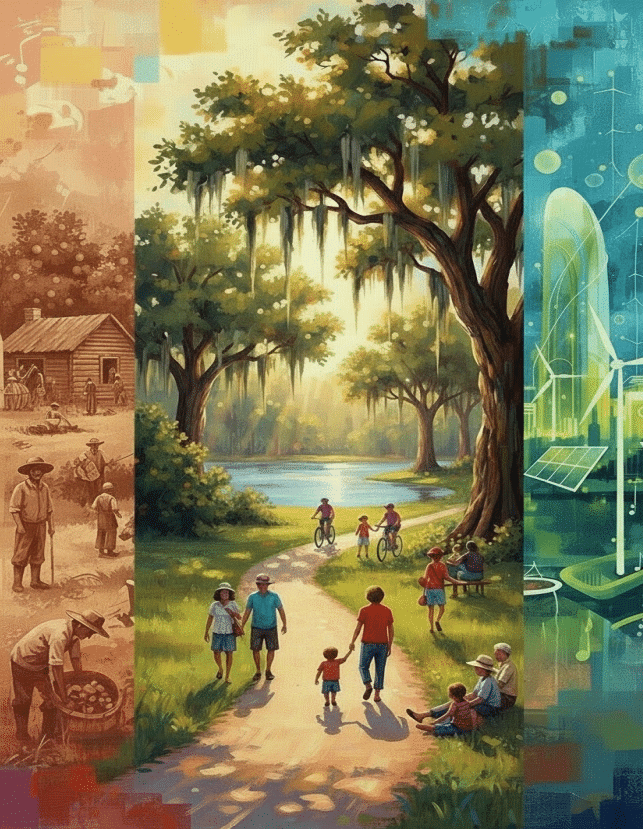
“He said the idea was his, he sketched it out on his iPad, and then at one point he put it in some kind of software to enhance the design,” Correa said. “And he said that he understands because there was no criteria (saying that] this was not allowed and (that) it would be okay and then he was expecting to if [we wanted], have a conversation with the public arts board to finalize the design, and so he, I think, had a different expectation of what the process would involve.”
The city did not get a response from Joseph Starkweather, whose design ranked No. 3.
Kathleen Safi, whose design ranked No. 4, told Oviedo Community News she did not use AI in her design. She said for this project, she made a rough sketch on paper, then made a more detailed sketch on her iPad so she could easily resize elements of her design, without having to erase and redraw as she would have to do on paper.
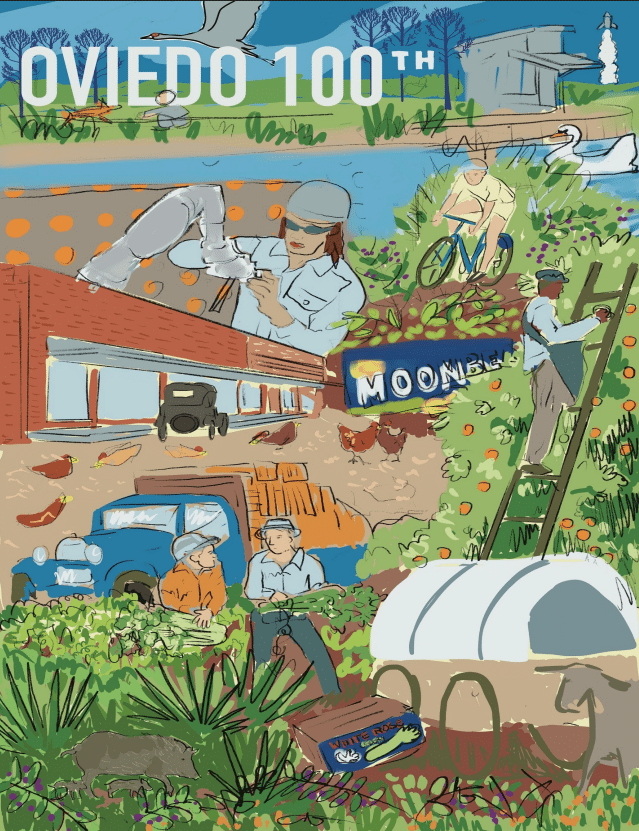
Safi said that, after watching the Council’s meeting reviewing the submissions, she was glad the board recognized the style difference between the AI designs and human designs.
“There were some submissions that were very clearly ChatGPT and I think that soon everyone is going to be able to recognize that and it will become white noise … It becomes really apparent what was stylized by ChatGPT and what was done by a human and I was pleased to see that the council noticed those things right away and did not take time on them.”
In October of last year, the Oviedo Community Redevelopment Agency Governing Board approved $7,000 for a call to artists campaign to design a mural on the back of the boat house at Center Lake Park to celebrate the city’s 100th anniversary. The city received fifteen eligible applications with proposed mural designs for the theme, “The 100th Anniversary of the City and beyond: Oviedo Past, Present and Future.” The selected artist will receive $3,000, in addition to $4,000 to cover material and equipment costs.
The Public Arts Board evaluated the proposed designs and ranked the candidates on artistic vision, community connection, suitability for public space, submission completeness, artist experience and clarity of vision. The board did not see the applicants’ names until after final scores were calculated.
During the Council meeting, Correa asked the Council what level of AI tolerance the city should allow if they were to send out a new call to artists. Teuchert directly opted for no use of AI in the mural contest, and the rest of the Council agreed.
On Monday, the city released a new call for artists, where the project’s instructions state that the use of AI is not permitted. The application window closes March 31.
“For this call to artists, no AI should be used to generate the idea,” Correa said. “Some cities have some kind of threshold that you can use up to 30% and then describe which software you use in the submission and that is all fine, but the direction we got from Council was clear that for this call to artists, no AI being used.”
When asked about the ethics of using AI to generate the design instead of the artist, Ott, who has an engineering background, compared human learning to machine learning. He said you couldn’t tell an artist it would be unethical to make a painting after walking through an art gallery because you had seen art on the wall.
“No art is really a clean-room implementation, as we would say in engineering. It’s based on everything you have seen before so then the question becomes, ‘Does the same apply to the machine when the machine goes and learns?’” Ott said.
Rudy McDaniel is the director of the school of visual arts and design at the University of Central Florida, with a research focus in digital ethics. He said that the evolving relationship between AI and art is something society seems to be grappling with more, rather than just in educational matters.
“I think it’s not something that you necessarily want to just ban outright unless you’re doing something very specifically that requires a human artist to develop their skill, or to showcase their skill rather,” McDaniel said.
He said that AI holds human artists at an unfair advantage since AI “encapsulates all of the visual arts” and has a large database on every piece of art that humans can’t. McDaniel added that he could see the arguments being made on both sides. Playing devil’s advocate, he said he could also see AI being used as an expressive tool just like Photoshop with different capabilities.
“One is like it’s a conceptual tool that helps me approach my artistic vision and it’s going to be hand-painted, but I’m using this as sort of a digital prototyping tool, just like I would use Photoshop or Illustrator or any other kind of digital technology.”
It is ethically problematic, McDaniel said, since AI’s output is based on a large number of previously human-created murals that have become AI’s training model.
McDaniel said the ethics of using AI in art comes down to transparency depending on what skill or objective the artist or competition is trying to measure.
“This issue of transparency and kind of disclosure is something that we’re really grappling with in a lot of different areas … of human expression. I think we’re still trying to figure out what the right balance is [among] the use of AI as a generative tool, and the use of AI as a brainstorming tool and the use of AI as an editing tool.”
Regardless of transparency, McDaniel said that artists shouldn’t use AI as a “cheat code” to produce art quickly and eliminate developing one’s sense of understanding scale, perspective aesthetics, design and color, since he said those are fundamental skills to becoming a better artist.
“It can be frustrating when you have to cancel a contest and start all over again,” McDaniel said. “But it’s also kind of interesting in what it says about how art is being created or how artists are thinking about their expressive capabilities using these new tools.”
Want to contact your elected leaders and weigh in on this topic? Find their contact information here. Have a news tip or opinion to share with OCN? Do that here.
Support critical, local news you rely on to stay informed, connected and empowered.
Choose a monthly amount
Hometown Hero
Community Champion
Rooster Society
Custom Amount
Thank you for your support!
Author

Related Articles
Zoning board: former Pappy’s Patch should remain inside rural boundary
Chris Dorworth’s proposed Strawberry Lane project at the former Pappy’s Patch near Oviedo now goes to the County Commission for a final decision.
Apartments, townhomes on Seminole County agenda next week
Seminole County Commissioners could weigh in on two developments, including apartments near Lukas Nursery
Seminole County students and the virtual school question
Increasing Seminole County virtual school enrollment numbers leave teachers and administration concerned about academic performance.