
Watch Florida House candidates field questions from kids
At PTA forum, candidates with districts in Seminole County answered questions about a lack of librarians, book bans and recess
Think back to being a student: Parents, teachers and school administrators make decisions that impact your life, but no one listens to you.
Unless, of course, someone gives those kids a microphone.
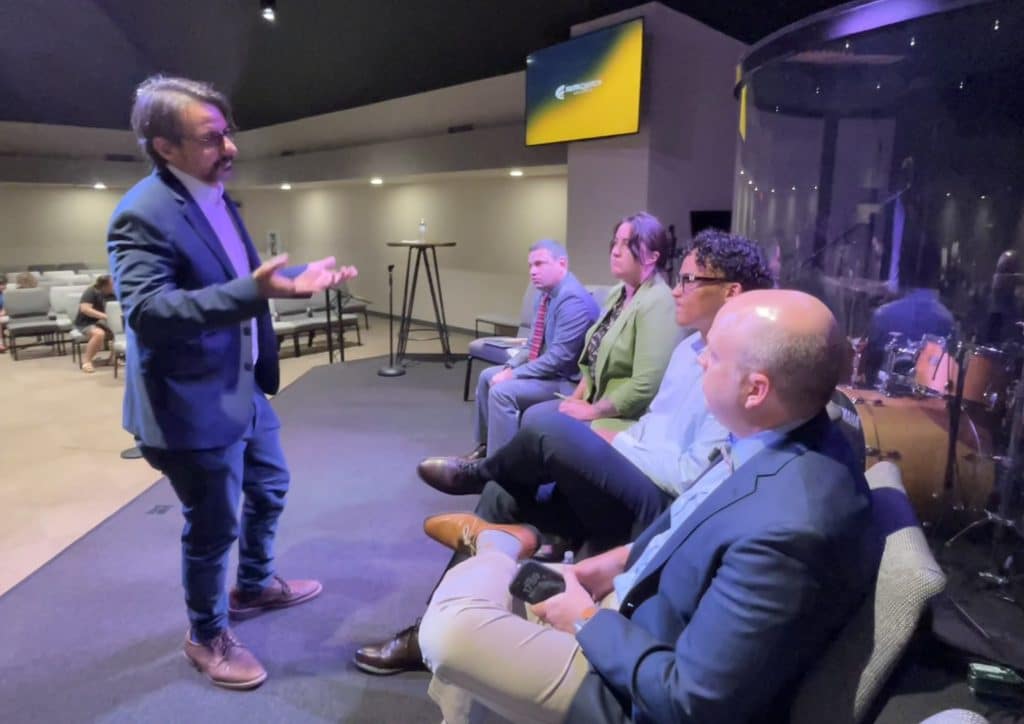
The Seminole County Council PTA, along with the League of Women Voters and Oviedo Community News as a moderator, recently held a forum with candidates for the Florida House of Representatives. As part of that, students were able to ask questions directly of the candidates vying to represent Seminole County in the Florida Legislature.
“There is virtually no population that is more disenfranchised than students,” said Jane Aman, a candidate for Florida House District 37. “They can’t vote yet … and so it’s hard to make sure that their voices feel heard.”
The candidates for Florida House of Representative in Seminole County are:
House District 36: Democrat Darryl Block, a lawyer and former social worker, is challenging incumbent Republican Rachel Plakon, a real estate broker.
House District 37: This open seat sees two teachers vying for the spot: Democrat Jane Aman, a full-time University of Central Florida lecturer, against Republican Rob Prater, an Orange County teacher.
House District 38: This open seat sees Republican Emily Duda Buckley, who works at A. Duda and Sons in Oviedo, against attorney and Democrat Nik Dean, who specializes in medical malpractice.
House District 39: Incumbent Republican Rep. Doug Bankson, a pastor, is being challenged by Democrat Dr. Jarod Fox, an infectious disease doctor at Orlando Health.
No Republican candidates attended the forum; all were invited. Oviedo Community News sent the questions to the Republican candidates as well.
The answers below are not the full answers of the candidates, but selected quotes. You can watch the forum below to see the full responses. All the questions were from, and asked by, children in Seminole County Public Schools, from elementary school to high school.
Editor’s note: Responses from some candidates came after the forum, via email. If candidates who declined to speak at the forum respond to questions, they will be added.
Below is the video. Due to volume issues we recommend listening with headphones.
Question: Considering that funding has been reduced for public schools, arts and electives are often the first areas to suffer. How will you support programs that keep kids engaged in the arts because this is often one reason students are excited to go to school?
Jarod Fox: “I’m a kid from a public school that did choir in elementary school and middle school, and I think we need to make sure that those programs remain. And hopefully we get the funding there, so we don’t have to make those tough decisions about what programs we’re going to cut.”
Nik Dean: “I’m a musician. … With music specifically, that’s basically math, right? And so I just think there’s this deprioritization of the arts because you only want to teach what they view as helps you become employable. And so with arts, not only does it help process your emotions, but it also helps teach things like math in a different context.
Jane Aman: “My twin brother is a painter … He was one of those students that only went to school so he could go hang out in the art room, and it really got him through. … But not only do we need students to want to come to school, we also need to change the narrative around what employability actually means. I teach English. What is English? Critical thinking, right? And arts teaches you to be uncomfortable with something for a little bit.”
Darryl Block: “I took theater in high school. Theater helped me learn practical skills for my future as now an attorney. So this is why the arts is so important, because everyone learns differently, and the arts actually is hands-on training for life.”
Rob Prater: Funding hasn’t been reduced. Overall, funding per [full-time equivalent student] has gone up. What has gone down is the number of students enrolled in our traditional public schools. That raises an important question: Why are parents pulling their children out of public schools? That is the question we need to be asking and addressing. Some counties have approved additional local millage to support programs such as the arts. Decisions about how local dollars are spent are primarily made at the local level. If art or music has been removed from your school, as a student I would encourage you and your parents and your best advocates to ask the school board why the program was removed and what can be done to restore it.
Emily Duda Buckley: “As a mom, I’ve seen how a music class, a drama club, or an art room can be the whole reason a kid loves school. Arts and electives build creativity, confidence, and problem-solving that carry into every other subject. I’ll fight to protect funding for arts and electives so they’re never first on the chopping block, and give schools the flexibility to keep the programs their students are excited about.”
Question: Funding and policies have impacted classroom libraries and many schools do not have media specialists. We know that students who read a lot develop their vocabulary and reading comprehension skills beyond peers who do not. Reading has impact on developing empathy as well. How will you commit to supporting funding and policies that give students access to quality, interesting reading materials curated by certified media specialists?
Darryl Block: “We have to ensure that our libraries remain funded, that we have the qualified specialists to assist our students in top areas, subject areas, and things that interest them, to expand their learning. So it’s definitely something that we need to remain funded. It’s another reason why I want to sit on the budget committee for education.”
Jane Aman: “Other legislative policy has come down from Tallahassee that has forced teachers to remove actual classical texts from their classrooms, and it’s caused a lot of confusion over what can and cannot be taught or read in school, what students can come to on their own. And so one priority for me would be rolling back some of that legislation.
Nik Dean: “My mom begged me to read as a kid. Didn’t do it. I was only interested in playing basketball, and it wasn’t until I was about 12 where I cracked open my first philosophy book that I have not stopped reading. And so, access to texts is just so important.”
Jarod Fox: “I think we need to be more worried about our kids being able to read instead of being worried about what they are reading. I know my kids; I’d much rather them read something and I have to explain it, explain something I wasn’t planning to explain, than not reading at all. So I think we need to be more worried about making sure that the kids have access to books instead of taking more and more of them away.”
Rob Prater: “If your school has reduced or eliminated its media specialist or library services, I would encourage you and your parents to speak directly with the principal and ask how those funds are being used and why that decision was made.
Emily Duda Buckley: “Reading is everything, it grows vocabulary, comprehension, and even empathy, exactly like you said. I want every school to have well-stocked classroom libraries and certified media specialists who help students find books that actually excite them. I’ll support the funding to make that happen, with materials that are both engaging and age-appropriate, and I trust our media specialists and parents working together to strike that balance.
Question: Will you help us to bring back recess in middle school?
Jarod Fox: “Yes. My son will be happy that I said that, he’s a fifth grader this year. … I’m a scientist by nature, and so I look at the data. The data’s out there that regular breaks from curriculum is important.
Nik Dean: “Definitely a very big pro-recess person. Like I mentioned, my mom struggled to get me to read when I was a kid because I wanted to be outside playing basketball, right? But I think there’s so much that you learn from playing sports, from being outside running around. … Just being physical, being outside, playing in nature is an excellent way to learn about things like biology, rather than just learning it from a book. You can go outside, touch grass.”
Jane Aman: “I’m a huge fan of kinetic learning. In my classroom, that is something that we did all the time when I was teaching high school. We’d get up and we’d learn. We didn’t just sit down and read Shakespeare. We performed Shakespeare.”
Darryl Block: “When I was in law school, they always said digest the law and spend time thinking about it. At the same time, outdoor activity, recess, it gives children time to learn more social skills too, which is part of learning.”
Emily Duda Buckley: “Physical activity is critical for child development, and I support any way to get our students active and moving, including recess!”
Question: If you are elected, will we see you again or are you going to ghost us?
Jane Aman: “That might be the best question that I’ve ever heard. … Somebody asked me, ‘What is your Day One promise?’ And I was like, “You will have a phone number to call. You will have some place to go. You will have somebody to yell at. It will be me.’ … Absolutely, I will be here in the community as a community partner, and also just like somebody who’s reachable.”
Nik Dean: No, I will not ghost you. … I plan on being very reachable. And yeah, as long as I’m invited, and as long as there are events, I want to be here.”
Jarod Fox: “I will gladly sign Olivia’s no ghosting pledge. … One of the reasons pretty much all of us got into this race is to make sure that everybody’s voices are heard, and not just the special interests that, unfortunately, a lot of times get … more of an ear in Tallahassee.”
Darryl Block: Will we ghost you? Absolutely not. … This is a job interview. We’re all here today applying for a job, and a job is to represent our community, which means be part of our community. … My address is listed online. My, I think my cell phone is listed on a website too. So yes, absolutely.”
Rob Prater: Elected officials and candidates are invited to events all the time, and we don’t intentionally ignore anyone. We receive many invitations and already have commitments to many organizations throughout the community. Being a public-school teacher for more than 20 years, our schools are especially important to me. If you invite me to your school and my schedule allows, I would love the opportunity to visit, listen to students, and hear what is important to you.
Emily Duda Buckley: “No ghosting, I promise! If you’ll have me, I’ll be back to visit, to read with you, and to hear how you’re doing. I look forward to sharing news with you about the Florida Legislature and how our state government works!”
Editor’s note: The question below question regards Florida state constitutional Amendment 3, on the ballot in November, which would increase the property tax exemption on homesteaded homes from the current $50,000 to $250,000 over two years. That would cut property taxes to local governments, which typically cover half the cost of school police officers.
Question: We love Deputy Gil at Sterling Park, he makes us feel safe at school. If Amendment 3 passes, how am I going to feel safe?
Nik Dean: “I think that’s why a lot of us should vote no on Amendment 3. But even with that, we need more safety. We need more funding for the safety in our schools. You know, it’s just unfortunate what has happened in the past at schools where students don’t feel safe, and I just think that’s wrong. And so again, funding, funding, funding, more funding.”
Jarod Fox: Hopefully, it’s not passed. But if it is, we will work with the local communities to make sure that they have the funding so that the resource offices aren’t removed from the schools. … We have a whole generation of students that know nothing but training for active shooters, and the safer that we can make them feel, I think is important.”
Darryl Block: “I really hope our legislators in Tallahassee heard that question. Our children are concerned. Our students are concerned how to remain safe as they keep cutting school budgets.”
Jane Aman: “I think most of us can agree that all of our children deserve to feel safe when they go to school. And some of that we can talk about, like mental health programs and diversion programs and all of this stuff that is going to help, but ultimately we’re going to need folks at the helm that value that and think that safety is important and that are willing to step in at the state level to provide that funding if the funding can no longer come from localities.”
Rob Prater: Public safety will always be a priority for me. I support keeping School Resource Officers (SROs) in our schools. The actual agreements for providing SROs are handled locally between school districts and law-enforcement agencies. As a legislator, I will continue to support policies and funding that help keep our students, teachers, and school employees safe.
Emily Duda Buckley: Deputy Gil sounds like exactly the kind of hero every school deserves, and keeping you safe will always come first for me. Here’s the good news: Florida law requires a safe-schools officer like Deputy Gil at every public school, and the state – not just local property taxes – helps pay for school safety. Giving families property tax relief should never come at the cost of your safety, and I’ll make sure officers like Deputy Gil stay right where they belong: with you.
Question: Wall Street, private equity, and Blackrock are buying single-family homes en masse in Florida. How will you stop that?
Darryl Block: “I want to ensure that there is legislation that protects the housing market and protects the people coming in buying second homes by raising the tax cap on second homes. That way, it’s going to cost them more to own it. We’ll hopefully make these private equity firms trying to make a buck; it will hopefully make them go away. But even still … we need to build affordable homes.”
Jane Aman: “One of the things that you can do is you can limit the amount of non-homesteaded properties that a single entity can actually own, and there are ways that you can approach that in communities. I think that right now we actually have limitations on how municipalities and counties can actually legislate that. … We need to allow localities to be able to make those kinds of decisions on their own that are best for their county to stop that kind of thing from happening.”
Nik Dean: “You can also increase taxes, right? Like [Real Estate Investment Trusts], for example, any kind of securitization of these properties can be taxed, right? And not only at the state level through corporation taxes, but also even if it’s a pass-through entity like an LLC, you can increase the taxes on these second, third, fourth homes. … But also there can be tax incentives for or lower insurance rates for people who are buying their first home, their only home, right? And so penalizing the securitization, the hoarding of property is probably the easiest way to go about it at the state level.”
Jarod Fox: “The local communities know best how to utilize the properties and the land that they have, and Tallahassee needs to stay out of that instead of being in the pocket of big business. And I think a good example is the Airbnbs that lobbied Tallahassee when local municipalities wanted to limit Airbnbs in their cities, and Tallahassee said, ‘Nope, I just got a bunch of money from Airbnb. We’re not going to allow that to happen.’”
Emily Duda Buckley: “When giant Wall Street firms buy single-family homes by the hundreds, they often outbid young families and first-time buyers, which feels unfair. I support leveling the playing field and closing tax advantages that favor mega-investors over families, bringing transparency to these bulk purchases, and above all building more homes so families aren’t competing against billion-dollar funds just for a place to live. Homeownership should be within reach for Floridians, not Wall Street.”
Abe Aboraya is a Report for America corps member.
Support local news!
Choose a monthly amount
Hometown Hero
Community Champion
Rooster Society
Custom Amount
Thank you for your support!
Author
Related Articles
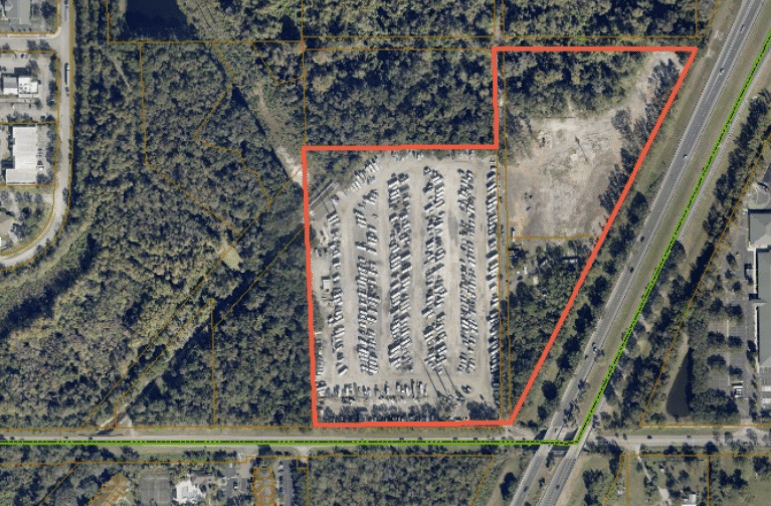
Apartments, townhomes on Seminole County agenda next week
Seminole County Commissioners could weigh in on two developments, including apartments near Lukas Nursery

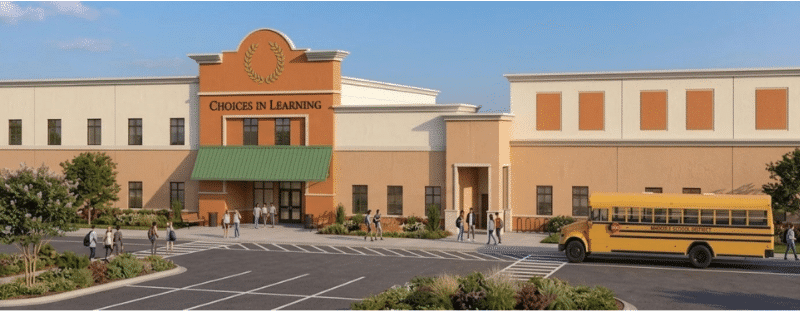
Winter Springs charter school gets key approval to add middle school
Some board members question the wisdom of approving a new middle school as traditional public school enrollment declines.