
After 35 years of teaching, coaching and directing, Hagerty’s Jay Getty crosses the finish line – Part 1
Coach Jay Getty retires, leaving behind decades of championships and stories at Oviedo and Hagerty High schools.
It starts right here, in this chilly spring twilight, and many laps later it ends on the same spot. A dozen or so runners pull back into a slight crouch on a white line, their legs compressed wiry springs ready to fire as the final sprinkles of passing rainclouds fall. Cue Vangelis’ score to “Chariots of Fire.”
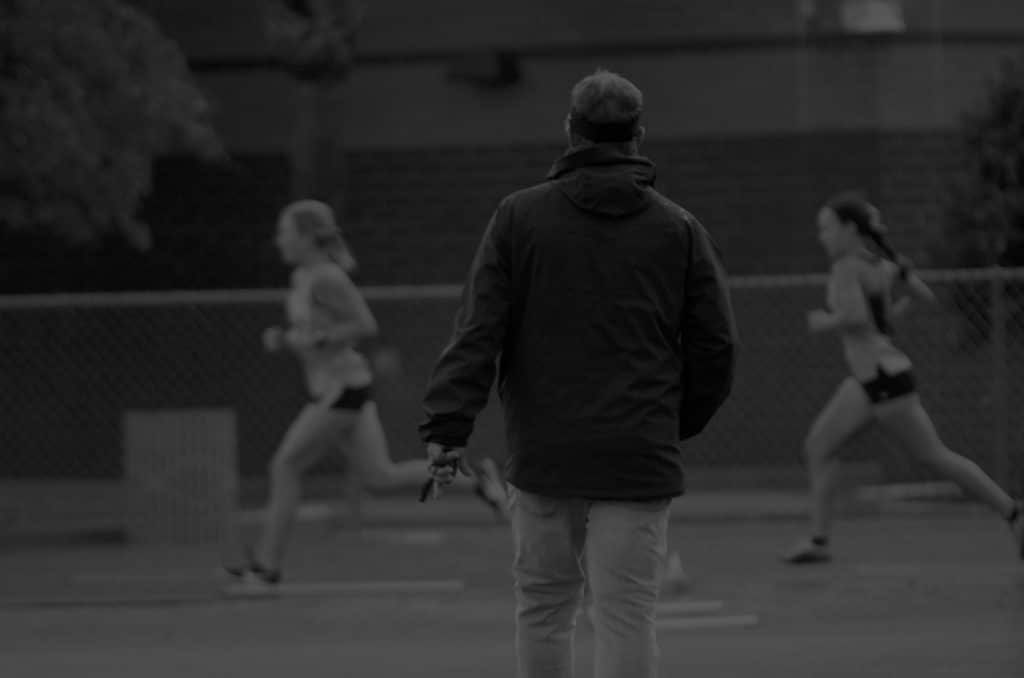
Jay Getty’s final lap
“Runners on your marks,” the man with the starting pistol aimed at the sky says. “Set.”
A gunshot cracks the darkening sky and they’re gone, hurtling around that first left curve faster than they think they can, then forcing that pace for as long as they dare, hoping something doesn’t give out before the finish line.
On the high school track, this is the distance race of distance races, the 3200 meter run, always one of the last races of the night. Eight laps, an interminable burn to the lungs and legs and 2,000 rapid-fire heartbeats, give or take. Only the athletes who can endure that burn and pressure for the longest are sent out here.
This isn’t so much the cat-and-mouse game of varying pace and attempts to break up the pack and leave them for dead that frequently engulfs the entire race on a college or professional track. Often here it’s pure speed and will. Gradually those less willing or less prepared drop off, one by one, as the leaders push on.
On this unsettled night in April the stage is Seminole High School, the Seminole Athletic Conference Championship, where an Allegiant A320 on final approach eastbound to Orlando Sanford International howls by only a few hundred feet overhead, ducking a passing deck of clouds. It’s cool and gusty amid the dying embers of a cold front sunset, remnants of a passing storm whipping windproof jackets as Jay Getty stands in the grassy midfield alone, the red digits on the big race clock speeding forward unregarded over his right shoulder.
But Getty knows. As he prepares to walk away from 35 years in the business, “Coach” as thousands call him has lived this quarter mile ovoid rhythm so long he could likely count a 67-second split blind, which Hagerty senior Ricardo Hernandez is about to click off as the lead pack, already spreading out, whooshes by on Lap 1. Getty in the midfield is instantly recognizable: perennial beach-bum tan, dark sandy hair, faded jeans, dark windbreaker, black and white Nikes, an ever-present visor on his head and a clean shave, just like he is on most Friday nights in the stormy uncertainty of spring in Florida.
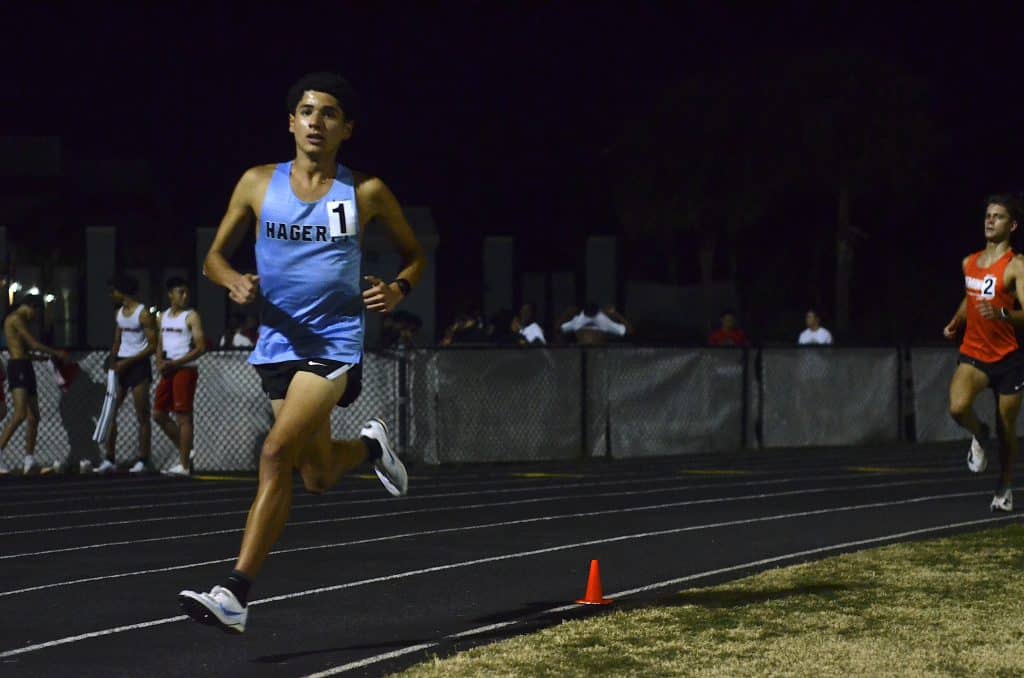
There are no tears tonight, though in the back of his head he knows he’s watching his last conference championship, maybe ever. Tonight it’s business for Getty. But Getty’s business, buried under minutes, seconds and milliseconds, has always been people, he says, thousands of them. There’s still a race or two left before the night’s over. The tears come later.
Every coach, as with every racer, eventually has to step away from the track.
“This year, he’s definitely slowed down, and it’s starting to hit that it’s his last year,” his daughter, Leah Getty, said. “He’s staying in one place for more than five minutes.”
Lyman track coach Fred Finke sidles up with a perpetual smile on his face and they talk about their greatest trip together for a few seconds: what would end up the building wave of one of Getty’s greatest triumphs as a coach, an ocean away from Seminole County.
“I took you to France,” Finke says, referencing their trip shepherding Oviedo High School middle distance phenom Jenny Barringer, now three-time Olympian Jenny Barringer Simpson, to her first international meet in Europe.
“And it was my job to not screw it up,” Getty says.
Finke’s one of Getty’s longtime mentors, in a venerated group of coaches that would form Getty’s introduction to what Finke called one of the most hyper-competitive counties in the country in the realm of cross country running and track and field. And in Florida, often if you coach one of those sports, you’re coaching both.
The two Seminole County mentors Getty mentions most, Finke and Seminole High School coach Ken Brauman, have been inducted into nearly a dozen halls of fame locally, statewide, and nationally. They’ve coached countless state champion athletes. Finke alone coached three future Olympians. To this day Brauman is the only high school coach in U.S. history to be the head manager of the U.S. Olympic team, which he did in 2012 in London.
“Our county was so far above everybody else in the state, I don’t think there’s a county in the country that can match what Jay walked into,” Finke later said of Getty’s 1991 beginning as a volunteer track and field coach. “What he walked into, it was a place that had three coaches in the county that were world class coaches, that just happened to all be good friends.”
Those two, along with ever-competitive Lake Brantley Coach Charlie Harris, Lake Howell’s (later Oviedo’s) Tom Hammontree, Lake Mary’s Mike Gibson and later Winter Springs’ Ocky Clark also happened to win or come close to the district track and cross country championships nearly every year. But the man Getty has called “Coach” the longest is a long way from Oviedo.
Far from home
A few weeks before this year’s conference championship, Getty was standing in the same spot on Seminole’s infield, as the stadium lights powered up, buzzing from a dim orange to a blinding blueish white as evening set in. Next to him stood a man in the same relaxed but contemplative stance, in a nearly identical outfit, a race schedule folded into the same back-right pocket of an identical pair of stonewashed jeans. And the pair are standing there almost silently, watching the finish line, a word or two occasionally escaping one of them.
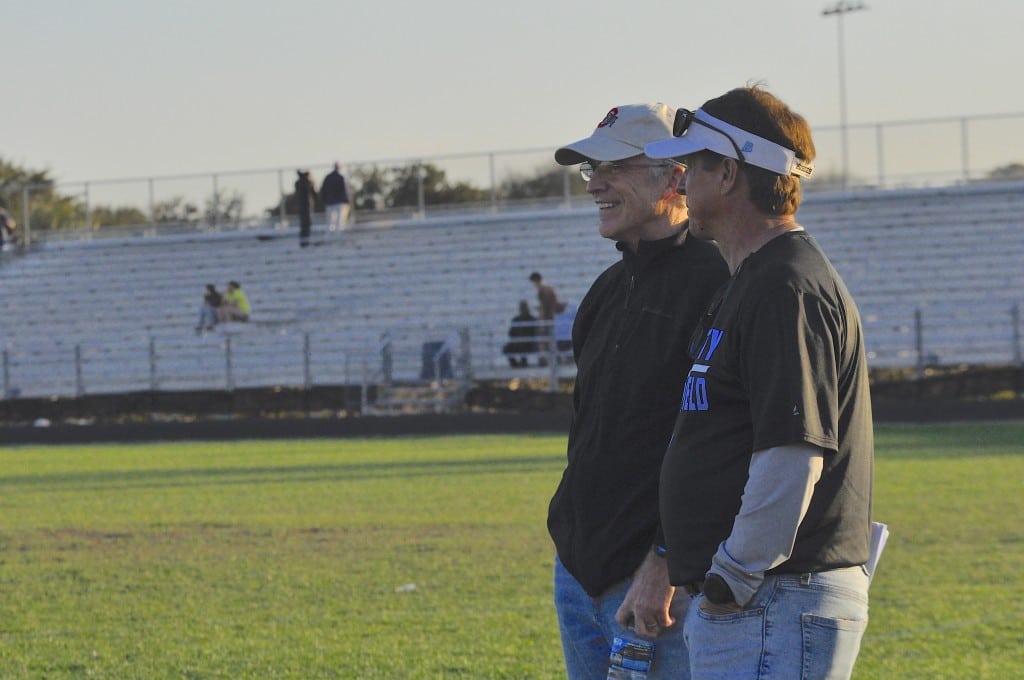
One came here in 1987 bound for the University of Central Florida and a destiny in coaching. The other just got here this week to visit. But both of them come from the same Ohio town.
Just two and a half miles inland from the south shore of Lake Erie, where it spreads as if an ocean to Canada on the other side, lies Amherst, Ohio. A farmtown connected to Cleveland by century-thick strands of two-lane and the inevitable distant hum of the long Great Lakes beltway of Interstate 90, it’s more governed by the rural area surrounding it, yet its fate remains ever-connected to the great lake that’s frozen for much of its breadth each winter. Like so many rustbelt cities, its motto “The Sandstone Center of the World” boasts of headier days past; the hollowed out countryside now bears the machine-dug scars of an industry that once supplied grindstones to the Union Army. The sandstone, it was said, and still is, is exceptionally durable.
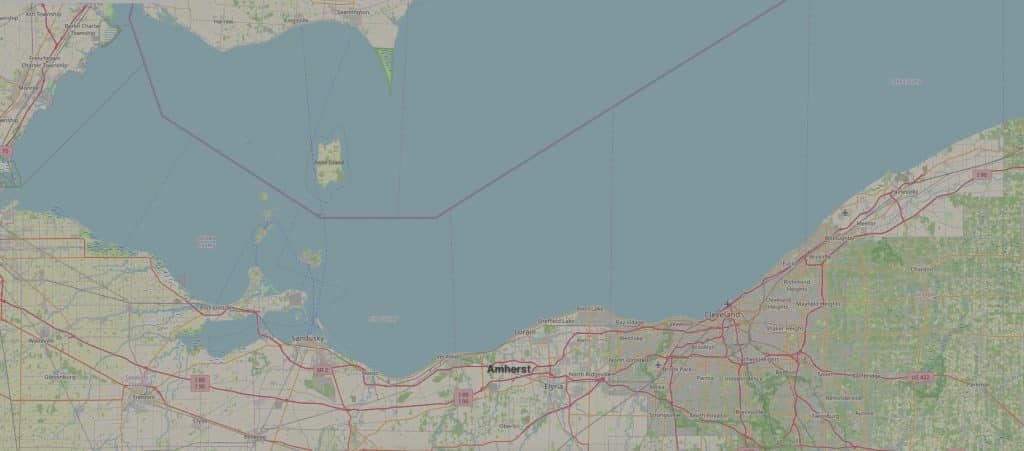
Getty was raised in the kind of place with a bar that opened in the 1800s and where people build ice sailboats for fun. He still visits on occasion. Thirty-nine years later, he’s still naturally polite and sometimes says “pry” when he’s saying the word “probably.”
“It looks a lot like Norman Rockwell’s paintings,” Getty said. “A little tiny town, old, old buildings in the downtown area, country roads. Once you get a mile and a half outside of downtown you’re in cornfields and farms.”
Amherst Steele High School is where Getty met Carl “Denis” Schneider, the man in nearly identical clothes who would become his coach, mentor and friend for life.
At the corner of Amherst’s North Ridge and Claus roads two gigantic maple trees stand as if for eternity itself, guarding a white colonial home at the corner, their branches nearly reaching over to the other side of the road. There’s an American flag hanging directly off a power pole out by the corner. And then you spin the steering wheel left and trees give way to a long view of flat and green. The yards stretch into football fields and the buildings, shrunken away from the road in their pastoral hermitage, turn barn red at the rare sight of a visitor. Here, just about 4 miles from downtown Amherst, lawns are mowed by a tractor powering blades the span of a small helicopter. Go for a run there and you might pass one.
“It is cornfields and soybeans on both sides,” Getty said. Near the wall of trees lined up so straight they’re seemingly intent to march across the road, Schneider’s house is on the left. Getty’s taken that drive, along with his wife and Schneider, over and over again to visit. They stay at Schneider’s house.
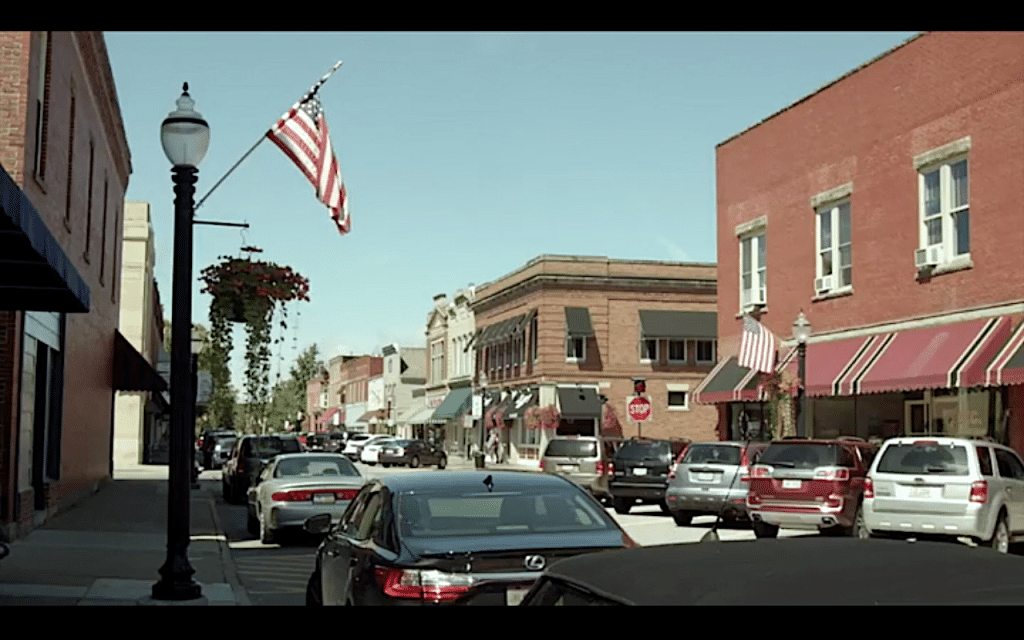
“It’s nice,” Getty said. “I was fortunate to grow up in a small town, very similar to what Oviedo was when I first started,” Getty said. “Oviedo was still small. That’s probably why I never left.”
On the north side of Amherst, just around the corner from the childhood home of wrestling legend Jerry Lawler, is the stadium for the Steele High Comets, where a teenaged Getty used to circle the track. Schneider, watching and giving pointers back then, was and is a man of few words. The kind of man who communicates ambition and hope in verbal nudges.
“He was pretty good,” Schneider said of a young Getty, the runner. “He got better as he aged.”
But when graduation came, Getty may have left with more than Schneider thought. Asked whether he thought Getty could have made a good coach at that point, Getty’s coach, the man of few words, was reticent.
“I couldn’t say yes or no,” he said. “He’s a good thinker, and he’s good with people. I never gave it a thought because I was just wondering if he was going to go to college.”
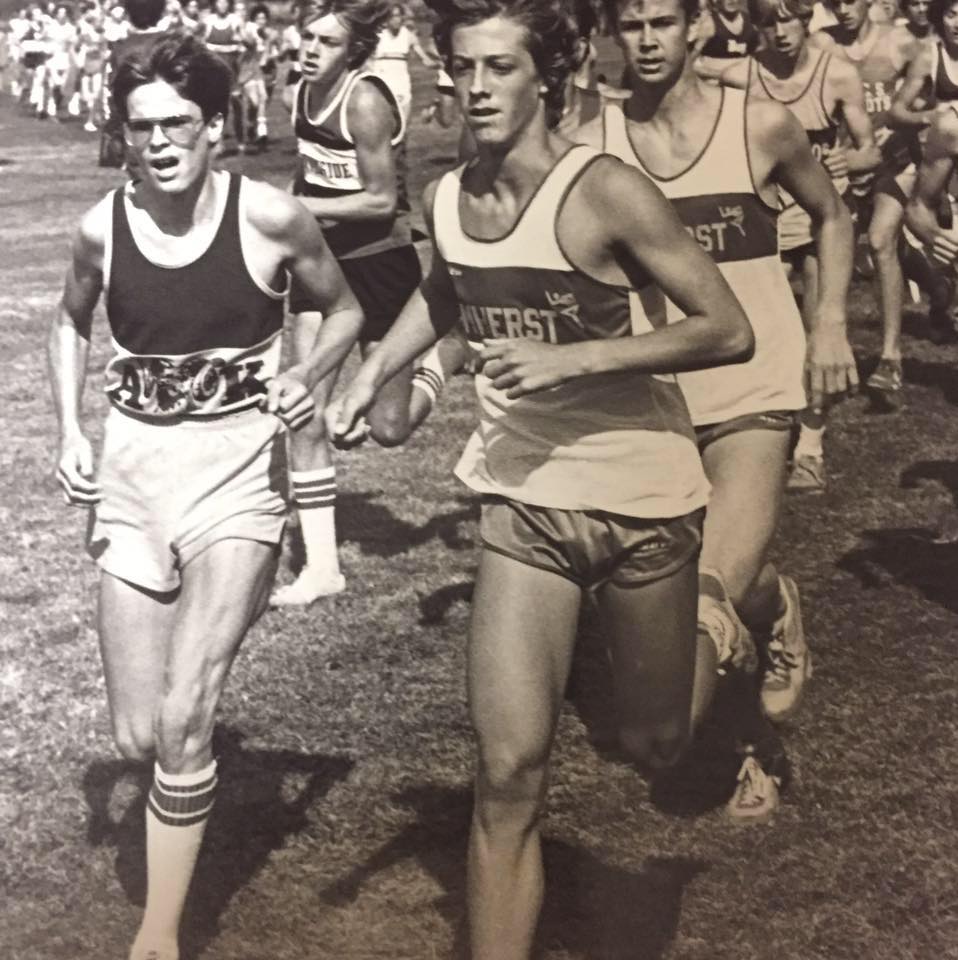
Getty did, traveling about 100 miles from home to find it. Mount Union College, now called Mount Union University, in Alliance Ohio is almost closer to Pittsburgh than it is to Cleveland. About an hour away from the lake, home of the Welsh-styled Glamorgan Castle and a home that was a stop on the underground railroad for fugitive slaves of the 1800s. He only lasted a year before transferring to the University of Central Florida, exactly 1,001 miles south.
“I fell in love with Oviedo when I ended up there for my internship and I really haven’t left about a 10-mile radius from UCF since 1987.”
Getty had followed his heart to UCF. Not because Florida called to him. It was a girlfriend, he admits, who had decided to go to UCF first. That didn’t work out in the long run, but Oviedo did.
Into the fire
Near the end of getting his teaching degree Getty was at Oviedo High School interning when he decided to ask the track coach an impromptu question.
“I just popped out at the track to see if they needed help,” Getty said. “So I volunteered in the spring of ‘91 and I haven’t left since then.”
By pure coincidence Joe Janson, who would approach Getty for an assistant coaching job that first fall, happened to be from Ohio too. Cleveland, as a matter of fact. He’d come to ask because his daughter, a freshman, decided she wanted to run cross country. He would coach alongside Getty on cross country teams for 30 years. Janson, he freely admits, knew nothing about running. But the four-sport high school athlete knew training, and he knew competition, and was eager to learn from Getty, the natural-born runner.
“I learned very quickly that cross country is not for the weak-willed,” Janson said.
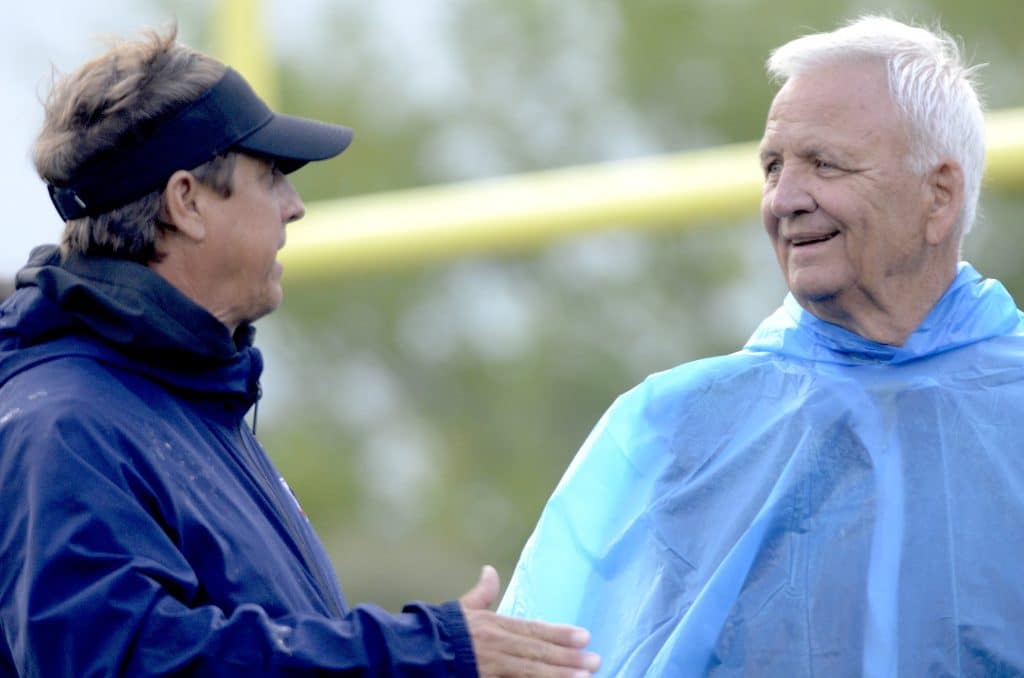
And Getty had no idea what he was getting into, Finke said, but Getty’s success, he added, is exactly because of how hard it was to be a coach in Seminole County in 1991. By that year Finke, now 74, as head coach of multiple schools had already won a cross country and a track state championship. He’d win two more, plus runner up three more times. Brauman had already won five state championships, entirely in track, and would go on to be state champion or runner up 12 times.
Imagine competing in the conference championship in a field like that, Finke said.
“So Jay walked into an environment where one of two things was going to happen,” Finke said. “Either he was going to be eaten alive, or he was going to take his role as rookie and run with it and bleed us dry for info, and that’s what he did.”
Brauman, now 79, laughs as he talks about the first time he ever saw Getty, at an invitational track meet in what would be Getty’s first ever season as an assistant coach.
“I was on the field and I noticed what looked like some high school kid down there officiating the high jump,” Brauman said. “And I went to the head coach at Oviedo High School, who was John Thomas at the time, and I said ‘John you’re supposed to have a coach down there, not some student.’ And he says to me ‘That’s not a student. That’s our new coach.’ So that’s when I first met Jay.”
More than 35 years later Finke still sometimes jokingly calls Getty “Rookie.” He’s also well aware of what Getty has done.
In that time, the teams the Rookie have helmed have finished in the state top 10 in cross country 10 times. In track and field they’ve finished in the top 10 six times, including Miguel Pantojas’ state champion 1:50.30 800 meter race in 2023. In 21 years as head coach at Hagerty, Getty’s cross country teams have qualified for the state meet in 20 of them. His Oviedo girls soccer teams in 1998, 2000, 2001 and 2002 won the district championship outright and reached the state semifinals all four years.
In the span of 2010-2025 his cross country and track teams amassed 20 conference, district and regional championships.
In the heavily competitive 2024 boys cross country state championship, with a field so tight the winning team’s runners averaged a 29th place finish, Getty’s Hagerty team finished runner up, coming within a few places of capturing the state title themselves.
“I don’t think there’s a hall of fame in the state of Florida that he is not in,” Janson, said.
And that’s just what he did as a head coach.
Back at the Seminole Athletic Conference meet this season, one of the last he’d ever coach directly in the run up to the state meet, he watched senior Ricardo Hernandez blast to a second place finish in that distance race of distance races, 3200 meters in 9:50.27, seconds behind the winner and a photo finish ahead of third place, Oviedo rival and fellow senior Colin Aysun.
“It always feels good to beat your cross-town rival,” Getty later said.
By that hour the crowd, save those waiting to ride the cheddar bus home, had long since thinned, leaving just a few runners circling in and out of the stadium lights. Getty was on his 16th hour on the go by then. Fridays are especially long-winded, sometimes Saturdays too, full of glories, triumphs, cheers and exhaustion. A bit earlier a Lyman runner crossed the finish line and collapsed into the infield just a few steps away from the track.
For Getty, the excitement of the track or cross country course hasn’t been his only responsibility for a long time. This might be his tenth job of the day. At one point Getty was coaching four teams, teaching biology classes, running an athletic department, and serving on multiple local and state athletic association boards and committees in the same year.
“Jay’s so active all the time, when he sits down at night, it’s really hard for him not to fall asleep,” his wife, Kelley, said. “There have been nights where a meet goes late, and he’s only slept two hours.”
But come Monday he’ll be up just like he always is, usually far before anyone else.
Waking to the waves
The stillness these days breaks at 4 a.m. for Getty, undaunted by the calming waves that call to him from his third floor balcony. There’s an Atlantic Surf Design longboard waiting for him in the couple’s new condo in Ponce Inlet, but Getty floats upon that warm Atlantic water less now.
Wakeup used to be 5 a.m. in Oviedo, but in the last year, the Gettys found a chance to accelerate the coach’s retirement plan, so they moved to the beach a year early.
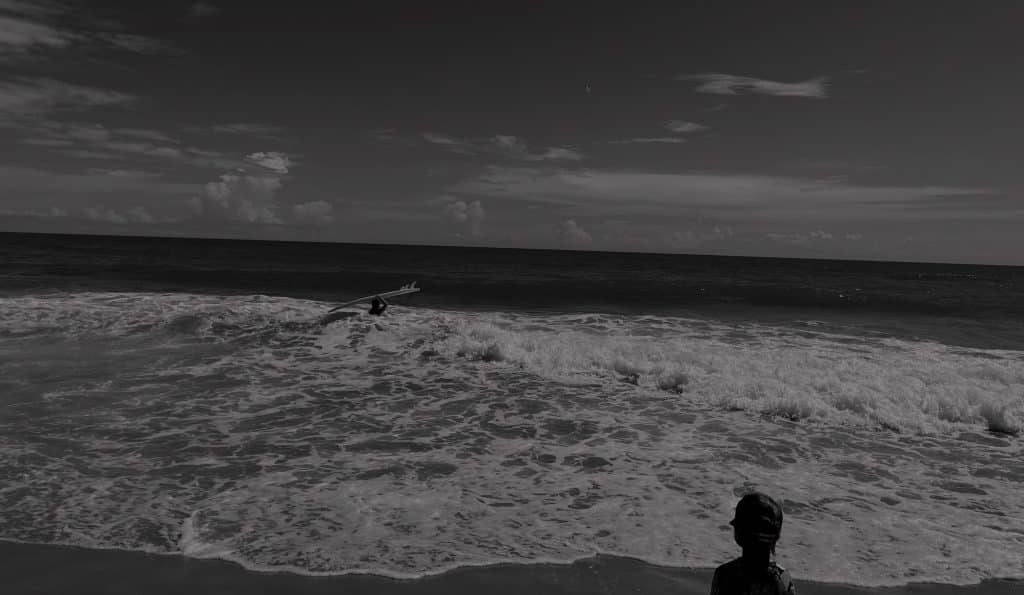
“That’s where I was gonna finish up after I retired,” Getty said of his home by the beach. “I spend a lot of time out there in the summer. It’s quiet. I’ve got some friends who live out there. It’s a solid chance for me to disconnect a little bit, and start to realize that there’s another part of life out there that I’ve heard about and may eventually get to experience. It’s a chance for me to in a way be the chameleon I’ve always been, to adapt in different ways.”
The drive to and from Oviedo takes an hour or so, set to the tune of SiriusXM’s Classic Vinyl, Classic Rewind, or maybe just nonstop Tom Petty.
“My goal is to be two hours ahead of everybody by the time school starts,” Getty said. The reason is to cut down on stress, he said. The more he has done before chaos starts to arrive, the less he has to worry.
Sometimes he wakes up to an alarm, one of those standard issue Echo alarms that gradually calls out louder, louder until you can’t take it anymore. Getty said he can tell he’s tired if it takes him a little longer than a few seconds.
“One time I woke up at 4:01, so that alarm was going off for a while,” he said.
But often he wakes up all on his own, hours before daybreak, drinking his coffee to the calm yet unrelenting sound of waves and those swaying palm trees brushing each other in the breeze.
Sometimes that’s with his kids, all young adults now, all having trodden at least tenuously into the footsteps of their father. All three know those quiet moments with their dad. The calm before the storm of the coming day.
“Just being up there, drinking our coffee, and just starting the day off like that, I’ve done what I wanted already, just waking up and seeing that sunrise, just how peaceful that is,” his son Noah, 23, said. “That’s something he’s definitely taught us is how to take everything in. There’s a lot of stress in this world. He’s been able to push us to take a moment, just sit there for 10-15 minutes and reset.”
Then, for Getty, it’s off to the races.
The streak
Every morning, for a very long time, Getty would lace up his shoes – New Balances for the longest time, then Nikes – and head out to do the thing he teaches others to do: run.
“The streak” as he calls it has actually been three streaks. Running every day, at least a mile, no breaking the streak. That is, until he does.
“One of them I almost got to 500 days and I literally forgot to run that day,” Getty said.
The next day one of his friends asked him how his streak was going when he realized, to his horror, what had happened. In between countless coaching and athletic director jobs in a 24-hour span, that reminder disappeared. Then a week later Simpson, inadvertently wielding salt for the wound as the coach and the Olympian prepared to head out together, asked him which day he was on.
“Day one.”
Then he just started again, with his greatest distance runner by his side. The streak to end all streaks.
He doesn’t say it out loud but it’s one of his proudest accomplishments. At one point in Getty’s life, between one day in 2009 and January of 2025, he ran at least a mile every single day, unbroken. Most of them started with a step out the door of his Crystal Drive two-story built in 1976, back when most of Oviedo was still dirt roads.
“We moved to that house when I was pregnant with Noah,” Kelley Getty said. “It has a back patio, it has a lake, it’s quiet, and we would have fires back there, and that was our happy place and our space as they were growing up.”
From there Getty’s feet could carry him anywhere. He’s taken his kids on runs along the Cross Seminole Trail, where the old railroad line passes over a heavy-duty covered bridge that’s stood for a century. Then there’s Simmons Road near Hagerty, which parallels Twin Rivers Golf Club’s hole 12, one of the shortest holes on the course that hooks left and disappears into a boggy cut through the tree line. Getty remembers decades ago, gliding along that stretch of sandy Oviedo soil mixed with river clay, his feet churning it to dust with every striding step east until the road nears the vast expanse of forest surrounding the Econ River on its long journey to the sea. It’s different now, though the feeling toward the Oviedo he arrived in remains the same.
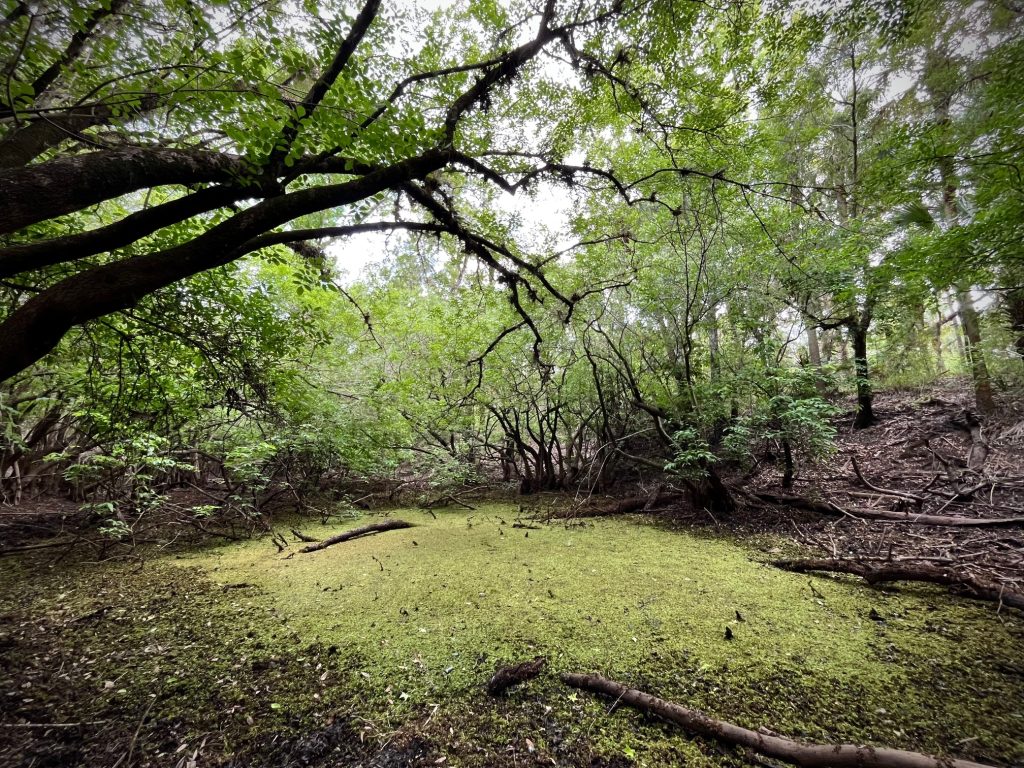
When time was short, he headed toward one of the oldest neighborhoods in Oviedo, passing by the oldest house in the city, owned for many years by Mayor Megan Sladek, on his way around the Lake Charm loop then back home again. He knows exactly what it takes to do a mile, because that’s the minimum he’d accept to call it a real run for the day.
He’s done that run in the rain. He’s done that run in a hurricane. He’s done that run on a nearly broken ankle.
“Maybe 5:30 in the morning, Lake Charm, a half mile in I caught a stick in the road, made it back to the house, and I’m on the phone with Bill [Sheridan] from Cora Rehabilitative and I say ‘Bill, I think it’s broken,’” Getty said. Scanned and diagnosed as a bad sprain, one of Getty’s first thoughts was the streak. But Cora had a machine he could use, a zero-gravity treadmill initially designed for astronauts which straps to your hips and pulls up to remove anywhere between 1 and 100% of your bodyweight from pressing down on your feet as you walk or run.
“I ran in the AlterG at about 33% bodyweight, just so I could get that mile in,” he said. “The next day, I was at maybe 40%. I knocked out like a 15-minute mile and my ankle went right back to swollen. It was a long, slow, 3-week process.”
But then the coach who’d shepherded so many athletes through the craggy woods, undulating fields, loose sand and even muddy bogs of cross country courses only to injure himself in the middle of the road was back, and off to the races again.
He can’t count how many races he’s done in his life, but he’s done eight marathons and countless 5Ks. Not quite as many as Oviedo’s 81-year-old Giles Williams, who won his division crossing the line at his 1,000th 5K, at The Oviedo Run Club’s Spring Rising in Oviedo March 21. But he’s done more than a few.
Almost offhand Getty mentions the time, in service of the streak, he ran in a hurricane, and got pulled over by the Oviedo Fire Department.
“One of the guys is like ‘Coach, what are you doing?,’” Getty said of the firefighter who, in a city of 40,000 people, inevitably recognized Getty on sight.
Getty and his name has become so well-traveled on athletic fields and in classrooms that his family say they find themselves regularly being tasked with “Say hi to Coach Getty for me,” at a cash register, in a restaurant, anywhere they say their name and someone remembers a day on a track, a field or a classroom many years ago, and smiles.
His oldest son, Caleb, is a firefighter now. So’s his younger brother, Noah.
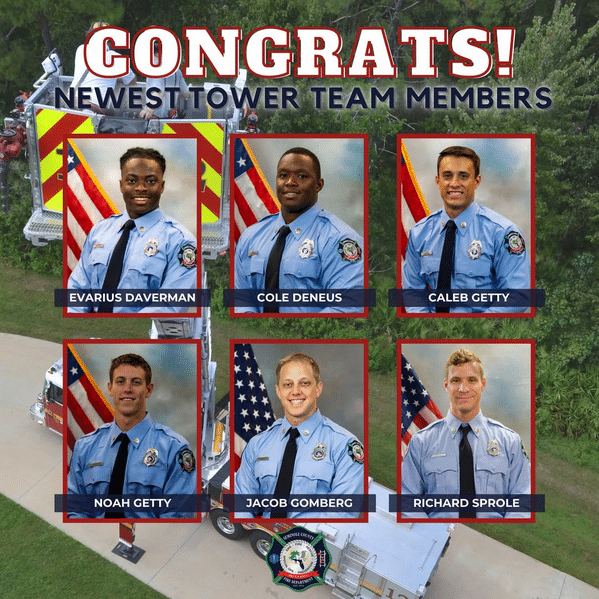
“I have five supervisors above me who have all been taught by [Getty],” Noah said.
So as the rain and wind swept through Oviedo during the hurricane, “I told them, ‘Look guys, I have ⅓ of a mile to go. Please just let me finish,’” Getty said. The firefighters let him finish.
That dedication to the streak took him nationwide. He’s run in Oregon before watching Simpson at all three of her U.S. Olympic Trials appearances there. He’s run when she came down for her final Olympic Trials appearance in 2024 in Orlando, in her dark horse bid to compete for the first time in the marathon, in an unexpected homecoming for one of the most decorated middle distance runners in U.S. history. He’s run in airport parking garages with her en route to races on the other side of the country.
And when Simpson, nearly 40, made her final professional running return to Central Florida, on her own terms with the 2025 Jenny and Jason Run USA Tour, a love letter to running authored on two feet, Getty was there too, ready to end one of the longest chapters of his own story.
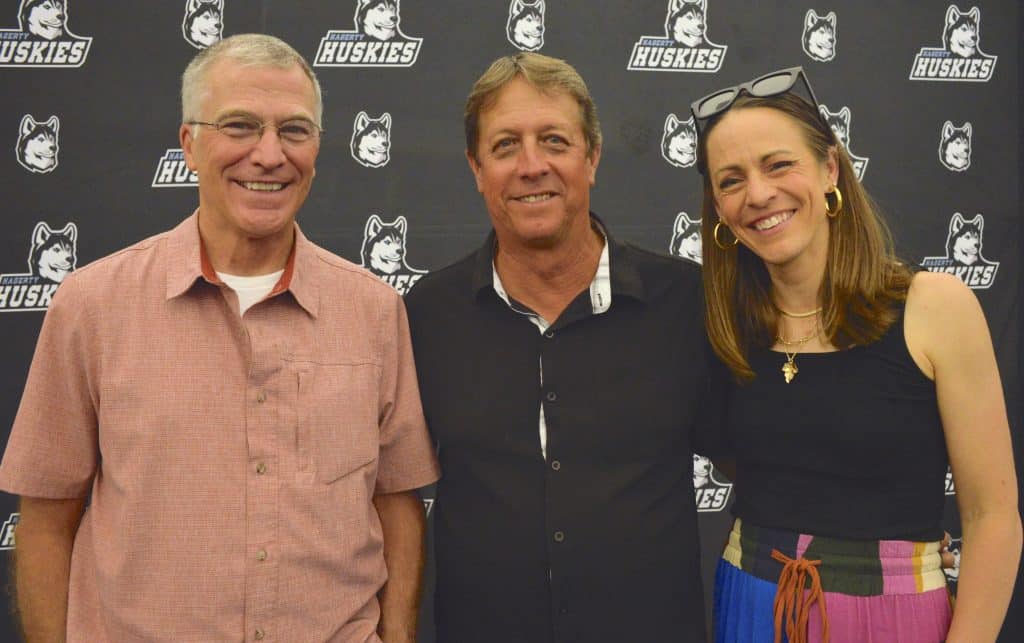
“I told her ‘Jen, the streak kind of started with you. If retirement’s looming, when you start your run USA tour and pop down to Florida, let’s go catch a run, and I’m going to retire the streak on that visit. Then we’ll, in a sense, we’ll retire together,’” he said.
And so off into the distance they went, ringing the bell for the final lap, feeling like they’d only toed the starting line a moment ago.
Stay tuned for Part 2 of this article, which is planned for publication on June 17. Read an explainer on why the author wrote such an lengthy article on this topic.
Words and photos, unless otherwise noted, by Isaac Benjamin Babcock
Support critical, local news you rely on to stay informed, connected and empowered.
Choose a monthly amount
Hometown Hero
Community Champion
Rooster Society
Custom Amount
Thank you for your support!
Author

Related Articles

Attempted coop: Winter Springs makes first move to allow backyard chickens
Final vote at the end of the month to allow up to 20 backyard chickens in certain areas, but some residents want the city to wait.
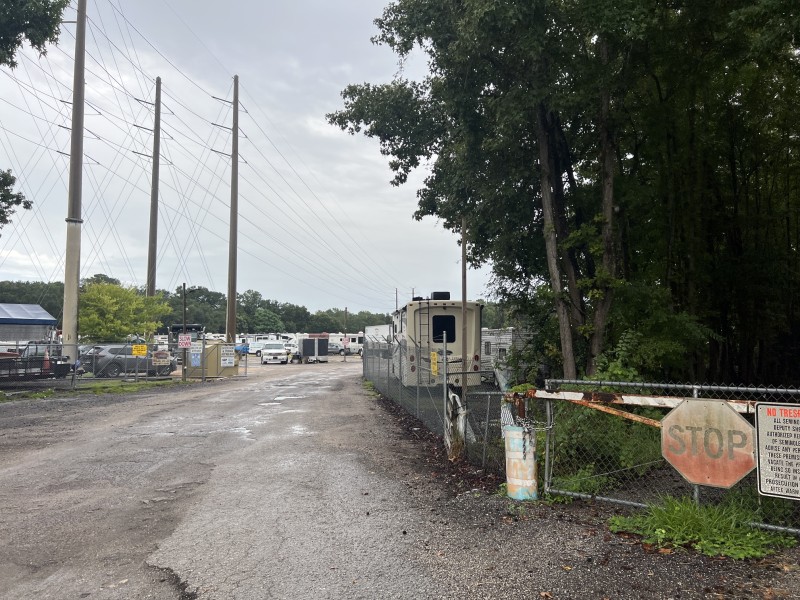
Seminole County approval could pave the way for 300+ apartments near Lukas Nursery
Greeneway Preserve still needs a detailed site plan before construction would start, as commissioners warn the area is ‘prone to flooding.’

Watchdogs warn Amendment 3 may cut funding for flood control and drinking water
Florida’s water management districts depend on property taxes to fund about a third of their work preventing floods, securing the drinking water supply and conserving wetlands.